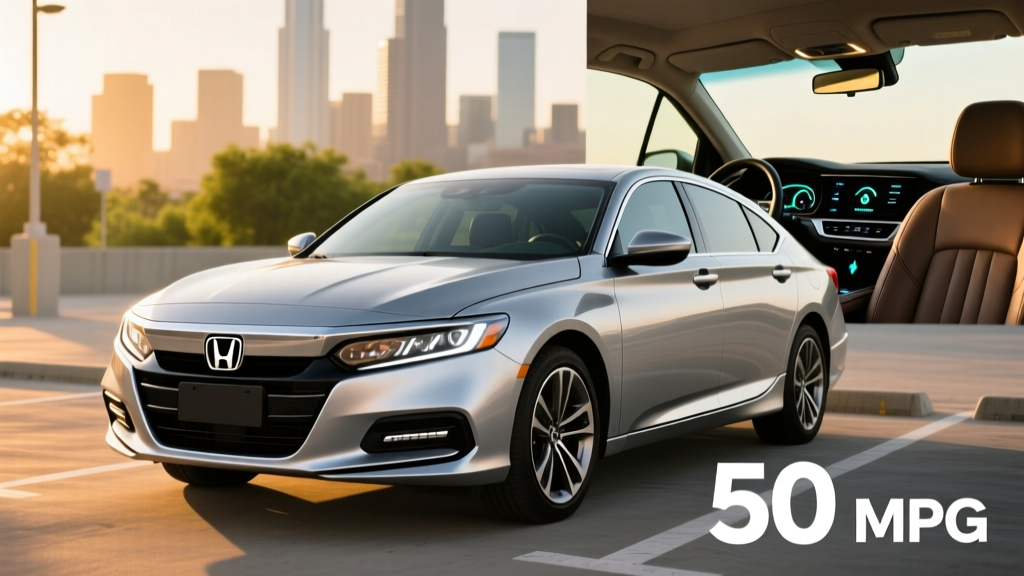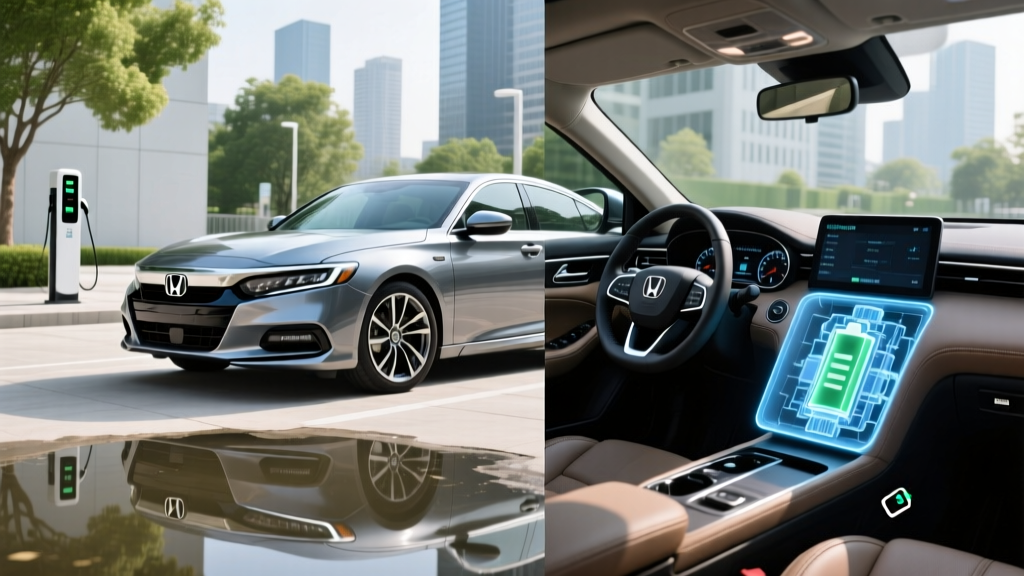
The Honda Accord has long been the default midsize sedan for buyers who want space, comfort, and efficiency without overthinking it. For 2026, the Accord Hybrid lineup — including the well-equipped Sport Touring Hybrid trim — continues with Honda's fourth-generation two-motor hybrid system. It's not a plug-in, and it doesn't pretend to be. Instead, it delivers consistently strong fuel economy with zero behavioral change from the driver: no charging cables, no range planning, no apps.
If you've searched for the Honda Sport Touring Hybrid, you're likely looking at the Accord's near-top-of-line hybrid trim and wondering whether the efficiency gains, feature list, and price tag make sense versus a plug-in hybrid or a full battery-electric vehicle. This guide breaks down every number that matters.
HEV vs PHEV vs EV: Where the Accord Sport Touring Hybrid Fits
Before we get into specs, it's worth clarifying what the Accord Sport Touring Hybrid actually is — and what it isn't.
| Feature | HEV (Accord Hybrid) | PHEV (e.g., Toyota Prius Prime) | BEV (e.g., Tesla Model 3) |
|---|---|---|---|
| Plug-in required? | No — self-charging | Yes — Level 1 or 2 | Yes — Level 2 or DC fast |
| Electric-only range | ~1 mile at low speed | 30–45 miles typical | 250–360+ miles |
| Fuel source | Gasoline only | Gasoline + grid electricity | Grid electricity only |
| EPA combined | 44 MPG | 48–52 MPG + MPGe | 120–132 MPGe |
| Home charging install | None needed | Optional (Level 2 ~$500–$1,500) | Recommended ($800–$2,500) |
| Federal tax credit (§30D) | Not eligible | Up to $7,500 (if sourcing/income rules met) | Up to $7,500 (if sourcing/income rules met) |
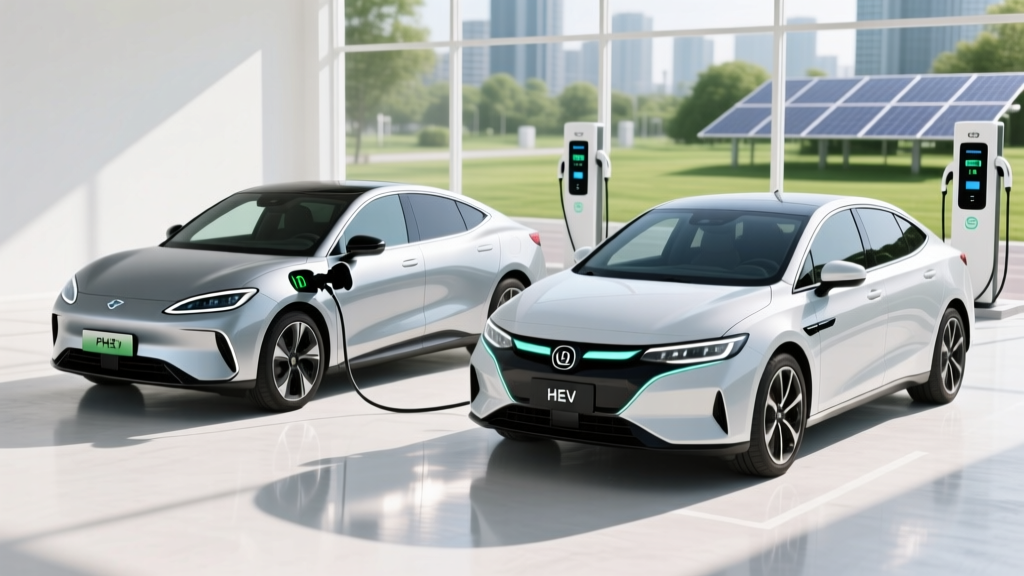
The Accord Sport Touring Hybrid is a conventional hybrid (HEV). It recovers energy through regenerative braking and uses its electric motor to assist the gasoline engine — but you never plug it in. The battery recharges itself during driving. This is fundamentally different from a plug-in hybrid (PHEV) like the Toyota Prius Prime or a full battery-electric vehicle (BEV) like the Hyundai Ioniq 6.
That distinction matters for two reasons: you won't need any home charging infrastructure, and you will not qualify for the federal §30D clean vehicle tax credit, which is reserved for PHEVs and BEVs meeting battery-sourcing and income requirements per IRS guidelines.
Fuel Economy: EPA Ratings and Real-World MPG
Here's what the EPA says about the 2026 Accord Hybrid, including the Sport Touring trim:
| Driving Cycle | EPA Rating | Real-World Expectation |
|---|---|---|
| City | 51 MPG | 48–55 MPG (hybrids often beat EPA in stop-and-go) |
| Highway | 44 MPG | 38–43 MPG (aerodynamic drag hurts hybrids at 75+ mph) |
| Combined | 48 MPG | 42–48 MPG depending on driving mix |
Important nuance: The Sport Touring trim comes with 19-inch alloy wheels and a slightly heavier equipment load compared to the base Accord Hybrid LX. Historically, Honda's EPA ratings for the Sport Touring Hybrid have been listed at 46 MPG combined (51 city / 44 highway) — about 2 MPG combined less than the lighter EX-L Hybrid. That's a small but measurable penalty for the larger wheels and added features.
In real-world driving, Honda's two-motor hybrid system excels in city conditions. The electric motor handles low-speed propulsion, and the gasoline engine primarily acts as a generator until highway speeds, where it engages directly through a clutch. This means city MPG often matches or exceeds the EPA sticker — something you rarely see with conventional gas cars. Highway driving at sustained 75–80 mph is where efficiency drops, as the engine takes on full load without electric assist advantage.
With a 12.8-gallon fuel tank, the Accord Sport Touring Hybrid delivers a total range of roughly 550–600 miles on a single tank in mixed driving. That's competitive with any midsize sedan on the market and eliminates any range-anxiety consideration entirely.
Powertrain: Two-Motor Hybrid System Explained
| Specification | 2026 Accord Sport Touring Hybrid |
|---|---|
| Engine | 2.0L DOHC Atkinson-cycle inline-4 |
| Engine output | 146 HP @ 6,100 rpm / 134 lb-ft torque |
| Electric motors | Two-motor system (propulsion + generator) |
| Combined system output | 204 HP / 247 lb-ft torque |
| Transmission | e-CVT (no traditional gears — fixed-ratio clutch) |
| Drivetrain | Front-wheel drive |
| 0–60 mph | ~7.5 seconds (estimated) |
| Hybrid battery | ~1.1 kWh lithium-ion (self-charging, not plug-in) |
| EPA combined MPG | 46 MPG (Sport Touring trim) |
| Fuel tank | 12.8 gallons |
| Total range | ~550–600 miles |
| Base MSRP (Sport Touring Hybrid) | $39,990 |
Honda's e:HEV system (marketed as the "two-motor hybrid system" in the US) is one of the most sophisticated conventional hybrid setups available. Unlike Toyota's planetary-gear Hybrid Synergy Drive, Honda uses a series-hybrid approach at low and moderate speeds: the gasoline engine spins a generator motor that produces electricity, which then powers the propulsion motor that actually drives the wheels. Only at steady highway cruising does a lock-up clutch connect the engine directly to the wheels.
The result is smooth, linear acceleration that feels more like an EV than a traditional hybrid. The 247 lb-ft of torque is available almost instantly from the electric motor, making the Accord Sport Touring Hybrid feel responsive in city merging and passing situations. The e-CVT produces none of the rubber-band drone associated with older Toyota hybrid systems.
Battery Longevity, Warranty, and Replacement Cost
Hybrid battery anxiety is the number-one concern we hear from first-time hybrid buyers. Here's the reality for the Accord:
Honda Hybrid Battery Warranty: 10 years / 150,000 miles (in states adopting California emissions standards, including CA, NY, MA, and 14 others). In remaining states, the warranty is 8 years / 100,000 miles. This covers capacity loss below a defined threshold and defects.
The Accord Hybrid's lithium-ion battery pack is relatively small (~1.1 kWh usable) compared to a PHEV or BEV. Because it never cycles through deep discharge — the system keeps the battery in a narrow state-of-charge window (roughly 40–80% SoC) — degradation is minimal. Honda's hybrid batteries have demonstrated strong longevity in real-world ownership. According to reliability data from Consumer Reports, the Accord Hybrid consistently earns above-average reliability ratings, with very few reports of hybrid battery failures within the first 150,000 miles.
Replacement cost if out of warranty: A hybrid battery replacement for the Accord runs approximately $3,000–$4,500 including labor at a Honda dealer. Independent hybrid specialists may offer refurbished packs for $2,000–$3,000. For context, this is a fraction of a BEV battery replacement ($8,000–$20,000+) and comparable to a major engine repair on a conventional vehicle.
Practical tip: The hybrid battery's thermal management is passive (air-cooled) in the Accord. Keeping the rear-seat ventilation area unobstructed — where the battery pack is located — helps maintain optimal battery temperature and longevity.
Features and Pricing: What the Sport Touring Trim Adds
The Sport Touring Hybrid sits at the top of the Accord Hybrid lineup for 2026. Here's what justifies the premium over the EX-L Hybrid:
- 19-inch alloy wheels with all-season tires (vs. 17-inch on EX-L)
- Wireless Apple CarPlay and Android Auto
- 12-speaker Bose premium audio system
- Built-in navigation with real-time traffic
- Wireless phone charging pad
- Low-speed braking control and enhanced Honda Sensing suite
- Heated rear seats and ventilated front seats
- Head-up display (HUD)
- Leather-trimmed interior with sport-bolstered front seats
The 2026 Accord Sport Touring Hybrid carries an MSRP of approximately $39,990 (including destination). The EX-L Hybrid starts around $35,290 — a $4,700 gap that buys meaningful technology and comfort upgrades but also costs you roughly 2 MPG combined due to the larger wheels and added weight.
Federal Tax Credit Eligibility
Because the Accord Sport Touring Hybrid is a conventional hybrid (HEV), it does not qualify for the federal §30D Clean Vehicle Credit. That credit — up to $7,500 for new vehicles — applies only to plug-in hybrids and battery-electric vehicles that meet battery-component and critical-mineral sourcing requirements, MSRP caps ($55,000 for sedans), and buyer income limits (see IRS §30D guidelines).
Some states may offer modest incentives for conventional hybrids, but these are increasingly rare as incentive programs shift toward PHEVs and BEVs. Check your state's energy or environmental agency for current programs.
Accord Sport Touring Hybrid vs. the Alternatives
Pros
- Excellent city MPG (often exceeds EPA 51 MPG in real-world stop-and-go)
- No plug-in charging required — zero infrastructure or behavior change
- 550+ mile total range eliminates fuel stops on most road trips
- Smooth, EV-like acceleration from two-motor system
- Top-tier Honda Sensing safety suite standard
- Strong resale value and 10-year hybrid battery warranty (CARB states)
- Premium features at a sub-$40K price point
Cons
- No electric-only driving beyond very low speeds (~1 mile)
- Not eligible for federal §30D tax credit (HEV, not PHEV)
- Highway MPG drops to 38–43 in real-world 75+ mph driving
- 19-inch wheels reduce efficiency vs. EX-L Hybrid trim
- No all-wheel-drive option (FWD only)
- Smaller trunk than some competitors due to battery placement
If you're cross-shopping: The Toyota Camry Hybrid (also redesigned) offers standard AWD and similar MPG at a slightly lower price. The Hyundai Sonata Hybrid provides more electric-only assist and a solar roof option. Neither matches the Accord's combination of driving refinement and interior quality at the Sport Touring level.
If you have home charging access and a short commute, a PHEV like the Toyota Prius Prime (44 miles electric-only, up to $7,500 tax credit) could save more on daily fuel. But you'll sacrifice trunk space, rear-seat room, and the Accord's highway composure.
Who Should Buy the Accord Sport Touring Hybrid?
Choose the Accord Sport Touring Hybrid if:
- You want maximum fuel efficiency without installing a home charger or changing your fueling habits
- Your driving is a mix of city commuting and highway road trips
- You value a premium interior and advanced safety features in a midsize sedan
- You plan to keep the car 8+ years and want proven hybrid reliability
- You live in an apartment or lack reliable charging access for a PHEV/BEV
Look at a PHEV or BEV instead if:
- You have Level 2 home charging and a commute under 40 miles (a PHEV could eliminate gas use entirely on weekdays)
- You want to qualify for the $7,500 federal tax credit (requires a PHEV or BEV meeting IRS sourcing rules)
- You want zero tailpipe emissions in daily driving (BEV) or reduced emissions (PHEV in EV mode)
Frequently Asked Questions
How many MPG does the Honda Accord Sport Touring Hybrid get?
The EPA rates the 2026 Accord Sport Touring Hybrid at 51 MPG city, 44 MPG highway, and 46 MPG combined. In real-world city driving, owners frequently report matching or slightly exceeding the 51 MPG city figure thanks to the electric motor's dominance at low speeds. Highway driving at 75+ mph typically yields 38–43 MPG.
Does the Honda Accord Hybrid need to be plugged in?
No. The Accord Hybrid is a conventional hybrid (HEV), not a plug-in hybrid (PHEV). The battery recharges itself through regenerative braking and the gasoline engine. You fuel it exactly like any other gas car — at the pump.
How far can the Accord Sport Touring Hybrid go on electric power alone?
Essentially zero meaningful distance. The hybrid system uses its electric motor for low-speed assist and smooth starts, but it cannot sustain electric-only driving beyond about one mile at very low speeds. For substantial electric-only range (30–45 miles), you'd need a PHEV like the Prius Prime or a full BEV.
Is the Honda Accord Hybrid reliable, and what does battery replacement cost?
Yes. The Accord Hybrid earns above-average reliability ratings from Consumer Reports and has a strong track record with Honda's two-motor system. The hybrid battery is warrantied for 10 years/150,000 miles (CARB states) or 8 years/100,000 miles (other states). Out-of-warranty replacement costs approximately $3,000–$4,500 at a dealer — far less than a BEV battery swap.
Does the Accord Hybrid qualify for any tax credit?
No federal tax credit. The §30D Clean Vehicle Credit applies only to plug-in hybrids (PHEVs) and battery-electric vehicles (BEVs) that meet specific battery-sourcing, MSRP, and buyer-income requirements. As a conventional hybrid, the Accord Hybrid is not eligible. Some states may offer small incentives for hybrids, but these are increasingly uncommon.
How does the Accord Sport Touring Hybrid compare to a full EV for commuting?
For a 30-mile round-trip commute, a BEV like the Tesla Model 3 or Hyundai Ioniq 6 would cost roughly $1.50–$2.50 per day in electricity (at $0.14/kWh national average) versus about $4.50–$5.50 in gasoline for the Accord Hybrid (at $3.40/gallon, 46 MPG). However, the BEV requires home charging access, costs more upfront (before tax credits), and adds charging-time planning for road trips. The Accord Hybrid offers a lower purchase price, no charging infrastructure, and 550+ mile range with no planning.
What's the difference between the Accord Sport Touring and EX-L Hybrid?
The Sport Touring adds 19-inch wheels, Bose 12-speaker audio, wireless CarPlay/Android Auto, built-in navigation, ventilated front seats, heated rear seats, and a head-up display. The trade-off is about $4,700 more and roughly 2 MPG combined less (46 vs. 48 MPG combined) due to the larger wheels and added weight. Per fueleconomy.gov, the efficiency difference is modest but measurable over years of ownership.
The 2026 Honda Accord Sport Touring Hybrid occupies a specific and defensible niche: it's the most fuel-efficient way to own a near-luxury midsize sedan without altering your daily routine. No plugs, no apps, no range calculations. You drive it like any other car, and it returns 44–51 MPG depending on your commute profile. For buyers who aren't ready for plug-in life — whether due to apartment living, road-trip frequency, or simple preference — it remains one of the smartest purchases in the segment.