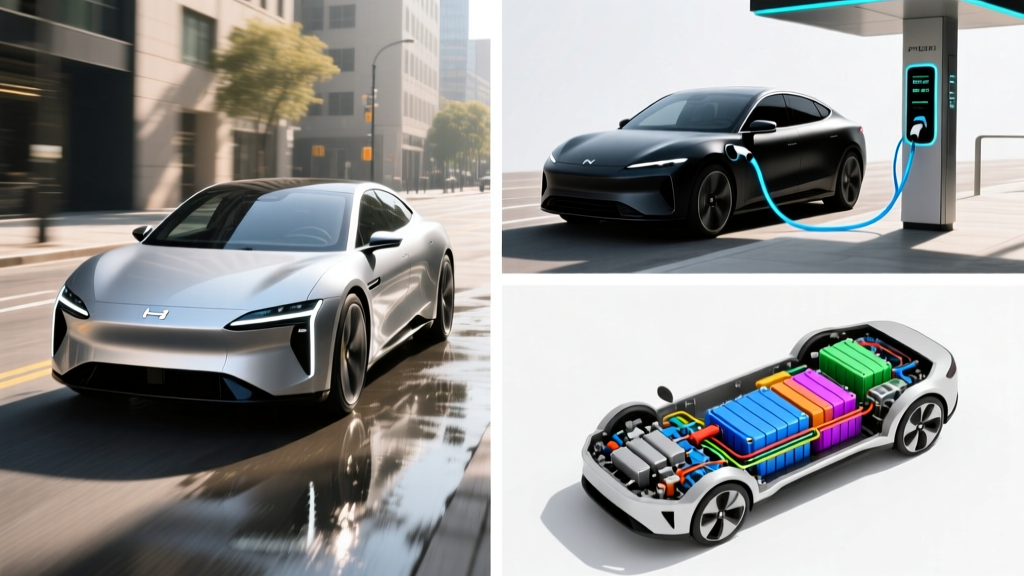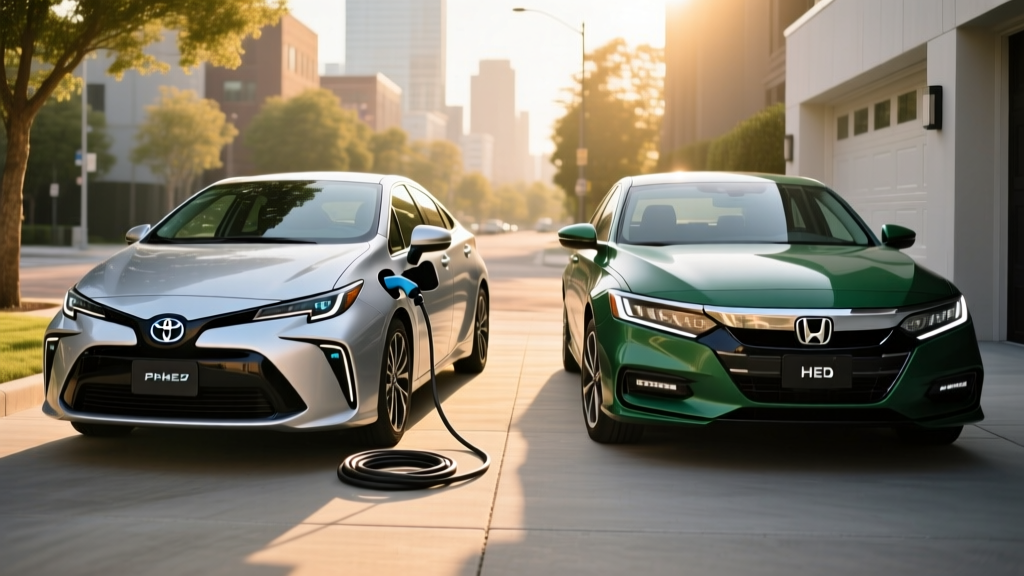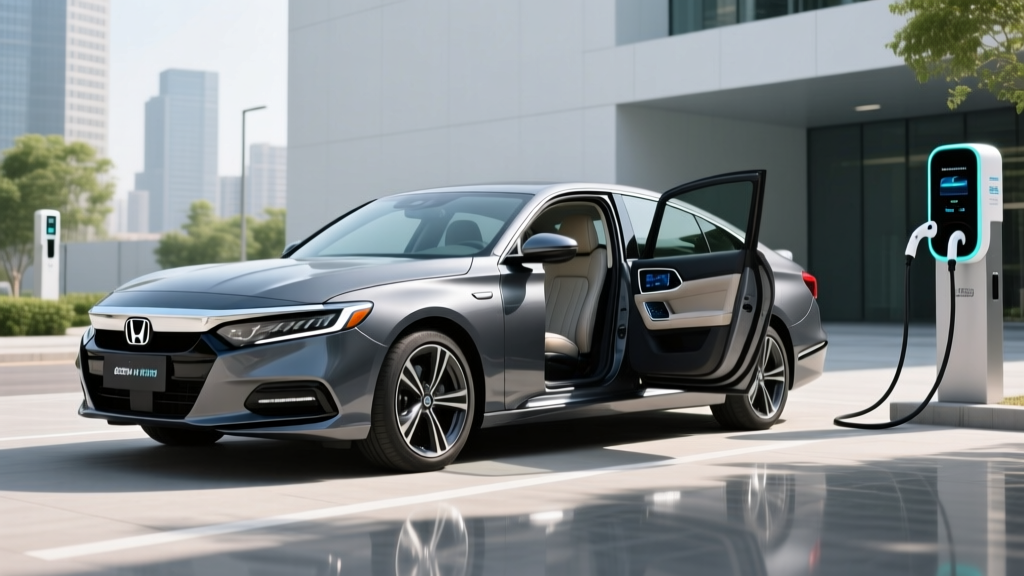
The midsize sedan segment hasn't gone fully electric — and the 2026 Honda Accord sedan hybrid is proof that electrification doesn't require a plug. Now standard across every Accord trim, Honda's two-motor hybrid system delivers 48 MPG combined EPA, brisk acceleration, and the kind of ownership simplicity that full EVs still can't match for apartment dwellers and road-trippers alike. But with Toyota's Camry hybrid nipping at its heels and plug-in alternatives emerging, where does the Accord hybrid actually land for 2026?
We've broken down the powertrain specs, real-world fuel economy, battery longevity, pricing, and the decision framework that separates a smart hybrid buy from a missed opportunity. No fluff — just the numbers and trade-offs you need.
2026 Accord Hybrid Powertrain and Performance
Honda uses its fourth-generation two-motor hybrid system across all 2026 Accord trims (LX, EX, EX-L, Sport-L, Touring). The architecture pairs a 2.0-liter Atkinson-cycle inline-four with two electric motors — one functioning primarily as a generator, the other driving the front wheels. Unlike Toyota's planetary-gear eCVT, Honda's system operates mostly in series-hybrid mode at low speeds (engine generates electricity, motor drives wheels) and switches to direct engine-drive via a lock-up clutch at highway cruising.
| Specification | Value |
|---|---|
| Engine | 2.0L Atkinson-cycle I-4 |
| Combined System Output | 204 hp / 247 lb-ft torque |
| Electric Drive Motor | 181 hp (135 kW) |
| Transmission | Direct-drive (eCVT, no gears) |
| Drivetrain | Front-wheel drive |
| 0–60 mph | ~6.5 seconds (MotorTrend tested) |
| Hybrid Battery | ~1.0 kWh lithium-ion (self-charging HEV) |
| Curb Weight | ~3,477 lbs (Touring trim) |
The 247 lb-ft of torque from the electric motor arrives instantly, which is why the Accord hybrid feels quicker off the line than its 204-hp figure suggests. In our experience, the transition between EV mode, hybrid mode, and engine-direct-drive is among the smoothest in the segment — you rarely feel the engine engage.
EPA Fuel Economy and Real-World MPG
Fuel economy varies slightly by trim due to wheel size and weight. Here's the EPA data from fueleconomy.gov:
| Trim | City MPG | Highway MPG | Combined MPG |
|---|---|---|---|
| LX / EX | 51 | 44 | 48 |
| EX-L / Sport-L / Touring (19" wheels) | 48 | 41 | 44–45 |
Real-world expectations: Honda's hybrid system, like most series-hybrid architectures, excels in city driving where regenerative braking recaptures energy at every stop. In mixed suburban commuting, owners routinely report matching or slightly exceeding the EPA city figure — 50–53 MPG isn't unusual. Highway driving is a different story. At sustained 75–80 mph, the engine operates in direct-drive mode without electric assist, and real-world highway numbers tend to land in the 38–42 MPG range. Cold weather (below 35°F) typically knocks 3–5 MPG off combined figures due to increased engine runtime for cabin heat and reduced battery efficiency.
For a 15,000-mile annual commute split 55/45 city/highway, expect roughly 44–46 MPG average — translating to about 330 gallons per year at a cost of approximately $1,050 (at $3.15/gallon regular unleaded). That's roughly $850–$1,100 less than a comparable turbo-gas midsize sedan annually.
HEV vs. PHEV vs. EV: Where the Accord Hybrid Fits
The Accord is a conventional hybrid (HEV) — it does not plug in, has no electric-only range to speak of (roughly 1 mile at very low speeds), and requires zero charging infrastructure. Honda does not offer a plug-in hybrid (PHEV) Accord for the U.S. market as of 2026.
| Factor | HEV (Accord Hybrid) | PHEV (e.g., Toyota Prius Prime) | BEV (e.g., Tesla Model 3) |
|---|---|---|---|
| Plug-in Required? | No | Yes (optional, but recommended) | Yes — mandatory |
| Electric-Only Range | ~1 mi (low speed) | 25–44 mi typical | 250–360 mi typical |
| Home Charging Needed? | No | Recommended (120V works, 240V better) | Yes — Level 2 strongly recommended |
| Annual Fuel Cost (15k mi) | ~$1,050 | ~$500–$900 (depends on EV-mode usage) | ~$500–$750 (electricity) |
| Upfront Price Premium vs. Gas | $0 (hybrid is standard on Accord) | $3,000–$6,000 more than HEV | $5,000–$15,000 more than HEV |
| Federal Tax Credit (§30D) | Not eligible | $3,750–$7,500 (if eligible) | Up to $7,500 (if eligible) |
| Road-Trip Convenience | Excellent — gas station stops only | Excellent once battery depletes | Requires DC fast-charging planning |
The Accord hybrid is the right call if you lack home charging access, drive more than 40 miles daily without a predictable routine, take frequent long road trips, or simply want maximum simplicity. A PHEV makes more sense if you have a garage or driveway for overnight Level 2 charging and a short commute you can cover entirely on electricity. A full BEV wins on operating cost and emissions — but only if your charging situation and driving patterns support it.
Pricing, Trims, and Tax Credit Eligibility
For 2026, the Accord hybrid is the only Accord — Honda dropped the turbocharged 1.5T gasoline-only powertrain after the 2024 model year. Every trim is a hybrid.
| Trim | MSRP (incl. destination) |
|---|---|
| LX | $33,650 |
| EX | $35,300 |
| EX-L | $37,650 |
| Sport-L | $38,350 |
| Touring | $40,700 |
Federal tax credit: The conventional Accord hybrid (HEV) does not qualify for the IRS §30D Clean Vehicle Credit. That credit applies only to plug-in electric vehicles (BEVs and PHEVs) meeting battery-sourcing, MSRP, and buyer income requirements. There is no federal purchase incentive for self-charging hybrids.
State incentives: A handful of states offer modest rebates or HOV-lane access for hybrids, but these programs are increasingly focused on PHEVs and BEVs. Check your state energy office or AFDC state incentive database for current local programs. Some states (California, Colorado, New York) have hybrid-specific incentives, but amounts and eligibility change annually.
Battery Longevity, Warranty, and Replacement Cost
Honda Accord Hybrid Battery Warranty
- Hybrid Battery: 8 years / 100,000 miles (10 years / 150,000 miles in CARB states including CA, CT, ME, MA, NJ, NY, OR, RI, VT, WA)
- Capacity Threshold: Honda warrants against failure and significant capacity loss — no specific percentage threshold published, but replacement is covered if the system detects battery degradation below operational limits
- Hybrid System Components: 8 years / 100,000 miles (IPU, DC-DC converter, electric motors)
- Powertrain Warranty: 5 years / 60,000 miles (engine, transmission)
Real-world longevity: Honda's hybrid battery packs have proven durable. The ~1.0 kWh lithium-ion pack is small and operates within a narrow state-of-charge window (roughly 20–80%), which significantly reduces degradation stress. Taxi fleets and high-mileage owners have reported Accord and Civic Hybrid units surpassing 200,000 miles on the original battery. That said, hybrid batteries are not immortal.
Replacement cost: If your hybrid battery fails outside warranty, expect a dealer replacement to cost between $2,000 and $4,000 depending on trim and labor rates. Independent hybrid specialists often offer refurbished pack replacements for $1,200–$2,000. Given the 8–10 year warranty coverage, most original owners will never face this expense — but it's a relevant consideration for second- and third-owners of higher-mileage vehicles.
Driving Experience, Tech, and Safety
The Accord hybrid's driving dynamics remain a segment benchmark. The low center of gravity (battery mounted under rear seats), responsive electric torque, and well-tuned suspension give it a composed feel that belies its efficiency focus. The Touring trim's adaptive dampers add a noticeable refinement layer over rough pavement.
Standard technology across all trims includes a 10.2-inch digital instrument cluster, wireless Apple CarPlay and Android Auto (EX and above), Honda Sensing suite (adaptive cruise, lane-keeping, collision mitigation, traffic-sign recognition), and a 12.3-inch touchscreen on EX-L and above. Google built-in navigation is standard on the Touring.
The IIHS has historically rated the Accord as a Top Safety Pick+, and NHTSA has awarded it 5 stars overall. Honda Sensing's adaptive cruise and lane-centering qualify as SAE Level 2 driver assistance — the driver must remain fully engaged at all times.
Pros
- 48 MPG combined EPA (LX/EX) — among the highest in the midsize segment
- No plug-in or charging infrastructure required
- 204 hp with instant electric torque — responsive in daily driving
- Spacious cabin with 16.7 cu-ft trunk (no battery intrusion)
- Strong resale value and proven hybrid reliability
- Honda Sensing standard on every trim
Cons
- No PHEV option — no electric-only commuting range
- Highway MPG drops to 38–42 in real-world 75+ mph driving
- No federal tax credit for conventional hybrids
- 19-inch wheels on upper trims reduce efficiency by 3–4 MPG
- No all-wheel-drive option (Toyota Camry hybrid offers AWD)
- Road noise on coarse pavement remains noticeable
Who Should Buy the Accord Hybrid — and Who Shouldn't
Decision Framework
Choose the Accord hybrid if:
- You live in an apartment or lack home-charging access
- Your commute is unpredictable or exceeds 50 miles daily
- You take regular road trips and don't want to plan charging stops
- You want a midsize sedan with top safety ratings and strong resale
- You value simplicity — no plugs, no range calculations, no charging apps
Look elsewhere if:
- You have home charging and a short commute — a PHEV (Prius Prime, RAV4 Prime) or BEV could eliminate most fuel costs
- You need AWD for snow-belt driving — consider the Toyota Camry hybrid AWD or a Subaru
- You want federal tax credit eligibility — only PHEVs and BEVs qualify under §30D
- You prioritize maximum cargo space — the Accord sedan's trunk is generous but can't match a crossover
Frequently Asked Questions
How many MPG does the Honda Accord hybrid get?
The 2026 Accord hybrid achieves 51 city / 44 highway / 48 combined MPG on LX and EX trims with 17-inch wheels. Upper trims (EX-L, Sport-L, Touring) with 19-inch wheels are rated at 48 city / 41 highway / 44–45 combined. Real-world highway driving at 75+ mph typically returns 38–42 MPG.
Does the Honda Accord hybrid need to be plugged in?
No. The Accord is a conventional hybrid (HEV). Its small lithium-ion battery charges through regenerative braking and the gasoline engine. You simply refuel at any gas station — no plug, no charger, no charging station required.
How far can the Accord hybrid drive on electric power alone?
Effectively about 1 mile at very low speeds (under 25 mph) in EV mode. The Accord hybrid's battery is roughly 1.0 kWh — it's designed to assist the engine and capture braking energy, not to provide meaningful electric-only range. If electric-only commuting is your goal, you need a PHEV or BEV.
Is the Honda Accord hybrid reliable, and what does a battery replacement cost?
Honda's hybrid system has a strong reliability track record over two decades of production. The hybrid battery is covered by an 8-year/100,000-mile warranty (10 years/150,000 miles in CARB states). Out-of-warranty replacement costs range from $2,000–$4,000 at a dealer, or $1,200–$2,000 through independent hybrid specialists using refurbished packs.
Does the Accord hybrid qualify for any federal tax credit?
No. The IRS §30D Clean Vehicle Credit applies only to plug-in electric vehicles (BEVs and PHEVs). Conventional hybrids like the Accord do not qualify for the federal purchase incentive. Some states may offer modest hybrid rebates or incentives — check your state's energy office for current programs.
Accord hybrid vs. Toyota Camry hybrid — which is better?
Both deliver 44–52 MPG combined and strong reliability. The Accord edges ahead on driving refinement, interior space, and tech. The Camry hybrid offers AWD (a significant advantage in snow states), a slightly lower starting price, and historically marginally higher city MPG. If you need AWD, the Camry wins. If you prioritize driving dynamics and cabin quality, the Accord is the stronger pick.
What is the 5-year total cost of ownership for the Accord hybrid?
Assuming 15,000 miles/year, $3.15/gallon gas, and the LX trim at $33,650 MSRP: fuel costs run roughly $5,250 over five years. Combined with estimated insurance (~$7,500), maintenance (~$2,500 — hybrids require less brake and engine maintenance), and typical depreciation (~$14,000), total 5-year ownership lands around $30,000–$33,000 depending on your state and driving profile. That's competitive with or lower than most gas-only midsize sedans.