The Honda Accord Plug-In Hybrid: What Buyers Need to Know in 2026
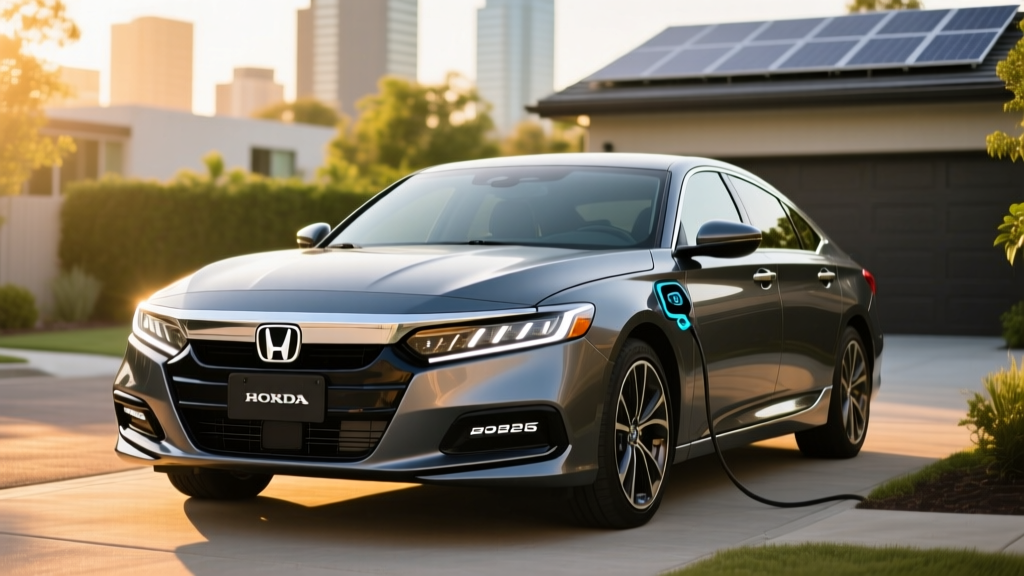
If you've been searching for a Honda Accord plug-in hybrid, here's the honest answer: Honda has not offered a PHEV version of the Accord since the 2014 model year. The current-generation Accord (11th gen, refreshed for 2026) is available exclusively as a conventional hybrid (HEV) — no plug required. But that doesn't mean you're out of options. Honda's Accord Hybrid delivers exceptional fuel economy, and several competitors fill the PHEV sedan gap with compelling plug-in alternatives.
This guide clarifies exactly what Honda offers today, how the Accord Hybrid performs in real-world driving, and whether a conventional hybrid, a competitor's PHEV, or a full EV is the right call for your commute and budget.
HEV vs PHEV: Understanding the Accord Hybrid's Setup
Before diving into specs, it's critical to understand the distinction between the two hybrid types, because they serve different drivers:
| Feature | HEV (Accord Hybrid) | PHEV (e.g., Toyota Camry PHEV) |
|---|---|---|
| Plugs in to charge? | No — charges via regen & engine | Yes — Level 1 or Level 2 |
| Electric-only range | 1–2 miles at low speed | 25–50+ miles typical |
| Battery size | ~1.0–1.3 kWh | 13–18 kWh typical |
| Federal tax credit (§30D) | Not eligible | Up to $7,500 if requirements met |
| Best for | No home charging access; simplicity | Home charging + short commutes |
The 2026 Honda Accord Hybrid is a conventional HEV. Its small battery recharges through regenerative braking and the gasoline engine. You never plug it in. This makes it ideal for apartment dwellers, street parkers, or anyone who wants hybrid efficiency without managing charging infrastructure.
2026 Honda Accord Hybrid: MPG, Powertrain, and Real-World Efficiency
The 2026 Accord Hybrid uses Honda's two-motor hybrid system paired with a 2.0-liter Atkinson-cycle inline-four engine. Here are the numbers that matter:
| Combined horsepower | 204 hp |
| Combined torque | 247 lb-ft |
| Engine | 2.0L 4-cyl Atkinson + 2 electric motors |
| Battery | ~1.3 kWh lithium-ion |
| EPA city MPG | 51 MPG |
| EPA highway MPG | 44 MPG |
| EPA combined MPG | 48 MPG |
| Fuel tank | 12.8 gallons |
| Total driving range | ~614 miles |
| 0–60 mph | ~7.1 seconds |
| Drivetrain | FWD |
Real-World MPG vs. EPA Estimates
Conventional hybrids like the Accord frequently exceed their EPA city rating in stop-and-go traffic because regenerative braking recovers energy that a gas car wastes as heat. In our experience and owner-reported data:
- City driving: Many drivers report 52–55 MPG in moderate climates with mixed stop-and-go routes.
- Highway driving: Expect 40–43 MPG at sustained 70–75 mph speeds — slightly below the EPA sticker, as aerodynamic drag dominates at highway speed and the electric motor assists less.
- Cold weather (below 32°F): Expect a 5–10% reduction (roughly 43–46 MPG combined). The engine runs more frequently to provide cabin heat and maintain battery temperature.
Why Honda Dropped the Accord Plug-In Hybrid (and What Replaced It)
The original Honda Accord Plug-In Hybrid (2014) offered just 13 miles of electric-only range on a 6.7 kWh battery and carried a steep $39,780 starting price. It was discontinued after one model year due to low sales and rapid advancements in battery technology that made the offering uncompetitive.
Honda's current electrification strategy for sedans focuses on:
- Conventional hybrids across the Accord and Civic lineups — maximizing MPG without requiring any behavioral change from the driver.
- Full battery-electric vehicles (BEVs) like the Prologue SUV — targeting buyers ready to commit to plug-in charging.
If you specifically need a midsize PHEV sedan, the closest competitors in 2026 include the Toyota Camry PHEV (offered in select markets), the Hyundai Sonata PHEV, and the BMW 330e. Each offers 30–45 miles of electric-only range for commutes that can be completed without burning gasoline.
Hybrid vs PHEV vs EV: Which Sedan Fits Your Life?
Choosing between a conventional hybrid, a plug-in hybrid, and a full electric vehicle depends on three factors: your daily mileage, your access to charging, and your budget.
Decision Framework
- Choose the Accord Hybrid (HEV) if: You drive 30–80 miles daily, lack reliable home or workplace charging, want maximum simplicity, and prioritize proven reliability over tax incentives.
- Choose a PHEV sedan if: You have Level 2 home charging, your daily commute is under 40 miles (so you can drive mostly electric), and you want a gas engine for longer road trips without range anxiety.
- Choose a full EV (BEV) if: You have home charging, your daily driving is under 250 miles, you want the lowest per-mile fuel cost, and you qualify for the federal §30D tax credit (up to $7,500).
Pricing, Tax Credits, and Total Cost of Ownership
The 2026 Honda Accord Hybrid starts at approximately $33,990 (Sport trim) and ranges up to $39,490 (Touring trim). Because it is a conventional hybrid — not a plug-in — it does not qualify for the federal §30D new clean vehicle tax credit. That credit, worth up to $7,500, is reserved for plug-in electric vehicles (PHEVs and BEVs) meeting specific battery-sourcing, MSRP, and buyer-income requirements.
§30D Federal Tax Credit Requirements (2026)
For context, here's what a PHEV buyer must satisfy to claim the credit — none of which applies to the Accord HEV:
- Vehicle must be a plug-in EV (BEV or PHEV) with ≥7 kWh battery capacity
- MSRP cap: $55,000 for sedans; $80,000 for SUVs/vans/trucks
- Buyer income cap: $150,000 (single) / $300,000 (married filing jointly)
- Battery critical minerals and components must meet phased-in domestic-sourcing thresholds
- Credit can be transferred to the dealer at point of sale as a purchase-price reduction
Even without the federal credit, the Accord Hybrid's total cost of ownership is compelling. At 48 MPG combined and $3.50/gallon gas, annual fuel cost for 15,000 miles is roughly $1,094. A comparable non-hybrid midsize sedan at 30 MPG would cost about $1,750 per year — a $656 annual savings, or roughly $3,280 over five years.
Battery Warranty, Reliability, and Replacement Cost
Hybrid battery longevity is consistently the top concern among first-time hybrid buyers. Here's what the data shows for Honda's hybrid system:
Accord Hybrid Battery Warranty
- Hybrid battery warranty: 8 years / 100,000 miles (10 years / 150,000 miles in CARB states including CA, NY, MA, and others)
- Powertrain warranty: 5 years / 60,000 miles
- Hybrid system components: Covered under the 8-year hybrid battery warranty, including the inverter and electric motors
Honda's hybrid batteries have demonstrated strong longevity in practice. The Accord Hybrid's ~1.3 kWh battery operates within a conservative state-of-charge window — it never fully charges or fully discharges — which dramatically reduces degradation stress. Owner reports and fleet data suggest most Honda hybrid batteries last 150,000–200,000+ miles before significant capacity loss.
If replacement is needed out of warranty, a refurbished Accord Hybrid battery typically costs $2,000–$3,500 including labor. A new OEM battery from Honda may run $3,500–$5,000. This is significantly less than a full EV battery replacement, which can exceed $10,000–$18,000 depending on the model.
Source: Honda — 2026 Accord Hybrid Specifications
Pros and Cons: The Accord Hybrid at a Glance
Pros
- Class-leading 51 MPG city — real-world city driving often exceeds EPA
- No charging infrastructure required — works for apartments and street parking
- Strong reliability record; conservative battery management extends lifespan
- 614+ miles of total range — fewer fill-ups on road trips
- Smooth, quiet electric assist at low speeds
- Competitive pricing starting under $34,000
Cons
- No PHEV option — cannot drive on electric-only for commutes
- Not eligible for the federal §30D tax credit (HEV, not plug-in)
- Highway MPG drops to ~40–43 at sustained 75 mph
- FWD only — no AWD option for snow-belt buyers
- CVT-like driving feel under hard acceleration (e-CVT)
Frequently Asked Questions
How many MPG does the 2026 Honda Accord Hybrid get?
The EPA rates the 2026 Accord Hybrid at 51 city / 44 highway / 48 combined MPG. In real-world city driving with regenerative braking active, many owners report 52–55 MPG. Highway driving at 70–75 mph typically yields 40–43 MPG.
How far can the Honda Accord Hybrid go on electric only?
The Accord Hybrid is a conventional HEV, not a PHEV. It can creep at very low speeds (under 25 mph) for roughly 1–2 miles on battery power alone, but the gasoline engine engages quickly under any meaningful acceleration or load. It does not offer a meaningful electric-only driving mode. If you need 25–45 miles of electric-only range, you need a plug-in hybrid from another manufacturer.
Does the Honda Accord Hybrid qualify for any tax credit?
No. The federal §30D clean vehicle tax credit applies only to plug-in electric vehicles (BEVs and PHEVs). Because the Accord Hybrid is a conventional HEV that cannot be plugged in, it is not eligible. Some states offer modest rebates for hybrids, but these vary by jurisdiction and are typically $500–$1,500 — check your state energy office for current programs.
Is the Accord Hybrid reliable, and what does a battery replacement cost?
Yes. Honda's two-motor hybrid system has been in production since 2014 and has demonstrated strong reliability across the Accord, CR-V, and Civic hybrid lineups. The hybrid battery is warranted for 8 years/100,000 miles (10 years/150,000 miles in CARB states). Out-of-warranty replacement runs $2,000–$3,500 for a refurbished unit or $3,500–$5,000 for new OEM. Most batteries last well beyond 150,000 miles due to conservative charge-window management.
Should I wait for a Honda Accord PHEV?
Honda has not announced any plans to reintroduce an Accord plug-in hybrid for the North American market. Honda's current sedan electrification roadmap focuses on conventional hybrids for the Accord and Civic, and full BEVs for future models. If a PHEV sedan is a priority, consider the Hyundai Sonata PHEV, Toyota Camry (PHEV variant where available), or BMW 330e.
How does the Accord Hybrid compare to a full EV for daily commuting?
If you have home Level 2 charging and a commute under 60 miles, a full EV like the Tesla Model 3 or Hyundai Ioniq 6 will cost significantly less per mile to fuel (roughly $0.04–$0.06/mile on electricity vs. $0.07–$0.09/mile in the Accord Hybrid at current gas prices). However, the Accord Hybrid wins on flexibility — no charging stops on road trips, no range degradation in extreme cold, and a lower purchase price without needing to qualify for tax credits.