Quick Verdict: The Accord Hybrid Sport-L at a Glance
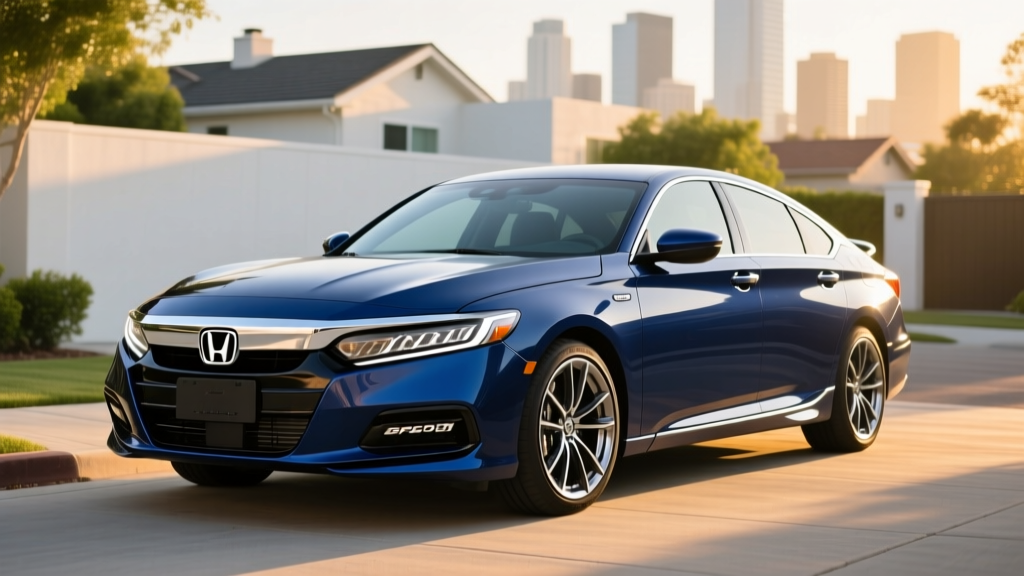
The 2026 Honda Accord Hybrid Sport-L occupies a precise niche: a midsize sedan that delivers near-compact fuel consumption with a full-size interior, wrapped in a trim level that adds leather upholstery and sport-tuned styling without crossing into luxury pricing. At a starting MSRP of $34,990 (including destination), it undercuts the Touring Hybrid by roughly $4,500 while retaining the same two-motor hybrid powertrain rated at 204 combined horsepower and an EPA-estimated 48 MPG combined.
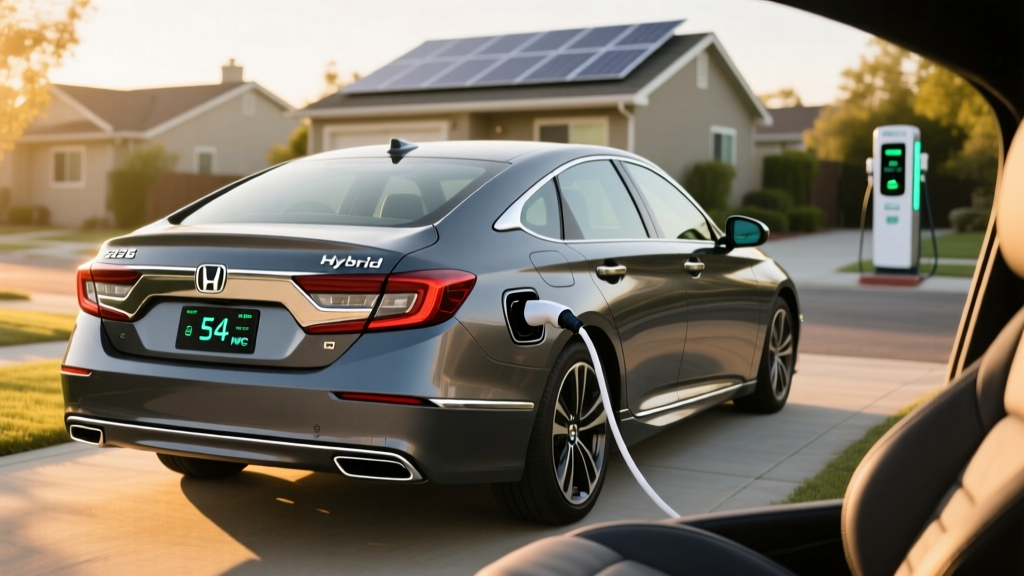
This is a conventional hybrid (HEV), not a plug-in hybrid (PHEV). You never plug it in. The 1.1 kWh lithium-ion battery recharges exclusively through regenerative braking and the gasoline engine. If you're searching for electric-only driving range or a federal tax credit, you'll need to look at PHEVs or BEVs — and we'll cover that decision framework below.
| Specification | 2026 Accord Hybrid Sport-L |
|---|---|
| Powertrain | 2.0L Atkinson-cycle 4-cyl + two-motor hybrid system |
| Combined Horsepower | 204 hp |
| Engine Output | 146 hp @ 6,100 rpm / 134 lb-ft torque |
| Drive Motor Output | 181 hp / 247 lb-ft torque |
| Transmission | e-CVT (no traditional gears) |
| Battery Capacity | 1.1 kWh lithium-ion |
| Drivetrain | Front-wheel drive |
| EPA MPG (City / Hwy / Combined) | 50 / 45 / 48 |
| Fuel Tank Capacity | 12.8 gallons |
| Total Driving Range | ~614 miles (EPA est.) |
| 0–60 mph | ~7.1 seconds (est.) |
| Cargo Volume | 16.7 cu ft |
| Base MSRP (incl. destination) | $34,990 |
| Federal EV Tax Credit (§30D) | Not eligible (HEV) |
| Hybrid Battery Warranty | 8 years / 100,000 miles |
EPA Fuel Economy vs. Real-World MPG: What Owners Actually See
The EPA rates the 2026 Accord Hybrid Sport-L at 50 city / 45 highway / 48 combined MPG per fueleconomy.gov. Those numbers are among the best in the midsize sedan segment, rivaling the Toyota Camry Hybrid LE (51/53/52) and exceeding the Hyundai Sonata Hybrid (44/51/47).
| Driving Scenario | EPA Estimate | Real-World Expectation |
|---|---|---|
| City / Stop-and-go | 50 MPG | 48–55 MPG (hybrids often exceed EPA in city) |
| Highway (70–80 mph) | 45 MPG | 40–44 MPG (aero drag reduces regen benefit) |
| Combined (mixed driving) | 48 MPG | 44–50 MPG depending on conditions |
| Cold Weather (below 32°F) | — | 38–43 MPG (engine runs more for cabin heat) |
Here's the counterintuitive reality of conventional hybrids: city driving is where they shine. The Accord Hybrid's two-motor system shuttles the car on electric power at low speeds, with the gasoline engine acting primarily as a generator. Frequent stops mean more regenerative braking, which recaptures kinetic energy back into the 1.1 kWh battery. On a 15-mile urban commute with traffic lights, owners regularly report 50–55 MPG.
Highway driving flips the script. At sustained 75–80 mph speeds, the electric motor's advantage diminishes, the engine drives the wheels directly through a lockup clutch, and aerodynamic drag dominates. Expect 40–44 MPG on flat interstate routes. In cold weather below freezing, the engine must run continuously to provide cabin heat (the Accord Hybrid lacks a heat pump, which is more common in BEVs), dropping observed economy to the high 30s or low 40s until the engine and cabin reach operating temperature.
With a 12.8-gallon fuel tank and 48 MPG combined, the EPA-estimated total range is approximately 614 miles. In mixed real-world driving, plan for 550–600 miles between fill-ups — still enough to make most road trips a one-stop affair.
Hybrid (HEV) vs. Plug-In Hybrid (PHEV) vs. Full EV: Which Is Right for You?
The Accord Hybrid Sport-L is a conventional hybrid — Honda does not currently offer a plug-in hybrid variant of the Accord in the US market. Understanding the distinction is essential before you buy:
| Feature | HEV (Accord Hybrid) | PHEV (e.g., Toyota RAV4 Prime) | BEV (e.g., Tesla Model 3) |
|---|---|---|---|
| Plug in to charge? | No — gas only | Yes (Level 1/2) | Yes (Level 1/2/DC) |
| Battery size | 1.1 kWh | 14–18 kWh typical | 60–82 kWh typical |
| Electric-only range | ~1 mile at low speed | 25–42 miles | 250–360 miles |
| Total range | ~614 miles | 400–550 miles | 250–360 miles |
| Federal tax credit (§30D) | Not eligible | Up to $7,500 (if eligible) | Up to $7,500 (if eligible) |
| Home charging needed? | No | Recommended (240V) | Essential (240V) |
| Best for | No charging access, long commutes | Short commutes + road trips | Home charging + daily driving |
Choose the Accord Hybrid (HEV) if: You lack access to home or workplace charging, you drive long or unpredictable distances regularly, you want zero behavior change from a gas car, or you live in an apartment without charging infrastructure. The Accord Hybrid asks nothing of you except filling up at any gas station.
Consider a PHEV if: You can install a Level 2 charger at home, your daily commute is under 35 miles round-trip (covering most days on electricity), but you still want the freedom to road-trip without route-planning around chargers. Models like the Toyota RAV4 Prime (42 miles electric) or the Chrysler Pacifica Hybrid (32 miles) serve this use case.
Choose a full EV (BEV) if: You have reliable home charging, your daily driving is under 250 miles, you want the lowest per-mile fuel cost ($0.03–0.05/mile on home electricity vs. $0.12–0.15/mile for the Accord Hybrid at current gas prices), and you want to qualify for the §30D federal tax credit of up to $7,500 (subject to income caps, MSRP limits, and battery-sourcing requirements — consult a tax professional).
Powertrain Deep Dive: Honda's Fourth-Generation Two-Motor Hybrid System
The Accord Hybrid Sport-L uses Honda's fourth-generation two-motor hybrid system, which pairs a 2.0-liter Atkinson-cycle four-cylinder engine with two electric motors and an e-CVT. The combined system output is 204 horsepower, but the character of that power is distinctly different from a turbocharged gas engine.
The primary drive motor produces 181 hp and 247 lb-ft of torque, available from zero RPM. This means the Accord Hybrid pulls away from stops with the smooth, immediate thrust characteristic of electric motors — there's no turbo lag and no gear hunting. The gasoline engine (146 hp, 134 lb-ft) primarily acts as a generator to feed electricity to the drive motor. At highway cruising speeds, a lockup clutch engages to connect the engine directly to the wheels for efficiency.
The result is a 0–60 mph time of approximately 7.1 seconds — adequate for highway merging and passing but not sporty in the way the badge might suggest. The "Sport" in Sport-L refers to aesthetic and comfort upgrades (19-inch alloy wheels, leather-trimmed seats, heated front seats, sport pedals), not a performance-tuned suspension or additional power.
The e-CVT is not a traditional continuously variable transmission with belts and pulleys. It uses a planetary gearset and the two motor/generators to manage power flow seamlessly. There are no fixed gear ratios and no rubber-band effect. Honda also includes paddle shifters that adjust regenerative braking intensity across four levels, allowing a degree of one-pedal-style driving in city traffic — though the car will not come to a complete stop without touching the brake pedal.
Sport-L Trim: What You Get for $34,990
The Sport-L sits in the middle of the 2026 Accord Hybrid lineup, between the Sport ($33,990) and the EX-L ($36,490). Here's what distinguishes the Sport-L from the trim below it:
- Leather-trimmed seats (vs. cloth/leatherette on Sport)
- Heated front seats
- Heated steering wheel
- Leather-wrapped shift knob
- Wireless phone charger
- 19-inch alloy wheels (shared with Sport trim)
- Black exterior accents and sport-tuned styling elements
The infotainment system is a 12.3-inch touchscreen with wireless Apple CarPlay and Android Auto, a 10.2-inch digital instrument cluster, and an 8-speaker audio system. Honda Sensing — the brand's Level 2 (SAE) driver-assistance suite — is standard across all trims and includes adaptive cruise control, lane-keeping assist, automatic emergency braking, traffic sign recognition, and blind-spot monitoring with rear cross-traffic alert.
One note on the SAE automation level: Honda Sensing is a Level 2 driver-assistance system. It can simultaneously manage steering and speed under certain conditions, but the driver must remain fully engaged — hands on the wheel, eyes on the road. It is not self-driving, and it will disengage if it detects driver inattention.
Battery Longevity, Warranty, and Replacement Cost
Hybrid Battery Warranty: Honda covers the Accord Hybrid's lithium-ion battery pack for 8 years or 100,000 miles (whichever comes first) in most states, and 10 years or 150,000 miles in California Air Resources Board (CARB) states including CA, CO, CT, ME, MA, NJ, NY, OR, RI, VT, and WA. The warranty covers defects and capacity loss below a specified threshold (typically 60–70% of original capacity, per Honda's warranty documentation).
The Accord Hybrid's 1.1 kWh battery is small by EV standards, but it also experiences far less stress. Unlike a BEV battery that cycles from 10% to 90% state of charge daily, the Accord's hybrid system keeps the battery in a narrow state-of-charge window — typically between 40% and 60%. This shallow cycling dramatically extends cell life. The battery is never deeply discharged or fully charged, which is the primary cause of lithium-ion degradation.
Real-world data from Honda's earlier hybrid systems (the Insight, previous-generation Accord Hybrid, and CR-V Hybrid) suggests these batteries routinely last 150,000–200,000+ miles before any meaningful capacity loss is noticed. Many first-generation Honda Insight and Civic Hybrid owners reported original batteries lasting the life of the vehicle.
If replacement is eventually needed out of warranty, expect a cost of approximately $2,000–$4,000 for a new or refurbished hybrid battery pack, plus $300–$600 in labor. This is substantially less than a BEV battery replacement ($8,000–$20,000) because the pack is small and accessible. Independent hybrid-battery specialists can often refurbish or replace individual cells for under $2,000.
The rest of the powertrain — the gasoline engine, motor/generators, and e-CVT — is covered under Honda's 5-year/60,000-mile powertrain warranty. The e-CVT, with no belts, chains, or friction-based clutches to wear, is among the most durable transmission designs in production.
Tax Credits and Incentives: What the Accord Hybrid Does and Doesn't Qualify For
The 2026 Honda Accord Hybrid Sport-L does not qualify for the federal §30D Clean Vehicle Credit. That credit — up to $7,500 for new vehicles — is reserved for plug-in electric vehicles (BEVs and PHEVs) that meet specific battery-sourcing, critical-mineral, MSRP, and buyer-income requirements as outlined by the IRS. Since the Accord Hybrid is a conventional HEV with no plug, it is categorically ineligible.
However, there are other financial considerations:
- Some state incentives: A handful of states offer small rebates or HOV-lane access for hybrids. These vary widely by jurisdiction and change frequently — check your state's energy or environmental agency website for current programs.
- Lower fuel cost: At 48 MPG combined and $3.30/gallon regular unleaded (2026 national average), the Accord Hybrid costs approximately $0.07 per mile in fuel. A comparable gas-only midsize sedan at 30 MPG combined costs about $0.11 per mile. Over 15,000 miles/year, that's a ~$600 annual fuel savings.
- Insurance: Hybrid sedans typically carry insurance premiums comparable to their gas counterparts. The Accord Hybrid Sport-L should not see a meaningful insurance premium increase over a gas Accord.
Reliability Record and Ownership Costs
Honda's hybrid system has built a strong reliability reputation over two decades of production, beginning with the original Insight (2000) and Civic Hybrid (2003). The current-generation two-motor system, introduced with the 2023 Accord redesign, has carried forward that track record. The Accord as a nameplate consistently earns top marks from both IIHS (Top Safety Pick+) and NHTSA (5-star overall).
Maintenance costs are low. The Accord Hybrid requires the same routine services as a gas Accord — oil changes (the 2.0L engine still needs them), tire rotations, brake fluid, and cabin air filters. In fact, brake pad wear is often reduced compared to gas models because regenerative braking handles much of the deceleration, sparing the friction brakes. Some owners report original brake pads lasting 80,000+ miles.
There is no timing belt to replace — the 2.0L Atkinson-cycle engine uses a timing chain, which is designed to last the life of the engine. There is no traditional transmission fluid to flush on the e-CVT, though Honda does recommend periodic inspection.
Pros
- 48 MPG combined EPA; frequently exceeded in city driving
- 614-mile total range — minimal fuel stops on road trips
- No charging infrastructure or behavior change required
- Smooth, responsive electric-motor torque from a stop
- Spacious interior (16.7 cu ft trunk, generous rear legroom)
- Honda Sensing Level 2 ADAS standard on all trims
- Strong reliability history and 8–10 year battery warranty
- IIHS Top Safety Pick+ and NHTSA 5-star safety
Cons
- No federal tax credit eligibility (HEV, not PHEV/BEV)
- Highway MPG drops to 40–44 at sustained 75+ mph speeds
- Cold-weather fuel economy penalty (no heat pump)
- "Sport" trim is cosmetic — no performance powertrain upgrade
- No all-wheel-drive option (FWD only)
- Not eligible for HOV-lane stickers in most states
- Infotainment learning curve for Honda's interface
Decision Framework: Should You Buy the Accord Hybrid Sport-L?
Buy the Accord Hybrid Sport-L if:
- You drive 15,000+ miles per year and want to minimize fuel cost without plugging in
- You live in an apartment or lack home charging access
- You take frequent road trips and don't want to plan around chargers
- You want a proven, low-risk hybrid from a brand with a long hybrid track record
- You value the leather and comfort upgrades of the Sport-L trim at a sub-$35K price
Look elsewhere if:
- You want electric-only commuting — consider a PHEV (Toyota RAV4 Prime, Hyundai Tucson PHEV) or a BEV
- You want the $7,500 federal tax credit — you need a qualifying BEV or PHEV
- You need all-wheel drive — the Accord Hybrid is FWD only; consider the Toyota Camry Hybrid AWD or a hybrid SUV
- You want sport-sedan performance — the 204 hp hybrid system prioritizes efficiency over acceleration
Frequently Asked Questions
How many MPG does the 2026 Honda Accord Hybrid Sport-L get?
The EPA rates it at 50 city / 45 highway / 48 combined MPG. In real-world city driving, many owners see 50–55 MPG thanks to regenerative braking. Highway driving at 75+ mph typically yields 40–44 MPG, and cold weather can reduce combined economy to the high 30s or low 40s until the engine warms up.
Does the Honda Accord Hybrid need to be plugged in?
No. The Accord Hybrid is a conventional hybrid (HEV). Its 1.1 kWh battery charges exclusively through regenerative braking and the gasoline engine. You fuel it like any other car — with gasoline at any station. There is no plug, no charging cable, and no electric-only driving range beyond about one mile at very low speeds.
Is there a plug-in hybrid (PHEV) version of the Honda Accord?
Honda does not currently sell a plug-in hybrid Accord in the US market. If you want a Honda PHEV, the closest option is the Honda Clarity Plug-In Hybrid, which was discontinued after the 2022 model year. For a current midsize PHEV sedan, consider the Hyundai Sonata Plug-In Hybrid or look at PHEV SUVs like the Toyota RAV4 Prime.
Does the Accord Hybrid qualify for any federal tax credit?
No. The federal §30D Clean Vehicle Credit applies only to plug-in electric vehicles (BEVs and PHEVs) that meet specific battery-sourcing, MSRP, and buyer-income requirements. As a conventional hybrid, the Accord Hybrid is not eligible. Some states may offer small hybrid incentives — check your state's energy agency for current programs.
How long will the Accord Hybrid battery last, and what does replacement cost?
Honda's hybrid batteries typically last 150,000–200,000+ miles thanks to shallow charge cycling (the system keeps the battery between roughly 40% and 60% state of charge). The battery is warrantied for 8 years/100,000 miles (10 years/150,000 miles in CARB states). Out-of-warranty replacement costs approximately $2,000–$4,000 for the pack plus $300–$600 in labor. Independent hybrid specialists can often refurbish the pack for under $2,000.
Is the Accord Hybrid Sport-L actually sporty?
The "Sport" designation refers to styling and comfort features — 19-inch wheels, black exterior accents, leather-trimmed heated seats, and a heated steering wheel — not a performance-tuned powertrain or suspension. The 204 hp hybrid system delivers smooth, responsive acceleration (0–60 in ~7.1 seconds) but prioritizes fuel efficiency over performance. If you want a genuinely sporty midsize sedan, the Accord Hybrid is not the answer.
Hybrid vs. EV: Which saves me more money over 5 years?
It depends on your charging access and electricity rates. At 48 MPG and $3.30/gallon, the Accord Hybrid costs about $1,031/year in fuel (15,000 miles). A comparable EV at 3.5 miles/kWh and $0.14/kWh home electricity costs about $600/year — a $431 annual savings. Over 5 years, that's ~$2,155 in fuel savings for the EV. However, the EV may carry a higher purchase price (partially offset by the $7,500 tax credit if eligible), potentially higher insurance premiums, and the cost of a home Level 2 charger installation ($500–$2,000). If you lack home charging and rely on public DC fast charging ($0.35–$0.50/kWh), the EV's fuel cost advantage shrinks significantly. The Accord Hybrid is the lower-risk, lower-complexity choice; the EV offers greater savings if your infrastructure supports it.