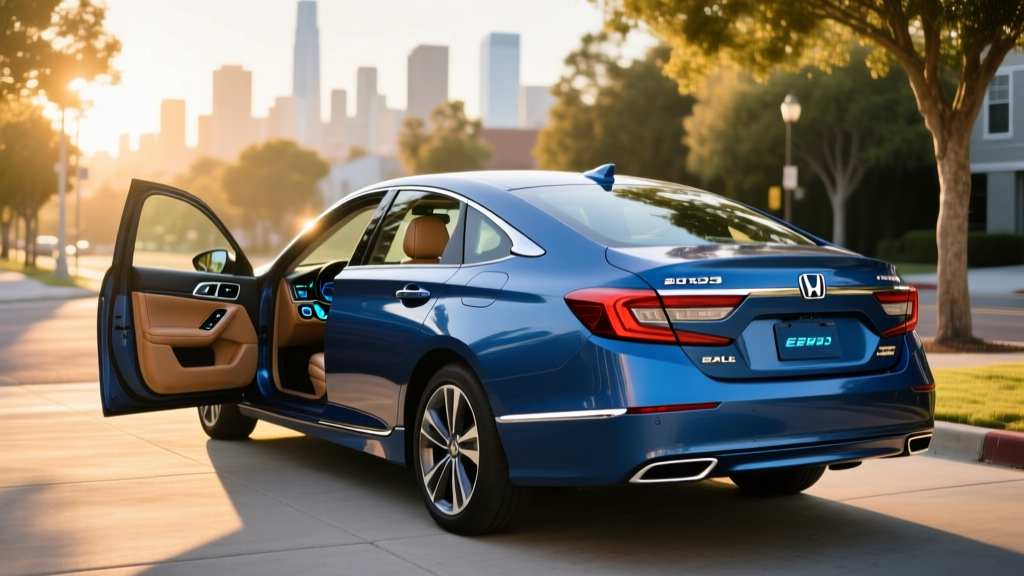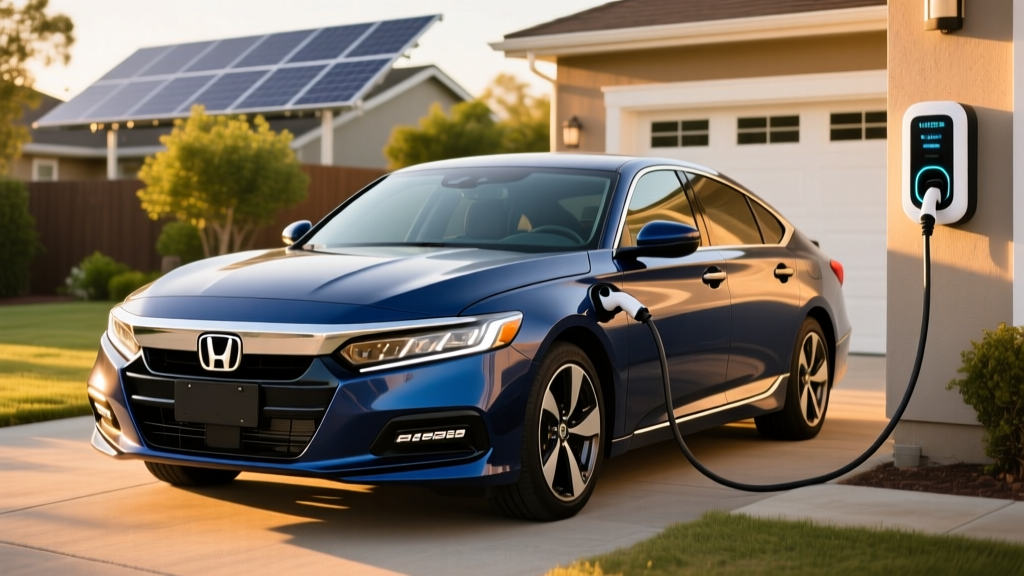
The midsize sedan segment has thinned out, but the Honda Accord Hybrid remains a benchmark for commuters who want electrified efficiency without plugging in. If you've been searching for Honda Accord Hybrid miles per gallon data, you've likely seen the EPA sticker numbers — but real-world fuel economy tells a more nuanced story depending on your driving mix, climate, and trim choice.
This guide breaks down the 2026 Accord Hybrid's fuel efficiency with exact figures, compares it against plug-in hybrid and full EV alternatives, and answers the ownership questions that matter most: battery longevity, warranty coverage, and total cost of operation.
EPA-Rated vs. Real-World Honda Accord Hybrid MPG
The 2026 Honda Accord Hybrid uses Honda's two-motor hybrid system across all hybrid trims (Sport, EX-L, Sport-L, and Touring). The EPA rates the Accord Hybrid identically regardless of trim, though wheel size can marginally affect real-world results.
| Driving Cycle | EPA Rating | Real-World Expectation |
|---|---|---|
| City | 51 MPG | 48–54 MPG |
| Highway | 44 MPG | 39–45 MPG |
| Combined | 48 MPG | 44–50 MPG |
The Accord Hybrid's city MPG exceeds its highway rating — a hallmark of series-parallel hybrid systems. In stop-and-go traffic, the electric motor handles low-speed propulsion while regenerative braking recovers energy that a gas-only car wastes as heat. On the highway, the 2.0-liter Atkinson-cycle engine operates more directly, and aerodynamic drag reduces the hybrid system's advantage.
What owners actually report: Drivers with predominantly urban commutes (under 45 mph average) routinely see 50–54 MPG. Highway-heavy drivers at 75+ mph should budget for 38–42 MPG. In cold weather (below 30°F), expect a 5–10% reduction due to increased engine runtime for cabin heat and battery conditioning. Source: fueleconomy.gov.
How the Accord Hybrid Powertrain Delivers That Efficiency
The 2026 Accord Hybrid pairs a 2.0-liter DOHC Atkinson-cycle four-cylinder engine with two electric motors in Honda's e-CVT configuration. There is no traditional belt-driven CVT or gear-based transmission — instead, the system uses a lock-up clutch for direct engine drive at highway speeds and electric-motor drive for most city conditions.
| Specification | Value |
|---|---|
| Engine | 2.0L Atkinson-cycle I-4 |
| Engine Output | 146 hp / 134 lb-ft torque |
| Drive Motor Output | 184 hp / 247 lb-ft torque |
| Combined System Output | 204 hp / 247 lb-ft torque |
| Transmission | e-CVT (direct-drive with lock-up clutch) |
| Drivetrain | Front-wheel drive |
| Hybrid Battery | ~1.1 kWh lithium-ion (non-plug-in HEV) |
| 0–60 mph | ~6.5 seconds (est.) |
| Curb Weight | ~3,477–3,570 lbs (varies by trim) |
The relatively small ~1.1 kWh traction battery is typical for conventional hybrids. It's not designed for electric-only driving beyond brief low-speed maneuvers — its job is to buffer energy between the engine, regenerative braking, and the drive motor. This is fundamentally different from a plug-in hybrid (PHEV) or battery-electric vehicle (BEV), which carry much larger batteries for sustained electric propulsion.
HEV vs. PHEV vs. EV: Which Powertrain Fits Your Life?
One of the most common questions from Accord Hybrid shoppers is whether they should consider a plug-in hybrid or full electric vehicle instead. Here's a clear framework:
| Factor | HEV (Accord Hybrid) | PHEV (e.g., Toyota Prius Prime) | BEV (e.g., Hyundai Ioniq 6) |
|---|---|---|---|
| Plug-in Required? | No — gas only | Optional (best with home charging) | Yes — mandatory |
| Electric-Only Range | ~1 mile at low speed | 35–45 miles typical | 250–360+ miles |
| Combined Efficiency | 48 MPG | 48–52 MPG (gas) / 120+ MPGe (electric) | 120–140 MPGe |
| Home Charging Needed? | No | Strongly recommended | Essential |
| Federal Tax Credit (§30D) | Not eligible | Up to $7,500 (if eligible) | Up to $7,500 (if eligible) |
| Best For | No home charging; long highway trips | Short commute + home charging + road trips | Home charging + daily driving under 300 mi |
Choose the Accord Hybrid (HEV) if: You lack access to home or workplace charging, you drive a mix of city and highway miles, you want zero behavior change from a gas car, and you prioritize a proven, simple powertrain.
Choose a PHEV if: You can charge at home, your daily commute is under 40 miles (running mostly on electricity), but you still want gas-engine flexibility for road trips without range anxiety.
Choose a full EV if: You have reliable home Level 2 charging, your typical trips fall within the vehicle's range, and you want the lowest per-mile fuel cost and minimal maintenance.
Honda Accord Hybrid Pricing and Tax Credit Eligibility
The 2026 Accord Hybrid is available in four trims. Pricing reflects Honda's MSRP before destination charges:
| Trim | MSRP (approx.) | Key Features |
|---|---|---|
| Sport Hybrid | ~$34,000 | 19" wheels, sport styling, heated front seats, Honda Sensing suite |
| EX-L Hybrid | ~$36,500 | Leather seats, power moonroof, wireless CarPlay/Android Auto |
| Sport-L Hybrid | ~$37,000 | Sport styling with leather, premium audio |
| Touring Hybrid | ~$39,500 | Navigation, Bose 12-speaker audio, ventilated front seats, heated rear seats, wireless charging |
Federal Tax Credit Status
The Honda Accord Hybrid is a conventional hybrid (HEV), not a plug-in hybrid. Under current IRS §30D rules, only plug-in electric vehicles (PHEVs and BEVs) with sufficient battery capacity qualify for the federal clean vehicle credit. The Accord Hybrid does not qualify for the $7,500 federal EV tax credit.
However, some states offer their own incentives for conventional hybrids — though these are increasingly rare as state programs shift focus to PHEVs and BEVs. Check your state's energy or environmental agency website for current programs. For federal rules, always consult the IRS clean vehicle credit page or a qualified tax professional.
Battery Warranty, Lifespan, and Replacement Cost
Hybrid battery longevity is consistently the top concern for buyers considering a used or new Accord Hybrid. Here's what the data shows:
Honda Hybrid Battery Warranty: 8 years / 100,000 miles (10 years / 150,000 miles in CARB states including California, New York, Massachusetts, and others adopting California emissions standards).
Warranty Coverage Threshold: Honda covers the hybrid battery if capacity drops below a defined threshold (typically ~70% state of charge capacity) during the warranty period.
In practice, Honda's hybrid battery packs have demonstrated strong longevity. The Accord Hybrid's ~1.1 kWh battery operates in a narrow state-of-charge window (roughly 40–80%), which dramatically reduces stress on the lithium-ion cells compared to a full EV that cycles between 10–90% daily. Many Accord Hybrids have exceeded 150,000–200,000 miles on the original hybrid battery with minimal degradation.
Battery Replacement Cost
If the hybrid battery does require replacement outside warranty:
- OEM replacement (dealer): $2,000–$4,000 (parts + labor)
- Refurbished/aftermarket: $1,000–$2,000
- Individual cell module replacement: $500–$1,500 (if only specific modules fail)
Compared to a full EV battery replacement ($10,000–$20,000+), the Accord Hybrid's small battery pack is relatively affordable to service. The smaller capacity also means less environmental impact at end-of-life.
Reliability Record and Safety Ratings
Honda's two-motor hybrid system has been in production since the early 2010s (across Accord, CR-V, and Civic lines), and its reliability track record is strong. The system eliminates several failure-prone components found in conventional gas cars: there's no traditional automatic transmission, no alternator, no starter motor, and brake pad life is extended significantly thanks to regenerative braking.
The 2026 Accord carries top safety credentials:
- NHTSA: 5-Star Overall Safety Rating (expected based on current-generation platform)
- IIHS: TOP SAFETY PICK+ (when equipped with qualifying headlights — check iihs.org for specific trim ratings)
- Honda Sensing: Standard across all trims — includes adaptive cruise control, lane-keeping assist, collision mitigation braking, road departure mitigation, and traffic sign recognition
These are SAE Level 1–2 driver-assistance features. The driver must remain fully engaged and attentive at all times — Honda Sensing is not autonomous or "self-driving."
Ownership Costs: Accord Hybrid vs. Gas Accord vs. EV
The Accord Hybrid carries roughly a $1,500–$2,000 premium over the gas-only Accord 1.5T turbo trims. Here's how the math works over five years at 15,000 miles/year (75,000 miles total):
| Vehicle | Combined MPG/MPGe | Est. 5-Year Fuel Cost |
|---|---|---|
| Accord 1.5T (gas) | 32 MPG combined | ~$8,200 |
| Accord Hybrid (HEV) | 48 MPG combined | ~$5,470 |
| Hyundai Ioniq 6 SE (BEV) | 140 MPGe combined | ~$3,200 (at $0.14/kWh avg.) |
The Accord Hybrid saves roughly $2,730 in fuel over five years compared to the gas Accord — enough to offset the hybrid premium and then some. A full EV saves more, but requires home charging infrastructure ($500–$2,000 for Level 2 installation) and a higher purchase price, though federal tax credits can narrow that gap significantly.
Insurance and Maintenance
Insurance premiums for the Accord Hybrid are typically comparable to the gas Accord — insurers don't penalize conventional hybrids the way they sometimes do EVs. Maintenance costs are actually lower than the gas model over time: regenerative braking extends pad life to 80,000+ miles in many cases, there's no transmission fluid to change, and the engine runs fewer total hours due to electric-only low-speed operation.
Pros and Cons: The Honest Verdict
Pros
- Class-leading 51 MPG city / 48 MPG combined
- No charging infrastructure needed — fill up at any gas station
- Strong reliability record with proven two-motor system
- Spacious midsize cabin with 16.7 cu-ft trunk (no battery intrusion)
- Generous hybrid battery warranty (8yr/100k or 10yr/150k CARB)
- Standard Honda Sensing ADAS across all trims
- Smooth, quiet electric-motor-driven city driving
Cons
- No federal tax credit eligibility (HEV, not PHEV/BEV)
- Highway MPG drops to 44 — less advantage on long road trips
- FWD only — no all-wheel-drive option (unlike Toyota Camry Hybrid AWD)
- Engine drone under hard acceleration (e-CVT characteristic)
- ~$1,500 premium over gas Accord trims
- Not eligible for HOV/carpool lane stickers in most states
Frequently Asked Questions
How many MPG does the Honda Accord Hybrid get?
The EPA rates the 2026 Honda Accord Hybrid at 51 MPG city, 44 MPG highway, and 48 MPG combined. Real-world results vary: urban drivers often see 50–54 MPG, while highway-heavy drivers at 75+ mph typically see 38–42 MPG.
Does the Honda Accord Hybrid need to be plugged in?
No. The Accord Hybrid is a conventional hybrid (HEV). It charges its small battery pack entirely through the gasoline engine and regenerative braking. You never plug it in — you simply refuel at any gas station as you would with a traditional car.
Is the Accord Hybrid available as a plug-in hybrid (PHEV)?
Not in the United States. Honda previously offered an Accord Plug-In Hybrid (2014 model year only), but the current generation is available only as a conventional HEV. If you need plug-in capability in a Honda, the closest option is the Honda Clarity PHEV (discontinued after 2022) or consider competitors like the Toyota Prius Prime.
How long will the Accord Hybrid battery last?
Honda warranties the hybrid battery for 8 years/100,000 miles (10 years/150,000 miles in CARB states). Real-world data from Honda's two-motor system shows many batteries lasting 150,000–200,000+ miles with minimal degradation, thanks to the narrow state-of-charge operating window.
What does it cost to replace the Accord Hybrid battery?
Dealer OEM replacement runs $2,000–$4,000 including labor. Refurbished packs are available for $1,000–$2,000, and individual cell module replacement can cost as little as $500–$1,500 if only specific modules fail.
Does the Honda Accord Hybrid qualify for any tax credit?
No. Under current IRS §30D rules, only plug-in electric vehicles (PHEVs and BEVs) qualify for the federal clean vehicle tax credit. The Accord Hybrid, as a conventional HEV, is not eligible. Some states may offer small incentives for hybrids, but these are increasingly rare.
How does the Accord Hybrid compare to the Toyota Camry Hybrid?
The Camry Hybrid (now on the redesigned 2025+ platform) offers similar combined MPG (~50–52 combined depending on trim) and is available with all-wheel drive — something the Accord Hybrid does not offer. The Accord Hybrid counters with a more refined ride, larger trunk, and Honda's strong safety suite. Both are excellent choices; AWD needs may tip the scale to Toyota.
Is the Accord Hybrid good for highway road trips?
It's competent, but the hybrid advantage shrinks at sustained highway speeds. Expect 39–44 MPG on the highway depending on speed and terrain — still better than a gas-only midsize sedan, but the gap narrows compared to city driving. The 12.8-gallon fuel tank gives roughly 550–600 miles of highway range between fill-ups.
Sources: EPA fuel economy data via fueleconomy.gov, Honda Automobiles official specifications, IRS clean vehicle credit guidance at irs.gov. All MPG figures are EPA estimates unless noted; real-world results vary by driving conditions, climate, and vehicle maintenance. Pricing reflects approximate MSRP and is subject to change; verify with your local dealer.