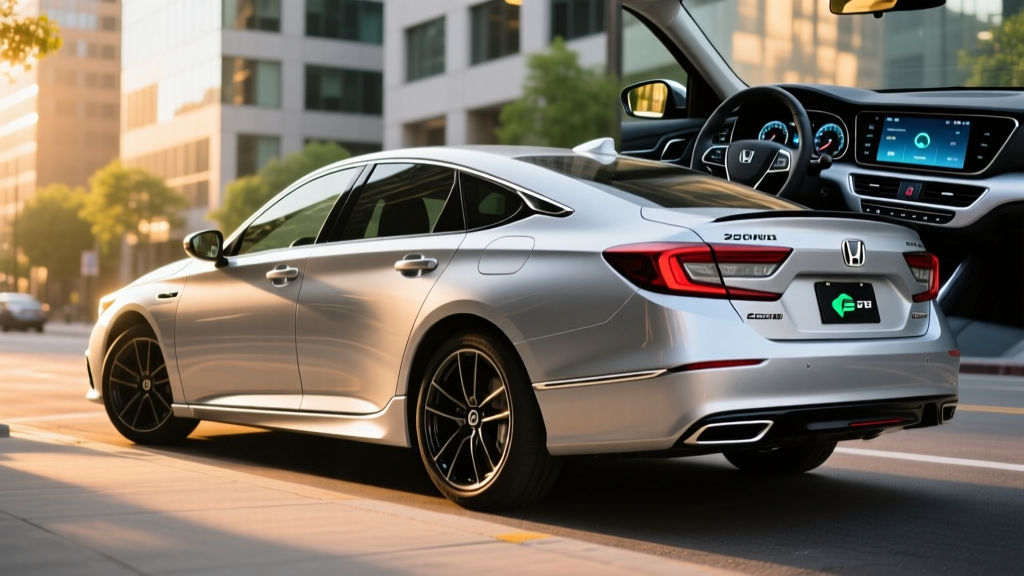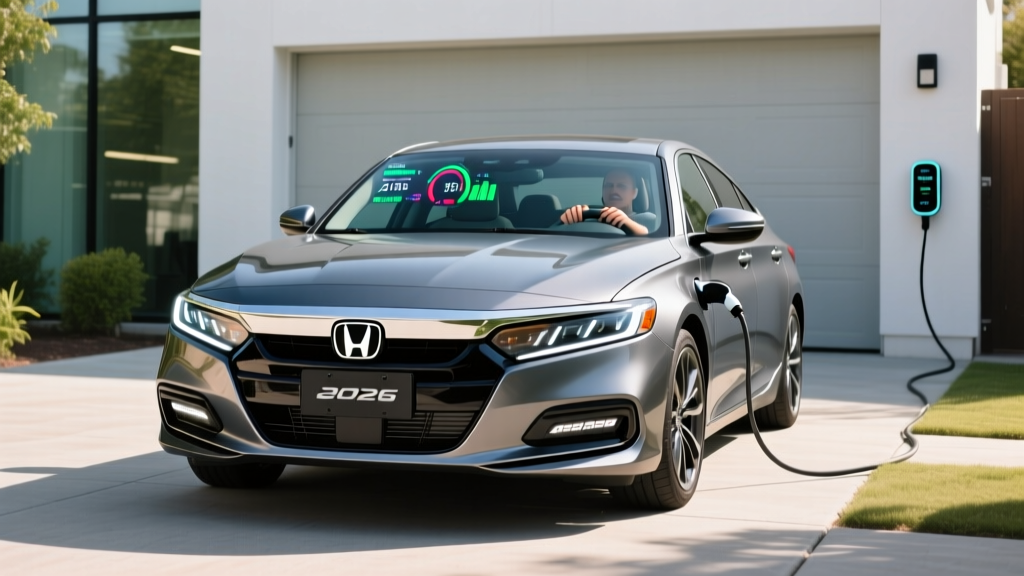
The Honda Accord Hybrid has anchored the midsize sedan segment for over two decades, and the current generation continues to prove that you don't need a plug to slash fuel consumption. For buyers weighing a conventional hybrid against a plug-in hybrid or full battery-electric vehicle, the Accord Hybrid occupies a specific and compelling niche: no charging infrastructure required, no range anxiety, and fuel economy that routinely beats its EPA sticker in real-world city driving.
This guide breaks down everything you need to know about the 2026 Honda Accord Hybrid — from its two-motor powertrain and exact EPA figures to battery longevity, ownership costs, and how it stacks up against PHEV and EV alternatives.
HEV vs. PHEV: Where the Accord Hybrid Fits
Before examining specs, it's essential to understand what the Accord Hybrid is — and what it isn't. The Accord uses a conventional hybrid (HEV) powertrain. Honda does not currently offer a plug-in hybrid (PHEV) version of the Accord in the U.S. market.
Conventional Hybrid (HEV) vs. Plug-In Hybrid (PHEV)
| Feature | HEV (Accord Hybrid) | PHEV (e.g., Toyota Prius Prime) |
|---|---|---|
| Plugs in to charge? | No — charges via engine and regenerative braking | Yes — requires Level 1 or Level 2 outlet |
| Electric-only range | ~1 mile at very low speed | 25–45 miles typical |
| Battery size | ~1.06 kWh (small buffer) | 13–18 kWh |
| Federal tax credit (§30D) | Not eligible | Up to $7,500 if eligible |
| Best for | No home charging access; long highway commutes | Home charging + short daily commutes |
The Accord Hybrid recovers energy through regenerative braking and the gasoline engine — you never plug it in.
EPA Fuel Economy and Real-World MPG
Fuel economy is the Accord Hybrid's headline feature. Here are the official EPA estimates for the 2026 model year across available trims, per fueleconomy.gov:
| Trim | City MPG | Highway MPG | Combined MPG | Annual Fuel Cost* |
|---|---|---|---|---|
| Sport / Sport-L | 46 | 41 | 44 | $1,350 |
| EX-L | 51 | 44 | 48 | $1,250 |
| Touring | 46 | 41 | 44 | $1,350 |
*Based on 15,000 miles/year, 55% city / 45% highway, and $3.50/gallon regular unleaded. Your costs will vary with local fuel prices.
Why do the Sport and Touring trims get lower MPG than the EX-L? The Sport, Sport-L, and Touring trims ride on larger 19-inch wheels and carry slightly more weight from additional equipment. The EX-L's 17-inch wheels and lighter curb weight let it achieve the highest combined rating of 48 MPG.
Real-World MPG: Expect to Match or Beat the EPA
Real-world insight: Honda's two-motor hybrid system excels in stop-and-go city traffic, where the electric motor handles most low-speed propulsion. Many owners report city MPG readings of 48–55 MPG on the EX-L in warm weather with moderate driving. Highway cruising at 75+ MPH tends to pull numbers down to the 38–42 MPG range because the gasoline engine must work harder at sustained speeds. In mixed driving, expect 42–50 MPG real-world on the EX-L and 39–46 MPG on Sport/Touring trims.
Cold weather (below 35°F) reduces fuel economy by roughly 5–10% as the engine runs more frequently to heat the cabin and maintain battery temperature.
Powertrain: Two-Motor Hybrid System Explained
The Accord Hybrid uses Honda's fourth-generation two-motor hybrid system, a series-parallel architecture that differs fundamentally from traditional hybrid setups like Toyota's planetary-gear design.
| Specification | 2026 Honda Accord Hybrid |
|---|---|
| Engine | 2.0L DOHC 4-cylinder Atkinson cycle |
| Engine output | 146 hp @ 6,100 rpm / 134 lb-ft torque |
| Drive motor | 181 hp / 247 lb-ft torque |
| Combined system output | 204 hp / 247 lb-ft torque |
| Hybrid battery | ~1.06 kWh lithium-ion (NMC chemistry) |
| Transmission | e-CVT (no fixed gears; direct clutch at highway speed) |
| 0–60 mph | ~7.5 seconds |
| Drivetrain | Front-wheel drive |
| Fuel type | Regular unleaded (87 octane) |
How it works in practice: At low speeds and during acceleration, the gasoline engine acts primarily as a generator, powering the electric drive motor rather than turning the wheels directly. This gives the Accord Hybrid the smooth, linear acceleration feel of an EV around town. At sustained highway speeds (roughly 55–80 MPH), a lock-up clutch connects the engine directly to the wheels for maximum efficiency — bypassing the generator-conversion step.
The result is a sedan that feels responsive off the line (247 lb-ft of torque is available nearly instantly from the electric motor) while still delivering outstanding highway economy. The 204 combined horsepower is adequate for confident merging and passing, though it won't satisfy enthusiasts seeking sport-sedan thrills.
Battery Warranty, Longevity, and Replacement Cost
Hybrid battery anxiety is the most common concern among first-time hybrid buyers. Here's what the data shows:
Honda Hybrid Battery Warranty
- Coverage: 8 years / 100,000 miles (10 years / 150,000 miles in CARB states including California, New York, Massachusetts, and others adopting California emissions standards)
- What's covered: Battery capacity loss below functional threshold, cell failure, and hybrid system components including the inverter and drive motor
- Replacement cost (out of warranty): Approximately $2,000–$4,000 for the hybrid battery pack, plus $500–$800 in labor — significantly less than a full EV battery replacement
Longevity reality: The Accord Hybrid's battery pack is small (~1.06 kWh) and operates within a narrow state-of-charge window — typically between 40% and 80% — which dramatically reduces stress on the cells. Honda's hybrid batteries routinely last 150,000–200,000+ miles before significant degradation. Third-party fleet data and owner reports from earlier-generation Accord Hybrids (2014–2022) show battery replacement rates well below 5% within the first 10 years of ownership.
The small battery size is also an economic advantage: even if you do need a replacement after the warranty expires, you're looking at a fraction of the $10,000–$20,000+ cost associated with a full EV battery swap. Many independent hybrid shops now offer refurbished battery packs for $1,200–$2,000 as an alternative to OEM new units.
Pricing, Trims, and Tax Credit Eligibility
| 2026 Accord Hybrid Trim | MSRP (incl. destination) | Key Features |
|---|---|---|
| Sport | ~$34,995 | 19" wheels, sport-tuned suspension, wireless Apple CarPlay/Android Auto |
| Sport-L | ~$36,495 | Leather-trimmed seats, heated front seats, power moonroof |
| EX-L | ~$37,295 | 17" wheels (best MPG), leather, heated rear seats, 10-speaker audio |
| Touring | ~$40,895 | Adaptive dampers, ventilated front seats, wireless charging, HUD, Wi-Fi hotspot |
Does the Accord Hybrid Qualify for a Federal Tax Credit?
No. The federal IRS §30D New Clean Vehicle Credit applies exclusively to battery-electric vehicles (BEVs) and plug-in hybrids (PHEVs) with a minimum battery capacity of 7 kWh. The Accord Hybrid's ~1.06 kWh battery and conventional HEV architecture make it ineligible for the federal credit.
Some states and municipalities offer modest incentives for conventional hybrids — typically $250–$500 rebates or reduced registration fees — but these vary widely by jurisdiction. Check your state's energy office or AFDC incentive database for current local programs.
Total cost perspective: Even without a tax credit, the Accord Hybrid's fuel savings are substantial. At 48 MPG combined versus a comparable gas-only midsize sedan at 30 MPG combined, a driver covering 15,000 miles per year saves approximately $730 annually on fuel (at $3.50/gallon). Over a 5-year ownership period, that's roughly $3,650 in fuel savings — which largely offsets the hybrid's modest price premium over a gas equivalent.
Accord Hybrid vs. PHEV vs. Full EV: Which Is Right for You?
Choose the Accord Hybrid (HEV) if:
- You don't have access to home or workplace charging
- Your commute includes frequent long highway stretches (100+ miles)
- You want zero behavior change — just fill up and drive
- You live in an apartment or street-park with no outlet access
- Budget is a priority and you want a proven, low-risk powertrain
Choose a PHEV (e.g., Toyota Prius Prime, Hyundai Tucson PHEV) if:
- You have reliable Level 2 home charging
- Your daily commute is under 40 miles round-trip (you'll rarely use gas)
- You want to qualify for the up-to-$7,500 federal tax credit
- You take occasional long road trips and want gas-engine flexibility
Choose a full BEV (e.g., Tesla Model 3, Hyundai Ioniq 6) if:
- You have home charging and your daily driving is under 250 miles
- You want the lowest per-mile energy cost (~$0.04–$0.06/mile on home electricity)
- You want maximum federal and state incentives
- You're comfortable planning around DC fast-charging on road trips
Pros and Cons
Pros
- 48 MPG combined (EX-L) beats most midsize competitors
- No plug-in charging required — zero lifestyle change
- Strong 247 lb-ft electric torque for responsive city driving
- Honda Sensing safety suite standard on all trims
- Spacious cabin with 16.7 cu-ft trunk (hybrid battery under rear seats, not in trunk)
- 8-year/100,000-mile hybrid warranty (10yr/150k in CARB states)
- Runs on inexpensive 87-octane regular fuel
Cons
- No PHEV variant available — can't drive on electric-only for commutes
- Not eligible for the $7,500 federal EV tax credit
- Sport/Touring trims drop to 44 MPG combined (19" wheels)
- Engine drone noticeable under hard acceleration (e-CVT characteristic)
- No all-wheel-drive option (FWD only)
- ~$1,500 price premium over comparable gas Accord trims
Frequently Asked Questions
How many MPG does the Honda Accord Hybrid get?
The 2026 Accord Hybrid EX-L achieves an EPA-estimated 51 city / 44 highway / 48 combined MPG. Sport and Touring trims are rated at 46 city / 41 highway / 44 combined due to larger wheels and additional weight. In real-world city driving, many owners exceed the EPA city figure, while highway driving at 75+ MPH typically yields 38–42 MPG.
Does the Honda Accord Hybrid need to be plugged in?
No. The Accord Hybrid is a conventional hybrid (HEV). Its small lithium-ion battery charges entirely through regenerative braking and the gasoline engine. You never plug it in — you simply refuel at any gas station with regular 87-octane fuel.
Is there a plug-in hybrid (PHEV) version of the Honda Accord?
As of the 2026 model year, Honda does not offer a PHEV Accord in the United States. If you need plug-in electric-only range for short commutes, consider the Toyota Prius Prime (44 miles EV range) or look at Honda's CR-V-based offerings in the SUV segment.
How long will the Accord Hybrid battery last?
Honda's hybrid battery packs are designed to last the life of the vehicle. Real-world data from previous-generation Accord Hybrids shows most batteries lasting 150,000–200,000+ miles without significant degradation. The battery is covered by an 8-year/100,000-mile warranty (10 years/150,000 miles in CARB states). Out-of-warranty replacement costs approximately $2,000–$4,000.
Is the Honda Accord Hybrid reliable?
Yes. The Accord Hybrid's two-motor system has fewer moving parts than a traditional automatic transmission — there's no torque converter, no multi-speed gearbox, and no conventional starter motor. Honda's hybrid system has been in production since 2014 with strong reliability records. The Accord consistently earns top marks from IIHS and high reliability ratings from long-term owner surveys.
Does the Accord Hybrid qualify for any tax credit?
The Accord Hybrid does not qualify for the federal §30D New Clean Vehicle Credit, which requires a minimum 7 kWh battery and plug-in capability. Some states offer small hybrid rebates ($250–$500). Check your state's energy office for current programs.
How does the Accord Hybrid compare to the Toyota Camry Hybrid?
The Camry Hybrid (51 combined MPG on the LE trim) matches the Accord Hybrid EX-L on fuel economy. The Accord offers more rear legroom (40.8" vs. 38.0"), a larger trunk, and a more responsive torque feel from its larger drive motor. The Camry Hybrid is available with all-wheel drive — the Accord is FWD only. Both are excellent choices; the decision often comes down to driving dynamics preference and interior space needs.