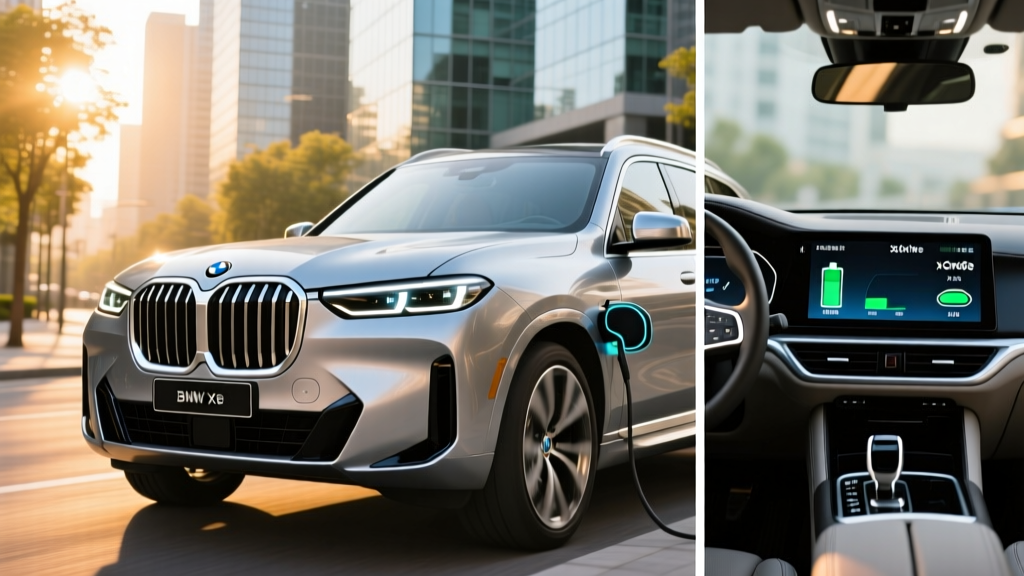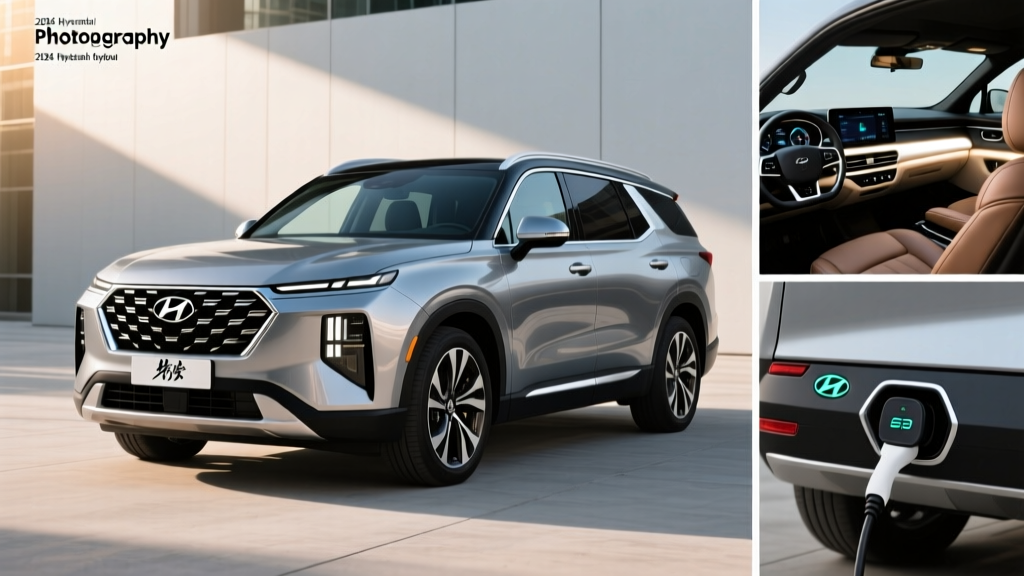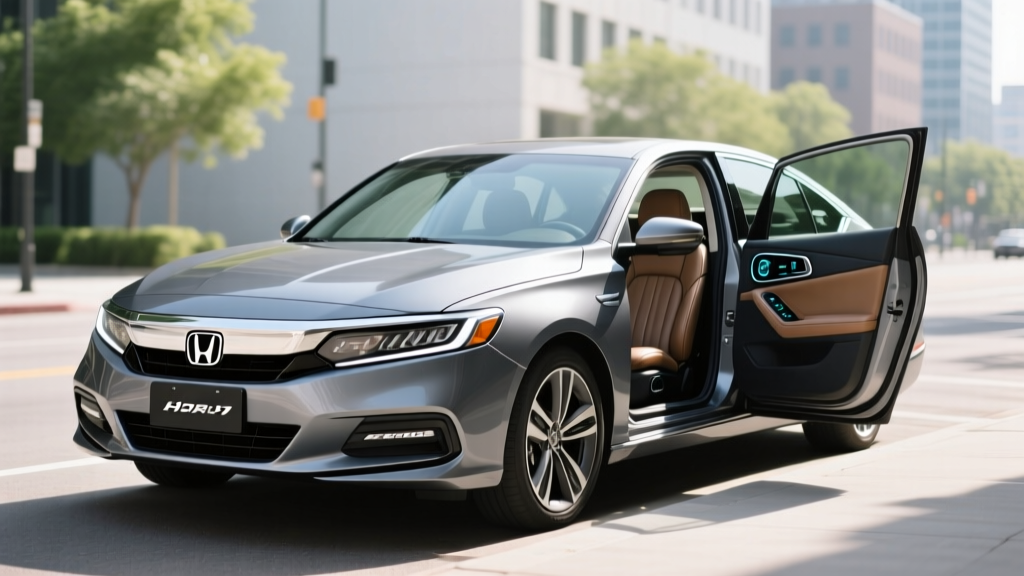
The 2017 Honda Accord Hybrid occupies a specific and increasingly relevant niche in 2026: a midsize sedan that delivers near-50 MPG without a plug, a charging port, or any lifestyle adjustment. As EV charging infrastructure continues to expand unevenly across the country and new EV prices hover well above $40,000, the used hybrid market has become a practical landing zone for drivers who want electrified efficiency without range anxiety or home-charging logistics.
This guide examines the 2017 Accord Hybrid's powertrain, real-world fuel economy, battery longevity, ownership costs, and how it stacks up against modern PHEVs and EVs nearly a decade after it rolled off the assembly line.
HEV vs. PHEV: Where the 2017 Accord Hybrid Fits
Before diving into specs, it's critical to distinguish what this car is — and what it isn't. The 2017 Honda Accord Hybrid is a conventional hybrid electric vehicle (HEV). It has no plug, no charging port, and no electric-only driving mode of meaningful distance. It recovers energy through regenerative braking and its gasoline engine, storing it in a small lithium-ion battery that assists the electric drive motors. You fuel it like any other car.
| Feature | HEV (2017 Accord Hybrid) | PHEV (e.g., Toyota Prius Prime) | BEV (e.g., Tesla Model 3) |
|---|---|---|---|
| Plug-in charging | No | Yes | Yes |
| Electric-only range | ~1 mile at low speed | 25–45 miles | 250–360+ miles |
| Fuel source | Gasoline only | Gasoline + electricity | Electricity only |
| Battery size | 1.3 kWh | 13–18 kWh | 50–82+ kWh |
| Home charging needed | No | Recommended | Required |
| Federal tax credit (new) | None | Up to $7,500 (§30D) | Up to $7,500 (§30D) |
This distinction matters because buyers sometimes confuse "hybrid" with "plug-in hybrid." The 2017 Accord Hybrid will never appear at a charging station. Its efficiency comes entirely from its two-motor hybrid system working in concert with a 2.0-liter Atkinson-cycle engine.
Powertrain and Performance Specs
The 2017 Accord Hybrid uses Honda's two-motor i-MMD (Intelligent Multi-Mode Drive) system, which operates differently from the planetary-gear hybrid systems found in Toyota models. Rather than blending engine and motor power through a traditional transmission, the Accord Hybrid drives primarily via its electric traction motors for most driving scenarios, with the gasoline engine acting as a generator. At highway speeds, a clutch engages to connect the engine directly to the wheels.
| Specification | Value |
|---|---|
| Engine | 2.0L Atkinson-cycle 4-cylinder |
| Engine output | 143 hp / 129 lb-ft torque |
| Electric motors | Dual-motor (one drive, one generator) |
| Motor output | 184 hp / 232 lb-ft torque |
| Combined system output | 212 hp |
| Hybrid battery | 1.3 kWh lithium-ion |
| Transmission | Direct-drive (no traditional CVT/gears) |
| 0–60 mph | ~7.1 seconds |
| Drivetrain | Front-wheel drive |
| Curb weight | ~3,505 lbs |
The 212 combined horsepower made the 2017 Accord Hybrid one of the quickest midsize hybrids of its era, and the torque delivery from the electric motors gives it responsive off-the-line acceleration that feels more immediate than its gasoline-only sibling. The absence of a conventional transmission also means smoother, quieter power delivery with none of the rubber-band effect associated with older CVTs.
Fuel Economy: EPA Ratings and Real-World MPG
The 2017 Accord Hybrid's headline number is its EPA-rated fuel economy, which remains competitive with hybrids released years later.
| Driving Cycle | EPA Rating |
|---|---|
| City | 49 MPG |
| Highway | 47 MPG |
| Combined | 48 MPG |
Source: EPA Fuel Economy
Real-World MPG Expectations
Hybrids frequently exceed their EPA city ratings in stop-and-go driving because regenerative braking recovers energy that would otherwise be lost. However, highway driving at sustained speeds above 70 mph tends to reduce efficiency, as the engine must work harder without the assist of frequent braking cycles.
- City / suburban driving: Expect 46–52 MPG. Many owners report regularly hitting or slightly exceeding the 49 MPG city rating in moderate-temperature conditions with mixed stop-and-go traffic.
- Highway cruising (65–70 mph): Expect 42–46 MPG. The engine engages directly at highway speeds, and aerodynamic drag limits electric-motor assistance.
- Highway cruising (75–80 mph): Expect 38–42 MPG. Efficiency drops noticeably at higher speeds.
- Cold weather (below 30°F): Expect 38–44 MPG combined. The engine runs more frequently to provide cabin heat and maintain battery temperature, reducing time spent in EV mode.
For a nine-year-old hybrid, these numbers remain impressive. The 2026 Toyota Camry Hybrid achieves 52 MPG combined — a modest improvement that underscores how well Honda engineered the 2017 system.
Battery Longevity, Warranty, and Replacement Cost
Hybrid battery degradation is the single largest concern for used-hybrid buyers, and it deserves a direct, data-driven answer.
2017 Accord Hybrid Battery Warranty (Original)
- Hybrid battery warranty: 8 years / 80,000 miles (10 years / 150,000 miles in CARB states including CA, CT, ME, MA, NJ, NY, OR, RI, VT, WA)
- Capacity retention threshold: Honda warranted against failure or significant capacity loss, though no specific percentage threshold was published (unlike EV warranties that guarantee 70% SoH).
- Powertrain warranty: 5 years / 60,000 miles
What Happens at 9 Years Old?
By 2026, a 2017 Accord Hybrid is outside its standard 8-year hybrid battery warranty in most states. The lithium-ion pack in this model is relatively small (1.3 kWh) and is managed conservatively by Honda's battery management system — it never charges to 100% or discharges to 0%, which significantly reduces degradation stress.
Based on long-term owner reports and industry data from hybrid fleet studies:
- Typical degradation at 8–10 years: 10–20% capacity loss, which translates to a modest 2–4 MPG reduction rather than catastrophic failure.
- Full battery failure rate: Low but non-zero. Honda's i-MMD system has proven more reliable than some earlier hybrid architectures, but isolated failures do occur, particularly in hot climates where thermal stress accelerates cell aging.
- Replacement cost: A new OEM hybrid battery from Honda runs approximately $2,000–$3,000 installed at a dealership. Independent hybrid shops and refurbished battery options can reduce this to $1,200–$2,000.
- Cell-level repair: Some specialists can replace individual degraded cells within the pack for $500–$1,000, though this is less common and availability varies by region.
For context, this replacement cost is dramatically lower than an EV traction battery replacement ($5,000–$20,000+), because the hybrid battery stores roughly 1/50th the energy of a typical EV pack.
Pricing and Tax Credit Eligibility in 2026
The 2017 Honda Accord Hybrid was originally sold in three trims: Hybrid, Hybrid EX-L, and Hybrid Touring, with MSRPs ranging from approximately $29,605 to $35,955.
In the 2026 used market, pricing varies significantly by mileage, condition, and region:
- Hybrid (base): $11,000–$14,000 (80,000–120,000 miles)
- Hybrid EX-L: $13,000–$16,500 (70,000–110,000 miles)
- Hybrid Touring: $15,000–$19,000 (60,000–100,000 miles)
Federal Tax Credit
The 2017 Accord Hybrid does not qualify for the federal §30D new clean vehicle credit, as it was never eligible when new (conventional HEVs have never qualified for §30D — only PHEVs and BEVs with sufficient battery capacity). On the used market, the IRS Used Clean Vehicle Credit (§25E) offers up to $4,000, but it applies only to qualified plug-in EVs and fuel-cell vehicles — not conventional hybrids. The 2017 Accord Hybrid is ineligible.
No state-level incentives specifically target used conventional hybrids either. This vehicle must be purchased at full market price without incentive offsets.
Reliability and Ownership Costs
Honda's hybrid powertrain in this generation has demonstrated strong reliability, though a few known issues are worth flagging for used buyers:
- Hybrid system: The i-MMD two-motor system has proven durable. The inverter and power control unit are generally reliable, and the electric motors have no wear components like brushes.
- 12V auxiliary battery: Like all hybrids and EVs, the Accord Hybrid has a standard 12V battery that powers electronics. These typically need replacement every 4–5 years ($150–$250).
- Brake wear: Regenerative braking significantly reduces pad and rotor wear. Many owners report original brake pads lasting 80,000–100,000 miles.
- Transmission: There is no traditional transmission — just a direct-drive clutch and the motor-generator assembly. This eliminates one of the most expensive failure points in conventional vehicles.
- Known concerns: Some owners report occasional hybrid system warning lights related to battery temperature sensors or inverter cooling. These are typically diagnostic rather than catastrophic and can be addressed for $200–$600.
Insurance costs for the 2017 Accord Hybrid are moderate and comparable to the gasoline Accord. Annual premiums typically range from $1,100–$1,600 depending on driver profile and state.
2017 Accord Hybrid vs. Modern Alternatives
Nine years of hybrid and EV development have shifted the landscape. Here's how the 2017 Accord Hybrid compares to what you'd buy new or used today:
Pros: 2017 Accord Hybrid
- 48 MPG combined still competitive in 2026
- No plug required — zero lifestyle change from a gas car
- Low purchase price ($11K–$19K used)
- No range anxiety, no charging logistics
- Spacious midsize sedan with large trunk (13.5 cu ft)
- Smooth, responsive electric-motor-driven acceleration
- Low brake wear from regenerative braking
Cons: 2017 Accord Hybrid
- No tax credits or incentives available
- Out of original hybrid battery warranty (most owners)
- Older infotainment — no wireless CarPlay, dated interface
- No modern ADAS suite (Honda Sensing was standard but less refined than 2026 systems)
- Cannot drive on electric power alone at meaningful speed/distance
- Higher fuel cost per mile vs. a PHEV or EV with home charging
Who Should Choose This Hybrid vs. a PHEV or EV?
Choose the 2017 Accord Hybrid if:
- You don't have access to home or workplace charging
- Your budget is under $20,000 and you want maximum MPG
- You drive 12,000–20,000 miles/year and want fuel savings without complexity
- You live in an apartment or street-park and cannot install a charger
- You want a proven, low-risk used vehicle with strong reliability data
Choose a PHEV (e.g., used Prius Prime, RAV4 Prime) if:
- You can charge at home (even a standard 120V outlet works for PHEVs)
- Your daily commute is under 30 miles and you want electric-only driving for most trips
- You want to reduce gasoline consumption by 60–80% without full EV commitment
Choose a BEV (e.g., used Model 3, Bolt EV) if:
- You have reliable Level 2 home charging
- You want zero tailpipe emissions and the lowest per-mile fuel cost
- You're eligible for the IRS §25E used EV credit (up to $4,000 on qualifying used EVs under $25,000)
- You're comfortable with public DC fast charging for road trips
Frequently Asked Questions
How many MPG does the 2017 Honda Accord Hybrid get?
The EPA rates the 2017 Accord Hybrid at 49 MPG city, 47 MPG highway, and 48 MPG combined. In real-world driving, city and suburban drivers frequently match or slightly exceed these numbers, while sustained highway driving above 70 mph typically yields 38–44 MPG.
Does the 2017 Accord Hybrid need to be plugged in?
No. The 2017 Accord Hybrid is a conventional hybrid (HEV) with no charging port. It generates all its electrical energy internally through regenerative braking and its gasoline engine. You fuel it exclusively with gasoline.
Is the 2017 Accord Hybrid reliable, and what does a battery replacement cost?
The i-MMD hybrid system has demonstrated strong long-term reliability. Hybrid battery degradation at 9 years old typically amounts to 10–20% capacity loss, causing a minor MPG reduction rather than failure. A full OEM battery replacement costs $2,000–$3,000 at a dealership, or $1,200–$2,000 through an independent hybrid specialist.
Does the 2017 Honda Accord Hybrid qualify for any tax credit?
No. Conventional hybrids have never qualified for the federal §30D clean vehicle credit, and the IRS §25E used clean vehicle credit applies only to plug-in electric vehicles and fuel-cell vehicles. No federal or state incentives are available for this vehicle in 2026.
How does the 2017 Accord Hybrid compare to a modern PHEV or EV?
The 2017 Accord Hybrid offers lower upfront cost ($11K–$19K used) and zero charging requirements, making it ideal for buyers without home charging access. However, a PHEV or EV with home charging will deliver significantly lower per-mile fuel costs (electricity at ~$0.04–$0.06/mile vs. gasoline at ~$0.10–$0.14/mile at 48 MPG). PHEVs and EVs also qualify for used-vehicle tax credits that the Accord Hybrid does not.
What is the total range of the 2017 Accord Hybrid?
With its 14.8-gallon fuel tank and 48 MPG combined rating, the 2017 Accord Hybrid delivers approximately 710 miles of total range on a full tank — one of the longest ranges of any vehicle in its class, and far exceeding the range of most EVs on a single charge.
Should I be concerned about buying a 9-year-old hybrid?
The primary risk is hybrid battery degradation, which is gradual rather than sudden. Have the battery's state of health (SoH) evaluated by a Honda dealer or hybrid specialist before purchase. A pre-purchase inspection ($100–$200) should include a hybrid system diagnostic. If the battery shows significant degradation, factor $1,500–$3,000 into your budget for eventual replacement.
Final Verdict
The 2017 Honda Accord Hybrid remains one of the most efficient, practical, and under-the-radar values in the used-car market in 2026. At $11,000–$19,000, it delivers fuel economy that still competes with brand-new hybrids, a spacious and comfortable cabin, and the simplicity of never needing a plug. Its main trade-offs are the absence of any tax incentive, aging tech features, and the reality that its hybrid battery warranty has likely expired.
For drivers without home charging access, or those who want maximum miles-per-dollar without the commitment of a plug-in vehicle, the 2017 Accord Hybrid is a data-backed, financially sound choice. Just budget for a pre-purchase hybrid diagnostic and keep a $2,000–$3,000 reserve for eventual battery service, and this sedan will deliver reliable, efficient transportation for years to come.