Quick Verdict: The 2021 Accord Hybrid Remains a Smart Used Buy
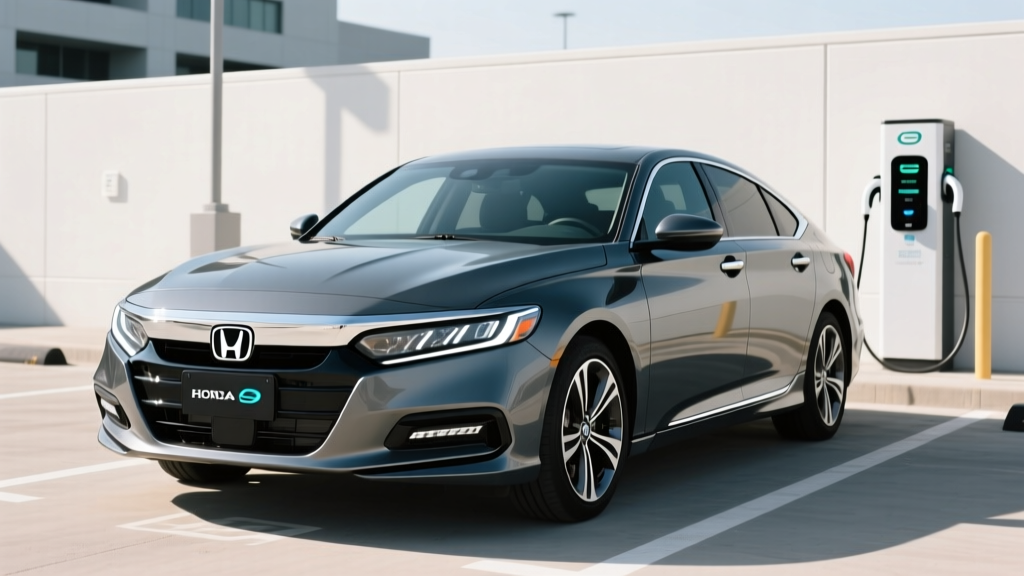
The 2021 Honda Accord Hybrid occupies a specific niche that still matters in 2026: a midsize sedan that delivers exceptional fuel economy without requiring a plug, a charging routine, or any lifestyle adjustment. With an EPA rating of 48 MPG combined, a 212-horsepower two-motor hybrid powertrain, and Honda's proven reliability record, it remains one of the strongest used hybrid sedans on the market.
But the 2021 Accord Hybrid is a conventional hybrid (HEV), not a plug-in hybrid (PHEV). That distinction matters for buyers weighing whether they want electric-only driving range, federal tax credits, or simply a car that sips fuel and never needs to be plugged in. This guide breaks down exactly what the 2021 Accord Hybrid delivers — and where a PHEV or full EV might serve you better.
HEV vs PHEV: What the 2021 Accord Hybrid Actually Is
Honda has never offered the Accord as a plug-in hybrid in the US market. The 2021 Accord Hybrid is a conventional hybrid electric vehicle (HEV) — meaning it pairs a gasoline engine with electric motors and a small battery that recharges through regenerative braking and the engine. You never plug it in. There is no electric-only driving range to manage.
HEV vs PHEV vs EV at a Glance
| Feature | HEV (2021 Accord Hybrid) | PHEV (e.g., Toyota RAV4 Prime) | BEV (e.g., Tesla Model 3) |
|---|---|---|---|
| Plugs in? | No | Yes | Yes |
| Electric-only range | 0 miles (EV mode at low speed only) | 25–42 miles typical | 250–350+ miles |
| Battery size | ~1.3 kWh (small buffer) | 13–18 kWh usable | 50–82 kWh usable |
| Federal tax credit (§30D) | Not eligible | Up to $7,500 (if eligible, new only) | Up to $7,500 (if eligible) |
| Used EV credit (§25E) | Not eligible | Up to $4,000 (if eligible) | Up to $4,000 (if eligible) |
| Fuel/energy cost | Gas only (~$0.08/mi) | Gas + electricity | Electricity only (~$0.04/mi) |
The Accord Hybrid's small battery — roughly 1.3 kWh — exists solely to buffer energy between the engine, motors, and wheels. It enables brief electric-only propulsion at very low speeds (parking lots, stop-and-go creep) but cannot sustain highway driving on electricity alone. If you need meaningful electric-only range for a short commute, you'll need to look at a PHEV like the Toyota RAV4 Prime or a full EV.
Fuel Economy: EPA Ratings and Real-World MPG
The 2021 Honda Accord Hybrid's headline number is its EPA fuel economy rating, which varies slightly by trim due to wheel size:
| Trim | City MPG | Highway MPG | Combined MPG |
|---|---|---|---|
| Hybrid / Hybrid EX | 48 | 47 | 48 |
| Hybrid EX-L / Touring (19" wheels) | 44 | 41 | 43 |
Source: EPA Fuel Economy
Real-World MPG: What Owners Actually See
Honda's hybrid system excels in city driving, where regenerative braking recaptures energy at every stop and the electric motors handle low-speed propulsion. Many owners report exceeding the EPA city rating in moderate-temperature urban driving — 50–55 MPG is common on suburban routes with frequent stops.
Highway driving tells a different story. At sustained 70–80 MPH speeds, the gasoline engine does most of the work, and aerodynamic drag dominates. Expect 40–44 MPG on the highway in real-world conditions, slightly below the EPA highway estimate. Cold weather (below 35°F) further reduces efficiency by 10–15% as the engine runs more frequently for cabin heat and battery conditioning.
For context, a 15-gallon fill-up at 48 MPG combined yields roughly 720 miles of range — enough for most drivers to visit a gas station once every two to three weeks.
Powertrain Specs: 212 HP from a Two-Motor System
| Specification | 2021 Honda Accord Hybrid |
|---|---|
| Engine | 2.0L Atkinson-cycle 4-cylinder |
| Engine power | 143 HP @ 6,200 RPM |
| Electric motors | Two (one drive, one generator) |
| Drive motor output | 181 HP / 232 lb-ft torque |
| Combined system output | 212 HP |
| Transmission | e-CVT (no traditional gears) |
| Drivetrain | Front-wheel drive |
| 0–60 MPH | ~6.7 seconds |
| Battery | ~1.3 kWh lithium-ion |
| Curb weight | ~3,300 lbs |
Honda's two-motor hybrid system is fundamentally different from Toyota's planetary-gear setup. In most driving scenarios, the gasoline engine acts as a generator, producing electricity that powers the drive motor. Only at steady highway cruising does a lock-up clutch connect the engine directly to the wheels. The result is a smooth, torque-rich feel that mimics an EV around town — the 232 lb-ft of electric torque is available from zero RPM, giving the Accord Hybrid surprisingly quick off-the-line acceleration.
The e-CVT is gearless and seamless. There are no shift shocks or rubber-band revving. Honda also includes steering-wheel paddle selectors that let you adjust regenerative braking intensity across four levels — not true one-pedal driving, but enough to slow the car significantly in traffic without touching the brake pedal.
Battery Warranty, Reliability, and Replacement Cost
Hybrid battery longevity is the number-one concern for used hybrid buyers, and the 2021 Accord Hybrid has strong coverage:
Honda Hybrid Battery Warranty
- Standard states: 8 years / 100,000 miles (whichever comes first)
- CARB states (CA, NY, MA, CT, RI, VT, ME, NH, NJ, OR, WA, MD, CO, MN, NV, NM, and others adopting CARB rules): 10 years / 150,000 miles
- Hybrid system components (inverter, motor, control unit): same coverage period
- Capacity threshold: Honda covers the battery if it drops below a functional threshold that impairs hybrid operation — unlike EVs, there is no published percentage retention guarantee
Reliability Track Record
Honda's two-motor hybrid system has been in production since the 2014 Accord Hybrid, giving it over a decade of real-world service data. The lithium-ion battery pack is compact and operates in a narrow state-of-charge window (never fully charged or fully depleted), which significantly reduces degradation stress compared to a full EV battery.
Outright battery failures on the Accord Hybrid are rare. The more common maintenance items are the 12V auxiliary battery (typical 3–5 year life, ~$200 replacement) and brake wear — regenerative braking extends pad life considerably, with many owners reporting 80,000+ miles on original brake pads.
Battery Replacement Cost
If the hybrid battery does fail outside of warranty, replacement costs typically range from $2,000 to $4,000 at a Honda dealer, including labor. Independent hybrid specialists and refurbished battery options can reduce this to $1,500–$2,500. Given the battery's track record and warranty coverage, this is a low-probability expense for most owners.
Used Pricing in 2026 and Tax Credit Reality
The 2021 Accord Hybrid was offered in four trims when new, with MSRPs ranging from $26,370 (Hybrid) to $36,240 (Hybrid Touring). In the 2026 used market, expect the following approximate pricing depending on mileage and condition:
| Trim | Original MSRP | 2026 Used Range (60K–90K mi) |
|---|---|---|
| Hybrid (base) | $26,370 | $18,500–$21,000 |
| Hybrid EX | $29,230 | $20,500–$23,500 |
| Hybrid EX-L | $31,870 | $22,500–$26,000 |
| Hybrid Touring | $36,240 | $25,000–$29,000 |
Tax Credit Eligibility
The 2021 Accord Hybrid does not qualify for the federal §30D new clean vehicle credit (up to $7,500) because it is a conventional HEV, not a PHEV or BEV with sufficient battery capacity and plug-in capability. It also does not qualify for the §25E used clean vehicle credit (up to $4,000), which applies only to used PHEVs and BEVs.
This is a meaningful financial difference compared to used PHEVs and EVs. A used 2021 Tesla Model 3 or Toyota RAV4 Prime purchased from a dealer for under $25,000 could qualify the buyer for up to $4,000 off at point of sale under §25E rules, subject to income caps ($75,000 single / $150,000 joint) and dealer registration requirements. The Accord Hybrid's fuel savings must make up for this credit gap over time.
Who Should Buy the 2021 Accord Hybrid — and Who Shouldn't
Choose the Accord Hybrid if:
- You want maximum MPG with zero lifestyle change — no plug, no app, no route planning
- Your daily commute is longer than 40 miles round-trip (where PHEV electric range runs out)
- You live in an apartment or lack home charging access
- You prioritize proven reliability and low maintenance costs
- You want a spacious, comfortable midsize sedan with strong safety ratings (IIHS Top Safety Pick+)
- You take regular road trips and want 700+ miles of range per tank
Look at a PHEV or EV instead if:
- Your commute is under 30 miles and you can charge at home (a PHEV or EV will run mostly on electricity)
- You want to qualify for federal or state EV/PHEV tax credits
- You want to minimize or eliminate gasoline use
- You want the latest in-car technology (the 2021 Accord's infotainment is dated by 2026 standards)
- You need all-wheel drive (Accord Hybrid is FWD only)
Decision Framework: Accord Hybrid vs PHEV vs EV
Which Powertrain Fits Your Situation?
Choose the Accord Hybrid (HEV) if: You drive 30+ miles daily, lack reliable charging access, and want a proven sedan with 48 MPG and no plug-in routine. Total fuel cost at 15,000 miles/year and $3.50/gallon: ~$1,094/year.
Choose a PHEV (e.g., RAV4 Prime, Hyundai Tucson PHEV) if: Your daily commute is under 35 miles, you can install a Level 2 charger at home, and you still want gas-engine flexibility for road trips. Expect ~$500–$700/year in combined fuel/electricity costs.
Choose a full EV (e.g., Model 3, Ioniq 6) if: You have home charging, drive under 250 miles daily, want the lowest per-mile energy cost (~$540/year at $0.14/kWh), and want access to federal/state incentives.
Frequently Asked Questions
How many MPG does the 2021 Honda Accord Hybrid get?
The EPA rates the Hybrid and Hybrid EX trims at 48 MPG combined (48 city / 47 highway). The EX-L and Touring trims with larger 19-inch wheels are rated at 43 MPG combined (44 city / 41 highway). Real-world city driving often exceeds EPA estimates, while sustained highway driving at 75+ MPH typically yields 40–44 MPG.
Does the 2021 Accord Hybrid need to be plugged in?
No. The 2021 Accord Hybrid is a conventional HEV. Its small battery charges through regenerative braking and the gasoline engine. There is no charging port and no electric-only driving range beyond brief low-speed maneuvering.
How far can the Accord Hybrid go on electric only?
Effectively zero miles at meaningful speeds. The EV mode button allows electric-only propulsion at very low speeds (under ~25 MPH) for short distances — useful in parking garages or drive-through lines — but the engine engages almost immediately under any real acceleration or at higher speeds.
Is the 2021 Accord Hybrid reliable, and what does battery replacement cost?
Yes. Honda's two-motor hybrid system has been in production since 2014 with a strong reliability record. The hybrid battery is warranted for 8 years/100,000 miles (10 years/150,000 miles in CARB states). Outright battery failures are uncommon; if replacement is needed outside warranty, expect $2,000–$4,000 at a dealer or $1,500–$2,500 from an independent specialist.
Does the 2021 Honda Accord Hybrid qualify for any tax credit?
No. As a conventional HEV without plug-in capability, the Accord Hybrid does not qualify for the federal §30D new vehicle credit or the §25E used vehicle credit. These credits are reserved for PHEVs and BEVs that meet battery capacity, sourcing, MSRP, and buyer income requirements per IRS guidelines. Some states may offer small hybrid rebates, but these are uncommon and vary by jurisdiction — check your state energy office for current programs.
How does the Accord Hybrid compare to the Camry Hybrid?
The 2021 Toyota Camry Hybrid is the Accord Hybrid's closest rival. The Camry Hybrid LE is EPA-rated at 52 MPG combined — 4 MPG higher than the Accord — but uses a less powerful powertrain (208 HP combined vs. 212 HP). The Accord Hybrid offers more rear legroom, a more refined ride, and a more intuitive infotainment interface. If pure MPG is your only metric, the Camry wins narrowly. If you value driving dynamics and interior space, the Accord has the edge.
What maintenance does the Accord Hybrid require?
Standard maintenance mirrors the gas Accord: oil changes every 7,500–10,000 miles, tire rotations, brake fluid, and cabin/engine air filters. Hybrid-specific maintenance is minimal — the hybrid battery cooling system has an intake filter that should be inspected periodically. Regenerative braking significantly extends brake pad life. Expect annual maintenance costs of $300–$500, lower than most non-hybrid midsize sedans.
Safety data sourced from IIHS. Fuel economy data from fueleconomy.gov.