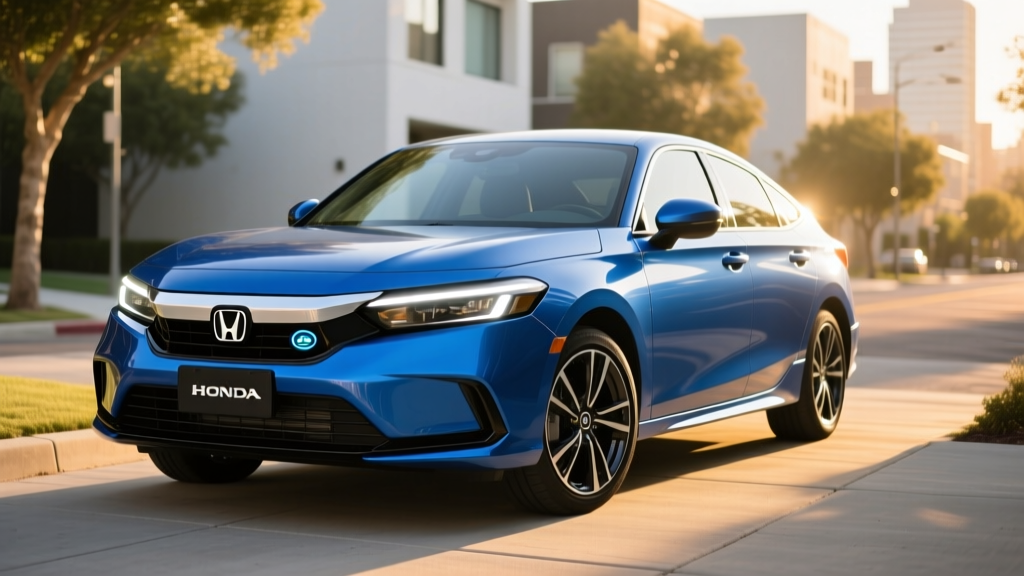
If you're researching the Honda 2025 hybrid lineup, you're looking at one of the most comprehensive electrification strategies from a mainstream automaker. Honda now offers conventional hybrid (HEV) versions of its three highest-volume models — the CR-V, Accord, and Civic — each using the brand's fourth-generation two-motor e:HEV system. None of these are plug-in hybrids. They require no charging cord, no home electrical upgrade, and no change to your driving habits. You fill up with gas and drive.
This guide breaks down every 2025 Honda hybrid with the exact numbers that matter: EPA MPG, real-world fuel economy observations, powertrain output, pricing by trim, battery warranty coverage, and federal tax credit eligibility. Whether you're cross-shopping against a Toyota RAV4 Hybrid or deciding between the Accord Hybrid and a full battery-electric vehicle, this is your spec-driven starting point.
Honda's 2025 Hybrid Lineup at a Glance
For the 2025 model year, Honda sells three hybrid models in the United States, all using the same fundamental architecture — a 2.0-liter Atkinson-cycle four-cylinder engine paired with two electric motors through an e-CVT. The key differences are vehicle size, tuning, and pricing.
| Attribute | CR-V Hybrid | Accord Hybrid | Civic Hybrid |
|---|---|---|---|
| Body Style | Compact SUV | Midsize Sedan | Compact Sedan |
| Combined HP | 204 hp | 204 hp | 200 hp |
| Combined Torque | 247 lb-ft | 247 lb-ft | 232 lb-ft |
| EPA Combined MPG | 39 MPG | 48 MPG | 49 MPG |
| EPA City / Hwy | 40 / 37 MPG | 51 / 44 MPG | 50 / 47 MPG |
| Drivetrain (Base Hybrid) | FWD (AWD available) | FWD | FWD |
| Starting MSRP | $35,395 | $34,095 | $29,845 |
| Plug-In / PHEV Option? | No | No | No |
Source: EPA fuel economy data via fueleconomy.gov and Honda's official 2025 specifications.
HEV vs. PHEV vs. EV: Where Honda Hybrids Fit
A common point of confusion is the difference between Honda's hybrid offerings and plug-in alternatives. Honda's 2025 hybrids are conventional hybrids (HEVs), not plug-in hybrids (PHEVs). Here's how the three electrification categories differ:
Conventional Hybrid (HEV) — All 2025 Honda Hybrids: A small battery (typically 1.0–1.5 kWh) is charged exclusively through regenerative braking and the gas engine. You never plug it in. The electric motor assists the engine and can drive the car solo at low speeds for short distances. Fuel economy improvement: 30–50% over a gas-only equivalent.
Plug-In Hybrid (PHEV): A larger battery (typically 12–25 kWh) provides 20–45 miles of electric-only driving before the gas engine engages. Requires Level 2 home charging for maximum benefit. Honda does not currently sell a PHEV in the US market for 2025.
Battery Electric Vehicle (BEV): No gas engine. Full propulsion from a large traction battery (60–100+ kWh). Requires regular charging at home or public stations. Examples: Tesla Model 3, Hyundai Ioniq 5, Honda Prologue.
Bottom line: Every 2025 Honda hybrid is an HEV. You will never see a charge port on these vehicles. You fuel them with gasoline, and the hybrid system handles the rest automatically.
Fuel Economy: EPA Numbers and Real-World MPG
The headline number for any hybrid buyer is fuel economy. Honda's 2025 hybrid lineup delivers some of the highest EPA ratings in their respective segments. But as with any efficiency figure, real-world results depend on your driving mix.
| Model | City MPG | Highway MPG | Combined MPG | Real-World Expectation |
|---|---|---|---|---|
| Accord Hybrid (Sport/LX) | 51 | 44 | 48 | 45–52 MPG typical; city-heavy drivers may exceed 51 |
| Civic Hybrid (Sport) | 50 | 47 | 49 | 46–53 MPG; excellent in stop-and-go traffic |
| CR-V Hybrid (Sport, FWD) | 40 | 37 | 39 | 35–42 MPG; AWD trims drop to ~37 combined |
| CR-V Hybrid (Sport, AWD) | 38 | 35 | 37 | 33–39 MPG; expect lower in sustained cold |
Why Hybrids Often Beat EPA in the City
Unlike gas-only vehicles, hybrids thrive in stop-and-go traffic. Every deceleration event captures energy through regenerative braking, recharging the small battery and reducing reliance on the friction brakes. The Accord Hybrid's 51 MPG city rating isn't just a lab figure — in real-world urban driving with frequent stops, many owners report matching or slightly exceeding this number. The electric motor handles low-speed propulsion where gas engines are least efficient.
Where Real-World MPG Falls Short
Highway driving at sustained 75–80 MPH is where hybrids lose their advantage. At steady speed, the engine runs continuously with minimal regenerative opportunity. Expect the CR-V Hybrid AWD to return closer to 33–35 MPG on a long interstate trip. Cold weather further reduces efficiency — engine warm-up cycles, cabin heating load, and denser air all work against you. In sub-freezing conditions, plan for a 10–15% reduction from EPA combined figures across all three models.
Powertrain Deep Dive: Honda's Fourth-Gen e:HEV System
All three 2025 Honda hybrids use the fourth generation of Honda's two-motor hybrid system, but with application-specific tuning. The architecture is fundamentally different from Toyota's planetary-gear Hybrid Synergy Drive.
How it works: Honda's system uses a 2.0-liter Atkinson-cycle four-cylinder engine (producing roughly 146 hp on its own) coupled with two electric motors. One motor acts as a generator; the other drives the wheels. In most driving conditions below ~45 MPH, the engine generates electricity while the drive motor propels the vehicle — essentially operating as a series hybrid. At highway speeds, a lock-up clutch connects the engine directly to the wheels for efficiency.
The result is a system that feels more like an EV in daily driving than a traditional hybrid. Throttle response is immediate because the drive motor provides torque without waiting for transmission ratio changes. There is no conventional geared transmission — the e-CVT manages the relationship between engine speed and wheel speed electronically.
Powertrain Specifications (2025 Models):
- Engine: 2.0L DOHC Atkinson-cycle 4-cylinder
- Engine Output: ~146 hp / 134 lb-ft (standalone)
- Drive Motor: ~184 hp / 247 lb-ft (CR-V/Accord), ~174 hp / 232 lb-ft (Civic)
- Combined System Output: 204 hp (CR-V/Accord), 200 hp (Civic)
- Transmission: e-CVT (no traditional gears)
- Battery: ~1.0 kWh lithium-ion (not plug-in)
- Regenerative Braking: 4-level paddle-selectable (Civic/Accord), standard (CR-V)
Pricing, Trims, and Tax Credit Eligibility
Honda has positioned its 2025 hybrid models as premium trims within each lineup, typically replacing or sitting alongside the upper gas-only variants. Here's the pricing breakdown:
| Model | Trim | MSRP (incl. destination) |
|---|---|---|
| Civic Hybrid | Sport | $29,845 |
| Accord Hybrid | LX | $34,095 |
| Accord Hybrid | Sport | $35,095 |
| Accord Hybrid | Sport-L | $37,095 |
| Accord Hybrid | EX-L | $39,095 |
| CR-V Hybrid | Sport (FWD) | $35,395 |
| CR-V Hybrid | Sport (AWD) | $36,895 |
| CR-V Hybrid | Sport-L (AWD) | $39,345 |
| CR-V Hybrid | Sport Touring (AWD) | $42,195 |
Federal Tax Credit: What You Need to Know
Key point: None of Honda's 2025 conventional hybrids (HEVs) qualify for the federal §30D Clean Vehicle Credit. That credit — up to $7,500 — applies only to battery electric vehicles (BEVs) and plug-in hybrids (PHEVs) that meet battery-sourcing, MSRP, and buyer income requirements as defined by the IRS.
Conventional hybrids are excluded by statute because their battery capacity is far below the 7 kWh minimum threshold. If you're buying a 2025 Honda hybrid, plan your budget around the full MSRP without assuming a federal incentive.
State incentives: Some states offer rebates or HOV lane access for hybrids, but these vary significantly by jurisdiction. Check your state's energy office or DMV for current programs.
Battery Warranty, Reliability, and Replacement Costs
Hybrid battery longevity remains one of the top concerns for buyers considering their first hybrid. Honda addresses this with robust warranty coverage and a proven track record across multiple generations of hybrid vehicles.
2025 Honda Hybrid Battery Warranty:
- Hybrid Battery: 8 years / 100,000 miles (10 years / 150,000 miles in CARB states — CA, CT, ME, MA, NJ, NY, OR, RI, VT, WA)
- Hybrid System Components: 8 years / 100,000 miles
- Powertrain (engine + e-CVT): 5 years / 60,000 miles
- Bumper-to-Bumper: 3 years / 36,000 miles
The hybrid battery warranty covers capacity loss below a defined threshold (typically 60–70% of original capacity) and any defect in battery cells or management electronics.
Real-World Battery Longevity
Honda's hybrid battery packs are relatively small (~1.0 kWh) and are never deeply discharged or fully charged during normal operation. The battery management system maintains a narrow state-of-charge window — typically between 40% and 80% — which dramatically reduces degradation. Based on long-term data from earlier Honda hybrid models (Insight, previous-gen Accord Hybrid), these batteries routinely last 150,000–200,000 miles before any capacity-related issues arise.
Replacement Cost if Needed
If your hybrid battery does fail outside of warranty, replacement costs for Honda's hybrid battery packs typically range from $2,000 to $4,000 including labor at a dealership. Independent hybrid specialists often offer refurbished packs for $1,500–$2,500. This is substantially less than a BEV traction battery replacement because the pack is small and accessible. For context, a Toyota Prius hybrid battery replacement runs a similar $2,000–$3,500 range.
Who Should Buy a 2025 Honda Hybrid — And Who Shouldn't
Honda's 2025 hybrid lineup isn't the right choice for every buyer. Here's a decision framework based on driving patterns, budget, and priorities:
Choose a 2025 Honda Hybrid if:
- You want 40–50 MPG without changing your fueling routine (no plug, no charger install)
- You drive a mix of city and highway with significant stop-and-go traffic
- You want Honda's reliability reputation with hybrid efficiency gains
- You're upgrading from a 10+ year old gas vehicle and want a big MPG jump
- You need the cargo space of the CR-V or trunk room of the Accord
- You live in an area with limited public charging infrastructure
- Your budget is $29,000–$42,000 and you want premium features
Consider a full EV instead if:
- You can install a Level 2 home charger and want zero tailpipe emissions
- You want to qualify for the $7,500 federal §30D tax credit (BEV/PHEV only)
- Your daily commute is under 40 miles round-trip and you rarely road-trip
- You want the lowest per-mile energy cost (electricity vs. gasoline)
- You want one-pedal driving and instant maximum torque from a standstill
- Local electricity rates make charging significantly cheaper than gas
The Gas vs. Hybrid Math
At current fuel prices (~$3.40/gal national average as of early 2025), the Accord Hybrid at 48 MPG combined saves roughly $550–$700 per year compared to a similarly sized gas midsize sedan averaging 30 MPG combined, assuming 12,000 miles annually. The CR-V Hybrid saves approximately $400–$550 per year over a gas compact SUV at 28 MPG. Over five years, that's $2,000–$3,500 in fuel savings — enough to offset most of the hybrid's price premium over a base gas trim.
How the 2025 Honda Hybrids Compare to Key Rivals
Honda isn't the only automaker offering well-executed hybrids. Here's how the key competitors stack up on EPA combined MPG and starting price:
| Model | EPA Combined MPG | Starting MSRP | Notes |
|---|---|---|---|
| Toyota Camry Hybrid | 52 MPG | $30,495 | Slightly higher MPG; AWD available |
| Honda Accord Hybrid | 48 MPG | $34,095 | More standard features at base; sportier drive |
| Toyota RAV4 Hybrid | 39 MPG | $33,345 | AWD standard; slightly less cargo room than CR-V |
| Honda CR-V Hybrid | 39 MPG | $35,395 | AWD optional; more refined interior |
| Toyota Corolla Hybrid | 50 MPG | $24,795 | Lower entry price; less power and refinement |
| Honda Civic Hybrid | 49 MPG | $29,845 | Significantly more power (200 hp vs 138 hp) |
| Hyundai Elantra Hybrid | 54 MPG | $27,650 | Highest MPG; less engaging to drive |
Frequently Asked Questions
How many MPG does a 2025 Honda hybrid get?
It depends on the model. The Civic Hybrid leads at 49 MPG combined (50 city / 47 highway). The Accord Hybrid achieves 48 MPG combined (51 city / 44 highway). The CR-V Hybrid returns 39 MPG combined with FWD (40 city / 37 highway) or 37 MPG combined with AWD (38 city / 35 highway). In real-world city-heavy driving, both the Civic and Accord can meet or slightly exceed their EPA city ratings thanks to aggressive regenerative braking.
Do Honda hybrids need to be plugged in?
No. All 2025 Honda hybrids are conventional hybrids (HEVs). They charge their small battery through regenerative braking and the gasoline engine. There is no charge port, no plug, and no electric-only driving range to manage. You fuel them with gasoline exactly like a conventional car.
Does the 2025 Honda hybrid qualify for any tax credit?
No. The federal §30D Clean Vehicle Credit requires a minimum battery capacity of 7 kWh and applies only to BEVs and PHEVs. Honda's conventional hybrids have batteries around 1.0 kWh and are excluded. Some states may offer their own incentives for hybrid purchases — check with your state energy office. Consult a tax professional for advice specific to your situation.
Is the Honda hybrid system reliable?
Yes. Honda's e:HEV hybrid system is in its fourth generation with extensive real-world deployment. The hybrid battery is warranted for 8 years / 100,000 miles (10 years / 150,000 miles in CARB states), and real-world data from previous-generation Honda hybrids shows battery packs lasting 150,000–200,000 miles under normal use. The e-CVT has no traditional gears or belts, reducing mechanical failure points.
What does it cost to replace a Honda hybrid battery?
Out-of-warranty replacement for a Honda hybrid battery pack typically costs $2,000–$4,000 at a dealership, including labor. Independent hybrid specialists may offer refurbished packs for $1,500–$2,500. Given the battery's small size (~1.0 kWh) and conservative charge management, full replacement is uncommon within the first 150,000 miles.
Hybrid vs. PHEV vs. EV — which should I choose?
Choose a conventional hybrid (HEV) if you want better fuel economy with zero lifestyle change — no charger, no plug, no range planning. Choose a PHEV if you can install home charging and want 20–40 miles of daily electric driving with a gas backup for road trips. Choose a full EV if you have reliable home charging, want the lowest per-mile energy cost, qualify for the federal tax credit, and are comfortable planning longer road trips around DC fast charging. Honda's 2025 lineup covers the HEV category exclusively.
Is AWD worth the MPG penalty on the CR-V Hybrid?
The AWD CR-V Hybrid drops from 39 to 37 MPG combined — a 2 MPG penalty that costs roughly $75–$100 per year in additional fuel at 12,000 miles annually. If you regularly drive in snow, rain, or on loose surfaces, AWD is worth the trade-off. For dry-climate, urban-only drivers, FWD saves money at purchase and at the pump.
Fuel economy figures sourced from fueleconomy.gov (EPA). Tax credit rules referenced from IRS §30D guidance. Pricing from Honda's official 2025 model specifications. Always verify current pricing and incentive eligibility before purchasing, as both are subject to change.