Does a Highlander Hybrid Plug-In Actually Exist?
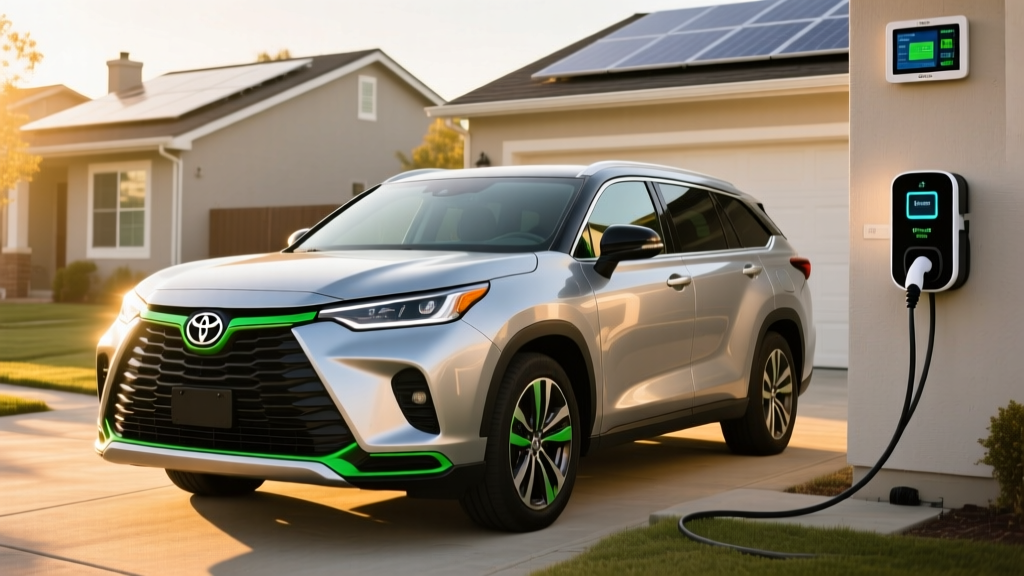
Here's the truth that trips up a lot of family-SUV shoppers: as of the 2026 model year, Toyota does not offer a plug-in hybrid (PHEV) version of the Highlander. The Highlander Hybrid is a conventional self-charging hybrid (HEV) — it recovers energy through regenerative braking and its gasoline engine, never requires plugging in, and delivers an EPA-estimated 36 MPG combined.
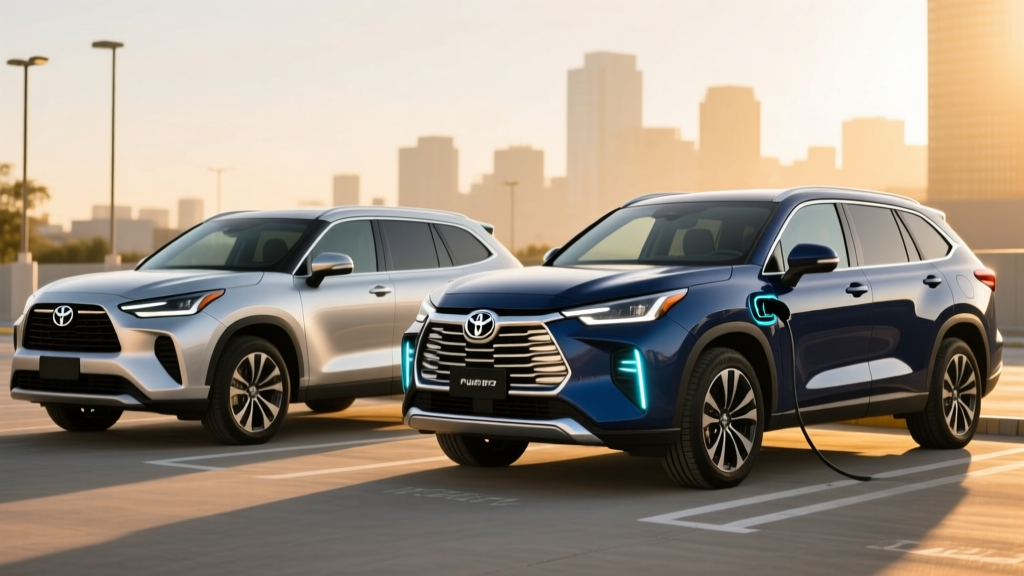
If you're searching for a "Highlander hybrid plug in" because you want a three-row Toyota SUV you can charge at home for electric-only school runs and grocery trips, you have two realistic paths: the standard Highlander Hybrid (three rows, no plug) or the RAV4 Prime PHEV (plug-in with 42 miles of electric range, but only two rows). This guide breaks down exactly what each delivers, what the MPG and range numbers look like in real driving, and which configuration actually fits your family's routine.
HEV vs PHEV — The Core Difference
Highlander Hybrid (HEV): No plug. The battery recharges via the gas engine and regen braking. You just fill it with gas. Expect 36 MPG combined.
RAV4 Prime (PHEV): Plugs in. 18.1 kWh battery gives 42 miles of electric-only range. After that, it operates as a hybrid at ~38 MPG combined. Requires Level 1 or Level 2 charging to realize the electric benefit.
2026 Toyota Highlander Hybrid: MPG, Powertrain & Specs
The 2026 Highlander Hybrid carries over the powertrain that has made it one of the most efficient three-row SUVs on the market. Toyota pairs a 2.5-liter four-cylinder engine with front and rear electric motors for standard electronic on-demand AWD.
| Spec | Value |
|---|---|
| Powertrain | 2.5L I4 + front/rear electric motors (eAWD) |
| Combined Horsepower | 243 hp (net system) |
| EPA City MPG | 36 MPG |
| EPA Highway MPG | 35 MPG |
| EPA Combined MPG | 36 MPG |
| Hybrid Battery | ~1.6 kWh NiMH (self-charging, no plug) |
| Fuel Tank | 17.9 gallons |
| Total Driving Range | ~644 miles |
| 0–60 mph | ~7.8 seconds |
| Seating | 7–8 passengers (trim dependent) |
| Towing Capacity | 3,500 lbs |
| Base MSRP (LE trim) | ~$42,220 |
| Hybrid Battery Warranty | 10 years / 150,000 miles |
Source: fueleconomy.gov — verify trim-specific figures for your configuration.
Real-World MPG: What Owners Actually Report
The EPA's 36 MPG combined rating for the Highlander Hybrid is one of the more honest stickers in the segment, but real-world results vary meaningfully with driving style and climate.
City driving: Hybrids thrive in stop-and-go traffic where regenerative braking recovers energy. Many Highlander Hybrid owners report 37–40 MPG in urban and suburban driving — occasionally beating the EPA city estimate of 36 MPG. This is the opposite of a gas-only vehicle, which gets its worst mileage in town.
Highway driving: At sustained 70–80 mph speeds, the hybrid advantage narrows. Expect 32–34 MPG on flat interstate runs, slightly below the EPA highway estimate. Aerodynamic drag dominates at highway speeds, and the hybrid system has fewer opportunities to recapture energy.
Cold weather: In freezing temperatures (below 32°F), expect a 5–10% reduction in fuel economy. The engine runs more frequently to provide cabin heat and maintain battery temperature. Owners in northern climates typically see 31–33 MPG combined in winter months.
Mountainous terrain: Climbing passes will drop instantaneous MPG into the low 20s, but regenerative braking on descents recovers some of that energy. Net trip MPG on mountain routes typically lands in the low-to-mid 30s.
| Condition | EPA Estimate | Real-World Expectation |
|---|---|---|
| City | 36 MPG | 37–40 MPG |
| Highway (70 mph) | 35 MPG | 32–34 MPG |
| Combined | 36 MPG | 34–37 MPG |
| Cold weather (below 32°F) | N/A | 31–33 MPG |
Chasing the Plug-In Dream: RAV4 Prime as the Closest Alternative
Since Toyota doesn't build a Highlander PHEV, the closest plug-in Toyota SUV is the RAV4 Prime. It's a compelling vehicle — but it comes with a major compromise for three-row families: it seats only five.
| Spec | Value |
|---|---|
| Powertrain | 2.5L I4 + front/rear electric motors (eAWD) |
| Combined Horsepower | 302 hp (net system) |
| PHEV Battery | 18.1 kWh lithium-ion |
| EPA Electric-Only Range | 42 miles |
| EPA Combined (gas-only hybrid mode) | 38 MPG |
| MPGe (electric + gas combined) | 94 MPGe |
| Total Range (electric + gas) | ~600 miles |
| Level 1 Charging (120V) | ~12 hours (full) |
| Level 2 Charging (240V) | ~2.5 hours (full) |
| DC Fast Charging | Not supported |
| 0–60 mph | 5.7 seconds |
| Base MSRP (SE trim) | ~$44,615 |
| PHEV Battery Warranty | 10 years / 150,000 miles |
The RAV4 Prime's 42 miles of electric-only range covers most daily commutes and school runs without using a drop of gas — provided you charge at home overnight. On a standard 120V outlet (Level 1), a full charge takes roughly 12 hours. Upgrade to a 240V Level 2 home charger, and that drops to about 2.5 hours. Note: the RAV4 Prime does not support DC fast charging, which is typical for PHEVs in this class.
Source: fueleconomy.gov — RAV4 Prime figures.
Pricing, Tax Credits & Ownership Economics
The 2026 Highlander Hybrid starts around $42,220 for the LE trim and climbs to approximately $52,000+ for the Platinum. The RAV4 Prime starts near $44,615 and can exceed $50,000 in XSE Premium trim.
Federal Tax Credit Eligibility (§30D)
This is where many buyers get confused. Under current IRS rules for 2026:
- Highlander Hybrid (HEV): Does NOT qualify for the §30D federal EV tax credit. Conventional hybrids are not eligible — only plug-in hybrids (PHEVs) and battery-electric vehicles (BEVs) with sufficient battery capacity qualify.
- RAV4 Prime (PHEV): May qualify for up to $7,500 under §30D, but eligibility depends on multiple factors: battery component and critical mineral sourcing requirements, buyer income caps ($150K single / $300K joint), and the vehicle's MSRP falling below the $80,000 SUV cap. Toyota's battery supply chain compliance has varied by model year — verify current eligibility at IRS.gov before purchasing.
- Point-of-sale transfer: If the RAV4 Prime qualifies, you can transfer the credit to the dealer at purchase for an immediate price reduction rather than waiting to claim it on your tax return.
State incentives may also apply. Several states offer additional rebates for PHEVs (California, Colorado, and others), but amounts and eligibility vary by jurisdiction. Check your state's energy office or DMV for current programs.
Battery Longevity, Warranty & Replacement Cost
Hybrid Battery Warranty
Both the Highlander Hybrid and RAV4 Prime come with Toyota's hybrid battery warranty: 10 years or 150,000 miles (whichever comes first). This is one of the strongest hybrid battery warranties in the industry and covers capacity loss below a defined threshold.
Highlander Hybrid (NiMH battery): Toyota's nickel-metal hydride hybrid batteries have an exceptional longevity track record. The ~1.6 kWh pack in the Highlander Hybrid is small and operates within a narrow state-of-charge window (roughly 40–80%), which dramatically reduces degradation stress. Real-world data from Toyota hybrids in taxi and fleet service routinely shows these batteries lasting 150,000–200,000+ miles without replacement. If replacement is needed out of warranty, expect $3,000–$4,500 for a new OEM pack, or $1,500–$2,500 for a refurbished unit from a reputable supplier.
RAV4 Prime (Li-ion battery): The 18.1 kWh lithium-ion pack is larger and sees deeper cycling (full EV-range discharges). However, Toyota's thermal management system and conservative charge buffers protect long-term health. Based on data from earlier Toyota PHEVs (Prius Prime), expect 8–12% degradation over 10 years of typical use. Replacement cost for the RAV4 Prime's larger battery is higher: approximately $6,000–$9,000 for a new OEM pack out of warranty.
Reliability: Toyota's hybrid powertrains consistently rank at or near the top of long-term reliability studies from Consumer Reports and J.D. Power. The eCVT transmission used in both vehicles has no traditional gears or clutch packs to wear out, contributing to lower long-term maintenance costs compared to conventional automatics.
Who Should Choose What: The Decision Framework
Choose the Highlander Hybrid if:
- You need three rows (7–8 seats) for family hauling
- You can't or don't want to install a home charger
- You want maximum total range (~644 miles) for road trips
- You value simplicity — just fill it with gas and go
- You're budget-conscious and don't want to pay a PHEV premium
Choose the RAV4 Prime (PHEV) if:
- Five seats are enough for your household
- You can charge at home (Level 1 or Level 2)
- Your daily driving is under 40 miles round-trip
- You want electric-only commuting with the safety net of a gas engine
- You want more power (302 hp vs 243 hp) and faster acceleration
- You may qualify for the federal tax credit, narrowing the price gap
Choose a Full EV (e.g., Kia EV9, Tesla Model X) if:
- You want three rows AND zero tailpipe emissions
- You have reliable home charging and access to DC fast chargers for road trips
- You want to eliminate gasoline costs entirely
- You're willing to accept a higher upfront price and plan for longer charging stops on road trips
Highlander Hybrid — Pros
- 36 MPG combined in a 3-row SUV
- No plug-in charging needed
- 644-mile total range
- Strong reliability track record
- 10-year / 150,000-mile battery warranty
- 3,500-lb towing capacity
Highlander Hybrid — Cons
- No plug-in / electric-only option
- No federal tax credit eligibility
- Modest 243 hp — adequate, not quick
- Highway MPG drops below EPA estimate
- Higher base price than gas-only Highlander
Frequently Asked Questions
How many MPG does the Highlander Hybrid get?
The 2026 Toyota Highlander Hybrid is EPA-rated at 36 MPG city, 35 MPG highway, and 36 MPG combined. In real-world driving, city MPG often exceeds the EPA estimate (37–40 MPG), while highway driving at 75+ mph typically returns 32–34 MPG.
Is there a plug-in version of the Toyota Highlander?
No. As of the 2026 model year, Toyota does not offer a plug-in hybrid Highlander. The Highlander Hybrid is a conventional self-charging hybrid (HEV) that requires no plug. The closest Toyota PHEV SUV is the RAV4 Prime with 42 miles of electric-only range, but it seats only five.
How far can the RAV4 Prime go on electric only?
The 2026 RAV4 Prime delivers an EPA-estimated 42 miles of electric-only range. Real-world results vary: gentle suburban driving in mild weather can stretch this to 45–48 miles, while cold weather and highway-speed driving may reduce it to 32–36 miles.
Does the Highlander Hybrid qualify for any tax credit?
No. The Highlander Hybrid is a conventional hybrid (HEV) and does not qualify for the federal §30D plug-in vehicle tax credit. Only PHEVs and BEVs with qualifying battery capacity and sourcing compliance are eligible. The RAV4 Prime (PHEV) may qualify for up to $7,500 depending on current IRS sourcing requirements, buyer income, and MSRP limits.
Is the Highlander Hybrid reliable, and what does battery replacement cost?
Toyota's hybrid powertrains are among the most reliable in the industry, consistently earning top marks from Consumer Reports and J.D. Power. The hybrid battery is covered for 10 years / 150,000 miles. Out-of-warranty replacement runs $3,000–$4,500 for a new OEM pack, or $1,500–$2,500 for a refurbished unit. Many Toyota hybrid batteries last well beyond 150,000 miles without issue.
Do I need to plug in the Highlander Hybrid?
No. The Highlander Hybrid is a conventional hybrid (HEV). Its small battery recharges through regenerative braking and the gasoline engine. You never plug it in — you simply refuel at a gas station like any other vehicle.
Hybrid vs PHEV vs EV — which fits my family?
If you need three rows and don't want to think about charging, the Highlander Hybrid is the answer. If five seats work and you can charge at home, the RAV4 Prime's 42 miles of electric range eliminates gas use on daily commutes. If you want three rows, zero emissions, and have solid charging access, consider a full EV like the Kia EV9 — but budget for a higher purchase price and plan road-trip charging stops.