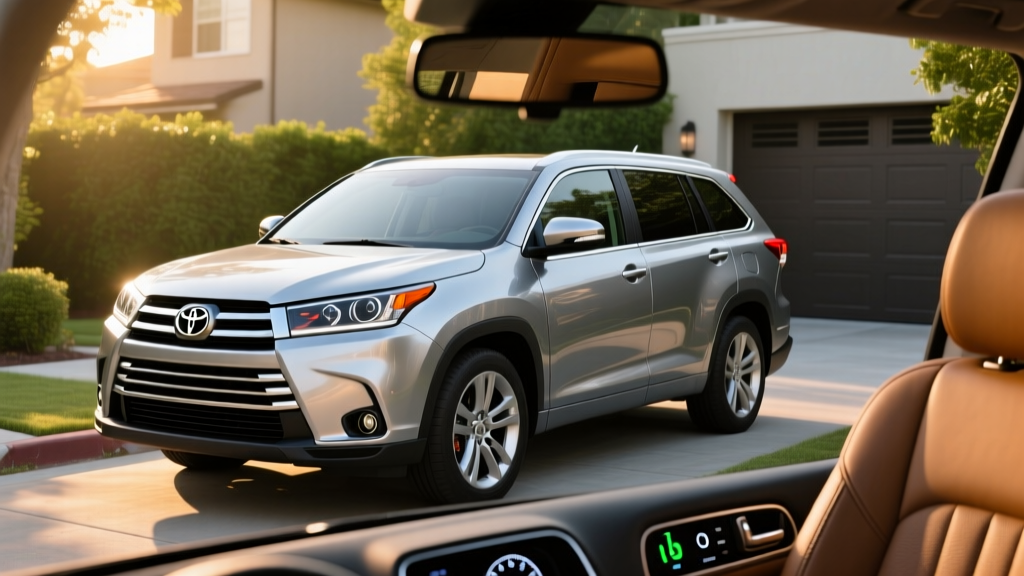
If you've been searching for a highlander hybrid limited 2014 on the used market, you're likely weighing a decade-old three-row hybrid SUV against newer electrified alternatives — or wondering whether its hybrid system still holds up. The third-generation Toyota Highlander Hybrid debuted for the 2014 model year with a full redesign, a more refined Hybrid Synergy Drive powertrain, and the range-topping Limited trim loaded with premium features. In 2026, this SUV remains a popular used-car target for families wanting three rows and hybrid efficiency without a plug.
This guide breaks down everything a used buyer needs to know: exact EPA fuel economy, real-world MPG expectations, the conventional hybrid powertrain, battery longevity and replacement costs, and how it compares to today's PHEVs and full EVs. Let's get into the numbers.
HEV vs PHEV: What the 2014 Highlander Hybrid Actually Is
Before evaluating the numbers, it's essential to classify this vehicle correctly. The 2014 Highlander Hybrid is a conventional hybrid electric vehicle (HEV) — not a plug-in hybrid (PHEV). That distinction matters for ownership expectations:
| Feature | Conventional Hybrid (HEV) | Plug-In Hybrid (PHEV) |
|---|---|---|
| Plug-in charging | No — charges via regenerative braking and engine | Yes — has a charge port for external power |
| Electric-only range | Less than 1 mile at very low speeds | 20–50+ miles depending on model |
| Battery size | Small (~1.9 kWh usable) | Larger (10–25+ kWh) |
| Federal tax credit (§30D) | Not eligible (no plug) | Up to $7,500 if new and eligible |
| Example | 2014 Highlander Hybrid | 2026 Toyota RAV4 Prime |
The 2014 Highlander Hybrid requires no plug-in charging whatsoever. Its nickel-metal hydride (NiMH) traction battery is recharged exclusively through regenerative braking and the gasoline engine. You fuel it like any conventional vehicle and the hybrid system manages energy flow automatically.
Fuel Economy: EPA Ratings and Real-World MPG
The 2014 Highlander Hybrid Limited carries an EPA rating of 28 MPG combined, with 28 MPG city and 28 MPG highway. For a 4,500-pound, all-wheel-drive, three-row SUV from 2014, those figures were impressive — and they remain competitive with many non-hybrid midsize SUVs sold today.
| Driving Condition | EPA Estimate | Real-World Expectation |
|---|---|---|
| City | 28 MPG | 27–30 MPG (hybrids excel in stop-and-go) |
| Highway | 28 MPG | 25–28 MPG (less regen benefit at steady speed) |
| Combined | 28 MPG | 26–29 MPG |
| Cold weather (below 30°F) | N/A | 23–26 MPG (engine runs more for cabin heat) |
| Towing (rated 3,500 lbs) | N/A | 16–20 MPG under load |
Real-world insight: Toyota's Hybrid Synergy Drive system tends to deliver MPG very close to EPA stickers in mixed driving. City driving often matches or slightly exceeds the 28 MPG rating because regenerative braking recaptures energy at every stop. Highway driving at 75+ MPH may dip to 25 MPG, as the electric motor provides less assistance at sustained high speeds and aerodynamic drag increases. Cold weather noticeably reduces efficiency because the gasoline engine must run more frequently to provide cabin heat — there is no electric heat pump in this generation.
With a 17.2-gallon fuel tank, expect a real-world driving range of roughly 445–500 miles per tank in typical conditions.
Powertrain Specs: Engine, Motors, and Combined Output
| Specification | Detail |
|---|---|
| Engine | 3.5L V6 Atkinson-cycle (2GR-FXE) |
| Engine output | 236 hp / 212 lb-ft torque |
| Front electric motor | 123 kW (165 hp) / 247 lb-ft |
| Rear electric motor (AWD-i) | 50 kW (67 hp) / 96 lb-ft |
| Net combined system horsepower | 280 hp |
| Transmission | eCVT (planetary gearset, no fixed gears) |
| Drivetrain | AWD-i (electric rear axle, no mechanical driveshaft) |
| 0–60 mph | ~7.8 seconds |
| Towing capacity | 3,500 lbs |
| Curb weight | ~4,865 lbs |
The 2014 Highlander Hybrid uses Toyota's proven eCVT — a planetary gearset that blends engine and motor power seamlessly without the rubber-band sensation of a belt-driven CVT. The AWD-i system engages the rear electric motor on demand for traction, eliminating the weight and friction losses of a traditional mechanical all-wheel-drive system. This is one reason the hybrid AWD model sacrifices very little fuel economy compared to the front-wheel-drive-only variant (which Toyota did not offer on the Hybrid for this generation).
Hybrid Battery: Chemistry, Lifespan, and Replacement Cost
This is the single biggest concern for anyone buying a decade-old hybrid. Here's what the data says:
2014 Highlander Hybrid Battery Facts
- Chemistry: Nickel-Metal Hydride (NiMH) — not lithium-ion
- Usable capacity: ~1.9 kWh (small by modern standards, but sufficient for HEV duty)
- Original warranty: 8 years / 100,000 miles (10 years / 150,000 miles in CARB states including CA, NY, MA, and others)
- Current warranty status (2026): Expired for all 2014 models by time, likely expired by mileage as well
- Expected lifespan: 150,000–250,000+ miles with normal use
- Replacement cost (2026): $2,000–$4,500 depending on source
Longevity reality: Toyota's NiMH hybrid batteries have an exceptional track record. The Prius taxi fleet demonstrated that these packs routinely exceed 200,000 miles before significant degradation. The Highlander Hybrid's battery is larger and operates under less stress relative to its capacity, which favors longevity. However, a 2014 model is now 12 years old in 2026. Calendar aging degrades NiMH cells even in low-mileage examples, so a vehicle with 80,000 miles that sat unused for long periods may have a weaker pack than one with 160,000 miles driven consistently.
Replacement options if the battery fails:
- New OEM Toyota pack: ~$3,500–$4,500 installed at a dealer
- Refurbished/reconditioned pack: ~$1,500–$2,500 installed at a hybrid specialist shop
- Individual module replacement: ~$500–$1,200 if only a few cells are weak (requires a shop with hybrid battery diagnostic equipment)
Before purchasing, request a hybrid battery health check — a Toyota dealer or hybrid specialist can read the battery's internal resistance and state-of-health via the OBD-II port using Toyota's Techstream software. This is the single most important pre-purchase inspection step for a used Highlander Hybrid.
2014 Highlander Hybrid Limited: Trim Features and Pricing
The Limited was the top trim for the 2014 Highlander Hybrid. Original MSRP was approximately $47,770 (including destination). Standard Limited equipment included:
- Leather-trimmed seats with heated/ventilated front seats
- Navigation system with 8-inch touchscreen
- JBL premium audio (12 speakers)
- Power liftgate
- Blind Spot Monitor with Rear Cross-Traffic Alert
- Pre-Collision System with Dynamic Radar Cruise Control
- Tri-zone automatic climate control
- 19-inch alloy wheels
Used market pricing in 2026: Expect to pay roughly $14,000–$22,000 depending on mileage, condition, and region. Examples under 100,000 miles with service records command a premium. Factor in a potential $2,000–$4,000 hybrid battery replacement reserve if the pack hasn't been recently replaced or tested.
Tax Credits and Incentives: What Applies in 2026
Because the 2014 Highlander Hybrid is a conventional HEV (no plug), it does not qualify for the federal §30D new clean vehicle credit or the §25E used clean vehicle credit. Both of those credits require a plug-in capable vehicle — either a PHEV or a full BEV.
- Federal §30D credit (new): Not applicable — HEV, not plug-in
- Federal §25E credit (used EV/PHEV): Not applicable — HEV, not plug-in
- State incentives: Most state EV/PHEV rebates do not cover conventional hybrids. A handful of states previously offered modest hybrid incentives, but nearly all have expired or shifted exclusively to plug-in vehicles.
If tax credit eligibility is a priority, you would need to look at a plug-in alternative (see the comparison below). For current §30D rules, income caps, MSRP limits, and battery-sourcing requirements, consult the IRS clean vehicle credit page.
Highlander Hybrid vs. PHEV vs. Full EV: Which Fits You?
The 2014 Highlander Hybrid occupies a specific niche. Here's a decision framework:
Choose the 2014 Highlander Hybrid If:
- You need three rows and AWD on a used-car budget under $25,000
- You cannot charge at home (no garage, no outlet access, apartment living)
- You want hybrid fuel savings with zero change to your fueling routine
- You drive 12,000–18,000 miles/year and want to minimize fuel cost without a plug
- You value Toyota's long-term reliability track record
Consider a PHEV or Full EV Instead If:
- You can install a Level 2 home charger and want electric-only daily driving
- You want to qualify for federal or state tax credits
- Your daily commute is under 40 miles round-trip (PHEV covers this on electricity alone)
- You want the latest ADAS features and infotainment (a 2014 model lacks modern driver-assist tech)
- You plan to keep the vehicle 5+ years and want lower per-mile energy costs
For context, a new 2026 Toyota Highlander Hybrid (current generation) starts around $42,000 and achieves an EPA 36 MPG combined — a meaningful improvement over the 2014's 28 MPG. A 2026 Kia Sorento PHEV offers 32 miles of electric-only range and qualifies for tax credits, but starts above $50,000 and offers less third-row space. A full EV like the Kia EV9 provides three rows and 270+ miles of range but starts above $55,000 and requires charging access.
Ownership Costs and Reliability Outlook
The 2014 Highlander Hybrid's reliability record is strong. The 2GR-FXE V6 is one of Toyota's most durable engines, and the hybrid transaxle has proven exceptionally reliable with minimal reported failures. NHTSA gave the 2014 Highlander a 4-star overall safety rating, and the IIHS rated it Good in most crashworthiness categories.
Estimated annual costs (2026):
| Category | Estimated Annual Cost |
|---|---|
| Fuel (15,000 mi/yr at 27 MPG, $3.40/gal) | ~$1,890 |
| Insurance (national avg, 45-yr-old driver) | ~$1,400–$1,900 |
| Maintenance (oil, filters, brakes — hybrid brakes last longer) | ~$400–$700 |
| Hybrid battery reserve (amortized over ownership) | ~$300–$500 |
Compared to a non-hybrid 2014 Highlander V6 AWD (EPA 20 MPG combined), the hybrid saves roughly $630 per year in fuel at 15,000 miles and $3.40/gallon. Over a typical 5-year used ownership period, that's approximately $3,150 in fuel savings — enough to offset a meaningful portion of the hybrid's purchase premium or a battery replacement.
Frequently Asked Questions
How many MPG does the 2014 Highlander Hybrid Limited get?
The EPA rates it at 28 MPG city, 28 MPG highway, and 28 MPG combined. Real-world driving typically yields 26–29 MPG in mixed conditions, with city driving often matching or slightly exceeding the rating thanks to regenerative braking. Cold weather and towing reduce this to 23–26 MPG and 16–20 MPG respectively.
Does the 2014 Highlander Hybrid need to be plugged in?
No. It is a conventional hybrid (HEV), not a plug-in hybrid (PHEV). The battery charges through regenerative braking and the gasoline engine. You never need to plug it in — just fuel it with regular unleaded gasoline (87 octane).
How long does the hybrid battery last, and what does replacement cost?
Toyota's NiMH hybrid batteries commonly last 150,000–250,000+ miles. At 12 years old in 2026, calendar age is a factor even on low-mileage examples. A new OEM replacement costs $3,500–$4,500 installed; refurbished packs run $1,500–$2,500. Always get a hybrid battery health check before purchasing.
Is the 2014 Highlander Hybrid reliable?
Yes. The 2GR-FXE V6 engine and Toyota's Hybrid Synergy Drive have excellent long-term reliability records. The eCVT transaxle has no belts or clutches to wear out. Common maintenance items are standard (brakes, suspension bushings, fluids). Hybrid-specific components rarely fail before 200,000 miles.
Does it qualify for any federal tax credit?
No. The §30D new vehicle credit and §25E used vehicle credit both require a plug-in vehicle (PHEV or BEV). The 2014 Highlander Hybrid is a conventional HEV and does not qualify for any federal EV tax credit. Some states previously offered hybrid incentives, but most have expired.
What should I check before buying a used 2014 Highlander Hybrid?
Prioritize these four inspections: (1) hybrid battery health check via OBD-II diagnostic, (2) service history for regular oil changes and transaxle fluid service, (3) brake actuator condition (the hybrid brake system uses an electro-hydraulic actuator that can be expensive to replace), and (4) inverter coolant pump operation. A pre-purchase inspection at a Toyota dealer or hybrid specialist is strongly recommended.