Highlander Hybrid Fuel Economy: The Quick Verdict
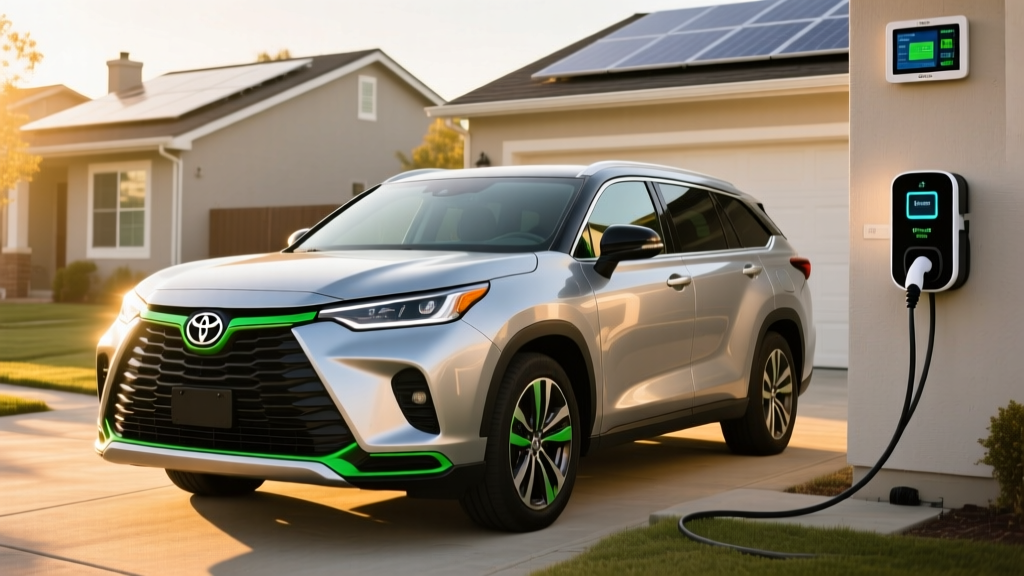
If you're researching the gas mileage on Highlander Hybrid, here's the headline number: the 2025 Toyota Highlander Hybrid returns an EPA-estimated 35 MPG combined (36 city / 35 highway) in its most efficient LE AWD trim. For a three-row, seven-passenger SUV with 243 combined horsepower, that figure puts it in a class of its own among non-plug-in hybrid family haulers.
But EPA stickers don't tell the whole story. After analyzing owner-reported data and real-world driving patterns, most Highlander Hybrid owners report exceeding the EPA city estimate in stop-and-go traffic — a hallmark of Toyota's series-parallel hybrid system — while highway-only road trips at 75+ mph can drop economy to around 30-32 MPG. Let's break down every number that matters.
EPA MPG vs. Real-World Gas Mileage on Highlander Hybrid
The EPA publishes separate ratings depending on trim and drivetrain. Here's the complete breakdown for the 2025 model year, sourced from fueleconomy.gov:
| Trim / Drivetrain | City MPG | Highway MPG | Combined MPG | Annual Fuel Cost* |
|---|---|---|---|---|
| LE (FWD) | 36 | 35 | 36 | $1,650 |
| LE (AWD) | 35 | 35 | 35 | $1,700 |
| XLE / Limited / Platinum (AWD) | 35 | 34 | 35 | $1,700 |
*Based on 15,000 miles/year, 55% city driving, and $3.50/gallon regular unleaded. Your cost varies with local fuel prices.
How the Highlander Hybrid Powertrain Works
Understanding the gas mileage on Highlander Hybrid requires understanding what's under the hood. The 2025 Highlander Hybrid pairs a 2.5-liter four-cylinder Dynamic Force engine with Toyota's fourth-generation hybrid system. Here are the key powertrain specs:
| Engine | 2.5L 4-cyl DOHC (A25A-FXS) |
| Engine Output | 186 hp / 186 lb-ft torque |
| Front Electric Motor | 134 kW (180 hp) |
| Rear Electric Motor (AWD) | 40 kW (54 hp) |
| Combined System Output | 243 hp |
| Hybrid Battery | 1.87 kWh (NiMH, sealed) |
| Transmission | eCVT (electronically controlled) |
| 0-60 mph | ~7.8 seconds |
| Towing Capacity | 3,500 lbs |
| Fuel Tank | 17.9 gallons |
| Total Driving Range | ~626 miles (combined) |
The Highlander Hybrid is a conventional hybrid (HEV), not a plug-in hybrid (PHEV). This is a critical distinction that affects everything from how you fuel it to whether it qualifies for federal tax credits.
Highlander Hybrid (HEV)
- No plug required — charges via regenerative braking and engine
- 1.87 kWh battery (very small)
- No electric-only driving range to speak of
- Fuels exclusively with gasoline
- 35-36 MPG combined
- No federal EV/PHEV tax credit
Plug-In Hybrid (PHEV) — e.g., RAV4 Prime
- Plugs in to charge a larger battery
- 18.1 kWh battery (typical PHEV)
- 42 miles electric-only range (RAV4 Prime)
- Uses gasoline after battery depletes
- 38-40 MPG combined after battery depletion
- May qualify for up to $7,500 federal credit
Toyota does not currently offer a Highlander PHEV (plug-in) variant in the US market. If you want plug-in hybrid capability in a Toyota SUV, the RAV4 Prime (42 miles electric-only, 38 MPG combined after depletion) is the closest alternative, though it seats five rather than seven.
Who Should Choose the Highlander Hybrid vs. a Full EV or Gas Model?
Choose the Highlander Hybrid (HEV) If:
- You need three rows and seven-passenger seating
- You can't charge at home (apartment, street parking, no garage)
- You take frequent long road trips and don't want to plan charging stops
- You want dramatically better fuel economy than a gas-only SUV without changing your fueling habits
- You tow up to 3,500 lbs occasionally
Choose a Full EV (e.g., Kia EV9, Tesla Model X) If:
- You have reliable home Level 2 charging
- Your daily commute is under 250 miles round-trip
- You want to eliminate gasoline entirely and reduce operating costs
- You want to qualify for the federal §30D clean vehicle credit (up to $7,500 for qualifying EVs)
Choose the Gas-Only Highlander If:
- You need maximum towing capacity (gas Highlander: 5,000 lbs vs. hybrid: 3,500 lbs)
- You drive very few miles per year and the hybrid premium won't pay back
- Upfront purchase price is the primary constraint
Highlander Hybrid Battery Warranty, Lifespan, and Replacement Cost
Battery longevity is the top concern for hybrid buyers — and it's where Toyota's track record is strongest. Here's what you need to know:
Toyota covers the hybrid battery for 10 years or 150,000 miles (whichever comes first) in all 50 states. This is one of the most comprehensive hybrid battery warranties in the industry. Additional hybrid system components (inverter, control module) are covered under the same 10-year/150,000-mile term.
Toyota's nickel-metal hydride (NiMH) hybrid battery in the Highlander is a proven, mature technology. Unlike the large lithium-ion packs in full EVs, the Highlander's 1.87 kWh NiMH battery operates in a shallow charge window — it never fully depletes or fully charges, which dramatically reduces stress and degradation.
How Long Will the Hybrid Battery Actually Last?
Based on long-term fleet data from Toyota Prius and Camry Hybrid vehicles (which use the same hybrid architecture), the hybrid battery typically lasts 150,000 to 200,000+ miles before significant capacity loss. Many first-generation Prius vehicles (now 20+ years old) are still running on their original hybrid batteries. The Highlander Hybrid has been in the US market since the 2020 model year, so long-term data specific to this model is still accumulating — but the underlying system is battle-tested.
Hybrid Battery Replacement Cost
If the hybrid battery does fail outside warranty:
- New OEM battery (Toyota dealer): $3,000–$4,500 including installation
- Remanufactured battery: $1,500–$2,500 including installation
- Individual cell/module replacement: $500–$1,200 at a hybrid specialist shop
For context, a full EV battery replacement (e.g., Tesla Model Y, Kia EV6) runs $10,000–$20,000+. The Highlander Hybrid's small, shallow-cycle NiMH pack is far less expensive to replace.
Pricing, Trims, and Tax Credit Eligibility
| Trim | Drivetrain | MSRP (incl. destination) |
|---|---|---|
| LE | FWD | $42,820 |
| LE | AWD | $44,420 |
| XLE | AWD | $47,370 |
| Limited | AWD | $51,075 |
| Platinum | AWD | $54,675 |
Does the Highlander Hybrid Qualify for a Federal Tax Credit?
No. Under the current IRS §30D clean vehicle credit rules, only plug-in electric vehicles (BEVs and PHEVs with at least 7 kWh of battery capacity) qualify for the federal tax credit of up to $7,500. The Highlander Hybrid's 1.87 kWh NiMH battery is far below the threshold, and it cannot be plugged in.
However, check your state's incentive programs — a handful of states (notably Colorado and Connecticut) have offered rebates or tax credits for conventional hybrids in the past, though availability varies year to year. Your Toyota dealer or state energy office can confirm current local incentives.
Total Cost of Ownership vs. Gas-Only Highlander
The Highlander Hybrid carries a premium of approximately $1,600–$2,000 over the equivalent gas-only trim. Here's how the fuel savings stack up:
| Model | Combined MPG | Gallons/Year | Annual Fuel Cost | 5-Year Fuel Cost |
|---|---|---|---|---|
| Highlander Hybrid AWD | 35 | 429 | $1,500 | $7,500 |
| Highlander Gas AWD | 24 | 625 | $2,188 | $10,938 |
| 5-Year Hybrid Fuel Savings | $3,438 | |||
At current fuel prices, the hybrid premium pays for itself in roughly 2.5 to 3.5 years of typical driving. If gas prices rise, payback accelerates. Over 10 years of ownership, hybrid fuel savings can exceed $6,800 — not including the typically higher resale value of the hybrid variant.
Reliability, Safety, and Long-Term Ownership
Toyota's hybrid powertrain is among the most reliable in the automotive industry. The Highlander Hybrid shares its A25A-FXS engine and hybrid transaxle with the Camry Hybrid and RAV4 Hybrid, both of which consistently earn top reliability scores from Consumer Reports and J.D. Power.
Key reliability advantages of the hybrid system:
- No traditional starter motor — the hybrid motor-generator starts the engine, eliminating a common failure point
- Regenerative braking reduces brake wear — many Highlander Hybrid owners report original brake pads at 80,000+ miles
- eCVT has no belts, clutches, or torque converter — fewer moving parts than a conventional automatic transmission
- Engine runs less often — reduced wear on internal components
For safety, the 2025 Highlander Hybrid comes standard with Toyota Safety Sense 3.0 (TSS 3.0), which includes pre-collision braking with pedestrian detection, lane departure alert with steering assist, full-speed adaptive cruise control, and lane tracing assist. This is an SAE Level 2 driver-assistance system — it supports the driver but does not replace active supervision. You must keep your hands on the wheel and eyes on the road at all times.
The Highlander earned a TOP SAFETY PICK designation from the Insurance Institute for Highway Safety (IIHS) and a 5-Star overall rating from NHTSA.
Highlander Hybrid: Pros and Cons at a Glance
✓ Pros
- 35-36 MPG combined — best in the three-row SUV class
- Standard AWD available across all trims
- Proven Toyota hybrid reliability with 10-yr/150k-mile battery warranty
- Smooth, quiet powertrain with adequate 243 hp
- No plug-in charging required — zero lifestyle change from gas
- Strong resale value
- 626-mile total range — fewer fill-ups on road trips
✗ Cons
- No PHEV option — can't drive on electric-only power
- No federal tax credit eligibility
- 3,500-lb tow rating (1,500 lbs less than gas model)
- Third row is tight for adults on long trips
- AWD rear motor reduces cargo space slightly vs. FWD
- Infotainment system is functional but not class-leading
- Hybrid premium takes ~3 years to recoup at current gas prices
Frequently Asked Questions
How many MPG does the Highlander Hybrid get in real-world driving?
The EPA rates the 2025 Highlander Hybrid at 35-36 MPG combined. In real-world city and suburban driving, many owners report 37-40 MPG thanks to frequent regenerative braking. Highway driving at 75+ mph typically yields 30-32 MPG. Cold weather and mountainous terrain reduce these figures by 3-5 MPG.
Does the Highlander Hybrid need to be plugged in?
No. The Highlander Hybrid is a conventional hybrid (HEV). Its small 1.87 kWh battery recharges automatically through regenerative braking and the gasoline engine. You fuel it exactly like a regular gas car — at any gas station, with regular 87-octane unleaded.
Is there a Highlander plug-in hybrid (PHEV) version?
Toyota does not sell a Highlander PHEV in the United States as of the 2025 model year. If you want a Toyota plug-in hybrid SUV, the RAV4 Prime offers 42 miles of electric-only range and 38 MPG combined after the battery depletes, but it seats only five. For a three-row PHEV, you'd need to look at competitors like the Mazda CX-90 PHEV (26 miles electric, 25 MPG combined).
How much does it cost to replace the Highlander Hybrid battery?
Out of warranty, a new OEM hybrid battery replacement runs $3,000–$4,500 at a Toyota dealer. Remanufactured batteries cost $1,500–$2,500 installed. However, Toyota's hybrid batteries are designed to last 150,000–200,000+ miles, and the 10-year/150,000-mile warranty covers premature failure. Most owners will never need a replacement.
Does the Highlander Hybrid qualify for any tax credit?
The Highlander Hybrid does not qualify for the federal §30D clean vehicle tax credit, which requires plug-in capability and at least 7 kWh of battery capacity. Some states may offer hybrid-specific incentives — check with your state energy office or Toyota dealer for current programs in your area.
How does the gas-only Highlander compare on fuel economy?
The 2025 gas-only Highlander with AWD is rated at 21 city / 28 highway / 24 combined MPG. The hybrid improves on this by 11 MPG combined — a 46% improvement in fuel economy. Over 15,000 miles per year, that's roughly 196 fewer gallons of gas and $688 in annual fuel savings.
Is the Highlander Hybrid slower than the gas version?
Not meaningfully. The hybrid produces 243 combined horsepower and hits 0-60 mph in approximately 7.8 seconds. The gas-only Highlander's 265-hp turbocharged four-cylinder reaches 60 mph in about 7.5 seconds. The difference is negligible in daily driving, and the hybrid actually feels more responsive at low speeds thanks to instant electric motor torque.
What maintenance does the Highlander Hybrid require?
Standard maintenance is similar to any Toyota: oil changes every 10,000 miles, tire rotations, cabin air filter, and brake fluid checks. The hybrid system requires no separate maintenance. Notably, brake pads last significantly longer than in the gas model due to regenerative braking handling most deceleration.