Quick Verdict: The Midsize Hybrid SUV Benchmark
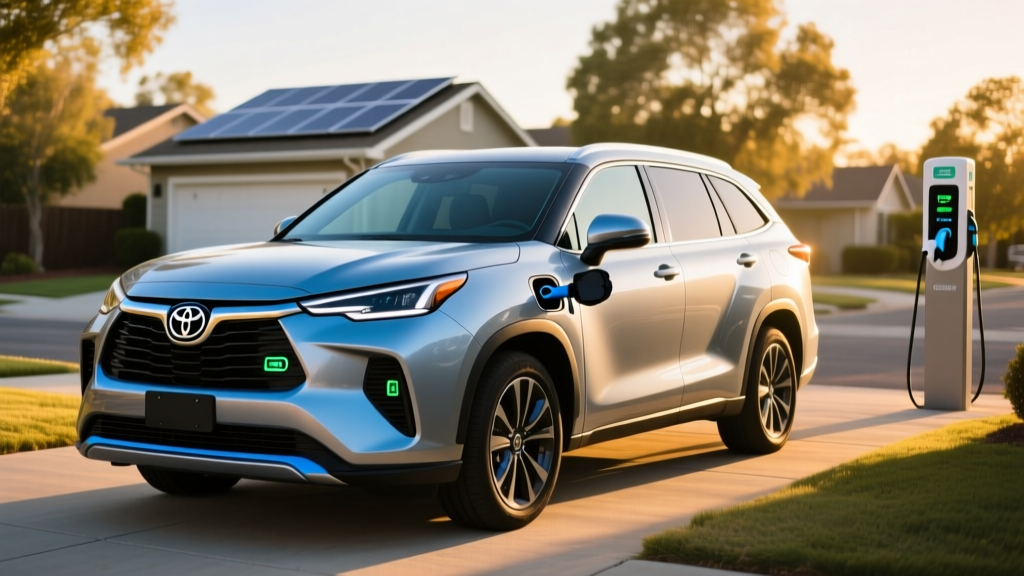
If you need three rows, all-wheel drive, and don't want to plug in, the 2026 Toyota Highlander Hybrid remains the default recommendation in the midsize SUV segment. Its EPA-rated 36 MPG combined is not a theoretical number — in real-world city driving, many owners report exceeding it, while highway cruising at 70+ mph will pull the figure down to roughly 30-32 MPG. For a 4,500-pound vehicle with seating for seven or eight, those numbers are exceptional.
This guide breaks down the Highlander Hybrid's powertrain, real-world efficiency data, battery longevity, and how it stacks up against plug-in hybrid and full EV alternatives for family-hauler duty.
Highlander Hybrid Fuel Efficiency: EPA Ratings and Real-World Data
| Driving Condition | EPA Estimate | Real-World Expectation |
|---|---|---|
| City | 36 MPG | 34–39 MPG |
| Highway (65-70 mph) | 35 MPG | 30–33 MPG |
| Combined | 36 MPG | 32–35 MPG |
| Cold Weather (below 30°F) | — | 28–32 MPG |
| Towing (3,500 lb max) | — | 18–22 MPG |
The Highlander Hybrid's city MPG advantage over its highway rating is a hallmark of Toyota's series-parallel hybrid system. At low speeds, the electric motors do heavy lifting, and regenerative braking recaptures energy that a conventional vehicle would waste as heat. Stop-and-go traffic actually improves hybrid efficiency relative to a gas-only SUV.
On the highway, the 2.5-liter four-cylinder engine runs more frequently and at higher loads. Aerodynamic drag on a boxy three-row SUV compounds above 70 mph, which is where you'll see the biggest deviation from EPA numbers. Data from fueleconomy.gov owner submissions consistently show combined averages in the low-to-mid 30s.
Powertrain Breakdown: How Toyota's Hybrid System Works
| Specification | 2026 Highlander Hybrid |
|---|---|
| Engine | 2.5L DOHC 4-cylinder (186 hp, 173 lb-ft) |
| Electric Motors | Front: 134 kW / Rear: 40 kW |
| Combined Net Horsepower | 243 hp |
| Transmission | eCVT (planetary gearset, not belt-driven) |
| Drivetrain | AWD (electronic rear motor, no mechanical driveshaft) |
| Hybrid Battery | ~1.6 kWh nickel-metal hydride (NiMH) |
| 0-60 mph | ~7.8 seconds |
| Towing Capacity | 3,500 lbs |
| Curb Weight | ~4,515 lbs |
The Highlander Hybrid uses Toyota's fourth-generation hybrid system. The eCVT is not a conventional continuously variable transmission — it's a planetary gearset that seamlessly blends engine and motor power without the rubber-band sensation associated with belt-driven CVTs. This is mechanically proven hardware with millions of miles of cumulative fleet data behind it.
The AWD system (branded "AWD-e") uses a dedicated rear electric motor rather than a mechanical driveshaft. This means no drivetrain hump eating into cabin space, and the rear motor activates only when needed — during acceleration, low-traction conditions, or cornering — which preserves efficiency.
HEV vs PHEV vs EV: Which Powertrain Fits Your Family?
Conventional Hybrid (HEV)
Example: Highlander Hybrid
Plug in? No
Electric-only range: Under 1 mile at very low speeds
How it works: Gas engine + small battery recharged by regen braking and the engine. You just drive and fill up normally.
Plug-in Hybrid (PHEV)
Example: Toyota RAV4 Prime
Plug in? Yes (optional but recommended)
Electric-only range: 25-42 miles typical
How it works: Larger battery (~18 kWh) charges from a wall outlet for short electric trips, then operates as a regular hybrid once depleted.
Full EV (BEV)
Example: Kia EV9
Plug in? Yes (required)
Electric-only range: 230-310 miles
How it works: No gas engine. 80-100 kWh battery charged at home or public stations. Lowest operating cost if charging access is reliable.
The Highlander Hybrid is a conventional HEV — it does not plug in. Toyota currently does not offer a Highlander Prime (PHEV variant). If you want Toyota plug-in hybrid capability in a three-row package, that option doesn't exist yet in the lineup. The RAV4 Prime offers 42 miles of electric range but only seats five. The Grand Highlander Hybrid is the closest alternative with more cargo room and similar efficiency.
Decision Framework
Choose the Highlander Hybrid if: You need 3 rows, don't have reliable home charging access for a plug-in vehicle, drive a mix of city and highway, and want minimal behavioral change from your current gas SUV.
Consider a PHEV (like the RAV4 Prime or Hyundai Tucson PHEV) if: You have home Level 2 charging, most daily trips are under 35 miles, and you can accept 2 rows or slightly less cargo space.
Consider a full EV (like the Kia EV9) if: You have reliable home charging, your daily commute is predictable, you rarely tow, and you want the lowest per-mile operating cost with no oil changes.
Pricing, Trims, and Tax Credit Eligibility
| Trim | MSRP (2026 est.) | Federal Tax Credit |
|---|---|---|
| LE | $41,770 | Not eligible |
| XLE | $45,370 | Not eligible |
| Limited | $49,570 | Not eligible |
| Platinum | $53,170 | Not eligible |
Important: The Highlander Hybrid is a conventional HEV and does not qualify for the federal §30D Clean Vehicle Credit. That credit applies only to plug-in vehicles (PHEVs and BEVs) with sufficient battery capacity and meeting critical-mineral sourcing and MSRP caps under current IRS rules.
Some states offer their own incentives for hybrid vehicles, but these vary significantly by jurisdiction and change frequently. Check your state energy office or department of environmental quality for current programs. A few states have offered rebates on HEVs in the past, but most incentive programs have shifted toward plug-in vehicles.
Battery Longevity, Warranty, and Replacement Cost
Hybrid Battery Warranty
Coverage: 10 years / 150,000 miles (whichever comes first)
What's covered: Hybrid battery pack, hybrid control module, and related hybrid system components
Capacity threshold: Toyota covers defects and abnormal degradation; normal capacity loss over time is expected but typically minimal on NiMH packs
Toyota's hybrid battery track record is among the best in the industry. The Highlander Hybrid uses a nickel-metal hydride (NiMH) battery pack — not the larger lithium-ion packs found in PHEVs and BEVs. NiMH chemistry is less energy-dense but extremely durable and well-understood. Taxi fleets running Toyota hybrids have logged 300,000+ miles on original battery packs.
| Concern | Reality |
|---|---|
| Typical battery lifespan | 15+ years / 200,000+ miles in most climates |
| Replacement cost (out of warranty) | $3,000–$4,500 (OEM), $1,500–$2,500 (reconditioned) |
| Failure rate | Very low — well under 5% within warranty period |
| Degradation impact on MPG | Negligible — the system compensates; you won't notice a drop |
The hybrid battery is not the same as the 12V auxiliary battery (which will still need replacement every 4-6 years like any vehicle). The hybrid traction battery is sealed, passively cooled, and operates within a narrow state-of-charge window managed by the vehicle's computer — this is why degradation is so slow compared to BEV batteries that routinely charge to 100% and discharge deeply.
Reliability and Ownership Costs
The Highlander Hybrid carries Toyota's reputation for long-term reliability, and the hybrid powertrain specifically has fewer wear items than a conventional gas drivetrain:
- No traditional starter motor — the hybrid motor-generator starts the engine
- Regenerative braking reduces wear on friction brake pads (many owners report 80,000+ miles on original pads)
- eCVT has no belts, clutches, or torque converter to fail — it's a simple planetary gearset
- Engine runs less — at stops and low speeds, it shuts off entirely, reducing accumulated engine hours
Annual fuel cost comparison at 15,000 miles/year and $3.50/gallon:
| Vehicle | Combined MPG | Annual Fuel Cost | 5-Year Fuel Cost |
|---|---|---|---|
| Highlander Hybrid (AWD) | 36 | $1,458 | $7,292 |
| Highlander Gas (AWD, 2.4T) | 24 | $2,188 | $10,938 |
| Competitor (Mazda CX-90, AWD) | 25 | $2,100 | $10,500 |
The hybrid saves approximately $730 per year or $3,646 over five years in fuel alone compared to the gas-only Highlander, per data from EPA fueleconomy.gov. Factor in slightly higher initial purchase price ($1,500-$2,500 hybrid premium depending on trim) and the payback period is roughly 2-3 years.
Pros
- 36 MPG combined is class-leading for a 3-row AWD SUV
- Proven, durable hybrid system with 10-year battery warranty
- No plug-in required — zero behavioral change from a gas car
- Strong resale value; Toyota hybrids hold premium in used market
- Smooth, quiet operation in EV mode at low speeds
- Reduced brake wear from regenerative braking
Cons
- 243 hp feels modest for a 4,500-lb vehicle — adequate, not quick
- No PHEV variant available (no electric-only commuting option)
- Highway MPG drops noticeably above 70 mph
- No federal tax credit eligibility
- Third row is tight for adults on longer trips
- Towing drops to 3,500 lbs (gas model tows 5,000 lbs)
Highlander Hybrid vs. the Competition
The midsize hybrid SUV segment has grown, but the Highlander Hybrid still sets the efficiency bar. Here's how it compares:
| Vehicle | Combined MPG | Rows | Combined HP | Starting MSRP |
|---|---|---|---|---|
| Toyota Highlander Hybrid | 36 | 3 | 243 | $41,770 |
| Toyota Grand Highlander Hybrid | 36 (MAX Hybrid: 27) | 3 | 243 / 362 | $44,405 |
| Kia Sorento Hybrid | 34 | 3 | 261 | $38,390 |
| Hyundai Santa Fe Hybrid | 34 | 3 | 232 | $39,400 |
| Mazda CX-90 PHEV | 25 (gas) / 56 MPGe (PHEV) | 3 | 323 | $51,400 |
The Grand Highlander Hybrid offers the same efficiency with substantially more third-row and cargo space, making it the better pick if budget allows. The Kia Sorento Hybrid undercuts on price but delivers slightly less MPG and a smaller third row. The Mazda CX-90 PHEV offers 26 miles of electric-only range and more power, but at a significantly higher price — and it requires plug-in access to realize its efficiency advantage.
Frequently Asked Questions
How many MPG does the Highlander Hybrid actually get?
The EPA rates it at 36 MPG city, 35 highway, and 36 combined. In real-world use, city-heavy drivers often see 37-39 MPG thanks to regenerative braking and electric-only low-speed operation. Highway-dominant driving at 70+ mph typically returns 30-33 MPG. Cold weather reduces efficiency by roughly 10-15%.
Does the Highlander Hybrid need to be plugged in?
No. The Highlander Hybrid is a conventional self-charging hybrid (HEV). Its small battery is recharged by the gas engine and regenerative braking. You fuel it exactly like a regular gasoline vehicle — no charging cable, no outlet, no behavioral change required.
Is there a plug-in hybrid (PHEV) Highlander?
Not as of the 2026 model year. Toyota has not announced a Highlander Prime. If you want PHEV capability from Toyota in a larger vehicle, the RAV4 Prime (42 miles electric, 5 seats) or the Grand Highlander Hybrid (HEV only, 3 rows) are the closest alternatives. The Mazda CX-90 PHEV offers a 3-row plug-in option from a competing brand.
How long does the hybrid battery last, and what does replacement cost?
Toyota's hybrid batteries routinely last 15+ years and 200,000+ miles. The battery is covered by a 10-year/150,000-mile warranty. Out-of-warranty replacement runs $3,000-$4,500 for a new OEM pack, or $1,500-$2,500 for a reconditioned unit. Given the track record, most owners will sell or trade the vehicle before a replacement is needed.
Does the Highlander Hybrid qualify for any federal tax credit?
No. The federal §30D Clean Vehicle Credit applies only to plug-in electric vehicles (PHEVs and BEVs) with battery packs of at least 7 kWh that meet critical-mineral and battery-component sourcing requirements per current IRS guidelines. The Highlander Hybrid's ~1.6 kWh NiMH battery does not meet this threshold. Some states may offer separate hybrid incentives — check your state's energy or environmental agency.
Hybrid vs PHEV vs EV — which is right for a family SUV buyer?
The Highlander Hybrid (HEV) is the right pick if you need 3 rows, lack home charging access, and want the lowest-friction transition from a gas vehicle. A PHEV makes sense if you can charge at home and want 25-40 miles of electric commuting with gas backup for road trips — but 3-row PHEV options are limited and pricier. A full EV (like the Kia EV9) offers the lowest operating cost and smoothest drive but requires reliable charging infrastructure and acceptance of range planning for longer trips.
Is the Highlander Hybrid reliable?
Yes. Toyota's hybrid powertrain is one of the most thoroughly validated systems in the automotive industry, with over 25 years of production history and millions of vehicles in service. The eCVT has no belts or friction clutches to wear out. The Highlander Hybrid consistently earns strong reliability ratings from IIHS and owner satisfaction surveys. The main ownership complaints tend to involve infotainment and road noise, not the powertrain.
How does towing affect fuel efficiency?
Towing at or near the 3,500-pound maximum will reduce fuel economy to approximately 18-22 MPG depending on trailer weight, terrain, and speed. The hybrid system provides smooth low-speed torque from the electric motors, which helps with trailer launch. Note that the gas-only Highlander (with the turbocharged 2.4L) has a 5,000-lb towing capacity — if you tow heavy regularly, the gas model may be more appropriate despite the fuel cost penalty.