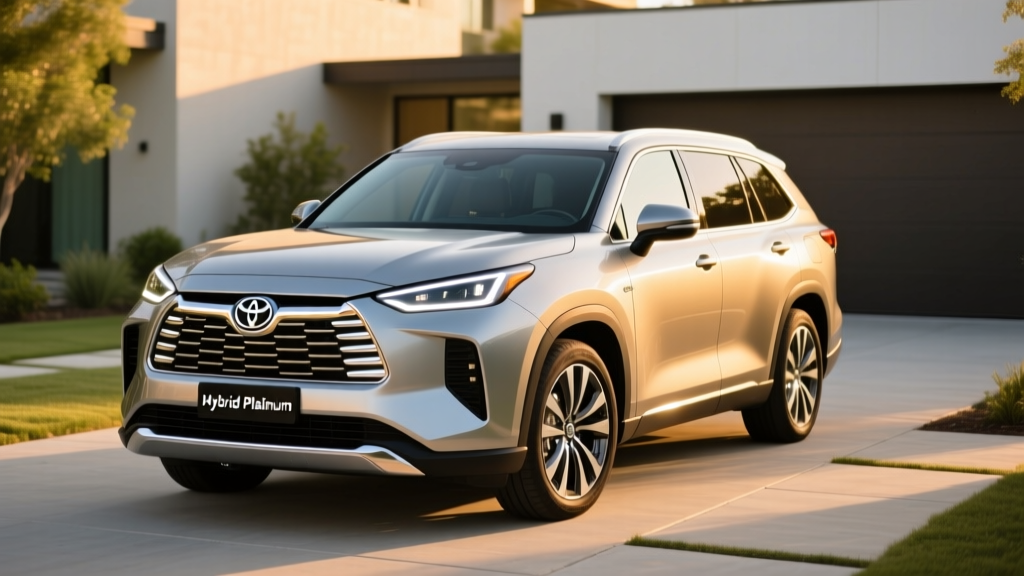
The 2026 Toyota Grand Highlander Hybrid Platinum sits at the top of Toyota's three-row hybrid SUV lineup, pairing the torque-heavy Hybrid MAX powertrain with a premium interior and genuine adult-sized third-row seating. For families who want electric-like efficiency around town without ever plugging in, this is one of the most compelling options on the market. But does the Platinum trim's $55,000+ price tag justify itself against the lower trims — or against a plug-in hybrid or full EV alternative?
We've broken down every number that matters: EPA fuel economy, real-world MPG observations, powertrain output, battery warranty coverage, and federal tax credit eligibility under current IRS §30D rules.
HEV vs PHEV: Where the Grand Highlander Hybrid Fits
Before diving into specs, it's worth clarifying what the Grand Highlander Hybrid is — and isn't. This is a conventional hybrid (HEV), not a plug-in hybrid (PHEV). That distinction matters for your daily routine:
Conventional Hybrid (HEV)
- Plugging in: Never required — the battery charges via regenerative braking and the gasoline engine
- Electric-only range: Minimal (typically under 1 mile at low speeds)
- Efficiency gain: 30-50% better MPG than a gas-only equivalent
- Example: Toyota Grand Highlander Hybrid
Plug-In Hybrid (PHEV)
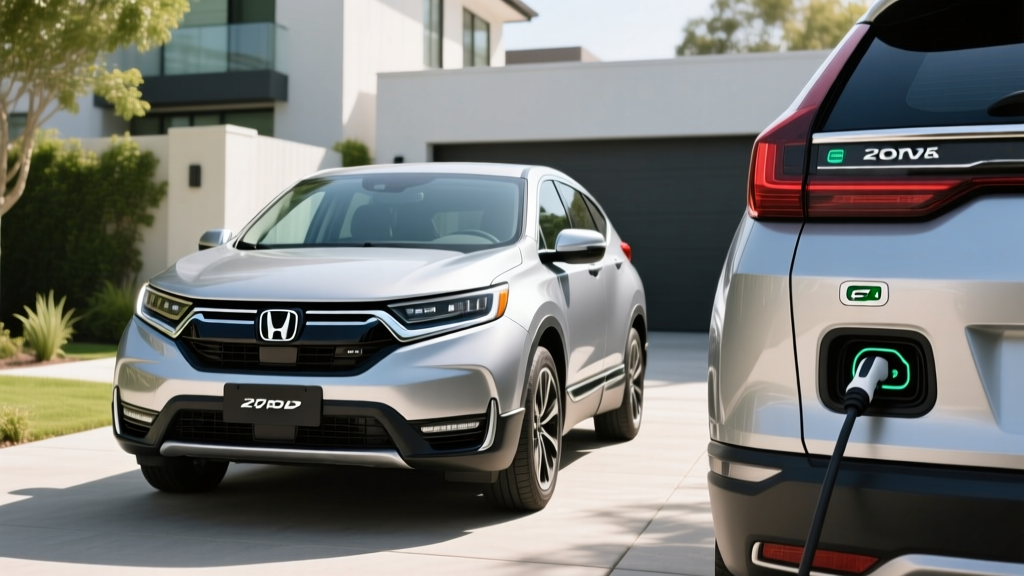
- Plugging in: Required to access full electric range; operates as HEV once battery depletes
- Electric-only range: Typically 25-45 miles on a full charge
- Efficiency gain: Near-zero fuel use on short commutes; HEV-level MPG after battery depletes
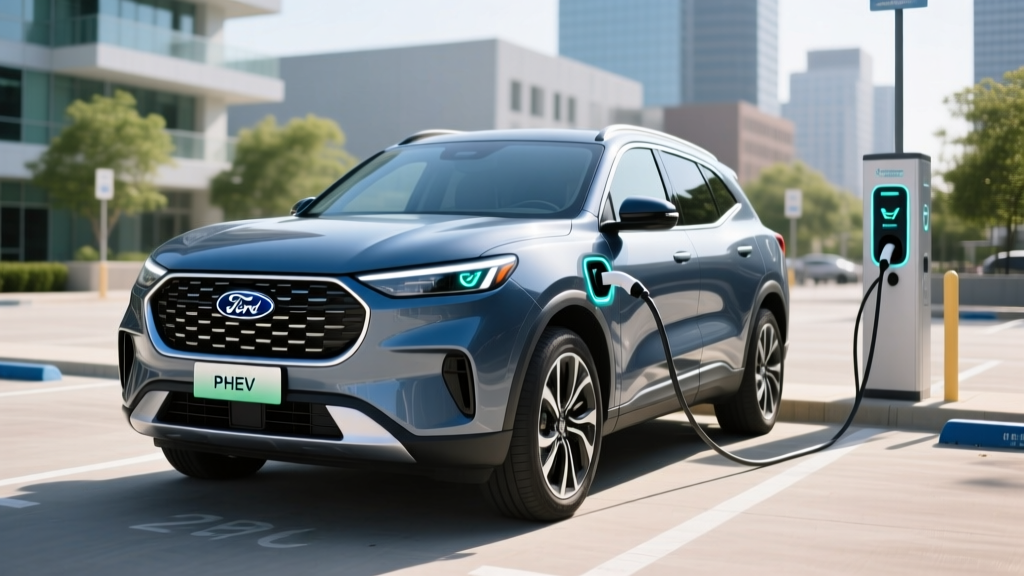
- Example: Toyota RAV4 Prime, Chrysler Pacifica PHEV
Toyota does not currently offer a Grand Highlander PHEV in the US market. If you need plug-in electric range for a short commute, you'd need to look at smaller PHEV SUVs or consider a full battery-electric vehicle (BEV) like the Kia EV9 or Tesla Model X.
Fuel Economy: EPA Ratings and Real-World MPG
The 2026 Grand Highlander Hybrid Platinum comes exclusively with the Hybrid MAX powertrain and standard all-wheel drive (AWD). Here's how the EPA rates it, alongside the standard Hybrid powertrain available on lower trims for comparison:
| Powertrain | City MPG | Highway MPG | Combined MPG | Trims Available |
|---|---|---|---|---|
| Hybrid MAX AWD (Platinum) | 26 | 27 | 27 | Limited, Platinum |
| Standard Hybrid AWD | 36 | 32 | 34 | XLE, Limited |
| Standard Hybrid FWD | 37 | 34 | 36 | XLE, Limited |
Source: fueleconomy.gov
Real-World MPG: What to Actually Expect
The Hybrid MAX's 27 MPG combined EPA rating is the trade-off for its 362 horsepower output. In real-world driving, owners report numbers that track closely with the EPA sticker — typically 25-28 MPG in mixed driving. Highway cruising at 70-75 mph tends to yield 26-28 MPG, while stop-and-go city traffic can push it to 27-29 MPG thanks to regenerative braking recapturing energy that a gas-only SUV would waste as heat.
By contrast, the standard Hybrid AWD's 34 MPG combined is where the Grand Highlander truly shines for efficiency-focused buyers. Real-world city driving in the standard Hybrid often exceeds the EPA city rating — 37-39 MPG is achievable because the smaller engine and lighter hybrid system lean harder on electric assist at low speeds.
Bottom line: If maximum fuel economy is your priority, the standard Hybrid AWD at 34 MPG combined is the efficiency winner. The Platinum's Hybrid MAX trades roughly 7 MPG for 122 additional horsepower and the premium trim content.
Powertrain and Performance Specs
| Specification | Hybrid MAX (Platinum) | Standard Hybrid |
|---|---|---|
| Engine | 2.4L turbocharged 4-cylinder | 2.5L naturally aspirated 4-cylinder |
| Combined Horsepower | 362 HP | 245 HP |
| Combined Torque | 400 lb-ft | 173 lb-ft (engine) |
| Drivetrain | AWD (standard) | FWD or AWD |
| Transmission | 6-speed automatic | eCVT |
| 0-60 MPH (est.) | ~6.3 seconds | ~7.8 seconds |
| Towing Capacity | 5,000 lbs | 3,500 lbs |
| Fuel Tank | 17.1 gallons | 17.1 gallons |
| Total Range (est.) | ~462 miles | ~581 miles (AWD) |
The Hybrid MAX replaces the eCVT found in the standard Hybrid with a traditional 6-speed automatic transmission, which gives it more linear, familiar acceleration. The turbocharged 2.4L engine paired with front and rear electric motors delivers the kind of low-end torque that makes merging and passing effortless — even at altitude where naturally aspirated engines lose power.
The 5,000-pound towing capacity on Hybrid MAX models is a meaningful advantage for anyone pulling a small boat, camper, or utility trailer. The standard Hybrid's 3,500-pound limit handles bike racks and light cargo trailers but falls short for heavier loads.
Pricing and Tax Credit Eligibility
The 2026 Grand Highlander Hybrid Platinum carries a starting MSRP of approximately $55,105 (including destination charge). Fully optioned with packages like the panoramic roof and premium paint, expect to land between $56,000 and $58,000 out the door before taxes and fees.
Does It Qualify for a Federal Tax Credit?
No. The Grand Highlander Hybrid is a conventional HEV, not a plug-in vehicle. Under IRS §30D rules, the federal clean vehicle credit of up to $7,500 is available only for battery electric vehicles (BEVs) and plug-in hybrids (PHEVs) that meet battery sourcing, critical mineral, MSRP cap, and buyer income requirements. Since the Grand Highlander Hybrid has no plug and a relatively small battery charged solely by the engine and regen braking, it does not qualify for §30D.
Hybrid Tax Credit Reality Check
- Federal §30D credit: Not eligible (HEV, not PHEV or BEV)
- Federal §30C alternative fuel credit: Not applicable
- State/local incentives: Vary by jurisdiction — some states offer rebates for any hybrid. Check your state energy office or DMV for current programs.
- IRS guidance: irs.gov/credits-deductions/clean-vehicle-credit
The lack of a federal tax credit is a common pain point for hybrid buyers comparing against PHEVs or BEVs that may qualify. However, the Grand Highlander Hybrid's lower purchase price relative to most three-row EVs (the Kia EV9 starts around $55K, the Tesla Model X over $80K) and zero home-charging installation cost partially offset this gap.
Hybrid Battery Warranty and Longevity
Toyota Hybrid Battery Coverage
- Hybrid battery warranty: 10 years / 150,000 miles (whichever comes first)
- Hybrid system components: 8 years / 100,000 miles
- Transferability: Warranty transfers to subsequent owners automatically
Toyota's hybrid battery warranty is among the best in the industry, and the company's track record backs it up. The Grand Highlander Hybrid uses a sealed nickel-metal hydride (NiMH) or lithium-ion battery pack (chemistry varies by model year and powertrain) that is substantially smaller than a BEV or PHEV battery — typically around 1.5-2.0 kWh for the standard Hybrid and slightly larger for the Hybrid MAX.
What Does Replacement Cost?
Based on current Toyota hybrid battery replacement pricing across models, a Grand Highlander Hybrid battery replacement would likely fall in the $3,000 to $5,000 range (parts and labor) if needed outside warranty. However, Toyota hybrid batteries routinely last 150,000-200,000+ miles before significant degradation. The Prius, Camry Hybrid, and Highlander Hybrid have all demonstrated exceptional battery longevity in fleet and owner data.
The key advantage of a conventional hybrid battery versus a BEV pack: because the battery is small and never deeply cycled (the system maintains a state of charge between roughly 40% and 80%), stress on the cells is minimal. Most Toyota hybrid owners will never face a battery replacement.
Platinum Trim: What You Get for the Money
The Platinum is the Grand Highlander Hybrid's top-tier trim, and it loads up with features that justify the premium over the Limited:
- Quilted leather-trimmed seats with ventilated second-row captain's chairs
- Panoramic glass roof (optional package)
- 12.3-inch digital instrument cluster and 12.3-inch infotainment touchscreen
- Head-up display (HUD)
- 360-degree camera system with curb-view mode
- JBL premium audio with 11 speakers
- Digital rearview mirror
- Heated steering wheel and heated/ventilated front seats
- Toyota Safety Sense 3.0 (ADAS suite — SAE Level 2 driver assistance)
- 20-inch black alloy wheels
The Platinum's Hybrid MAX powertrain is exclusive to the Limited and Platinum trims. If you want the standard Hybrid's superior fuel economy, you'll need to select the XLE or Limited — the Platinum does not offer the standard Hybrid as an option.
Grand Highlander Hybrid vs EV vs PHEV: Which Fits You?
Choose the Grand Highlander Hybrid If:
- You lack access to home or workplace charging (apartment, street parking)
- You regularly take long road trips and don't want to plan around DC fast chargers
- You need three rows with genuine adult space in the third row
- You want a $55K vehicle, not a $70-80K EV
- You tow up to 5,000 lbs
Consider a PHEV or Full EV If:
- You have Level 2 home charging and a commute under 30-40 miles (PHEV covers it on electricity alone)
- You want to qualify for the $7,500 federal tax credit (§30D eligible BEVs/PHEVs)
- You want zero tailpipe emissions on daily driving (BEV) or most daily driving (PHEV)
- Your state offers additional EV/PHEV rebates or HOV lane access
- Lower per-mile fuel cost matters more than upfront price
The Three-Row EV Gap
As of 2026, the three-row electric SUV market remains limited and expensive. The Kia EV9 (EPA range up to 304 miles, starting ~$55K) is the most direct BEV competitor, but it sacrifices some cargo volume and charges via CCS/NACS at up to 236 kW DC — excellent, but still requiring route planning on long trips. The Rivian R1S and Tesla Model X both exceed $75,000. For many families, the Grand Highlander Hybrid Platinum offers the most practical three-row solution without range anxiety or charging infrastructure dependency.
Reliability and Ownership Costs
Toyota's hybrid systems have been in production since 1997 (Prius), and the Highlander Hybrid has been on sale since 2006. The Grand Highlander, introduced for the 2024 model year, builds on this mature platform. Toyota consistently ranks at or near the top in J.D. Power and Consumer Reports reliability surveys, and the hybrid powertrain is one of the brand's most proven technologies.
Key ownership cost advantages over a gas-only three-row SUV:
- Fuel savings: At 27 MPG combined (Hybrid MAX) vs. ~22 MPG for the gas-only Grand Highlander turbo, you save roughly $350-$500 annually at 15,000 miles/year and $3.50/gallon
- Brake longevity: Regenerative braking significantly reduces wear on friction brakes — many Toyota hybrid owners report 80,000-100,000+ miles on original brake pads
- No plug-in infrastructure cost: Zero electrical upgrades needed (unlike a BEV or PHEV requiring a Level 2 home charger installation, which averages $500-$2,000)
Insurance premiums for the Grand Highlander Hybrid Platinum will be comparable to other $55K SUVs — expect $150-$220/month depending on your profile and location. Always get a quote before purchasing, as hybrid-specific repair costs can vary by insurer.
Frequently Asked Questions
How many MPG does the Grand Highlander Hybrid Platinum get?
The 2026 Grand Highlander Hybrid Platinum with the Hybrid MAX AWD powertrain is EPA-rated at 26 city / 27 highway / 27 combined MPG. Real-world driving typically yields 25-28 MPG in mixed conditions. The standard Hybrid AWD (available on lower trims) achieves a more efficient 36/32/34 MPG city/highway/combined.
Does the Grand Highlander Hybrid need to be plugged in?
No. The Grand Highlander Hybrid is a conventional HEV. Its battery charges automatically through regenerative braking and the gasoline engine. There is no plug, no charging cable, and no need for home charging infrastructure. This is fundamentally different from a PHEV or BEV.
Is there a Grand Highlander PHEV or plug-in version?
As of the 2026 model year, Toyota does not offer a Grand Highlander PHEV in the United States. If you need a three-row Toyota with plug-in capability, the closest option is the Sienna PHEV minivan (if available in your market) or stepping outside Toyota to options like the Chrysler Pacifica PHEV.
Does the Grand Highlander Hybrid qualify for a federal tax credit?
No. Under current IRS §30D rules, only plug-in electric vehicles (BEVs and PHEVs) are eligible for the federal clean vehicle credit of up to $7,500. The Grand Highlander Hybrid is a conventional HEV and does not qualify. Some state or local programs may offer incentives for hybrids — check with your state energy office. Source: IRS Clean Vehicle Credit.
How long will the hybrid battery last and what does replacement cost?
Toyota covers the hybrid battery for 10 years or 150,000 miles. Based on historical data from the Highlander Hybrid and other Toyota models, these batteries routinely last 150,000-200,000+ miles. If replacement is needed out of warranty, expect $3,000-$5,000 for parts and labor. The small battery size and partial-cycling strategy (maintaining ~40-80% SoC) contribute to exceptional longevity.
Can the Grand Highlander Hybrid Platinum tow?
Yes. The Hybrid MAX powertrain in the Platinum trim is rated for up to 5,000 pounds of towing capacity — sufficient for a small travel trailer, boat, or utility trailer. The standard Hybrid AWD is rated for 3,500 pounds.
Is Toyota Safety Sense on the Platinum actually self-driving?
No. Toyota Safety Sense 3.0 is an SAE Level 2 driver-assistance system. It includes adaptive cruise control, lane-centering, automatic emergency braking, and blind-spot monitoring. The driver must remain fully engaged, hands on the wheel, and eyes on the road at all times. It is not autonomous or self-driving — only Level 4 services like Waymo operate without a human driver.
The 2026 Grand Highlander Hybrid Platinum is a purpose-built family hauler for buyers who want hybrid efficiency without lifestyle changes. No plugs, no range planning, no charging apps — just fill up at any gas station and go. Its 27 MPG combined (Hybrid MAX) isn't class-leading for efficiency, but paired with 362 HP, 5,000-lb towing, and a genuinely spacious third row, it occupies a practical sweet spot that no current three-row EV matches at this price point.