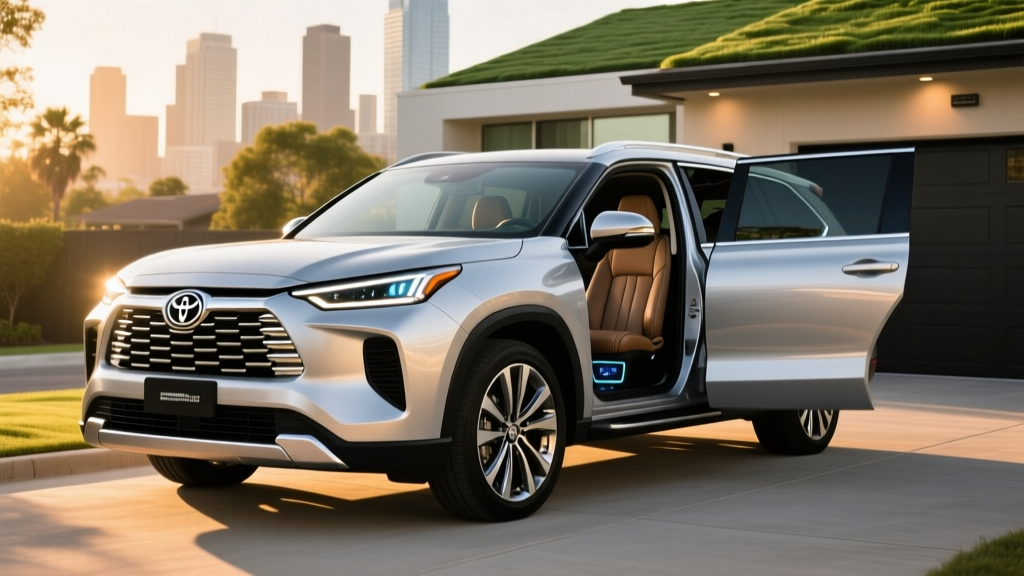
The Toyota Grand Highlander Hybrid MAX Platinum sits at the top of Toyota's three-row hybrid SUV lineup, pairing a turbocharged engine with electric motors for 362 horsepower and an EPA-estimated 27 MPG combined. For buyers who need serious cargo and passenger space but want to avoid the fuel bills of a conventional V6 SUV — and aren't ready to commit to a full battery-electric vehicle — this trim represents one of the most compelling packages on the market. Here's everything you need to know about its powertrain, efficiency, pricing, and long-term ownership costs.
Grand Highlander Hybrid MAX Platinum: Quick Spec Overview
| Specification | Value |
|---|---|
| Powertrain | 2.4L turbo 4-cyl + electric motors (Hybrid MAX) |
| Combined Horsepower | 362 hp / 400 lb-ft torque |
| EPA Fuel Economy | 26 city / 27 hwy / 27 combined MPG |
| Drivetrain | AWD (standard on Hybrid MAX) |
| Seating | 7 passengers (captain's chairs) or 8 (bench) |
| Cargo Volume (behind 3rd row) | ~20.6 cu ft |
| Towing Capacity | 5,000 lbs |
| Battery Type | Nickel-metal hydride (NiMH), ~1.8 kWh |
| Hybrid Battery Warranty | 10 years / 150,000 miles |
| Base MSRP (Platinum trim) | ~$58,170 |
Understanding the Hybrid MAX Powertrain
The "Hybrid MAX" badge distinguishes this powertrain from the standard Grand Highlander Hybrid. The conventional Hybrid (non-MAX) uses a 2.5-liter naturally aspirated four-cylinder paired with electric motors for 245 hp and an EPA-estimated 35 MPG combined. The Hybrid MAX trades some efficiency for substantially more power: a 2.4-liter turbocharged four-cylinder working with a more robust electric motor system to produce 362 hp and 400 lb-ft of torque.
This is a conventional hybrid (HEV), not a plug-in hybrid (PHEV). That means you never plug it in. The battery recharges through regenerative braking and the gasoline engine. There is no electric-only driving range to manage, no charging cable to deal with, and no need for home charging infrastructure. You simply fill it with regular unleaded gasoline and drive.
A conventional hybrid (HEV) like the Grand Highlander Hybrid MAX uses a small battery (~1–2 kWh) that charges itself through braking and the engine. It assists the gas engine for better MPG but cannot drive on electricity alone for meaningful distances.
A plug-in hybrid (PHEV) has a larger battery (typically 15–25 kWh), can be plugged in to charge, and offers 20–45 miles of electric-only range before the gas engine kicks in. The Grand Highlander does not currently offer a PHEV variant in the US market.
Fuel Economy: EPA Ratings and Real-World MPG
| Driving Cycle | EPA Estimate |
|---|---|
| City | 26 MPG |
| Highway | 27 MPG |
| Combined | 27 MPG |
The Hybrid MAX's EPA ratings — 26 city / 27 highway / 27 combined — reflect its performance-oriented tuning. For comparison, the standard (non-MAX) Grand Highlander Hybrid achieves 35 MPG combined, a substantial 8 MPG advantage. That gap is the cost of the MAX's 117 additional horsepower and 5,000-pound towing capability.
Real-world expectations: According to fueleconomy.gov, owner-reported fuel economy for the Hybrid MAX powertrain tends to cluster around 25–28 MPG in mixed driving. Hybrids generally perform closer to or slightly above their EPA city rating in stop-and-go traffic (where regenerative braking recaptures the most energy) and may fall 1–2 MPG below their highway rating on sustained 75+ mph interstate drives. In cold weather (below 30°F), expect a 5–10% reduction as the engine runs more frequently to provide cabin heat and maintain battery temperature.
For context, a comparably sized gas-only three-row SUV like the Mazda CX-90 turbo returns around 25 MPG combined, and the non-hybrid Toyota Highlander V6 achieves approximately 24 MPG combined. The Hybrid MAX's 27 MPG combined is a modest but meaningful improvement over those competitors, especially given its power output.
Pricing, Trims, and Tax Credit Eligibility
The 2026 Toyota Grand Highlander Hybrid MAX Platinum carries an MSRP starting at approximately $58,170 (including destination charge). This positions it as the most expensive Grand Highlander variant, sitting above the Hybrid MAX Limited (~$53,000) and the standard Hybrid trims (~$45,000–$50,000).
The Platinum trim adds premium features including a panoramic roof, head-up display, 360-degree camera, heated and ventilated second-row captain's chairs, and Toyota's advanced parking assist.
The Grand Highlander Hybrid MAX is a conventional hybrid (HEV), not a plug-in electric vehicle. It does not qualify for the federal §30D Clean Vehicle Credit (up to $7,500), which is reserved for battery-electric vehicles (BEVs) and plug-in hybrids (PHEVs) meeting battery sourcing, MSRP, and buyer income requirements as outlined by the IRS.
However, some states offer rebates or incentives for conventional hybrids. Check your state's energy office or department of environmental quality for current programs. Always consult a tax professional for eligibility specifics.
Reliability, Battery Warranty, and Long-Term Costs
Toyota's hybrid systems have an extensive track record spanning over 25 years, beginning with the original Prius in 1997. The Hybrid Synergy Drive architecture used in the Grand Highlander is a mature, well-proven technology. IIHS and NHTSA have rated the Grand Highlander highly for safety, and Toyota's overall brand reliability consistently ranks at or near the top in long-term dependability studies.
Toyota covers the Grand Highlander's hybrid battery with a 10-year / 150,000-mile warranty (whichever comes first). This applies nationwide and is transferable to subsequent owners.
Battery replacement cost: If the hybrid battery requires replacement outside of warranty, expect to pay between $3,000 and $5,000 for a new OEM battery pack (parts and labor). Refurbished or aftermarket options may reduce this to $2,000–$3,500. Given the NiMH chemistry's proven longevity — many Toyota hybrid batteries exceed 200,000 miles before significant degradation — this is a low-probability expense for most owners.
The Hybrid MAX's NiMH battery is smaller and less stressed than a PHEV or BEV battery pack. It operates within a narrow state-of-charge window (roughly 40–80%), which minimizes degradation. Unlike BEV batteries, which can cost $10,000–$20,000+ to replace, the Grand Highlander Hybrid's battery is a manageable expense and rarely fails prematurely.
Who Should Choose the Hybrid MAX Platinum?
Pros
- 362 hp with 5,000-lb towing — most powerful hybrid in its class
- 27 MPG combined beats gas-only competitors by 2–4 MPG
- No plug-in charging required — operates like a normal gas car
- 10-year / 150,000-mile hybrid battery warranty
- Platinum trim offers near-luxury features at mainstream pricing
- Toyota's proven hybrid reliability and strong resale value
Cons
- 8 MPG less efficient than the standard (non-MAX) Grand Highlander Hybrid
- $58,170 MSRP is steep for a Toyota-badged SUV
- No federal tax credit (HEV, not PHEV/BEV)
- Hybrid MAX requires premium fuel for optimal performance
- Third-row space is tighter than full-size SUVs (Tahoe, Expedition)
- Turbo engine adds complexity vs naturally aspirated hybrid
Hybrid MAX vs Standard Hybrid vs Full EV: Which Fits You?
| Factor | Grand Highlander Hybrid MAX | Grand Highlander Hybrid (Std) | Kia EV9 (BEV) |
|---|---|---|---|
| Combined MPG / MPGe | 27 MPG | 35 MPG | 89 MPGe |
| Power | 362 hp | 245 hp | 379 hp (GT-Line AWD) |
| Range | ~480 miles | ~620 miles | ~270 miles (EPA) |
| Fuel/Energy Cost (annual, 15k mi) | ~$2,400 | ~$1,850 | ~$800 (home charging) |
| Plug-in Required? | No | No | Yes |
| Federal Tax Credit | None | None | Up to $7,500 (if eligible) |
| Starting Price | ~$58,170 | ~$45,000 | ~$54,900 |
| Towing | 5,000 lbs | 3,500 lbs | 5,000 lbs |
Choose the Hybrid MAX Platinum if: You need maximum towing capacity and passing power, frequently drive with a full load of passengers and cargo, and don't want to manage charging logistics. It's ideal for families who take road trips, tow a boat or camper, and want the simplicity of gas-station refueling with better efficiency than a conventional V6.
Choose the standard Hybrid if: Fuel economy is your top priority and you don't need the extra horsepower or towing capacity. The 35 MPG combined rating saves roughly $550/year in fuel compared to the MAX, and the lower starting price (~$45,000) means a significantly lower cost of entry.
Choose a full EV (like the Kia EV9) if: You have reliable home charging, drive under 250 miles daily, want the lowest operating costs, and can take advantage of the federal tax credit. BEVs eliminate oil changes, have fewer moving parts, and offer the lowest per-mile energy cost — but require a lifestyle adjustment around charging on road trips.
Frequently Asked Questions
How many MPG does the Grand Highlander Hybrid MAX Platinum get?
The EPA rates it at 26 city / 27 highway / 27 combined MPG. Real-world mixed driving typically yields 25–28 MPG, with city driving sometimes slightly exceeding the EPA estimate thanks to regenerative braking.
Does the Grand Highlander Hybrid MAX need to be plugged in?
No. It is a conventional hybrid (HEV), not a plug-in hybrid. The battery charges through regenerative braking and the gasoline engine. You refuel it at any gas station with regular unleaded fuel (premium recommended for optimal performance).
Is there a plug-in hybrid (PHEV) version of the Grand Highlander?
As of the 2026 model year, Toyota does not offer a PHEV variant of the Grand Highlander in the United States. If you want a Toyota PHEV with three rows, the RAV4 Prime is a two-row option; the closest three-row PHEV competitor is the Jeep Grand Cherokee 4xe or the Mazda CX-90 PHEV.
How long will the hybrid battery last?
Toyota's NiMH hybrid batteries have a proven track record of lasting 150,000–250,000+ miles with normal use. The battery is warranted for 10 years / 150,000 miles. Replacement cost outside of warranty is approximately $3,000–$5,000.
Does the Grand Highlander Hybrid MAX qualify for a tax credit?
No federal tax credit applies. The §30D Clean Vehicle Credit is only available for BEVs and PHEVs that meet battery sourcing, MSRP caps, and buyer income requirements. Some states may offer hybrid-specific rebates — check your local programs.
Is the Hybrid MAX worth the premium over the standard Hybrid?
It depends on your priorities. If you need 5,000-pound towing, 362 hp for mountain passes and highway merging, and prefer the Platinum trim's luxury features, the premium is justified. If efficiency and value are paramount, the standard Hybrid at 35 MPG combined and ~$13,000 less is the smarter financial choice.