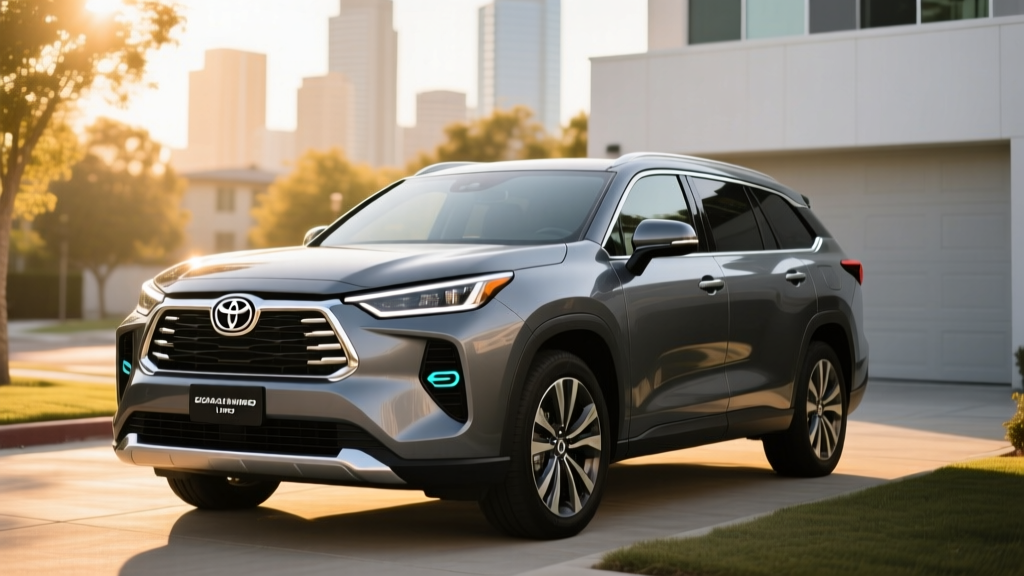
The 2026 Toyota Grand Highlander Hybrid Limited sits in a narrow but highly desirable lane: three-row family hauler, standard all-wheel drive, and EPA-estimated fuel economy that undercuts most midsize sedans. With the Hybrid MAX powertrain option now standard on Limited trims, Toyota has turned its biggest crossover into one of the most efficient vehicles in its class — without requiring a plug, a charging routine, or any change in driving habits.
This guide breaks down everything a buyer needs to know about the Grand Highlander Hybrid Limited: real-world MPG versus EPA stickers, the Hybrid MAX powertrain, battery longevity and warranty coverage, pricing with current tax-credit context, and how it stacks up against plug-in hybrids and full EVs for family duty.
HEV vs. PHEV: What the Grand Highlander Hybrid Actually Is
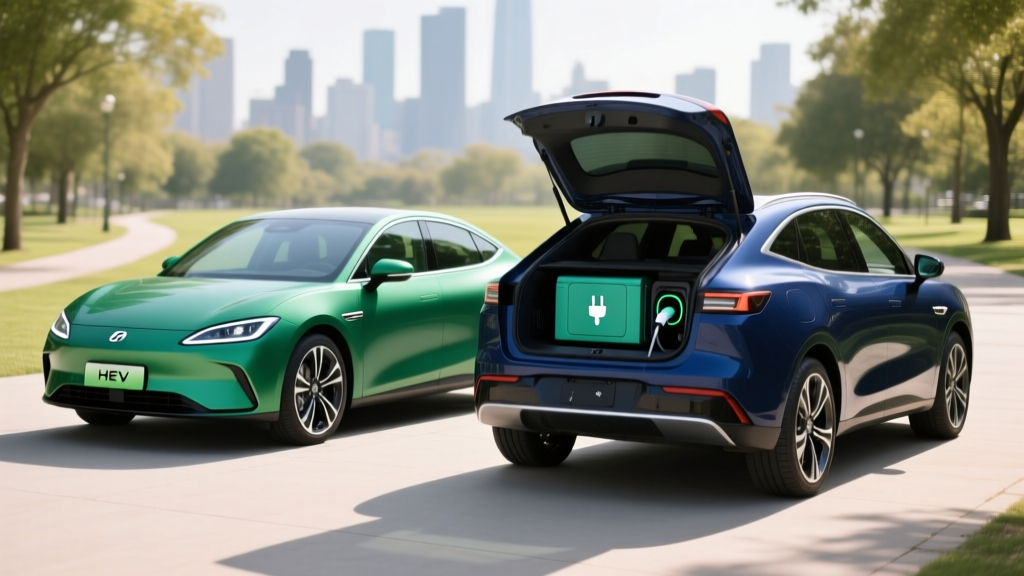
Before examining specs, it's critical to understand what you're buying. The Grand Highlander Hybrid is a conventional hybrid (HEV) — not a plug-in hybrid (PHEV). It charges its own battery through regenerative braking and the gasoline engine. You never plug it in. There is no electric-only driving mode and no all-electric range to manage.
HEV vs. PHEV vs. EV — Quick Reference
| Feature | HEV (Grand Highlander Hybrid) | PHEV (e.g., RAV4 Prime) | BEV (e.g., Kia EV9) |
|---|---|---|---|
| Plug in to charge? | No | Yes (optional) | Yes (required) |
| Electric-only range | None (EV assist only) | 25–42 mi typical | 250–350+ mi |
| Federal tax credit (§30D) | Not eligible | Up to $7,500 if qualified | Up to $7,500 if qualified |
| Home charger needed? | No | Recommended (Level 2) | Essential (Level 2) |
| Gasoline engine? | Yes (primary) | Yes (backup) | No |
If you're shopping the Grand Highlander Hybrid expecting plug-in capability or electric-only school-run miles, you'll want to look at a PHEV three-row option (currently scarce in the U.S. market) or a full EV like the Kia EV9. But if your goal is maximum fuel efficiency with zero lifestyle compromise — no plug, no range planning, no charging-app frustration — the HEV architecture is exactly the right tool.
Fuel Economy: EPA Ratings and Real-World MPG
The 2026 Grand Highlander Hybrid with the Hybrid MAX powertrain and standard AWD carries an EPA-estimated 36 MPG combined (36 city / 35 highway), according to fueleconomy.gov. That figure is remarkable for a 4,700-pound, three-row SUV with seating for up to eight.
| Driving Cycle | EPA Estimate | Real-World Expectation |
|---|---|---|
| City | 36 MPG | 37–40 MPG (hybrids excel in stop-and-go) |
| Highway | 35 MPG | 32–34 MPG (aerodynamic drag at 70+ mph) |
| Combined | 36 MPG | 34–38 MPG depending on driving mix |
Real-world context: Toyota hybrids consistently meet or exceed EPA city estimates because regenerative braking recaptures energy in traffic — the exact scenario where gas-only vehicles waste the most fuel. On highway-heavy commutes at sustained 75–80 mph speeds, expect a slight dip below the EPA highway figure due to the Grand Highlander's boxy profile and frontal area. In cold weather (below 30°F), the engine runs more frequently to provide cabin heat and maintain catalyst temperature, typically reducing observed MPG by 3–5 MPG until the system reaches operating temperature.
With a 17.9-gallon fuel tank, total range lands around 630–650 miles per tank in mixed driving — enough to drive from Denver to Kansas City without refueling.
Hybrid MAX Powertrain: Specs and Performance
The 2026 Grand Highlander Hybrid Limited uses Toyota's Hybrid MAX system, which pairs a turbocharged 2.4-liter inline-four engine with a high-output electric motor integrated into a six-speed automatic transmission. This is fundamentally different from the e-CVT-based hybrid system found in the base Grand Highlander Hybrid and most other Toyota hybrids.
| Specification | Value |
|---|---|
| Engine | 2.4L turbocharged inline-4 |
| Combined System Horsepower | 362 hp |
| Combined System Torque | 400 lb-ft |
| Transmission | 6-speed automatic (Direct Shift) |
| Drivetrain | AWD (electronic rear motor) |
| 0–60 mph | ~6.3 seconds |
| Towing Capacity | 5,000 lbs (max rated) |
| Hybrid Battery | 1.87 kWh (nickel-metal hydride, self-charging) |
The Hybrid MAX trades a small amount of efficiency for substantially more power. The 362-hp output makes the Grand Highlander Hybrid Limited one of the quickest three-row crossovers on the market, and the 5,000-lb tow rating covers most boat and camping-trailer duty. The trade-off versus the standard hybrid (which achieves ~36 MPG with 245 hp) is about 1 MPG combined in the Hybrid MAX's favor at the Limited trim due to the six-speed automatic's efficiency on highway cruises, though city figures can vary slightly by driving style.
The 1.87 kWh hybrid battery is small by EV standards — it exists to buffer regenerative energy and provide electric-motor assist, not to drive the vehicle independently. It charges automatically during deceleration and from the engine. There is no plug, no charging port, and no home-charging setup required.
Battery Longevity, Warranty, and Replacement Cost
Battery Warranty Coverage
Toyota covers the Grand Highlander Hybrid's battery and hybrid system components under its Hybrid Battery Warranty: 10 years / 150,000 miles (whichever comes first), transferable to subsequent owners. This applies in all 50 states. The broader powertrain warranty runs 5 years / 60,000 miles.
Source: Toyota Warranty Guide
Hybrid battery longevity is one of the strongest arguments for Toyota's HEV architecture. The nickel-metal hydride (NiMH) pack in the Grand Highlander Hybrid operates within a narrow state-of-charge window — typically between 40% and 80% — which dramatically reduces degradation compared to a full EV battery that cycles from 10% to 90% or higher. Toyota has been refining NiMH hybrid battery management since the 2001 Prius, and failure rates within the warranty period are low.
What happens if the battery fails out of warranty? A hybrid battery replacement for a Grand Highlander-class Toyota typically runs $3,000–$5,000 including parts and labor at a dealership. Independent hybrid specialists often offer refurbished packs for $2,000–$3,500. Compare this to EV battery replacements, which can exceed $15,000–$20,000 for large packs. The Grand Highlander's small 1.87 kWh pack is far less expensive to replace, and it rarely needs replacement within the vehicle's useful life.
Toyota's hybrid system also benefits from a brake-by-wire setup that uses regenerative braking for most deceleration, meaning the physical brake pads and rotors often last 80,000–100,000+ miles — a meaningful maintenance savings over gas-only competitors.
Pricing, Trims, and Tax Credit Eligibility
The 2026 Toyota Grand Highlander Hybrid Limited carries a starting MSRP of approximately $51,170 (including destination charge). Key standard equipment at the Limited trim includes:
- Hybrid MAX 362-hp powertrain with AWD
- Leather-trimmed seats (heated and ventilated front, heated second row)
- 12.3-inch touchscreen with wireless Apple CarPlay and Android Auto
- Toyota Safety Sense 3.0 (adaptive cruise, lane-keeping, automatic emergency braking, blind-spot monitoring)
- Panoramic moonroof
- JBL 11-speaker audio system
- Power-folding third row
Options that push the price higher include captain's chairs for the second row (reducing capacity to seven), a head-up display, and premium paint colors. A fully loaded Limited can reach approximately $54,000–$55,000.
Federal Tax Credit: Does the Grand Highlander Hybrid Qualify?
No. The Grand Highlander Hybrid is a conventional HEV and does not qualify for the federal §30D Clean Vehicle Credit (up to $7,500). That credit applies only to plug-in electric vehicles — battery-electric (BEV) and plug-in hybrid (PHEV) models that meet battery-sourcing, MSRP, and buyer-income requirements under current IRS rules.
Some states offer rebates or reduced registration fees for hybrids, but these vary widely by jurisdiction. Check your state's energy office or department of environmental quality for current programs. Toyota's hybrid lineup has historically held strong resale value, which partially offsets the absence of a federal purchase incentive — the Grand Highlander Hybrid's total cost of ownership over five years often rivals or beats gas-only competitors despite a higher sticker price, thanks to fuel savings and lower brake maintenance.
Grand Highlander Hybrid vs. EV vs. PHEV: Which Fits Your Family?
Choosing between a conventional hybrid, a plug-in hybrid, and a full EV comes down to three questions: Can you charge at home? How far do you drive daily? And how much complexity are you willing to manage?
Choose the Grand Highlander Hybrid (HEV) If:
- You cannot install a home charger (apartment, condo, street parking)
- You want EV-like city efficiency with zero behavior change
- You regularly take long road trips (500+ miles) and don't want to plan charging stops
- You need a proven three-row SUV now, not in 2–3 years
- You tow a trailer and need the 5,000-lb capacity without EV range penalties
Choose a PHEV or BEV If:
- You have Level 2 home charging (garage or driveway with 240V outlet)
- Your daily driving is under 40 miles (PHEV covers most trips on electricity)
- You want to qualify for the $7,500 federal tax credit (subject to IRS §30D eligibility)
- You want to minimize or eliminate gasoline purchases
- You're willing to plan DC fast-charging stops on road trips (BEV)
The honest trade-off: the Grand Highlander Hybrid will burn roughly 470 gallons of gas per year at 12,000 miles (vs. zero for a BEV, or ~150 gallons for a PHEV with 35 miles of electric range and regular plug-in use). At $3.40/gallon, that's about $1,600/year in fuel. A comparable gas-only three-row SUV at 24 MPG combined would cost ~$1,700 more per year in fuel than the Grand Highlander Hybrid — the hybrid pays for its premium over the gas model in roughly 3–4 years of ownership through fuel savings alone.
Reliability and Ownership Track Record
Toyota's hybrid powertrain has accumulated over 25 years of real-world data since the first Prius, and the Hybrid MAX system shares core architecture with proven components from the Crown, Tacoma, and Tundra i-FORCE MAX. The Grand Highlander itself earned a TOP SAFETY PICK designation from the IIHS, with top marks in crashworthiness testing.
Common reliability considerations for the Grand Highlander platform include:
- Hybrid system: Very low failure rate; Toyota's hybrid components are among the most reliable in the industry
- Turbocharged engine (Hybrid MAX): The 2.4L turbo is newer than Toyota's naturally aspirated hybrid engines; long-term data (100K+ miles) is still accumulating, though early reports are positive
- Infotainment: Toyota's latest multimedia system is responsive, but some owners report occasional wireless CarPlay connectivity drops — typically resolved via software updates
- Brakes: Regenerative braking significantly extends pad and rotor life; expect 80K–100K+ miles before service
Insurance costs for the Grand Highlander Hybrid Limited tend to run 8–12% higher than the gas-only XLE trim due to the higher MSRP and hybrid-specific repair costs, though they remain lower than comparable EVs (which often carry 20–30% insurance premiums over gas equivalents due to battery repair complexity).
Frequently Asked Questions
How many MPG does the Grand Highlander Hybrid Limited get?
The EPA estimates 36 MPG combined (36 city / 35 highway) for the 2026 Grand Highlander Hybrid with AWD. In real-world driving, expect 37–40 MPG in city traffic (where regenerative braking shines) and 32–34 MPG on sustained highway cruises at 75+ mph. Cold weather can reduce observed MPG by 3–5 MPG on short trips.
Does the Grand Highlander Hybrid need to be plugged in?
No. It is a conventional hybrid (HEV). The battery charges itself through regenerative braking and the gasoline engine. There is no plug, no charging cable, and no home-charger installation required.
Can the Grand Highlander Hybrid drive on electric power alone?
Only at very low speeds (parking-lot crawling, typically under 15 mph for brief distances). The electric motor primarily assists the gasoline engine during acceleration and captures energy during braking. There is no meaningful electric-only driving range.
Is the hybrid battery expensive to replace?
Out-of-warranty replacement typically costs $3,000–$5,000 at a dealership, or $2,000–$3,500 through an independent hybrid specialist. However, Toyota's NiMH hybrid batteries rarely fail within the vehicle's normal lifespan. The battery is covered for 10 years / 150,000 miles under Toyota's hybrid warranty.
Does the Grand Highlander Hybrid qualify for a federal tax credit?
No. The IRS §30D Clean Vehicle Credit applies only to plug-in vehicles (BEVs and PHEVs) that meet battery-sourcing, MSRP, and buyer-income requirements. Conventional hybrids like the Grand Highlander Hybrid do not qualify. Check your state's energy office for any local hybrid incentives.
How does the Hybrid MAX differ from the standard Grand Highlander Hybrid?
The standard hybrid uses a 2.5L naturally aspirated engine with an e-CVT, producing 245 hp and achieving similar MPG. The Hybrid MAX (standard on Limited and Platinum trims) uses a 2.4L turbo with a six-speed automatic, producing 362 hp, adding a 5,000-lb tow rating, and delivering a more responsive driving experience. The fuel-economy difference is minimal — about 1 MPG.
What is the total range on a full tank?
With a 17.9-gallon tank and 36 MPG combined, expect approximately 630–650 miles of total range in mixed driving. Highway-only trips at moderate speeds can push this closer to 620 miles; city-heavy driving may extend it beyond 660 miles thanks to regenerative efficiency.