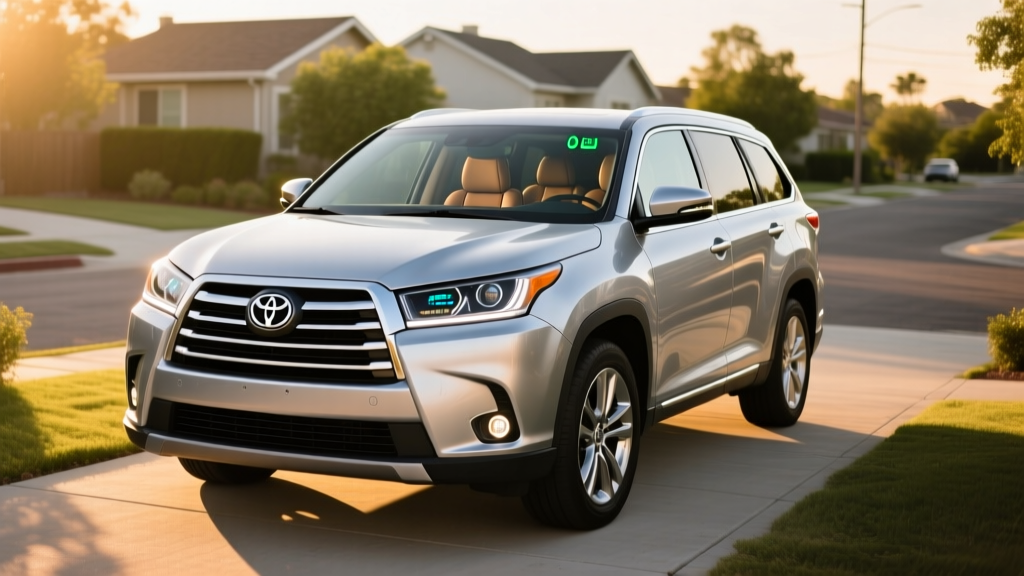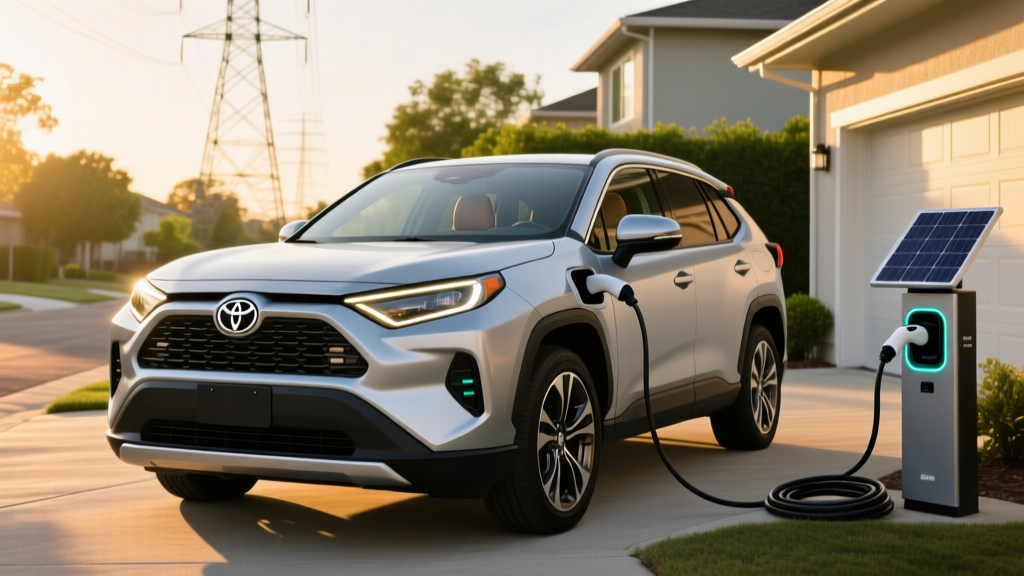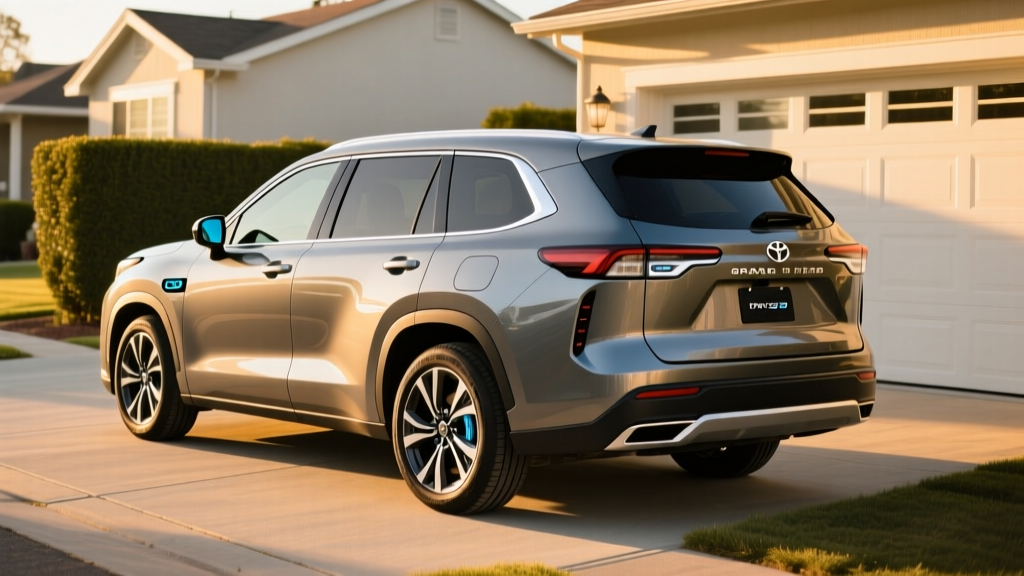
If you are shopping for a three-row family hauler that doesn't require a plug but still delivers impressive efficiency, the Toyota Grand Highlander Hybrid is likely at the top of your list. As a conventional hybrid electric vehicle (HEV), it uses regenerative braking and an internal combustion engine to charge its battery—no charging cables required. But with multiple powertrain options and trims, understanding the real-world Grand Highlander Hybrid gas mileage is critical before signing the paperwork.
In this guide, we break down the official EPA estimates, real-world fuel economy expectations, and the total cost of ownership for the 2026 model year. We'll also clarify the difference between the standard Hybrid and the Hybrid MAX performance variant, and explain why this HEV might be the right bridge for buyers not yet ready for a full battery electric vehicle (BEV).
Toyota Grand Highlander Hybrid Gas Mileage: EPA vs. Real World
The Grand Highlander offers two distinct hybrid powertrains, and their fuel economy differs significantly. The standard Hybrid prioritizes efficiency, while the Hybrid MAX trades some MPG for substantially more power.
| Powertrain | Drivetrain | City MPG | Highway MPG | Combined MPG |
|---|---|---|---|---|
| 2.5L 4-Cyl Hybrid | FWD | 37 | 34 | 36 |
| 2.5L 4-Cyl Hybrid | AWD (eAWD) | 36 | 32 | 34 |
| 2.4L Turbo Hybrid MAX | AWD | 26 | 27 | 27 |
Source: EPA Fuel Economy
Toyota's hybrid synergy drive excels in stop-and-go traffic. In city driving, many owners report exceeding the EPA estimate, seeing 38-40 MPG on the standard AWD Hybrid. However, on long highway road trips at 75+ mph, expect the standard hybrid to drop to roughly 30-32 MPG. The Hybrid MAX, with its turbocharged engine and performance tuning, will typically see 24-26 MPG in mixed real-world driving.
Powertrain Specs: Standard Hybrid vs. Hybrid MAX
Understanding what's under the hood helps explain the MPG spread. The Grand Highlander is not a plug-in; it's a self-charging HEV.
| Spec | Standard Hybrid (2.5L) | Hybrid MAX (2.4L Turbo) |
|---|---|---|
| Engine | 2.5L 4-Cylinder Atkinson | 2.4L Turbo 4-Cylinder |
| Net Combined Horsepower | 245 HP | 362 HP |
| 0-60 MPH (Est.) | 7.6 seconds | 6.3 seconds |
| Transmission | eCVT | 6-Speed Automatic |
| Towing Capacity | 3,500 lbs | 5,000 lbs |
HEV vs. PHEV vs. EV: Which Fits Your Lifestyle?
Buyers often confuse the Grand Highlander Hybrid with a Plug-in Hybrid (PHEV). It is vital to know the difference before purchasing.
Conventional Hybrid (HEV)
How it works: Uses a small battery charged by the engine and regenerative braking. You never plug it in.
Best for: Apartment dwellers, street parkers, or those who want EV-like city MPG without changing their fueling habits.
Plug-in Hybrid (PHEV)
How it works: Features a larger battery (typically 15-20 kWh) that can be plugged in for 30-40 miles of electric-only range. Once depleted, it operates like a standard hybrid.
Note: As of the 2026 model year, Toyota does not offer a Grand Highlander PHEV in the US market.
Battery Electric (BEV)
How it works: 100% electric, zero tailpipe emissions. Requires home or public charging infrastructure.
Best for: Homeowners with Level 2 charging access who want minimal maintenance and the lowest per-mile fuel costs.
Reliability and Battery Warranty
Toyota's hybrid systems are among the most proven in the industry, with a track record dating back to the 1997 Prius. The Grand Highlander uses a Nickel-Metal Hydride (NiMH) or Lithium-Ion (Li-Ion) traction battery depending on the specific trim and model year configuration.
- Coverage: 10 years or 150,000 miles (whichever comes first) for hybrid battery components.
- Replacement Cost: Out-of-warranty hybrid battery replacements typically range from $3,000 to $5,000, though many Toyota hybrid batteries last well beyond 200,000 miles with proper maintenance.
- Maintenance: Unlike EVs, the hybrid system requires no special maintenance beyond standard oil changes and ensuring the rear battery cooling vents are not blocked by cargo.
Pricing and Tax Credit Eligibility
The Grand Highlander Hybrid starts in the mid-$40,000 range, climbing toward the mid-$50,000s for the Hybrid MAX Platinum trim.
| Trim Level | MSRP (Est.) | Federal Tax Credit |
|---|---|---|
| XLE Hybrid | $46,020 | $0 (HEV ineligible) |
| Limited Hybrid | $50,125 | $0 (HEV ineligible) |
| Platinum Hybrid MAX | $58,175 | $0 (HEV ineligible) |
Tax Credit Reality Check: Under current IRS §30D rules, conventional hybrids (HEVs) do not qualify for the federal Clean Vehicle Credit. Only plug-in hybrids (PHEVs) and full electrics (BEVs) with sufficient battery capacity and compliant battery sourcing are eligible. Always check IRS.gov for the latest eligibility requirements.
Pros and Cons: The Grand Highlander Hybrid
Pros
- Class-leading city MPG for a 3-row SUV.
- No range anxiety or charging infrastructure needed.
- Standard Toyota Safety Sense 3.0 (ADAS suite).
- Excellent reliability and resale value.
Cons
- Hybrid MAX MPG is only average for the class.
- No PHEV option for electric-only school runs.
Frequently Asked Questions
How many MPG does the Grand Highlander Hybrid get on the highway?
The EPA estimates 32 MPG highway for the AWD standard hybrid. However, at speeds above 70 mph, aerodynamic drag reduces efficiency; expect 29-31 MPG on flat interstate drives.
Does the Grand Highlander Hybrid need to be plugged in?
No. It is a conventional HEV. The battery is charged internally by the gasoline engine and through regenerative braking when you slow down.
Is the Hybrid MAX worth the extra cost?
Choose the Hybrid MAX if you need 5,000 lbs of towing capacity or frequent highway merging power. Choose the standard Hybrid if you prioritize 34+ MPG and lower fuel costs.