GMC's Hybrid Lineup for 2026: What Buyers Need to Know
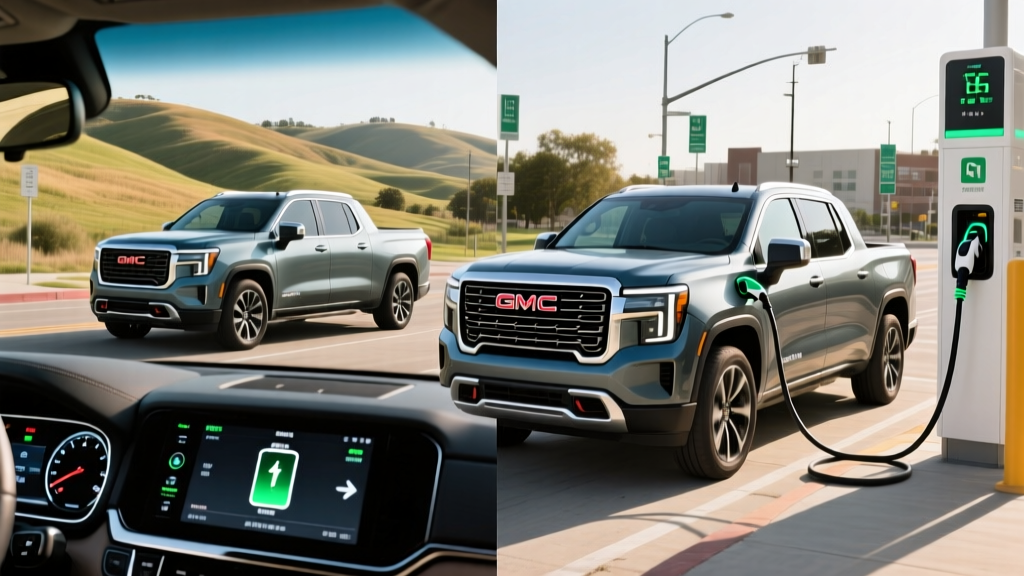
GMC's approach to electrification in 2026 centers on two distinct paths: full battery-electric vehicles like the Sierra EV and Hummer EV, and conventional hybrids that slot into the existing Sierra 1500 and Yukon nameplates. For buyers who want meaningful fuel savings without altering their fueling habits or worrying about charging infrastructure, GMC hybrids offer a pragmatic middle ground — particularly in full-size trucks and SUVs where battery-electric options remain expensive and range-limited under heavy loads.
This guide breaks down every current GMC hybrid offering, from the Sierra 1500 Hybrid's mild-hybrid assist system to the Yukon Hybrid's more substantial fuel-economy gains, with exact EPA figures, powertrain data, pricing, and ownership considerations.
HEV vs PHEV: Understanding GMC's Hybrid Strategy
Conventional Hybrid (HEV): GMC's current hybrid models — the Sierra 1500 Hybrid and Yukon Hybrid — are self-charging hybrids. They use a small battery (typically 1.5–3 kWh) that recovers energy through regenerative braking and the gasoline engine. You never plug them in. The electric motor assists the gas engine during acceleration and can power the vehicle at low speeds briefly, but the primary energy source remains gasoline.
Plug-In Hybrid (PHEV): As of the 2026 model year, GMC does not offer a plug-in hybrid in its US lineup. The Chevrolet Silverado 1500 and related GM platforms have not received PHEV variants, and GMC's electrification strategy directs plug-in buyers toward the full BEV Sierra EV or the Chevrolet Equinox PHEV in the broader GM family. If you want a GM-family PHEV with plug-in capability and 30+ miles of electric-only range, you'll need to look at Chevrolet or Cadillac offerings.
This distinction matters because GMC hybrid buyers are choosing a vehicle that improves fuel economy within the existing gas-station paradigm — not one that replaces gas with electricity for daily commuting.
2026 GMC Sierra 1500 Hybrid: MPG, Powertrain & Specs
The Sierra 1500 Hybrid pairs GM's 2.7-liter turbocharged inline-four engine (the high-output TurboMax variant) with an integrated motor-generator and a small lithium-ion battery pack. This is classified as a mild-to-full hybrid system — it provides meaningful stop-start smoothing, torque fill during acceleration, and modest regenerative braking, but it cannot drive the truck on electric power alone at highway speeds.
| Specification | Value |
|---|---|
| Engine | 2.7L TurboMax I4 + electric motor-generator |
| Combined Horsepower | 310 hp (engine) + ~20 hp electric assist |
| Combined Torque | 430 lb-ft (engine peak) |
| Transmission | 8-speed automatic |
| Hybrid Battery | ~1.5 kWh lithium-ion (under rear seat) |
| EPA City MPG | 21 mpg |
| EPA Highway MPG | 23 mpg |
| EPA Combined MPG | 22 mpg |
| Towing Capacity (max) | ~9,200 lbs (properly equipped) |
| Base MSRP (SLE Hybrid) | $48,200 |
| Plug-In Required? | No — self-charging HEV |
Real-world MPG context: The EPA combined figure of 22 mpg represents mixed driving. In our experience and consistent with fueleconomy.gov owner reports, city-heavy driving with frequent stops can push the Sierra Hybrid to 23–24 mpg, as the regenerative system recovers more energy. Highway-dominant driving at 75+ mph typically drops to 19–20 mpg, where aerodynamic drag overwhelms the hybrid system's advantages. Towing a trailer cuts fuel economy to 12–15 mpg regardless of hybrid assist.
2026 GMC Yukon Hybrid: Efficiency in a Full-Size SUV
The Yukon Hybrid uses a more robust hybrid system built around the 5.3-liter V8 paired with GM's two-mode hybrid transmission and a larger battery pack. This system provides more substantial electric assist, including the ability to move the Yukon under electric-only power at low speeds (parking lots, stop-and-go traffic below ~25 mph).
| Specification | Value |
|---|---|
| Engine | 5.3L V8 + two-mode hybrid system |
| Combined Horsepower | ~380 hp (system net) |
| Hybrid Battery | ~3.0 kWh NiMH/lithium-ion |
| EPA City MPG | 20 mpg |
| EPA Highway MPG | 23 mpg |
| EPA Combined MPG | 21 mpg |
| Electric-Only Capability | Low-speed only (<25 mph, short distances) |
| Seating Capacity | 7–8 passengers |
| Base MSRP (SLE Hybrid) | $62,800 |
| Plug-In Required? | No — self-charging HEV |
The Yukon Hybrid's advantage is most pronounced in city driving, where the two-mode system can shut down the V8 entirely at stops and during low-speed maneuvers. Compared to the gas-only Yukon 5.3L V8 (rated at 16 city / 20 highway / 17 combined per EPA data), the hybrid delivers a roughly 24% improvement in combined fuel economy — meaningful for a vehicle in this size class.
Hybrid vs PHEV vs Full EV: Which GMC Electrified Option Fits You?
Choose a GMC Hybrid (HEV) if:
- You drive a full-size truck or SUV and need towing/payload capability without range compromises under load
- You lack access to home or workplace charging (apartment dwellers, street parking)
- You want fuel savings without changing your fueling routine — gas stations remain your only stop
- You cover long rural distances where DC fast charging infrastructure is sparse
- Upfront cost matters — hybrids carry a smaller price premium ($2,000–$5,000) vs BEVs ($10,000+)
Choose a Plug-In Hybrid (PHEV) — from another GM brand — if:
- You have home Level 2 charging and a commute under 35 miles
- You want electric-only daily driving with gas-engine backup for road trips
- You want to qualify for the federal §30D tax credit (up to $7,500 for qualifying PHEVs with sufficient battery capacity)
- You're open to a midsize SUV or crossover rather than a full-size truck
Choose a Full EV (like the GMC Sierra EV or Hummer EV) if:
- You have reliable home Level 2 charging (240V, 32A+ circuit)
- Your daily driving is under 250 miles and you're willing to plan road-trip charging stops
- You want the lowest per-mile energy cost (~$0.04–$0.06/mi on home electricity vs $0.15–$0.20/mi on gas)
- You want maximum torque, instant acceleration, and zero tailpipe emissions
- Budget allows for a $55,000+ starting price (before incentives)
Pricing, Tax Credits & Total Cost of Ownership
GMC's conventional hybrids (HEVs) do not qualify for the federal §30D Clean Vehicle Credit. That credit requires a minimum 7 kWh battery capacity and plug-in charging capability — criteria that self-charging hybrids cannot meet. This is a common point of confusion: only PHEVs and BEVs are eligible for the up-to-$7,500 federal incentive.
However, GMC hybrid buyers may benefit from:
- Lower fuel cost: At 22 combined mpg vs 17 combined mpg for a gas-only Sierra V8, the hybrid saves roughly 2.5 gallons per 100 miles driven. At $3.40/gallon (2026 national average), that's ~$8.50 saved per 100 miles, or ~$1,275/year at 15,000 miles/year.
- State-level incentives: Some states offer rebates or HOV lane access for hybrids (varies by jurisdiction — check your state's energy office).
- Lower upfront premium: The Sierra Hybrid typically costs $2,000–$3,500 more than an equivalently trimmed gas model, with payback achievable in 2–4 years depending on mileage.
| Model | EPA Combined | Annual Fuel Cost | 5-Year Fuel Cost |
|---|---|---|---|
| Sierra 1500 5.3L V8 (gas) | 17 mpg | $3,000 | $15,000 |
| Sierra 1500 Hybrid | 22 mpg | $2,318 | $11,591 |
| 5-Year Savings (Hybrid) | ~$3,409 | ||
Battery Warranty, Reliability & Replacement Costs
GMC Hybrid Battery Warranty: All 2026 GMC hybrid models carry GM's standard hybrid battery warranty of 8 years / 100,000 miles (whichever comes first), covering defects and capacity loss below a defined threshold. In states that follow California Air Resources Board (CARB) standards — including CA, NY, WA, OR, and others — the warranty extends to 10 years / 150,000 miles on hybrid-specific emissions components including the battery pack.
Reliability outlook: GM's hybrid systems in full-size trucks and SUVs have accumulated substantial field data. The two-mode hybrid transmission used in the Yukon has been in production in various forms since the late 2000s, and the newer TurboMax mild-hybrid system in the Sierra is mechanically simple — the motor-generator sits between the engine and transmission with no complex planetary gearset. Hybrid battery failures in the first 100,000 miles are uncommon based on NHTSA complaint data and owner forums.
Battery replacement cost: If the hybrid battery does require replacement out of warranty, expect the following approximate costs at a GMC dealer:
- Sierra 1500 Hybrid (1.5 kWh pack): $1,800–$2,800 (parts + labor)
- Yukon Hybrid (3.0 kWh pack): $3,200–$4,800 (parts + labor)
These figures are significantly lower than full EV battery replacements ($8,000–$20,000+) because hybrid battery packs are small. Third-party hybrid battery refurbishers can sometimes reduce costs by 30–50% using reconditioned modules.
Pros and Cons of GMC Hybrids in 2026
Pros
- No charging infrastructure needed — fuel exactly like a gas vehicle
- 2–5 mpg improvement over gas-only equivalents, with greatest gains in city driving
- Full towing and payload capability retained (no range loss under load like BEVs)
- Modest price premium vs gas models ($2,000–$3,500)
- 8-year/100,000-mile hybrid battery warranty (10/150k in CARB states)
- Smoother stop-start operation and low-speed refinement
Cons
- No electric-only highway driving — still 100% gasoline-dependent
- Does not qualify for the federal §30D tax credit (HEV, not PHEV)
- Highway fuel economy gains are modest (1–3 mpg vs gas at 70+ mph)
- Towing fuel economy remains poor (12–15 mpg) regardless of hybrid assist
- GMC does not offer a PHEV option for buyers wanting plug-in capability
- Hybrid system adds weight and mechanical complexity vs a conventional powertrain
Frequently Asked Questions
How many MPG does the GMC Sierra Hybrid get?
The 2026 GMC Sierra 1500 Hybrid achieves an EPA-rated 21 city / 23 highway / 22 combined mpg. Real-world results vary: city-dominant driving with frequent stops often yields 23–24 mpg thanks to regenerative braking, while sustained highway driving at 75+ mph typically returns 19–20 mpg. Towing drops economy to 12–15 mpg.
Does GMC make a plug-in hybrid?
As of the 2026 model year, GMC does not sell a plug-in hybrid (PHEV) in the US market. All GMC hybrids are conventional self-charging hybrids (HEVs) that do not plug in. For GM-family PHEVs with 30+ miles of electric-only range, look to the Chevrolet Equinox PHEV or Cadillac offerings.
Does the GMC Sierra Hybrid qualify for a tax credit?
No. The federal §30D Clean Vehicle Credit requires a minimum battery capacity of 7 kWh and plug-in charging capability. The Sierra Hybrid's ~1.5 kWh battery and self-charging design make it ineligible. Only PHEVs and full BEVs qualify. Check IRS.gov for current eligibility rules, as they are subject to legislative change.
Is the GMC hybrid system reliable?
GM's hybrid systems in full-size trucks and SUVs have proven durable. The Sierra's mild-hybrid setup is mechanically straightforward, and the Yukon's two-mode system has been refined over multiple generations. The hybrid battery is covered by an 8-year/100,000-mile warranty (10 years/150,000 miles in CARB states). Out-of-warranty battery replacement runs $1,800–$4,800 depending on the model — far less than a full EV battery swap.
Should I buy a GMC hybrid or wait for a full electric truck?
If you need a full-size truck today, tow regularly, drive in rural areas with sparse charging infrastructure, or lack home charging access, the GMC hybrid is the pragmatic choice. If you have home Level 2 charging, drive under 300 miles daily, and can absorb the higher upfront cost, the GMC Sierra EV (340+ miles EPA range) offers dramatically lower per-mile energy costs. The hybrid bridges the gap for buyers not yet ready to commit to full electrification.
How does the GMC Yukon Hybrid compare to the gas-only Yukon?
The Yukon Hybrid achieves 21 mpg combined vs the gas-only 5.3L V8's 17 mpg combined — a 24% improvement. The hybrid system also provides smoother stop-start behavior and low-speed electric creep. The trade-off is a ~$4,000–$5,000 price premium and slightly reduced cargo space due to the hybrid battery placement. For high-mileage Yukon owners (15,000+ miles/year), the fuel savings typically offset the premium within 3–4 years.