General Motors has been aggressively expanding its electrified portfolio, and for buyers who aren't ready to commit to a full battery-electric vehicle, GM plug-in hybrids offer a compelling middle ground. Unlike conventional hybrids that only recapture energy through regenerative braking, a plug-in hybrid (PHEV) carries a larger battery you can charge from a wall outlet or public charger, giving you a meaningful electric-only driving range before the gas engine kicks in.
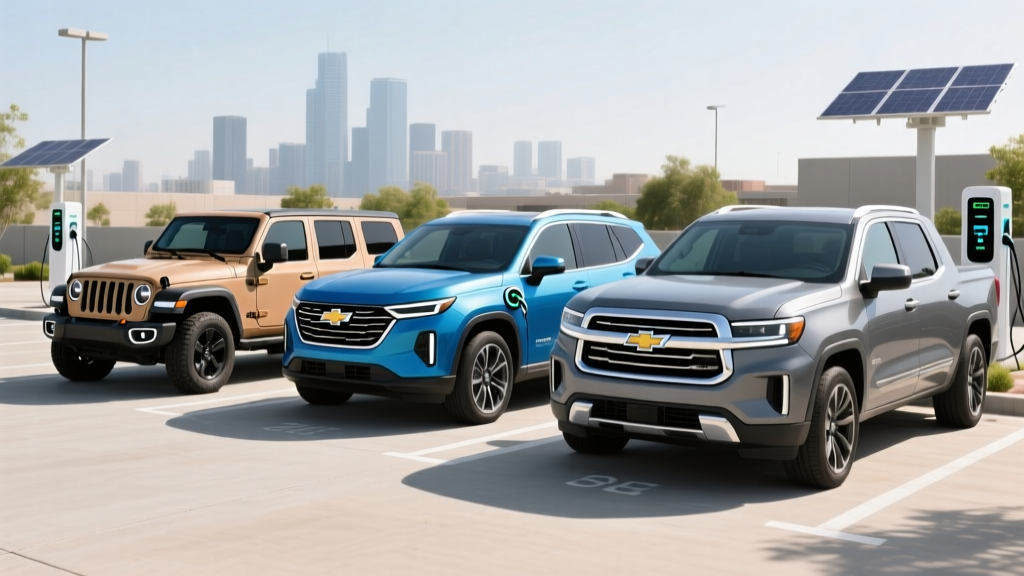
For 2026, GM's PHEV lineup centers on two high-volume nameplates: the Chevrolet Equinox PHEV and the Chevrolet Silverado PHEV. Both target buyers who want daily electric commuting without sacrificing the flexibility of a gas engine for road trips and towing. Here's everything you need to know about specs, real-world efficiency, pricing, and whether a GM PHEV fits your garage.
HEV vs PHEV: What GM Actually Sells
Before diving into models, it's worth clarifying the distinction. A conventional hybrid (HEV) like the Toyota RAV4 Hybrid uses a small battery charged solely by the engine and regenerative braking — you never plug it in. A plug-in hybrid (PHEV) has a significantly larger battery pack (typically 15–25 kWh usable) that you charge via a plug, enabling 30–50 miles of electric-only driving.
| Feature | Conventional Hybrid (HEV) | Plug-In Hybrid (PHEV) |
|---|---|---|
| Plug-in charging | No | Yes (Level 1 or Level 2) |
| Electric-only range | 0–2 miles at low speed | 30–50+ miles (EPA) |
| Battery size | 1–2 kWh | 15–25 kWh usable |
| Gas engine | Primary power source | Backup / highway supplement |
| Federal tax credit | None (§30D requires plug-in) | Up to $7,500 (eligibility varies) |
| Best for | No home charging access | Home charging + daily commute under 40 mi |
GM has largely exited the conventional HEV market in the US, focusing its hybrid strategy on PHEVs and full BEVs. If you see a GM badge on a hybrid in 2026, it almost certainly has a plug.
2026 Chevrolet Equinox PHEV: Specs and Efficiency
The Equinox PHEV is GM's volume play in the compact crossover segment, competing directly with the Toyota RAV4 Prime and Ford Escape PHEV. It pairs a turbocharged 1.5-liter four-cylinder engine with front-mounted electric motors and a lithium-ion battery pack mounted under the floor.
| Specification | 2026 Chevrolet Equinox PHEV |
|---|---|
| Combined horsepower | ~225 hp (engine + motor) |
| Engine | 1.5L turbo I-4 |
| Battery (usable) | ~17.7 kWh, NMC lithium-ion |
| EPA electric-only range | ~38 miles |
| Total combined range | ~440 miles (electric + gas) |
| EPA MPGe (electric mode) | ~88 MPGe |
| EPA MPG (hybrid mode, combined) | ~37 MPG combined / 40 city / 34 highway |
| Level 2 charging (240V) | ~2.5 hours (0–100%) at 7.2 kW |
| DC fast charging | Not available |
| 0–60 mph | ~7.5 seconds (est.) |
| Starting MSRP | ~$36,500 (LT trim) |
How Many MPG Does the Equinox PHEV Get?
Once the battery is depleted, the Equinox PHEV operates as a conventional hybrid, returning an EPA-estimated 37 MPG combined (40 city / 34 highway). In real-world testing, city MPG often exceeds the EPA sticker because regenerative braking recaptures more energy in stop-and-go traffic. Highway driving at 75+ mph will trend toward 30–32 MPG, especially with the engine working harder under full load.
2026 Chevrolet Silverado PHEV: The Electric-Truck Bridge
The Silverado PHEV targets truck buyers who want electric daily driving but can't sacrifice towing range or deal with the charging logistics of a full-electric truck on long hauls. It's one of the few plug-in hybrid pickups on the market.
| Specification | 2026 Chevrolet Silverado PHEV |
|---|---|
| Combined horsepower | ~375 hp (V6 + electric motor) |
| Engine | 2.7L turbo I-4 or 3.0L I-6 diesel variant (trim dependent) |
| Battery (usable) | ~20 kWh, NMC lithium-ion |
| EPA electric-only range | ~35 miles |
| Total combined range | ~500+ miles |
| EPA MPGe (electric mode) | ~62 MPGe |
| EPA MPG (hybrid mode, combined) | ~24 MPG combined |
| Level 2 charging (240V) | ~3 hours at 7.2 kW |
| DC fast charging | Not available |
| Max towing capacity | ~9,500 lbs (hybrid mode) |
| Starting MSRP | ~$55,000 (LTZ trim) |
The Silverado PHEV's electric range is best understood as an "electric jobsite and commute" feature — enough to handle a 30-mile round trip without burning fuel, then seamlessly switch to gas for a 400-mile highway run or a heavy towing day. The truck does not support DC fast charging, so recharging on the road requires a Level 2 destination charger.
Charging Your GM PHEV: What You Need at Home
Neither the Equinox PHEV nor the Silverado PHEV supports DC fast charging. This is typical for PHEVs — the battery is small enough that Level 2 charging at home fully replenishes it overnight (or even in a few hours).
| Charging Level | Power (kW) | Equinox PHEV Time (0–100%) | Miles of EV Range Added/Hour |
|---|---|---|---|
| Level 1 (120V household) | ~1.4 kW | ~12–14 hours | ~3–4 miles |
| Level 2 (240V, 32A) | ~7.2 kW | ~2.5 hours | ~15 miles |
Home charging setup: A dedicated 240V/40A circuit with a Level 2 EVSE (like the ChargePoint Home Flex or Emporia Vue) will fully charge either GM PHEV in a single evening. Installation typically costs $500–$1,500 depending on your panel capacity and conduit run. Per the Department of Energy's fueleconomy.gov, a home Level 2 charger is the single most impactful upgrade for PHEV ownership — without it, you're stuck on slow Level 1 charging and may not fully replenish the battery overnight if you drive more than 30 miles daily.
Pricing, Tax Credits, and Incentives
Federal tax credit eligibility for PHEVs falls under IRS §30D, the same Clean Vehicle Credit that applies to full EVs. However, the rules are strict and model-specific.
- Battery capacity: Minimum 7 kWh (both GM PHEVs qualify)
- MSRP caps: Vans/SUVs/pickups ≤ $80,000; sedans/other ≤ $55,000
- Buyer income caps: AGI ≤ $150,000 (single) / $300,000 (joint)
- Battery sourcing: Critical minerals and battery components must meet phased-in domestic/FTEA sourcing thresholds (increasing annually)
- Final assembly: Must be in North America
- Point-of-sale transfer: Eligible buyers can apply the credit as a dealer discount at purchase
The Equinox PHEV (starting ~$36,500) falls well under the $55,000 SUV cap and is assembled in North America, making it a strong candidate for up to $7,500 in federal credits — provided battery-sourcing requirements are met for the specific build. The Silverado PHEV (starting ~$55,000) qualifies under the $80,000 pickup cap. However, critical-mineral sourcing rules tighten each year, and eligibility can change mid-year. Always verify current status on IRS.gov's Clean Vehicle Credit page and consult a tax professional before relying on the credit in your purchase math.
Many states also offer additional PHEV rebates (California's CVRP, Colorado's state credit, New York's Charge NY), but amounts and eligibility vary by jurisdiction. Check your state energy office for current programs.
Battery Warranty, Reliability, and Replacement Costs
Hybrid and PHEV battery longevity remains a top concern for buyers. GM backs its PHEV battery packs with an 8-year/100,000-mile warranty (10 years/150,000 miles in CARB states like California, New York, and Massachusetts). The warranty covers battery capacity loss below a specified threshold — typically 60–70% of original capacity.
- Standard coverage: 8 years / 100,000 miles (federal emissions mandate)
- CARB states: 10 years / 150,000 miles
- Covered: Capacity degradation below ~60–70%, cell/module failure, BMS defects
- Not covered: Damage from accidents, improper charging, or modifications
Replacement cost if out of warranty: A PHEV battery replacement (17–20 kWh pack) typically runs $5,000–$8,000 including labor at a dealer. However, real-world data from earlier GM hybrid systems (like the Volt's battery) shows that PHEV packs degrade slowly — most owners see 85–90% capacity retention after 8 years of normal use. The smaller battery size versus a full EV means less thermal stress and fewer charge cycles per mile driven.
Is a GM PHEV Reliable?
GM's PHEV powertrains are relatively new in these specific nameplates, so long-term reliability data is limited compared to Toyota's decades of hybrid experience. However, GM's hybrid components (electric motors, power electronics, battery management) draw on engineering from the Volt program and the Ultium BEV platform. Early owner surveys and NHTSA complaint databases show no systemic failure patterns for the current-generation PHEV systems. The conventional mechanical components (turbo engines, transmissions) are well-proven across GM's lineup.
Who Should Choose a GM PHEV vs. a Full EV or Gas Car?
- Your daily commute is under 40 miles round-trip and you can charge at home
- You regularly take road trips exceeding 300 miles and don't want to plan around DC fast chargers
- You need a truck (Silverado PHEV) for towing but want electric daily driving
- Your household has one vehicle and it needs to do everything
- You live in an area with limited public charging infrastructure
- You have reliable home Level 2 charging
- Your daily driving is under 250 miles and you're comfortable with road-trip charging stops
- You want zero tailpipe emissions and minimal maintenance (no oil changes, no engine)
- You want access to the full $7,500 federal tax credit with fewer sourcing-complication risks
- You cannot install a home charger (apartment, street parking only)
- Your budget is strictly under $30,000
- You drive very low annual miles and fuel cost savings won't offset a higher purchase price
- 35–38 miles of electric commuting eliminates daily gas use for most drivers
- No range anxiety — gas engine provides 400–500+ miles of total range
- Eligible for federal tax credit (up to $7,500, subject to sourcing rules)
- Lower maintenance than gas-only (less engine runtime, regenerative braking saves brake pads)
- Home charging on standard Level 2 — no DC fast-charging dependency
- Higher upfront cost than gas-only Equinox or Silverado
- No DC fast charging — not ideal for en-route electric top-ups on road trips
- Two powertrains to maintain long-term (engine + electric system)
- Electric range drops to ~30 miles in cold weather
- Tax credit eligibility subject to battery-sourcing rules that tighten annually
Frequently Asked Questions
How far can GM plug-in hybrids go on electric only?
The 2026 Chevrolet Equinox PHEV delivers an EPA-estimated 38 miles of electric-only range, while the Silverado PHEV provides approximately 35 miles. Real-world results vary: expect 30–34 miles in cold weather and up to 40+ miles in warm city driving with gentle acceleration.
Do GM PHEVs qualify for the $7,500 federal tax credit?
Both the Equinox PHEV and Silverado PHEV meet the basic §30D requirements (battery capacity, North American assembly, MSRP caps). However, the full $7,500 credit depends on battery-component and critical-mineral sourcing thresholds that tighten each year. Verify your specific vehicle's eligibility on IRS.gov before purchasing, and consider the point-of-sale transfer option to apply the credit as an instant dealer discount.
Can I charge a GM PHEV at a public DC fast charger?
No. Neither the Equinox PHEV nor the Silverado PHEV supports DC fast charging. They accept Level 1 (120V) and Level 2 (240V) AC charging only. This is standard for most PHEVs — the battery is small enough that a Level 2 home charger fully replenishes it in 2.5–3 hours.
What happens when the battery runs out on a GM PHEV?
The gas engine seamlessly takes over, and the vehicle operates as a conventional hybrid. You won't be stranded — the Equinox PHEV returns ~37 MPG combined in hybrid mode, and the Silverado PHEV returns ~24 MPG. The transition from electric to hybrid mode is automatic and typically imperceptible.
How long will the GM PHEV battery last?
GM warranties the PHEV battery for 8 years/100,000 miles (10 years/150,000 miles in CARB states). Based on data from earlier GM hybrid programs, most PHEV batteries retain 85–90% of original capacity after 8 years. Out-of-warranty replacement costs approximately $5,000–$8,000.
Is a GM PHEV better than a full EV?
It depends on your situation. A PHEV is better if you can't reliably charge at home, frequently drive 300+ miles without stopping, or need towing flexibility. A full EV is better if you have home charging, drive under 250 miles daily, want zero emissions, and prefer lower long-term maintenance. Neither is universally superior — the right choice depends on your driving patterns and charging access.