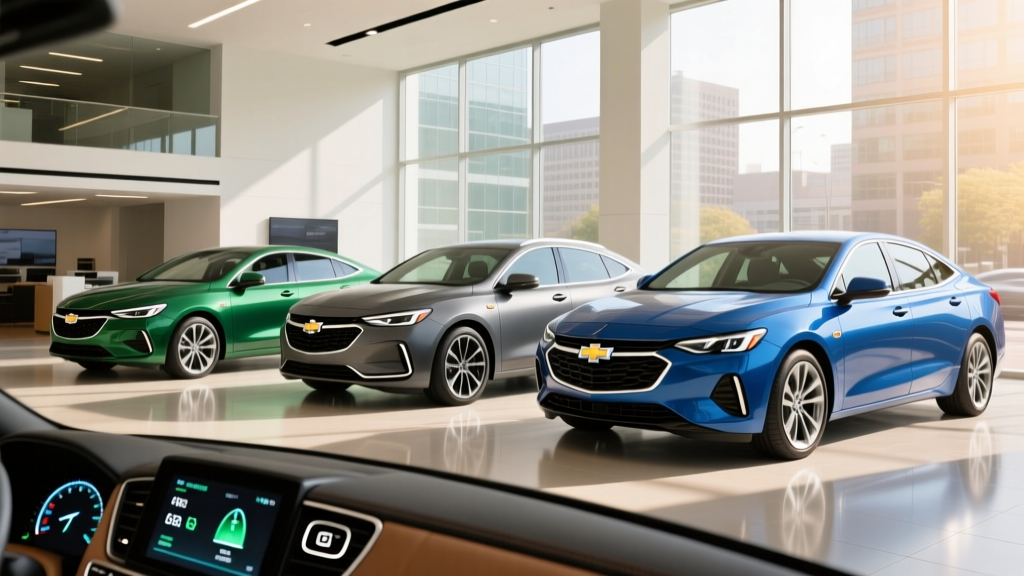
General Motors took a different path than Toyota or Hyundai when it came to electrification. Rather than building a deep hybrid lineup, GM spent years pushing fully electric vehicles under its Ultium platform while letting its hybrid offerings thin out. But in 2025-2026, the automaker reversed course — reintroducing plug-in hybrids and expanding its hybrid strategy to meet buyer demand for electrified vehicles that don't require lifestyle changes around charging.
If you're researching GM hybrid cars, the current landscape includes a mix of plug-in hybrid SUVs, a new range-extended electric truck, and a conventional hybrid compact SUV. This guide breaks down every electrified GM vehicle available in 2026, with exact EPA figures, real-world expectations, battery warranties, and tax credit eligibility so you can make a data-driven decision.
HEV vs PHEV vs EREV: How GM's Hybrid Lineup Works
Before diving into specific models, it's essential to understand the three hybrid architectures GM currently offers — they serve very different use cases.
| Type | How It Works | Plug In? | Best For |
|---|---|---|---|
| HEV (Hybrid) | Gas engine + small electric motor; battery recharges via regenerative braking and engine | No | Drivers who want better MPG with zero behavior change |
| PHEV (Plug-in Hybrid) | Larger battery + electric motor for EV-only driving; gas engine kicks in when battery depletes | Yes (Level 1/2) | Short-commute drivers who want EV daily, gas for road trips |
| EREV (Range-Extended EV) | Electric motors drive wheels at all times; gas engine acts as a generator to recharge the battery | Yes (Level 2 + DC fast) | EV-curious buyers who need long range without range anxiety |
The key distinction: a conventional HEV never plugs in and has no electric-only range to speak of. A PHEV gives you 30-50 miles of pure electric driving before the gas engine takes over. An EREV, like the new Silverado EV with range extender, drives electrically at all times but carries a gas generator for extended trips.
2026 Chevrolet Equinox Hybrid: GM's Mainstream HEV
The Equinox Hybrid is GM's most accessible hybrid offering — a compact SUV that doesn't require a plug, a lifestyle change, or a premium price. It pairs a 1.5-liter turbocharged four-cylinder engine with an electric motor integrated into the transmission.
| Spec | 2026 Equinox Hybrid |
|---|---|
| Powertrain | 1.5L turbo I4 + electric motor |
| Combined Horsepower | 175 hp |
| EPA City MPG | 38 MPG |
| EPA Highway MPG | 35 MPG |
| EPA Combined MPG | 36 MPG |
| Battery Type | Lithium-ion (under 1.5 kWh) |
| Drivetrain | FWD (AWD available) |
| Base MSRP | $31,900 |
| Federal Tax Credit | Not eligible (§30D requires plug-in capability) |
Real-World MPG Expectations
Conventional hybrids like the Equinox Hybrid often exceed their EPA city rating in stop-and-go traffic because regenerative braking recovers energy that a gas-only car wastes as heat. On the highway, where regen opportunities are fewer, you may see 1-3 MPG below the sticker. In mixed suburban driving, owners typically report 34-37 MPG combined — right around the EPA estimate. Cold weather (below 30°F) can reduce efficiency by 5-8% as the engine runs more frequently to provide cabin heat.
Who Should Choose It
The Equinox Hybrid fits buyers who want a 25-30% fuel economy improvement over the gas-only Equinox (26 MPG combined) without plugging in, learning new habits, or paying a steep premium. If you live in an apartment or lack home charging access, this is your best GM electrified option.
2026 Chevrolet Corvette E-Ray: Performance PHEV
The Corvette E-Ray is GM's most unconventional hybrid application — a plug-in hybrid sports car that uses its electric front axle for all-wheel-drive launch capability and short EV-only runs. It's not a fuel-saver; it's a performance hybrid.
| Spec | 2026 Corvette E-Ray |
|---|---|
| Powertrain | 6.2L V8 (rear) + electric motor (front axle) |
| Combined Horsepower | 655 hp |
| 0-60 MPH | 2.5 seconds |
| Electric-Only Range | ~5 miles (EPA est.) |
| Battery Capacity | 1.9 kWh usable |
| EPA Combined MPG | 19 MPG (hybrid mode) |
| Base MSRP | $111,300 |
| Federal Tax Credit | Not eligible (exceeds MSRP cap, limited EV range) |
The E-Ray's electric-only range is minimal — enough for quiet neighborhood exits, not commuting. Its hybrid system prioritizes torque fill and AWD traction, not efficiency. This is a niche vehicle that happens to be a plug-in hybrid, not an efficiency play.
2026 Chevrolet Silverado EV with Range Extender (EREV)
The Silverado EV Range Extender is the most talked-about addition to GM's electrified lineup. It's technically an electric vehicle that carries a small gasoline generator — an architecture GM hasn't used since the original Volt, but now applied to a full-size pickup.
| Spec | 2026 Silverado EV Range Extender |
|---|---|
| Architecture | EREV — electric motors drive wheels; gas engine generates electricity |
| Battery Capacity | ~100 kWh (usable) |
| Electric-Only Range | ~240 miles (EPA est.) |
| Total Range (with generator) | ~600+ miles |
| Combined Horsepower | ~510 hp (electric motors) |
| DC Fast Charging | Yes — up to 200 kW peak |
| Level 2 Charging | 11.5 kW onboard charger |
| Base MSRP | $62,000 (est.) |
| Federal Tax Credit | Eligibility TBD — depends on battery sourcing & MSRP cap |
Battery & Powertrain Warranty
GM covers the Silverado EV's Ultium battery pack for 8 years / 100,000 miles against defects and capacity loss below 60% of original capacity. The electric drive units carry the same 8-year/100,000-mile warranty. The range-extender gasoline generator is covered under the standard 5-year/60,000-mile powertrain warranty.
Real-World Range Considerations
The 240-mile electric-only estimate assumes moderate temperatures and mixed driving. Towing a 5,000-lb trailer will slash electric range by 35-45% — the generator will engage earlier and more frequently, which is precisely the use case GM designed it for. Highway-only driving at 75+ MPH typically reduces EV range by 15-20%. In winter conditions (20°F), expect 20-25% range loss from the battery before the generator assists.
On a DC fast charger, the Silverado EV Range Extender peaks at 200 kW but tapers significantly above 80% state of charge. Expect a 10-80% charge in roughly 28-32 minutes. Above 80%, charging slows to protect battery longevity — this is normal lithium-ion behavior, not a defect.
GM Hybrid Tax Credits: What Qualifies in 2026?
The federal EV tax credit under IRS §30D applies only to plug-in vehicles — meaning conventional hybrids like the Equinox Hybrid do not qualify. Here's the eligibility framework for GM's plug-in offerings:
- MSRP Cap: Vans, SUVs, and pickups must be under $80,000 MSRP; sedans under $55,000
- Buyer Income Cap: Modified AGI must not exceed $150,000 (single), $225,000 (head of household), or $300,000 (joint)
- Battery Sourcing: Critical minerals and battery components must meet escalating North American/free-trade-agreement sourcing thresholds (stricter in 2026 than prior years)
- Point-of-Sale Transfer: Eligible buyers can transfer the credit to the dealer at purchase for an immediate price reduction
- Final Assembly: Vehicle must undergo final assembly in North America
The Corvette E-Ray exceeds the $80,000 MSRP cap and falls short on meaningful electric range, making it ineligible. The Silverado EV Range Extender's credit eligibility depends on final MSRP configuration and whether GM's battery supply chain meets 2026 critical-mineral thresholds — check fueleconomy.gov for the latest qualified-vehicle list before purchasing.
State incentives vary widely. California, Colorado, and several other states offer additional rebates for PHEVs and EREVs. Consult your state's energy office or a tax professional for jurisdiction-specific details.
GM Hybrid Battery Reliability and Replacement Costs
Hybrid battery longevity remains the top concern for buyers. Here's what the data shows across GM's hybrid architectures:
| Model | Battery Warranty | Expected Lifespan | Replacement Cost (est.) |
|---|---|---|---|
| Equinox Hybrid (HEV) | 8 years / 100,000 miles | 150,000-200,000 mi | $2,000-$3,500 (small pack) |
| Corvette E-Ray (PHEV) | 8 years / 100,000 miles | 100,000-150,000 mi | $4,000-$6,000 |
| Silverado EV Range Extender | 8 years / 100,000 miles | 200,000+ mi (with management) | $12,000-$18,000 (large pack) |
GM's hybrid battery warranties are federally mandated to meet emissions-related component requirements, which is why you'll see 8 years/100,000 miles across the board. In practice, modern lithium-ion hybrid batteries with active thermal management (as used in the Ultium platform) rarely require replacement within the warranty period. The smaller packs in the Equinox Hybrid and E-Ray experience less stress because they operate in a narrow state-of-charge window — the battery management system never allows full depletion or full saturation, which dramatically extends cycle life.
The Silverado EV Range Extender's larger pack faces more thermal cycles but benefits from GM's most advanced liquid cooling system. Real-world degradation data from GM's Ultium fleet testing suggests 85-90% capacity retention at 100,000 miles under normal use.
Hybrid vs PHEV vs EV: Which GM Electrified Vehicle Fits You?
Decision Framework
Choose the Equinox Hybrid (HEV) if:
- You don't have access to home or workplace charging
- You want a straightforward ownership experience with no new habits
- Your priority is reducing fuel costs by ~25% over a gas-only SUV
- You want the lowest purchase price in GM's electrified lineup
Choose the Silverado EV Range Extender (EREV) if:
- You want EV daily driving (sub-200-mile commutes) with road-trip flexibility
- You tow or haul and can't risk EV range limitations on long trips
- You have Level 2 home charging access (240V, 40-amp circuit minimum)
- You want to reduce fuel consumption by 60-70% on average driving days
Choose a full BEV (like the Equinox EV or Blazer EV) if:
- You have reliable home charging and rarely drive more than 250 miles in a day
- You want zero tailpipe emissions and minimal maintenance (no oil changes, no generator engine)
- You qualify for the full federal tax credit, narrowing the price gap
- You're comfortable planning DC fast-charging stops on road trips
Skip GM hybrids entirely and consider a Toyota or Hyundai PHEV if:
- You want a proven plug-in hybrid SUV with 35-45 miles of electric range today
- GM's current PHEV lineup doesn't include a family SUV (the RAV4 Prime and Tucson PHEV fill this gap)
Real-World Ownership Economics: GM Hybrids at a Glance
| Model | Type | Base MSRP | EPA Combined | Est. Annual Fuel Cost* | Tax Credit |
|---|---|---|---|---|---|
| Equinox Hybrid | HEV | $31,900 | 36 MPG | $1,540 | None |
| Equinox Gas (2.0T AWD) | Gas baseline | $30,400 | 26 MPG | $2,130 | None |
| Corvette E-Ray | PHEV | $111,300 | 19 MPG | $2,920 | None |
| Silverado EV Range Ext. | EREV | $62,000 (est.) | ~60 MPGe (elec.) / 19 MPG (gas) | $900-$1,800** | TBD |
*Based on 15,000 miles/year, $3.50/gallon regular, national average electricity rate of $0.16/kWh. **Silverado cost depends heavily on electric vs. generator driving ratio.
The Equinox Hybrid saves roughly $590 per year in fuel costs compared to its gas-only counterpart, recovering the ~$1,500 price premium in about 2.5 years. The Silverado EV Range Extender's economics depend almost entirely on how much of your driving happens within its electric-only range — if 80% of your miles are electric, fuel savings are substantial; if you tow weekly and run the generator often, savings narrow.
Frequently Asked Questions
Does GM make a conventional hybrid SUV?
Yes. The 2026 Chevrolet Equinox Hybrid is a conventional (non-plug-in) hybrid SUV rated at 36 MPG combined. It uses a small lithium-ion battery that recharges through regenerative braking and the gasoline engine — you never plug it in.
Does GM offer a plug-in hybrid family SUV in 2026?
Not yet in the traditional sense. GM's current plug-in offerings are the Corvette E-Ray (a sports car with minimal EV range) and the Silverado EV Range Extender (a pickup). If you need a PHEV family crossover with 30+ miles of electric range, competitors like the Toyota RAV4 Prime or Hyundai Tucson PHEV currently fill that segment. GM has signaled additional PHEV SUVs are in development for the 2027-2028 timeframe.
How reliable are GM hybrid batteries?
GM's hybrid batteries are covered by an 8-year/100,000-mile warranty across all models. Modern lithium-ion packs with active thermal management rarely fail within this period. The Equinox Hybrid's small battery faces minimal stress and is expected to last 150,000-200,000 miles. Replacement costs for the small HEV pack are relatively low ($2,000-$3,500) compared to full EV battery replacements.
Can the Silverado EV Range Extender charge at DC fast chargers?
Yes. Despite having a gasoline generator onboard, the Silverado EV Range Extender retains full DC fast-charging capability at up to 200 kW peak. The generator and the charging port serve different purposes — you can fast-charge the battery at a public station or let the generator extend range on the highway. A 10-80% DC fast charge takes approximately 28-32 minutes.
Do any GM hybrid cars qualify for the $7,500 federal tax credit?
Conventional hybrids never qualify for the §30D federal clean vehicle credit — it applies only to plug-in vehicles. The Silverado EV Range Extender may qualify depending on its final MSRP, battery sourcing compliance, and your income level. The Corvette E-Ray does not qualify due to its MSRP exceeding the $80,000 cap and its minimal electric-only range. Always verify current eligibility at fueleconomy.gov and consult a tax professional before relying on credit availability.
How does GM's hybrid strategy compare to Toyota's?
Toyota offers a deep hybrid lineup spanning nearly every model (RAV4, Camry, Highlander, Prius, Sienna) with proven, high-volume HEV and PHEV options. GM's 2026 hybrid portfolio is narrower and more specialized — a compact SUV HEV, a performance PHEV, and an innovative EREV truck. If hybrid variety and proven track record are your top priorities, Toyota has the broader catalog. If you want a hybrid pickup or are interested in range-extended EV technology, GM offers something Toyota doesn't.
What is the battery replacement cost for a GM hybrid?
Replacement costs vary by model: the Equinox Hybrid's small pack runs $2,000-$3,500, the Corvette E-Ray's pack is estimated at $4,000-$6,000, and the Silverado EV Range Extender's large Ultium pack could cost $12,000-$18,000 out of warranty. However, all are covered for 8 years/100,000 miles, and real-world failure rates within that window are very low based on current lithium-ion reliability data.
Pros of GM's Hybrid Lineup
- Equinox Hybrid offers affordable, no-plug efficiency for mainstream buyers
- Silverado EV Range Extender solves the towing/road-trip problem that limits full EV pickups
- All hybrid batteries backed by 8-year/100,000-mile warranties
- EREV architecture gives EV driving experience without range anxiety
- GM's Ultium platform technology is advanced and well-tested
Cons of GM's Hybrid Lineup
- No PHEV family SUV available — a major gap vs. Toyota and Hyundai
- Hybrid lineup is small: only three models spanning very different segments
- Corvette E-Ray's hybrid system is performance-only, not efficiency-focused
- Silverado EV Range Extender pricing and tax credit eligibility still uncertain
- Late to the hybrid revival compared to competitors who never left