Quick Verdict: The GLE 350e 4MATIC PHEV at a Glance
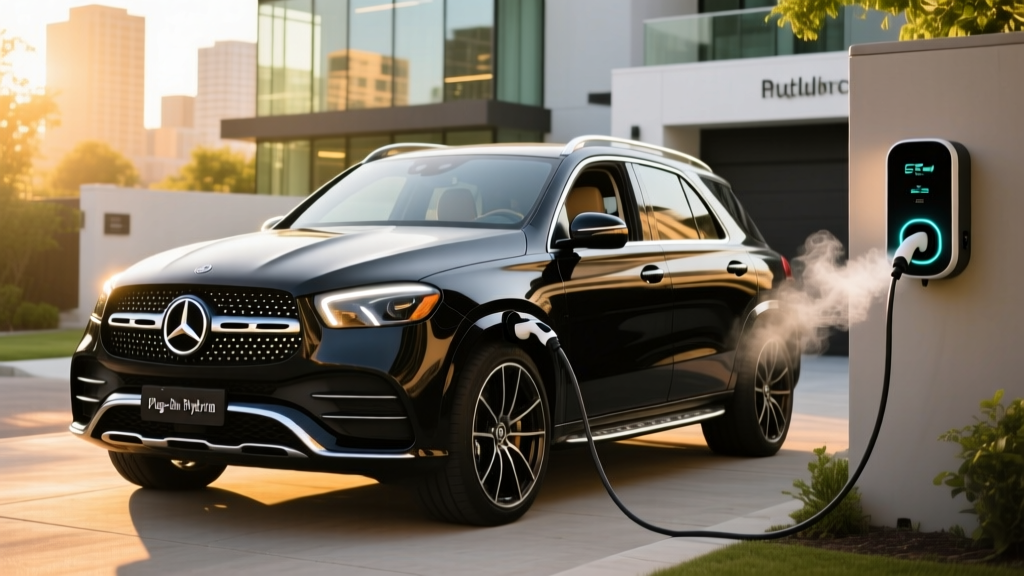
The 2026 Mercedes-Benz GLE 350e 4MATIC occupies a specific niche: a midsize luxury SUV that can handle most daily commutes on electricity alone while retaining a turbocharged gas engine for road trips. With an EPA-rated 48 miles of electric-only range, 56 MPGe combined, and 362 combined horsepower, it targets buyers who want EV-like daily driving without range anxiety on longer hauls. The trade-off is a premium starting MSRP near $64,750 and a cargo-area compromise from the larger battery pack.
| Spec | 2026 GLE 350e 4MATIC |
|---|---|
| Powertrain | 2.0L turbo I-4 + electric motor (PHEV) |
| Combined Horsepower | 362 hp / 516 lb-ft torque |
| Battery (usable) | 23.3 kWh (NMC lithium-ion) |
| EPA Electric-Only Range | 48 miles |
| Total Combined Range | |
| MPGe (electric + gas) | 56 MPGe combined |
| MPG (gas-only, charge-depleted) | 23 city / 26 hwy / 24 combined |
| Max AC Charging (Level 2) | 7.4 kW |
| DC Fast Charging | Not available |
| Level 2 Charge Time (0–100%) | ~3.5 hours |
| 0–60 mph | 6.5 seconds |
| Base MSRP | $64,750 |
| Federal Tax Credit (§30D) | Up to $3,750 (see eligibility below) |
| Powertrain Warranty | 4 yr / 50,000 mi |
| Hybrid Battery Warranty | 10 yr / 150,000 mi |
HEV vs PHEV: Where the GLE 350e Fits
Mercedes-Benz offers the GLE in several electrified flavors globally, but for the US market the GLE 350e 4MATIC is the plug-in hybrid (PHEV). It is critical to understand what separates a PHEV from a conventional hybrid (HEV):
| Feature | Conventional Hybrid (HEV) | Plug-In Hybrid (PHEV) — GLE 350e |
|---|---|---|
| Battery Size | 1–2 kWh | 23.3 kWh usable |
| Plug-In Required? | No — regenerates while driving | Yes — plug in for electric range |
| Electric-Only Range | 0–2 miles (low speed only) | 48 miles EPA |
| Can Drive Gas-Free? | No — engine assists frequently | Yes — up to 48 mi at highway speeds |
| Fuel Economy Benefit | ~20–35% better than gas-only | Up to 80% electric driving if charged daily |
| Charging Hardware | None needed | J1772 / NACS adapter for Level 2 |
| Federal Tax Credit | None | Potentially up to $3,750 |
If you cannot plug in at home or work, a PHEV's advantage collapses — you'll be hauling a heavy battery on gas alone, achieving roughly 24 MPG combined, which is worse than some non-hybrid luxury SUVs. The GLE 350e rewards owners who charge nightly.
Electric-Only Range and Real-World Efficiency
The EPA rates the GLE 350e at 48 miles of electric-only range. In real-world testing, expect approximately 38–44 miles in mixed driving conditions. Highway-speed driving at 75+ mph, cold weather below 40°F, and aggressive acceleration can reduce electric range to 30–35 miles. A heat pump is standard, which helps preserve range in cooler temperatures compared to resistive heating systems.
Once the battery depletes, the 2.0L turbocharged four-cylinder takes over. EPA rates charge-depleted (gas-only) driving at 23 city / 26 highway / 24 combined MPG. Real-world owners report 22–25 MPG in mixed driving once the battery is spent — reasonable for a 5,400-pound luxury SUV but not exceptional. For comparison, the non-hybrid GLE 350 4MATIC achieves 22 MPG combined.
The critical insight: if your daily round-trip commute is under 40 miles and you charge every night, you may visit a gas station only on road trips. Several owners report using less than 10 gallons per month in this pattern.
Charging: Level 2 Only, No DC Fast Charging
The GLE 350e supports Level 2 AC charging at up to 7.4 kW via a J1772 connector (NACS adapter included for Tesla Destination Chargers). A full 0–100% charge takes approximately 3.5 hours on a 240V/32A circuit.
Notably, the GLE 350e does not support DC fast charging. This is typical for PHEVs — the 23.3 kWh battery is small enough that Level 2 charging is adequate for overnight replenishment. For most PHEV owners, this is a non-issue: you plug in at home and wake up to a full charge every morning.
Battery Warranty & Replacement Cost
Mercedes-Benz covers the GLE 350e's high-voltage battery for 10 years or 150,000 miles (whichever comes first) against defects and capacity loss below 70% of original capacity. This exceeds the federal minimum requirement of 8 years/100,000 miles and matches the industry's best PHEV battery warranties.
If replacement is needed out of warranty, expect a cost between $8,000–$12,000 for the battery pack plus labor. However, modern NMC PHEV batteries with active thermal management rarely require full replacement — individual cell module service is sometimes possible at lower cost.
Powertrain and Performance
The GLE 350e pairs a 2.0L turbocharged inline-four (217 hp, 295 lb-ft) with an electric motor integrated into the transmission housing (134 hp, 325 lb-ft). Combined system output is 362 horsepower and 516 lb-ft of torque, routed through a 9-speed automatic and 4MATIC all-wheel drive.
The result is a 0–60 mph time of 6.5 seconds — quicker than the non-hybrid GLE 350 (7.1 seconds) and comparable to the six-cylinder GLE 450. The electric motor provides instant torque at low speeds, making the GLE 350e feel responsive in city driving and highway merging. The transition between electric and gas power is well-damped; most drivers won't notice the engine engaging unless accelerating hard.
Driving modes include Electric, Hybrid, and Battery Hold. Battery Hold is useful on road trips — it preserves your electric range for city driving at your destination, where electric efficiency matters most.
Pricing, Trims, and Federal Tax Credit Eligibility
The 2026 GLE 350e 4MATIC starts at $64,750 (including destination). Key packages include the Premium Package ($2,850), AMG Line Exterior ($3,250), and Driver Assistance Package ($2,250). A well-equipped model typically lands between $70,000–$76,000.
Does the GLE 350e Qualify for the §30D Federal Tax Credit?
Under current IRS §30D rules, the GLE 350e PHEV may qualify for a partial credit of up to $3,750 (the critical minerals half), depending on battery sourcing compliance. The full $7,500 credit requires meeting both critical mineral AND battery component sourcing thresholds, and Mercedes-Benz has not confirmed full compliance for the GLE 350e's battery supply chain.
- MSRP Cap: The GLE 350e qualifies — SUVs must be under $80,000 MSRP, and the base model clears this. Loaded models exceeding $80,000 lose eligibility.
- Buyer Income Cap: AGI must not exceed $150,000 (single), $225,000 (head of household), or $300,000 (married filing jointly).
- Point-of-Sale Transfer: The credit can be transferred to the dealer at purchase, reducing your out-of-pocket cost immediately rather than waiting for tax filing.
- Battery Capacity: The 23.3 kWh battery exceeds the minimum 7 kWh threshold for PHEV credit eligibility.
Always verify current eligibility on fueleconomy.gov before purchasing, as sourcing requirements tighten annually. State-level incentives vary — check your state's energy office for additional rebates.
Who Should Choose the GLE 350e PHEV?
Choose the GLE 350e PHEV if:
- Your daily commute is 30–45 miles round-trip and you can charge at home
- You want a luxury midsize SUV but want to minimize gas use on weekdays
- You take regular road trips where a full EV would require charging stops
- You value the GLE's interior quality, ride comfort, and MBUX tech
Look elsewhere if:
- You cannot charge at home or work — a PHEV without charging becomes a heavy, less-efficient gas SUV
- You want maximum cargo space — the GLE 350e's battery raises the cargo floor by ~1.5 inches, reducing volume to 33.3 cu ft (vs. 38.2 in the gas GLE)
- You prioritize sporty handling — the extra 400+ lbs of battery is noticeable in corners
- You want full electric driving beyond 50 miles — consider the BMW iX or Mercedes EQE SUV instead
Pros
- 48-mile electric range covers most daily commutes
- Smooth electric/gas transitions, strong 362 hp combined
- 10-year/150,000-mile battery warranty
- Quiet, refined cabin with MBUX dual-screen setup
- No range anxiety — gas engine for road trips
Cons
- No DC fast charging
- Reduced cargo space vs. gas GLE
- Gas-only MPG (24 combined) is unremarkable for a hybrid
- $64,750+ starting price; options push past $80K (losing tax credit)
- Partial tax credit ($3,750 max) vs. full EV credits
GLE 350e vs. Full EV vs. Gas GLE: The Decision Matrix
| Factor | GLE 350e PHEV | Mercedes EQE SUV (Full EV) | GLE 350 4MATIC (Gas) |
|---|---|---|---|
| Starting MSRP | $64,750 | $78,050 | $62,050 |
| EPA Range / MPG | 48 mi electric + gas | 279 mi (300) | 22 MPG combined |
| "Fuel" Cost per Year | ~$900–$1,400 | ~$650 (electric) | ~$2,400 |
| Maintenance Cost | Moderate (engine + EV systems) | Low (no engine) | Standard |
| Road Trip Convenience | Excellent — gas + electric | Requires DC charging stops | Excellent |
| Home Charging Needed? | Strongly recommended | Essential | No |
| Tax Credit Potential | Up to $3,750 | Up to $7,500 | None |
The PHEV makes the most financial sense for drivers who can charge at home, commute under 50 miles daily, and still take 3+ road trips per year. If you rarely drive beyond 250 miles in a day and have reliable home charging, the EQE SUV offers lower running costs. If charging access is uncertain, the gas GLE remains the pragmatic choice.
Frequently Asked Questions
How many MPG does the GLE 350e get on gas alone?
Once the battery is depleted, the EPA rates the GLE 350e at 23 city / 26 highway / 24 combined MPG. Real-world results cluster around 22–25 MPG depending on driving style and terrain. This is only marginally better than the gas-only GLE 350 (22 combined) because the PHEV carries approximately 400 extra pounds of battery and motor hardware.
How far can the GLE 350e go on electric power only?
The EPA rates it at 48 miles of electric-only range. Real-world expectations are 38–44 miles in moderate temperatures with mixed driving. Highway speeds above 70 mph and cold weather below freezing can reduce this to 30–35 miles. The electric motor can propel the GLE up to 87 mph without engaging the gas engine.
Can I charge the GLE 350e at a Tesla Supercharger?
Not at DC Supercharger stalls — the GLE 350e does not support DC fast charging. However, you can use a NACS adapter to charge at Tesla Destination Chargers (Level 2 AC) and Wall Connectors, which is useful at hotels and workplaces.
Is the GLE 350e PHEV reliable? What about battery lifespan?
The GLE 350e's powertrain is mechanically proven — the 2.0L M254 turbo engine and 9G-Tronic transmission are widely used across the Mercedes lineup. The high-voltage battery uses liquid-cooled NMC chemistry with active thermal management, which significantly extends longevity. Mercedes covers the battery for 10 years/150,000 miles. Based on industry data from similar PHEV systems, expect 85–90% battery capacity retention at 100,000 miles with normal use.
Does the GLE 350e qualify for the $7,500 federal tax credit?
Under current IRS §30D rules, the GLE 350e is expected to qualify for a partial credit of up to $3,750 (the critical minerals component), assuming the buyer meets income requirements and the vehicle's MSRP stays under $80,000. The full $7,500 requires both critical mineral and battery component sourcing compliance. Always confirm on the IRS Clean Vehicle Credit list before purchasing, as eligibility can change with supply chain updates.
How much does it cost to charge the GLE 350e at home?
Charging the 23.3 kWh battery from empty to full at the national average residential rate of $0.16/kWh costs approximately $3.73. That works out to roughly $0.08 per electric mile — about one-third the cost of gasoline per mile at current prices. Over a year of daily 40-mile electric commutes, home charging costs around $350–$400 versus $1,500+ in gasoline.
What's the difference between the GLE 350e and the old GLE 350de?
The GLE 350de (diesel PHEV) was sold in Europe but never in the US market. The GLE 350e uses a gasoline 2.0L turbo engine paired with the electric motor. US buyers have never had a diesel-electric PHEV option in the GLE lineup.