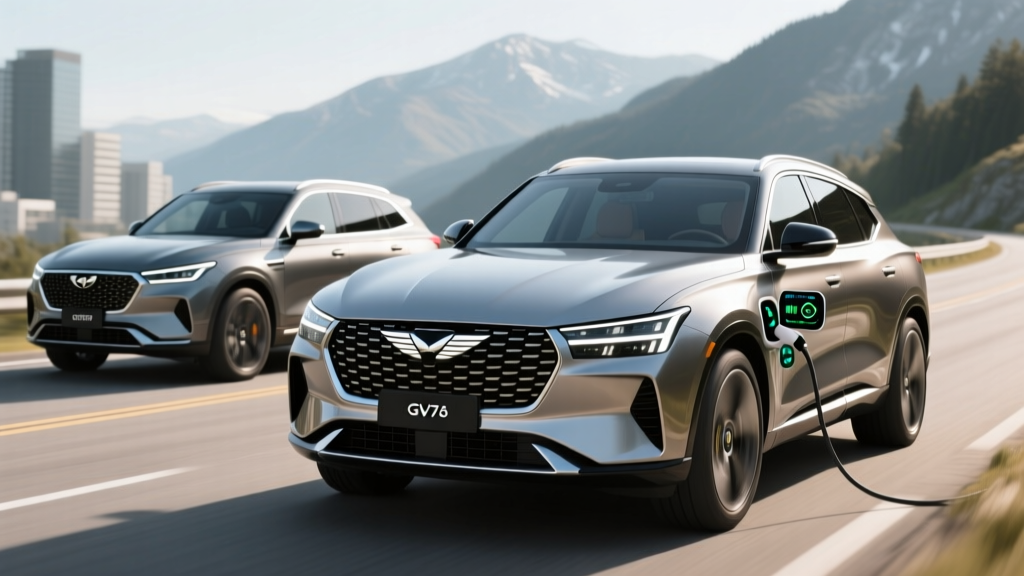
If you've been browsing luxury SUVs and wondering, "does Genesis make a hybrid SUV?" — the short answer is yes, but with an important caveat. As of the 2026 model year, Genesis offers electrified SUVs in the form of the all-electric GV60 and Electrified GV70, alongside the conventionally powered GV70 and GV80. What Genesis does not currently sell in the U.S. is a traditional hybrid (HEV) or plug-in hybrid (PHEV) SUV. That makes the buying decision more nuanced than a simple yes-or-no.
This guide walks through every electrified Genesis SUV available, clarifies the HEV vs. PHEV vs. BEV distinction, and helps you decide whether a Genesis electrified SUV fits your lifestyle — or whether a competitor's hybrid or PHEV might serve you better.
Does Genesis Make a Hybrid SUV? The 2026 Lineup Explained
Genesis currently markets two fully electric (battery-electric, or BEV) SUVs in the United States:
- Genesis GV60 — a compact luxury crossover built on Hyundai Motor Group's E-GMP platform
- Genesis Electrified GV70 — the battery-electric variant of the mid-size GV70 luxury SUV
The larger Genesis GV80 remains available only with conventional gasoline powertrains (a 2.5L turbocharged I4 or a 3.5L twin-turbo V6). There is no hybrid or plug-in hybrid GV80 for 2026.
Genesis has not announced a conventional hybrid (HEV) or plug-in hybrid (PHEV) SUV for the U.S. market. If you specifically want a luxury PHEV SUV — something that blends electric-only commuting with a gas engine for longer trips — you'll need to look at competitors like the BMW X5 xDrive50e, Volvo XC60 Recharge, or Lincoln Corsair Grand Touring.
HEV vs. PHEV vs. BEV: What Genesis Actually Offers
Before evaluating the Genesis lineup, it's essential to understand the three types of electrified vehicles and how they differ in daily use:
| Feature | Conventional Hybrid (HEV) | Plug-in Hybrid (PHEV) | Battery Electric (BEV) |
|---|---|---|---|
| Plugs in to charge? | No | Yes (optional but recommended) | Yes (required) |
| Electric-only range | 0 miles (motor assists engine) | 20–50 miles typical | 200–400+ miles |
| Gas engine | Yes (primary power) | Yes (backup + highway) | No |
| Tailpipe emissions | Reduced | Reduced (zero in EV mode) | None |
| Federal tax credit (§30D) | No | Up to $7,500 (if eligible) | Up to $7,500 (if eligible) |
| Genesis offers in U.S.? | No | No | Yes (GV60, Electrified GV70) |
Genesis has chosen to skip the hybrid and PHEV steps entirely, going straight from conventional gasoline to full battery-electric for its SUVs. This is a bolder strategy than most luxury competitors, but it means buyers who aren't ready for a full EV have no middle-ground option from Genesis.
2026 Genesis GV60: Specs, Range, and Pricing
The GV60 is Genesis's dedicated electric compact luxury SUV, sharing its E-GMP platform and 77.4 kWh (usable) battery pack with the Hyundai Ioniq 5 and Kia EV6. It's the most affordable entry into the Genesis electric lineup.
| Spec | GV60 Standard Range | GV60 Advanced / Prestige (AWD) |
|---|---|---|
| Drivetrain | RWD (single motor) | AWD (dual motor) |
| Horsepower | 168 hp | 314 hp (429 hp w/ Boost) |
| 0–60 mph | ~7.3 sec | ~4.0 sec (Boost mode) |
| Battery (usable) | 77.4 kWh (NMC) | 77.4 kWh (NMC) |
| EPA Range | 294 miles | 248 miles |
| MPGe (combined) | 97 MPGe | 90 MPGe |
| Max DC Fast Charge | ~240 kW (peak) | ~240 kW (peak) |
| 10–80% DC Charge | ~18 minutes | ~18 minutes |
| Level 2 Charge (240V, 48A) | ~7 hr 20 min | ~7 hr 20 min |
| Base MSRP (2026 est.) | ~$53,400 | ~$61,400 (Advanced) |
GV60 Charging Deep Dive
The GV60's 800V electrical architecture is one of its strongest features. At a capable 350 kW DC fast charger (like Electrify America's latest stalls), the GV60 can peak near 240 kW, adding roughly 200 miles of range in 18 minutes from 10–80% State of Charge. However, the charge curve tapers significantly above 80% — a 10–90% session can take 30+ minutes. This is normal for NMC chemistry batteries and a reason to plan fast-charging stops around the 80% mark.
The GV60 uses the CCS1 connector natively. As of 2026, Genesis has not adopted Tesla's NACS port, though adapters for Supercharger access are available through Hyundai Motor Group partnerships. Verify current adapter availability with your dealer before relying on Supercharger access for road trips.
2026 Genesis Electrified GV70: The Luxury Electric SUV
The Electrified GV70 takes the well-regarded GV70 mid-size luxury SUV and replaces its gasoline powertrain with a dual-motor AWD electric system. It's larger, more powerful, and more expensive than the GV60, targeting buyers cross-shopping the BMW iX, Audi Q8 e-tron, and Mercedes EQE SUV.
| Spec | Electrified GV70 (AWD) |
|---|---|
| Drivetrain | AWD (dual motor) |
| Horsepower | 429 hp (483 hp w/ Boost) |
| 0–60 mph | ~4.2 sec (Boost mode) |
| Battery (usable) | 77.4 kWh (NMC) |
| EPA Range | 236 miles |
| MPGe (combined) | 85 MPGe |
| Max DC Fast Charge | ~240 kW (peak) |
| 10–80% DC Charge | ~18 minutes |
| Level 2 Charge (240V, 48A) | ~7 hr 20 min |
| Towing Capacity | ~3,500 lbs |
| Base MSRP (2026 est.) | ~$67,000 |
Electrified GV70 Charging and Platform Notes
Like the GV60, the Electrified GV70 uses the 800V E-GMP architecture and CCS1 connector. Charging speeds and curve behavior are virtually identical. The shared 77.4 kWh battery means range is the trade-off for the GV70's heavier curb weight (~4,900 lbs) and more powerful motors.
Federal Tax Credit Eligibility for Genesis Electric SUVs
Under current IRS §30D rules, both the GV60 and Electrified GV70 may qualify for the federal clean vehicle credit — but eligibility depends on several factors that change frequently:
- MSRP Cap: SUVs must have an MSRP at or below $80,000. Both Genesis models qualify under this cap.
- Buyer Income Cap: Modified adjusted gross income must not exceed $300,000 (joint filers), $225,000 (head of household), or $150,000 (single filers).
- Battery Component Sourcing: A percentage of battery components must be manufactured or assembled in North America. This threshold increases annually and is a common reason vehicles lose eligibility mid-year.
- Critical Minerals Sourcing: A percentage of critical minerals must be sourced from the U.S. or FTA partners. This requirement also tightens annually.
- Point-of-Sale Transfer: As of 2024, eligible buyers can transfer the credit to the dealer at purchase, reducing the purchase price directly rather than waiting for a tax refund.
Important: The Genesis GV60 and Electrified GV70 are assembled in South Korea, which historically has affected eligibility under North American assembly requirements. However, the §30D credit for new vehicles does not require North American final assembly (that requirement applies only to the used EV credit under §25E). Eligibility hinges on the battery sourcing and critical minerals rules. Always verify current eligibility on fueleconomy.gov before purchasing, as the list of qualifying vehicles updates regularly.
Reliability, Battery Warranty, and Long-Term Ownership
Hyundai Motor Group's E-GMP platform has proven reliable in early data. The NMC battery chemistry used in both Genesis EVs is well-established, with degradation curves that typically show 5–8% capacity loss in the first 2–3 years before leveling off. Most E-GMP owners report roughly 90–93% State of Health (SoH) after 50,000 miles.
If you're coming from a hybrid mindset and wondering about battery replacement cost: an out-of-warranty high-voltage battery replacement for the GV60 or Electrified GV70 would likely cost between $12,000 and $18,000 based on current E-GMP pack pricing. However, given the 10-year/100,000-mile warranty and typical degradation patterns, most original owners will never face this expense.
How Does Genesis Reliability Compare?
Genesis as a brand has consistently ranked near the top of J.D. Power dependability studies, though EV-specific reliability data is still accumulating. The E-GMP platform's simplicity (fewer moving parts than any gasoline or hybrid powertrain) is an inherent reliability advantage. There are no oil changes, no transmission fluid, no spark plugs, and regenerative braking significantly extends brake pad life.
Genesis Electric SUV vs. Competitor Hybrids and PHEVs
If the lack of a Genesis hybrid or PHEV has you considering alternatives, here's how the Genesis BEVs stack up against popular luxury hybrid and PHEV SUVs:
| Model | Type | EPA Combined | EV-Only Range | Starting MSRP (est.) |
|---|---|---|---|---|
| Genesis GV60 (AWD) | BEV | 90 MPGe | 248 mi (total) | $61,400 |
| Genesis Electrified GV70 | BEV | 85 MPGe | 236 mi (total) | $67,000 |
| BMW X5 xDrive50e | PHEV | 56 MPGe / 25 MPG (gas) | ~38 mi electric | $72,000 |
| Volvo XC60 Recharge | PHEV | 63 MPGe / 28 MPG (gas) | ~35 mi electric | $59,000 |
| Lincoln Corsair Grand Touring | PHEV | 78 MPGe / 33 MPG (gas) | ~31 mi electric | $55,000 |
The PHEV competitors offer a compelling middle ground: 30–40 miles of electric-only range for daily commuting, with a gas engine eliminating range anxiety on road trips. The trade-off is more complex powertrain maintenance (you have both an engine and an electric motor), lower performance, and no access to DC fast charging. The Genesis BEVs deliver stronger acceleration, lower running costs, and a simpler powertrain — but require commitment to charging infrastructure.
Who Should Choose a Genesis Electrified SUV?
Choose a Genesis GV60 or Electrified GV70 if:
- You have reliable home charging (Level 2, 240V) and don't depend solely on public chargers
- Your daily commute is under 100 miles round-trip
- You want luxury-car refinement with EV-smooth acceleration and silence
- You value the 10-year/100,000-mile battery warranty
- You're ready to commit to a fully electric vehicle
Look at a competitor's PHEV instead if:
- You can't install a home charger and public charging access is limited in your area
- You frequently take road trips over 250 miles and don't want to plan charging stops
- You want the option of electric-only commuting without full EV commitment
- You live in an apartment or condo without charging access
Stick with a conventional gas SUV if:
- You have zero charging access at home or work
- You regularly tow heavy loads beyond the GV70's 3,500-lb capacity
- Your budget is under $45,000
Frequently Asked Questions
Does Genesis make a hybrid SUV in 2026?
No. Genesis does not offer a conventional hybrid (HEV) or plug-in hybrid (PHEV) SUV in the U.S. for the 2026 model year. The brand offers two fully electric SUVs: the GV60 and the Electrified GV70. The larger GV80 is available only with gasoline engines.
How far can the Genesis GV60 go on a full charge?
The EPA rates the RWD GV60 at 294 miles and the AWD model at 248 miles. In real-world driving, expect approximately 250–265 miles (RWD) or 210–225 miles (AWD) in mixed conditions, with reduced range in cold weather or sustained highway speeds above 70 mph. Source: fueleconomy.gov.
How far can the Electrified GV70 go on electric only?
Since the Electrified GV70 is a fully electric vehicle (BEV), not a PHEV, its entire 236-mile EPA range is electric-only. There is no gas engine backup. Real-world range is approximately 195–215 miles in mixed driving.
Do Genesis electric SUVs qualify for the $7,500 federal tax credit?
Eligibility depends on current IRS §30D rules regarding battery component sourcing, critical minerals requirements, and buyer income limits. Both models fall under the $80,000 SUV MSRP cap. However, because they are assembled in South Korea with batteries that may not fully meet evolving sourcing requirements, eligibility can change. Always check the latest list on fueleconomy.gov and consult a tax professional before relying on the credit.
Is the Genesis GV60 reliable? What about battery replacement cost?
The E-GMP platform has shown strong early reliability data. Genesis covers the high-voltage battery for 10 years or 100,000 miles, guaranteeing at least 70% capacity retention. Out-of-warranty battery replacement would cost an estimated $12,000–$18,000, though most original owners are unlikely to need this based on current degradation data.
Can I charge a Genesis GV60 or Electrified GV70 at Tesla Superchargers?
As of 2026, Genesis vehicles use the CCS1 connector natively. Hyundai Motor Group has announced NACS adoption for future models, and adapters for Supercharger access may be available. Confirm adapter compatibility and Supercharger network access with your Genesis dealer before purchase if Tesla network access is a priority.
Will Genesis release a hybrid or PHEV SUV in the future?
Genesis has not announced a hybrid or PHEV SUV for the U.S. market. The brand's stated strategy focuses on full electrification. A hybrid GV80 has been rumored for other markets but is not confirmed for U.S. sale. If a PHEV is essential to your purchase, consider the BMW X5 xDrive50e or Volvo XC60 Recharge as alternatives.
Pros of Genesis Electric SUVs
- 800V architecture enables ~18-min 10–80% DC fast charging
- 10-year/100,000-mile battery warranty among the best in luxury segment
- Refined, quiet ride with premium interior materials
- Strong acceleration (GV60 AWD: ~4.0 sec 0–60)
- Competitive pricing vs. German luxury EV rivals
Cons of Genesis Electric SUVs
- No hybrid or PHEV option for buyers not ready for full EV
- Electrified GV70 range (236 mi EPA) trails key competitors
- CCS1 connector limits native Supercharger access (adapter dependent)
- South Korean assembly may affect tax credit eligibility
- Limited dealer network compared to BMW, Mercedes, Audi