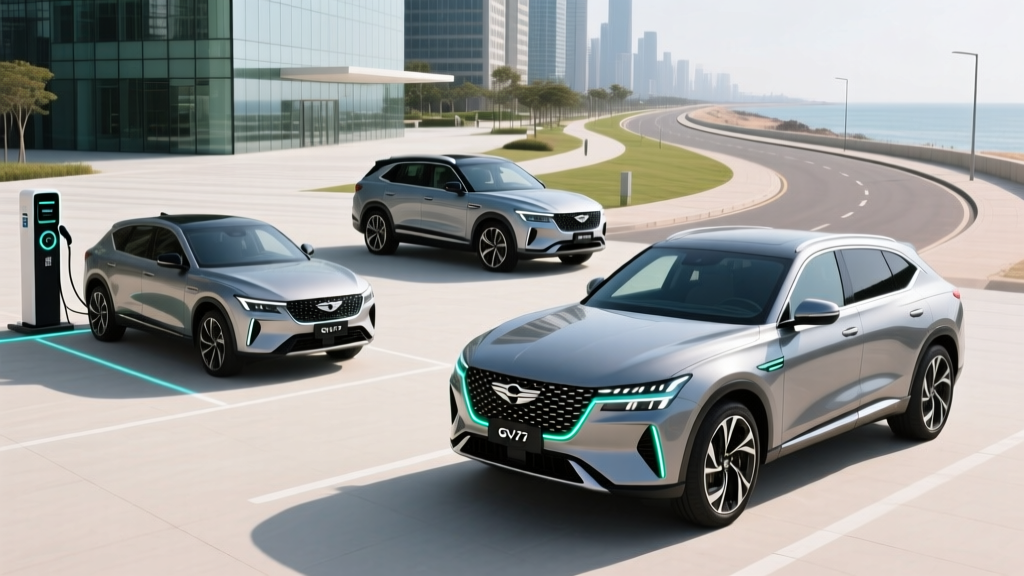
If you've been browsing luxury electrified SUVs and typed "genesis hybrid suv 2025" into your search bar, you've likely hit a wall of conflicting information. Here's the reality Genesis buyers need to know: as of the 2025 model year, Genesis does not offer a conventional hybrid (HEV) or plug-in hybrid (PHEV) SUV in the United States. What Genesis does offer are fully electric SUVs — the GV60 and the Electrified GV70 — alongside the gas-powered GV70 and GV80. A redesigned GV80 with hybrid variants has been announced for international markets, but U.S. availability remains unconfirmed.
This guide breaks down exactly what's available from Genesis in 2025, what's on the horizon, and how to decide whether a Genesis EV, a competitor's PHEV, or waiting for a future Genesis hybrid makes the most sense for your garage.
Genesis Electrified Lineup: What You Can Actually Buy in 2025
Genesis currently sells two all-electric SUVs in the U.S. Neither is a hybrid, but both compete in the same luxury electrified SUV space that hybrid shoppers are exploring. Understanding their specs is essential before cross-shopping against PHEV rivals like the BMW X5 xDrive50e or Volvo XC90 Recharge.
| Spec | GV60 (AWD) | Electrified GV70 |
|---|---|---|
| Powertrain Type | BEV (Dual Motor AWD) | BEV (Dual Motor AWD) |
| Battery Capacity | 77.4 kWh usable | 77.4 kWh usable |
| Horsepower | 314 hp (429 hp w/Boost) | 429 hp (490 hp w/Boost) |
| 0-60 mph | ~3.8 sec (Boost mode) | |
| EPA Range | 248 miles | 236 miles |
| Max DC Fast Charge | ~240 kW (800V architecture) | ~240 kW (800V architecture) |
| 10-80% DC Charge Time | ~18 minutes | ~18 minutes |
| Level 2 Charge Rate | 10.9 kW | 10.9 kW |
| Starting MSRP | ~$52,000 | ~$66,450 |
| Federal §30D Tax Credit | Not eligible (Korea-built) | Not eligible (Korea-built) |
| Battery Warranty | 10 yr / 100,000 mi | 10 yr / 100,000 mi |
Both vehicles ride on Hyundai Motor Group's E-GMP 800-volt platform, which delivers some of the fastest DC charging speeds in the luxury segment. The tradeoff is EPA range: at 236-248 miles, these SUVs fall short of rivals like the BMW iX (324 miles) or Tesla Model X (335 miles). On real-world highway drives at 75 mph in moderate temperatures, expect roughly 200-215 miles from the GV60 and 190-205 miles from the Electrified GV70 before needing a charger.
HEV vs PHEV vs BEV: What Genesis Buyers Need to Understand
Before we go further, let's clarify the three electrified powertrain types, because Genesis's current lineup and rumored future offerings span all of them:
Conventional Hybrid (HEV)
A small battery (typically 1-2 kWh) recharged by regenerative braking and the gas engine. No plug required. Improves fuel economy 20-40% over a gas-only equivalent. Example: Toyota RAV4 Hybrid.
Plug-In Hybrid (PHEV)
A larger battery (typically 12-25 kWh) that can be plugged in for 20-50 miles of electric-only driving. Once depleted, it operates as a conventional hybrid. Best for drivers who can charge at home but need gas-engine range for road trips. Example: BMW X5 xDrive50e.
Battery Electric Vehicle (BEV)
No gas engine. Runs entirely on a large battery (60-120+ kWh). Zero tailpipe emissions, lowest running costs, but requires charging infrastructure. Example: Genesis GV60.
Genesis currently sells only BEVs in the U.S. If you specifically need a plug-in hybrid luxury SUV — perhaps because you lack reliable home charging or frequently drive 400+ mile routes — you'll need to look at competitors for now.
How Many MPG Does a Genesis Hybrid Get?
Because Genesis does not currently sell a hybrid SUV in the U.S., there is no EPA MPG figure to report. However, we can provide useful context from the brand's existing lineup and international offerings:
| Model | Powertrain | EPA City | EPA Highway | EPA Combined |
|---|---|---|---|---|
| GV70 2.5T AWD | Gas (turbo I-4) | 22 MPG | 28 MPG | 24 MPG |
| GV70 3.5T AWD | Gas (turbo V6) | 18 MPG | 23 MPG | 20 MPG |
| GV80 2.5T AWD | Gas (turbo I-4) | 21 MPG | 25 MPG | 23 MPG |
| GV80 3.5T AWD | Gas (turbo V6) | 18 MPG | 22 MPG | 19 MPG |
| GV60 AWD | BEV | 98 MPGe | 85 MPGe | 92 MPGe |
| Electrified GV70 | BEV | 91 MPGe | 87 MPGe | 89 MPGe |
Source: fueleconomy.gov, EPA estimates. MPGe (miles per gallon equivalent) allows direct comparison between electricity and gasoline energy consumption. Real-world highway MPGe is typically 10-15% lower than EPA sticker values for EVs.
Internationally, Hyundai Motor Group (Genesis's parent) offers hybrid versions of the GV80 in South Korea using a 1.6-liter turbo hybrid powertrain rated around 25-28 MPG combined. If Genesis brings this powertrain to the U.S., expect similar figures — a meaningful improvement over the current GV80 3.5T's 19 MPG combined.
The GV80 Hybrid: What We Know About the Upcoming Model
The redesigned 2025 Genesis GV80 (internally coded RG3) launched with gas-only powertrains in the U.S., but international markets have received a hybrid variant built on Hyundai's TMED-II (Transmission-Mounted Electric Drive) hybrid system. Here's what's known from announced international specs:
- Powertrain: 1.6L turbocharged inline-4 paired with an electric motor integrated into the transmission
- Combined Output: Estimated ~290-310 hp (final U.S. specs unconfirmed)
- Hybrid Type: Conventional HEV (no plug-in variant confirmed)
- Expected MPG: ~26-30 combined (based on Korean certification data)
- U.S. Availability: Not yet confirmed — likely 2026 model year at earliest
Genesis has not officially confirmed a plug-in hybrid GV80 for any market, though the platform is technically capable of supporting one. A PHEV variant would likely use a larger battery (18-25 kWh) for 30-40 miles of electric-only range, similar to the Hyundai Santa Fe PHEV. Until Genesis USA makes an announcement, treat all GV80 hybrid specs as preliminary.
Pricing and Tax Credit Reality for Genesis Electrified SUVs
Pricing is where Genesis's electrified SUVs create a genuine dilemma for hybrid-minded buyers:
Genesis GV60 (Starting ~$52,000)
Pros:
- 800V architecture — 10-80% in ~18 min at capable DC chargers
- Premium interior with rotating crystal gear selector
- 10-year/100,000-mile battery warranty
- 3 years of complimentary Electrify America charging (30-min sessions)
Limitations to Consider
Cons:
- No federal §30D tax credit (assembled in South Korea)
- EPA range of 236-248 miles trails key competitors
- No hybrid or PHEV option available
- Smaller dealer/service network than BMW or Mercedes
Federal §30D Tax Credit Eligibility
Neither the GV60 nor the Electrified GV70 qualifies for the federal §30D clean vehicle credit (up to $7,500). The credit requires final assembly in North America, and both Genesis EVs are built in Ulsan, South Korea. Additionally, battery component and critical mineral sourcing requirements further restrict eligibility across the luxury EV segment. Always verify current-year eligibility on IRS.gov before purchasing, as rules are subject to change. Some states offer separate EV rebates that are not restricted by assembly location — check your state energy office for details.
For hybrid shoppers, the tax credit picture is equally important: conventional hybrids (HEVs) do not qualify for any federal tax credit. Only PHEVs and BEVs with sufficient battery capacity can qualify, and they still must meet assembly, MSRP cap ($80,000 for SUVs), buyer income, and battery sourcing requirements. This means a future Genesis GV80 HEV would likely not receive federal incentives regardless of where it's built.
Genesis vs the Competition: PHEV Alternatives Worth Cross-Shopping
If you're set on a luxury hybrid or PHEV SUV and can't wait for Genesis to potentially offer one, these are the benchmarks to consider:
| Model | Elec. Range | Combined MPG (hybrid mode) | HP | MSRP | §30D Eligible? |
|---|---|---|---|---|---|
| BMW X5 xDrive50e | 38 mi | 27 MPG | 483 hp | ~$74,000 | Yes (U.S.-built) |
| Volvo XC90 Recharge | 32 mi | 27 MPG | 455 hp | ~$78,000 | No (Sweden-built) |
| Lincoln Corsair Grand Touring | 28 mi | 33 MPG | 266 hp | ~$55,000 | No |
| Porsche Cayenne E-Hybrid | 32 mi | 21 MPG | 389 hp | ~$92,000 | No |
The BMW X5 xDrive50e stands out as the strongest competitor for a buyer who wants Genesis-level luxury with PHEV flexibility. Built in Spartanburg, South Carolina, it qualifies for the full $7,500 federal credit (subject to income and sourcing verification), bringing its effective price closer to $66,500. Its 38 miles of electric-only range covers most daily commutes, and the inline-6 hybrid powertrain delivers 483 hp with a combined 27 MPG when the battery is depleted.
Source: fueleconomy.gov and manufacturer specifications.
Battery Reliability and Warranty: What Hybrid Buyers Should Expect
Battery longevity is consistently the top concern among hybrid and EV shoppers, and it's an area where Genesis's parent company has built a strong track record.
Genesis Battery and Powertrain Warranty Coverage
- EV Battery: 10 years / 100,000 miles (covers defects and capacity loss below 70% of original)
- Powertrain: 10 years / 100,000 miles
- Basic (Bumper-to-Bumper): 5 years / 60,000 miles
- Complimentary Maintenance: 3 years / 36,000 miles
Hyundai Motor Group's hybrid and EV battery systems have demonstrated strong real-world durability. Independent fleet data from sources like Recurrent shows that Hyundai/Kia/Genesis E-GMP battery packs (the platform used in the GV60 and Electrified GV70) retain approximately 90-95% of original capacity after 3 years and 50,000 miles of typical use. This is aided by the 800V system's sophisticated thermal management, which keeps cells within optimal temperature ranges during both fast charging and high-load driving.
For a future conventional hybrid GV80, expect a similar 10-year/100,000-mile hybrid battery warranty. Hybrid battery replacement costs for vehicles in this class typically range from $2,500 to $5,000, though failures within the warranty period are rare. The smaller battery in a conventional hybrid (1-2 kWh vs 77.4 kWh in the BEVs) means lower replacement cost and less degradation concern overall.
Who Should Buy a Genesis Electrified SUV — and Who Should Wait or Look Elsewhere
Choose a Genesis GV60 or Electrified GV70 if:
- You have reliable Level 2 home charging (240V, 40-48A circuit)
- Your daily driving is under 150 miles round-trip
- You value ultra-fast DC charging for road trips (18-min 10-80% at 240 kW chargers)
- You prefer Genesis's interior design and 10-year warranty over German rivals
- You don't need the federal tax credit or your state offers its own EV rebate
Choose a Competitor's PHEV (BMW X5, Volvo XC90) if:
- You lack home charging access but want some electric-only driving
- You regularly drive 300+ mile routes where charging infrastructure is sparse
- You want to claim the $7,500 federal tax credit (BMW X5 qualifies)
- You need more than 250 miles of total range without stopping
Wait for a Genesis Hybrid GV80 if:
- You're a loyal Genesis buyer who specifically wants a three-row hybrid SUV
- You can wait until the 2026-2027 model year for potential U.S. availability
- You want improved MPG over the current gas GV80 (19-23 MPG combined) without going fully electric
Frequently Asked Questions
Does Genesis make a hybrid SUV in 2025?
Not in the United States. Genesis currently offers the GV60 and Electrified GV70 as fully electric (BEV) SUVs, plus the gas-only GV70 and GV80. A hybrid GV80 variant exists in international markets but has not been confirmed for U.S. sale.
How far can the Genesis GV60 go on a single charge?
The 2025 GV60 AWD has an EPA-estimated range of 248 miles. In real-world highway driving at 70-75 mph, expect approximately 200-215 miles. Cold weather (below 30°F) can reduce range by an additional 15-25%, bringing usable range down to roughly 175-190 miles in winter conditions.
Does the Electrified GV70 qualify for the $7,500 federal tax credit?
No. The Electrified GV70 is assembled in South Korea and does not meet the North American final assembly requirement under IRS §30D rules. Always check IRS.gov for the most current eligibility list, as trade policy changes can affect credit availability.
Will Genesis release a plug-in hybrid (PHEV) SUV?
Genesis has not officially announced a PHEV SUV for the U.S. market. The parent company's TMED-II hybrid system can support plug-in configurations, and competitors are moving in that direction, but no timeline has been provided. The GV80 redesign is the most likely candidate for a future PHEV variant.
Is the Genesis GV60 battery reliable long-term?
The E-GMP platform's battery system has shown strong early durability data, with typical retention of 90-95% capacity after 3 years of ownership. Genesis backs the battery with a 10-year/100,000-mile warranty covering capacity loss below 70%. Full battery replacement, if ever needed out of warranty, would likely cost $12,000-$18,000 based on current E-GMP pack pricing.
How long does it take to charge a Genesis electric SUV at home?
On a Level 2 home charger (240V, 48A, delivering ~10.9 kW), the GV60 and Electrified GV70 will charge from 10% to 100% in approximately 7-8 hours. This is well-suited to overnight charging. Both vehicles use the CCS1 connector, though Genesis has announced a transition to the NACS (Tesla-style) connector for future models.
Hybrid vs PHEV vs EV — which Genesis is right for me?
Today, your only Genesis electrified options are full EVs (BEVs). If you need hybrid flexibility — gas engine for long trips, electric for commuting — you'll need to look at competitors like BMW or Volvo until Genesis confirms a U.S. hybrid or PHEV offering. If you can charge at home and your daily driving is under 200 miles, the GV60 offers compelling luxury and charging speed at a competitive price point.
Specifications reflect 2025 model year data from Genesis USA and the EPA. Pricing, tax credit eligibility, and model availability are subject to change. Always verify current figures with your local Genesis retailer and IRS.gov before purchasing.