The Short Answer: Yes, Genesis Makes a Plug-In Hybrid
If you've been searching whether Genesis offers a hybrid, the answer is yes — but with an important distinction. For the 2026 model year, Genesis sells the G80 Electrified as a plug-in hybrid (PHEV) variant in select markets, while its mainstream U.S. lineup leans toward the fully electric GV60 and Electrified GV70. Genesis has also confirmed that conventional hybrid (HEV) powertrains are coming to models like the GV70 and GV80 as part of its broader electrification strategy, though availability varies by model year and region.
Genesis approaches electrification differently than mainstream brands. Rather than offering a hybrid variant across every model, the luxury marque has focused on full battery-electric vehicles (BEVs) for its dedicated EV platforms, while using PHEV technology as a bridge for sedan buyers who want electric commuting without range limitations on longer trips.
HEV vs. PHEV: What's the Difference?
Conventional Hybrid (HEV): Uses a small battery (typically 1–2 kWh) charged by the engine and regenerative braking. You never plug it in. The electric motor assists the gas engine, improving MPG — especially in city driving. Think Toyota Prius.
Plug-In Hybrid (PHEV): Carries a larger battery (typically 13–22 kWh) that you can plug in to charge. It offers a meaningful electric-only range (20–50 miles) before the gas engine engages. After the battery depletes, it operates like a conventional hybrid. Think Toyota RAV4 Prime or the Genesis G80 PHEV.
2026 Genesis G80 PHEV: Full Powertrain and Efficiency Specs
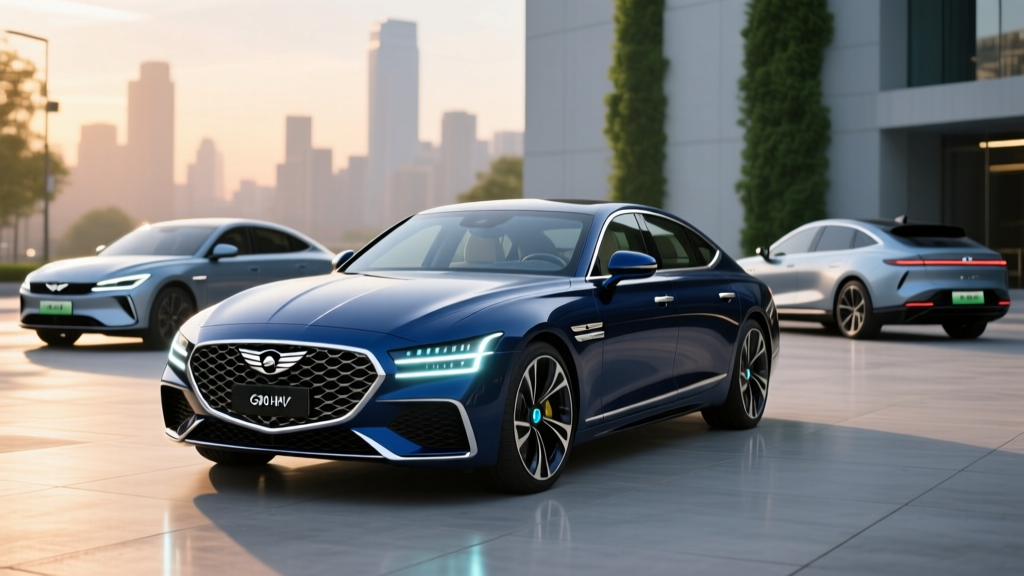
The Genesis G80 PHEV pairs a turbocharged 2.5-liter four-cylinder engine with an electric motor integrated into the transmission. This setup delivers strong combined output while maintaining the refinement expected from a Genesis luxury sedan.
| Specification | 2026 Genesis G80 PHEV |
|---|---|
| Engine | 2.5L Turbocharged I4 |
| Electric Motor | 100 kW permanent-magnet synchronous |
| Combined Horsepower | 362 hp |
| Combined Torque | 383 lb-ft |
| Battery Capacity | 22.0 kWh (usable) |
| Drivetrain | AWD (e-AWD with rear motor assist) |
| 0–60 mph | ~5.4 seconds (est.) |
| Base MSRP | ~$68,000 (est.) |
Electric-Only Range and Fuel Economy
The headline feature of any PHEV is how far it can travel on electricity alone before the engine kicks in. For daily commuters with short one-way trips, a PHEV can function as a pure EV most days, only burning gasoline on longer weekend drives.
🔋 Range & Efficiency Snapshot
EPA Electric-Only Range: 28 miles
EPA Combined MPG (hybrid mode): 28 MPG combined (26 city / 31 highway)
Total Combined Range: ~400 miles (electric + gasoline)
Real-World Note: Electric-only range drops to approximately 22–24 miles in cold weather (below 40°F) or at sustained highway speeds above 70 mph. Hybrid-mode MPG tends to run 1–2 MPG below EPA estimates on long highway trips but can exceed EPA city figures during stop-and-go commuting thanks to regenerative braking.
| Driving Scenario | City | Highway | Combined |
|---|---|---|---|
| EPA Estimate (hybrid mode) | 26 MPG | 31 MPG | 28 MPG |
| Real-World Expectation | 27–29 MPG | 28–30 MPG | 27–28 MPG |
| Electric-Only (MPGe) | 68 MPGe (combined, first 28 miles) | ||
The G80 PHEV's 28-mile electric range covers the average American's one-way commute of roughly 16 miles, according to fueleconomy.gov data. If you can charge at home overnight and your daily round trip is under 28 miles, you'll rarely visit a gas station on weekdays.
Charging: Level 2 Only, No DC Fast Charging
One critical limitation of the G80 PHEV — and most PHEVs in this segment — is that it does not support DC fast charging. The battery is simply too small to benefit from high-power DC infrastructure, and the cost/weight of DC hardware isn't justified for a 22 kWh pack.
| Charging Level | Power | 0–100% Time | Notes |
|---|---|---|---|
| Level 1 (120V outlet) | 1.4 kW | ~16 hours | Emergency/top-up only |
| Level 2 (240V) | 7.2 kW | ~3.5 hours | Recommended; full charge overnight |
| DC Fast Charge | N/A | N/A | Not supported |
A 240V Level 2 home charger is the practical choice. At 7.2 kW, the G80 PHEV's 22 kWh battery charges from empty to full in roughly 3.5 hours — easily replenished overnight. If you only use 15–20 miles of electric range daily, a Level 2 charger tops the battery back up in under 2 hours. Installation of a Level 2 home charger typically costs $500–$1,500 including equipment and electrician labor, depending on your panel capacity and run length.
Battery Warranty, Reliability, and Replacement Cost
Hybrid and PHEV battery longevity remains a top concern for buyers transitioning from conventional vehicles. Genesis backs its electrified powertrains with competitive warranty coverage, consistent with Hyundai Motor Group's broader warranty standards.
🛡️ Genesis PHEV Warranty Coverage
- High-Voltage Battery: 10 years / 100,000 miles (capacity retention threshold: 70% of original capacity)
- Powertrain: 10 years / 100,000 miles
- New Vehicle Limited: 5 years / 60,000 miles
- Complimentary Maintenance: 3 years / 36,000 miles
Genesis's 10-year/100,000-mile battery warranty is among the longest in the luxury segment, matching Hyundai and Kia and exceeding most European competitors (BMW and Mercedes typically offer 8 years/80,000 miles).
Real-world data on Hyundai Motor Group PHEV powertrains (which share architecture with Genesis) shows minimal degradation in the first 5–7 years of ownership. The 22 kWh battery in the G80 PHEV uses NMC (nickel-manganese-cobalt) chemistry, which offers high energy density but requires thermal management to minimize degradation. Genesis includes active liquid cooling for this purpose.
If the battery does require replacement outside of warranty — a scenario that's uncommon before 150,000+ miles based on current data — expect a cost in the range of $6,000–$9,000 including parts and labor. However, most PHEV batteries outlast the vehicle's useful life, and individual module replacement (rather than the full pack) is often possible at lower cost.
Pricing, Trims, and Federal Tax Credit Eligibility
The 2026 Genesis G80 PHEV is positioned as a premium luxury sedan, competing with the BMW 550e xDrive PHEV and Mercedes-Benz E-Class PHEV. Pricing reflects its luxury positioning and advanced powertrain.
| Trim | Est. MSRP | Key Features |
|---|---|---|
| G80 PHEV Advanced | ~$68,000 | Leather, 12.3" digital cluster, Highway Driving Assist II |
| G80 PHEV Prestige | ~$75,000 | Nappa leather, 3D cluster, rear entertainment, Ergo motion seats |
Does the Genesis G80 PHEV Qualify for the Federal Tax Credit?
Under current IRS §30D rules for 2026, the Genesis G80 PHEV faces several eligibility hurdles for the full $7,500 federal tax credit:
- MSRP Cap: Sedans must be under $55,000 MSRP. At ~$68,000+, the G80 PHEV exceeds this cap and does NOT qualify for the new-vehicle §30D credit.
- Battery Capacity: Must be at least 7 kWh — the G80 PHEV's 22 kWh pack qualifies ✓
- Buyer Income Limits: AGI must not exceed $150,000 (single) / $300,000 (joint) — applies if vehicle otherwise qualified
- Critical Minerals & Battery Sourcing: Must meet escalating percentage thresholds per IRS guidelines
Bottom line: The G80 PHEV's MSRP disqualifies it from the federal new-vehicle tax credit. However, some states offer their own PHEV incentives — California's CVRP, for example, has offered rebates for PHEVs, though funding and eligibility change frequently. Check your state incentive database for current programs.
Genesis G80 PHEV vs. Full EV vs. Gas: Which Is Right for You?
Choosing between a PHEV, a full battery-electric vehicle, and a conventional gas car depends on your driving patterns, charging access, and priorities. Here's a practical decision framework:
Choose the Genesis G80 PHEV If:
- Your daily commute is under 28 miles round-trip and you can charge at home
- You take regular road trips (200+ miles) and don't want to plan around charging stations
- You want a luxury sedan with electric commuting but aren't ready for a full BEV
- You lack reliable public DC fast charging in your area
Choose a Full EV (like the Genesis Electrified G80 or GV60) If:
- You have home Level 2 charging and your daily driving is under 250 miles
- You want the lowest per-mile fuel cost and minimal maintenance
- You're comfortable planning longer road trips around DC fast charging
- You want to maximize environmental benefit and eliminate tailpipe emissions entirely
Choose a Conventional Gas Car If:
- You cannot install a home charger and public charging is unreliable in your area
- Your budget is under $50,000 and you prioritize lowest upfront cost
- You regularly tow or drive in extreme cold where EV range loss is a major concern
Pros and Cons of the Genesis G80 PHEV
✅ Pros
- 28-mile electric range covers most daily commutes
- 362 hp provides effortless passing power
- Luxury interior with Genesis's best materials and tech
- 10-year/100,000-mile battery warranty
- No range anxiety — gas engine for long trips
- AWD standard for all-weather confidence
❌ Cons
- MSRP exceeds $55K federal tax credit cap
- No DC fast charging capability
- 28-mile EV range is shorter than some rivals (BMW 550e: ~35 mi)
- High starting price (~$68,000) vs. non-luxury PHEVs
- Limited U.S. availability — check dealer inventory
- Heavy vehicle weight impacts hybrid-mode MPG
What's Next for Genesis Hybrids?
Genesis has signaled that conventional hybrid (HEV) variants of the GV70 and GV80 SUVs are in development as part of its transition strategy. These would compete directly with the BMW X5 xDrive50e and Volvo XC90 Recharge, targeting buyers who want hybrid efficiency in a luxury SUV without plug-in charging requirements. As of early 2026, these models are announced but not yet on sale in the U.S. — we'll update this guide when official EPA figures and pricing are confirmed.
The brand's longer-term vision remains fully electric, with a goal of selling only EVs by 2030. But for buyers who need flexibility today, the PHEV lineup serves as a practical bridge technology.
Frequently Asked Questions
How many MPG does the Genesis G80 PHEV get?
The EPA rates the G80 PHEV at 26 city / 31 highway / 28 combined MPG when operating in hybrid mode (after the battery is depleted). In real-world driving, expect 27–29 MPG in city conditions thanks to regenerative braking, and 28–30 MPG on the highway. During the first 28 miles on a full charge, it runs on electricity at a rated 68 MPGe.
How far can the Genesis G80 PHEV go on electric only?
The EPA-rated electric-only range is 28 miles. In real-world conditions — especially cold weather below 40°F or sustained highway driving above 70 mph — expect 22–24 miles of electric range. For city commuting at moderate temperatures, you may achieve the full 28 miles or slightly more.
Does the Genesis G80 PHEV qualify for any tax credit?
No. Under current IRS §30D rules, new sedans must have an MSRP under $55,000 to qualify for the federal clean vehicle credit. The G80 PHEV starts around $68,000, exceeding this cap. Some state-level incentives may still apply — check your state's EV rebate program.
Is the Genesis G80 PHEV reliable? What does battery replacement cost?
The G80 PHEV uses Hyundai Motor Group's proven PHEV architecture, which has demonstrated strong reliability across the Hyundai Sonata PHEV and Kia Sorento PHEV. Genesis provides a 10-year/100,000-mile high-voltage battery warranty. Out-of-warranty battery replacement is estimated at $6,000–$9,000, though full-pack replacement is rare — most issues involve individual modules that can be replaced at lower cost.
Does Genesis make a conventional hybrid (non-plug-in)?
As of the 2026 model year, Genesis does not sell a conventional HEV in the U.S. market. The brand's electrified offerings consist of the G80 PHEV and fully electric models (Electrified G80, Electrified GV70, GV60). Conventional hybrid versions of the GV70 and GV80 SUVs have been announced but are not yet available.
Do I need to plug in the Genesis G80 PHEV?
You don't have to, but you should. If you never plug it in, the G80 PHEV operates as a conventional hybrid at ~28 MPG combined — still efficient, but you're paying a premium for a larger battery you're not utilizing. To get the most value, plug in nightly using a Level 2 (240V) home charger to maximize your electric-only commuting miles.
How does the G80 PHEV compare to the BMW 550e xDrive?
The BMW 550e xDrive offers approximately 35 miles of electric range (vs. 28 for the G80 PHEV), similar horsepower (~490 hp combined for the BMW vs. 362 for the Genesis), and a starting price around $60,000. The BMW also exceeds the $55,000 federal credit cap for sedans. The Genesis counters with a longer warranty (10yr/100k vs. BMW's 8yr/80k) and standard luxury features that BMW charges extra for.