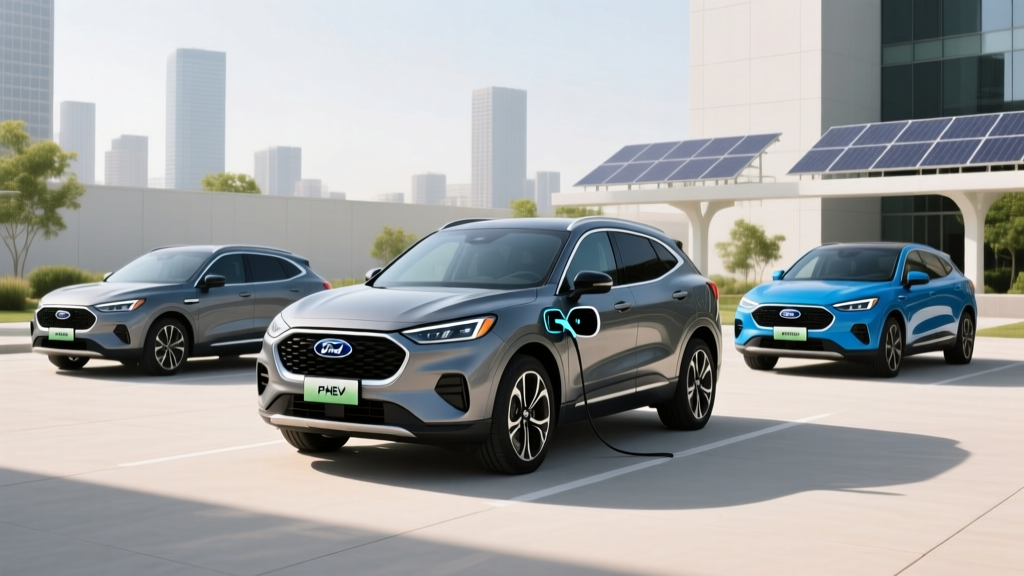
If you're searching for a Ford plug-in hybrid that bridges the gap between a conventional gas car and a full electric vehicle, the 2026 Ford Escape PHEV remains the Blue Oval's most compelling answer. With 37 miles of electric-only range, a combined 105 MPGe, and the backing of Ford's hybrid powertrain engineering, it targets buyers who want daily electric commuting without sacrificing road-trip flexibility.
But the Escape PHEV isn't Ford's only electrified option. The Maverick hybrid delivers exceptional MPG without a plug, while the F-150 Lightning handles full-electric truck duty. Understanding where the Ford plug-in hybrid fits — and whether it qualifies for federal tax credits under current IRS §30D rules — is essential before you visit a dealer.
Ford Plug-In Hybrid vs. Conventional Hybrid: What's the Difference?
Conventional Hybrid (HEV) — like the Ford Maverick Hybrid or Escape Hybrid — pairs a gasoline engine with a small electric motor and a battery that recharges through regenerative braking and the engine. You never plug it in. The battery is typically 1.1–1.5 kWh, and electric-only driving is limited to brief low-speed moments.
Plug-In Hybrid (PHEV) — like the Ford Escape PHEV — carries a much larger battery (14.4 kWh usable) that you charge via an external power source. This enables 37 miles of pure electric driving before the gas engine engages. Once the battery is depleted, it operates exactly like a conventional hybrid.
The practical difference is substantial. If your daily commute is under 37 miles round-trip and you charge at home, you could go weeks without burning a drop of gasoline. The Maverick Hybrid, by contrast, achieves outstanding fuel economy but always relies on its gasoline engine.
2026 Ford Escape PHEV: Full Powertrain Specs
| Specification | 2026 Ford Escape PHEV |
|---|---|
| Powertrain | 2.5L Atkinson-cycle I4 + electric motor (eCVT) |
| Combined Horsepower | 210 hp |
| Gas Engine Output | 163 hp / 155 lb-ft torque |
| Electric Motor Output | 131 hp |
| Battery Capacity | 14.4 kWh (usable), lithium-ion |
| Electric-Only Range (EPA) | 37 miles |
| Total Combined Range | |
| EPA MPGe (electric + gas) | 105 MPGe |
| EPA MPG (gas-only, combined) | 40 MPG |
| Level 1 Charging (120V) | ~10–11 hours (full charge) |
| Level 2 Charging (240V) | ~3.5 hours (full charge) |
| DC Fast Charging | Not supported |
| 0–60 mph | ~7.7 seconds |
| Drivetrain | Front-wheel drive (eCVT) |
| Cargo Volume (behind 2nd row) | 34.4 cu ft |
The 2.5-liter Atkinson-cycle four-cylinder is optimized for efficiency over peak power, while the 131-hp electric motor handles low-speed and electric-only driving. The eCVT (electronically controlled continuously variable transmission) uses a planetary gearset rather than a belt-and-pulley design — it's proven, durable, and avoids the rubber-band feeling of some conventional CVTs.
Fuel Economy Breakdown: EPA vs. Real-World MPG
| Driving Mode | EPA Estimate | Real-World Expectation |
|---|---|---|
| Electric-only (MPGe) | 105 MPGe combined | 95–110 MPGe (temperature-dependent) |
| Gas-only city | 42 MPG | 40–44 MPG (hybrids often beat EPA in city) |
| Gas-only highway | 37 MPG | 34–38 MPG |
| Gas-only combined | 40 MPG | 37–41 MPG |
The EPA rates the Escape PHEV at 105 MPGe when operating on its electric charge. Once the battery depletes and the vehicle switches to hybrid mode, it delivers a strong 40 MPG combined — with 42 MPG in city driving where regenerative braking and low-speed electric assist shine.
According to fueleconomy.gov, real-world owners report a wide spread depending on charging habits. Drivers who charge nightly and commute short distances routinely see effective fuel economy well above 100 MPGe. Those who rarely charge and treat it as a conventional hybrid will see numbers closer to 38–41 MPG combined.
Cold weather is the main enemy of PHEV electric range. Expect the 37-mile electric range to drop to roughly 28–32 miles in freezing temperatures, as battery chemistry becomes less efficient and cabin heating draws significant energy. The gas engine may also activate sooner to provide heat.
Electric-Only Range and Charging: What 37 Miles Means in Practice
The Escape PHEV's 37-mile EPA electric range covers a significant portion of American commutes. The U.S. Census Bureau reports the average one-way commute at approximately 26 miles, meaning many drivers can complete their daily round trip on electricity alone — provided they charge at home.
Charging is straightforward but limited to AC power:
- Level 1 (standard 120V outlet): Adds roughly 4 miles of range per hour. A full charge from empty takes 10–11 hours — feasible for overnight charging if you arrive home with partial battery.
- Level 2 (240V, 32A): A full charge takes approximately 3.5 hours. This is the practical sweet spot — plug in when you get home, and you're fully charged well before bedtime.
- DC fast charging: Not available on the Escape PHEV. This is standard for most PHEVs in this class; only a few vehicles (like the Toyota RAV4 Prime) offer DC fast-charge capability.
Battery & Powertrain Warranty: Ford covers the Escape PHEV's high-voltage battery for 8 years or 100,000 miles (whichever comes first), with a capacity retention threshold of 70%. The hybrid-specific components (eCVT, electric motor, inverter) carry the same coverage. Ford's standard vehicle warranty is 3 years/36,000 miles bumper-to-bumper and 5 years/60,000 miles powertrain.
If the battery does require out-of-warranty replacement, expect costs in the range of $5,000–$8,000 including labor, based on current dealer pricing. However, PHEV battery degradation tends to be moderate because the battery is smaller and cycles less deeply than a full EV battery — many owners report minimal capacity loss over 100,000+ miles.
Pricing, Trims, and Federal Tax Credit Eligibility
The 2026 Ford Escape PHEV starts at approximately $39,990 MSRP (including destination) for the base Select trim. Higher trims push the price into the mid-$40,000s:
- Select: ~$39,990
- Premium: ~$43,490
- ST-Line Select: ~$44,990
Under current IRS §30D rules, the Escape PHEV may qualify for a partial federal tax credit of up to $3,750, depending on battery sourcing and critical-mineral compliance. Full $7,500 eligibility requires meeting both critical-mineral and battery-component sourcing thresholds, which have tightened significantly since 2024.
To check your personal eligibility, consult the IRS clean vehicle credit page. Key requirements include:
- Income caps: Modified AGI must not exceed $150,000 (single), $225,000 (head of household), or $300,000 (joint).
- MSRP cap: The vehicle MSRP must not exceed $80,000 for SUVs (the Escape PHEV clears this easily).
- Battery sourcing: Critical minerals and battery components must meet phased-in domestic/free-trade requirements. Credit amount depends on how many thresholds the vehicle meets.
- Point-of-sale transfer: As of 2024, eligible buyers can transfer the credit to the dealer at purchase, reducing the purchase price directly rather than waiting for a tax refund.
- Assembly: The vehicle must undergo final assembly in North America (the Escape PHEV is built in Alabama).
Because sourcing compliance can change mid-model-year as Ford adjusts its supply chain, always verify current eligibility on fueleconomy.gov's tax credit tracker before purchasing.
How the Escape PHEV Fits Into Ford's Electrified Lineup
Ford offers three distinct electrification paths, and choosing the right one depends on your driving patterns, charging access, and budget:
Escape PHEV Pros
- 37-mile electric range covers most commutes
- 520+ mile total range eliminates road-trip anxiety
- 40 MPG in hybrid mode even without charging
- Eligible for partial federal tax credit
- No range anxiety — gas engine always available
Escape PHEV Cons
- No DC fast charging
- FWD only — no AWD option (unlike RAV4 Prime)
- Higher starting price than Escape Hybrid (~$6,000 premium)
- Cargo space slightly reduced vs. gas Escape
- Electric range drops in cold weather
Choose the Escape PHEV if you have home charging access (even a standard 120V outlet works overnight), your daily driving is under 40 miles, and you want the flexibility to take longer road trips without planning charging stops. It's ideal for one-car households that need versatility.
Choose the Maverick Hybrid instead if you don't have reliable charging access, want a lower purchase price, prefer a truck bed, and are satisfied with 42 MPG combined without ever plugging in. The Maverick HEV starts around $28,000 and requires zero behavioral change.
Choose the F-150 Lightning or Mustang Mach-E if you have reliable Level 2 home charging, your daily driving is predictable, you want zero tailpipe emissions, and you're ready to use DC fast-charging networks for road trips. Full EVs have lower operating costs but require more charging planning.
Reliability and Long-Term Ownership Costs
Ford's hybrid powertrain — particularly the 2.5L Atkinson-cycle engine paired with the eCVT — has proven durable across multiple model lines. The Escape Hybrid and Fusion Hybrid (now discontinued) accumulated millions of fleet and consumer miles with few systemic powertrain failures. The eCVT design, shared conceptually with Toyota's Hybrid Synergy Drive, has no belts, clutches, or torque converters to wear out.
For the PHEV battery specifically, the 14.4 kWh pack operates within a conservative state-of-charge window, which reduces stress and extends cycle life. Ford's 8-year/100,000-mile hybrid battery warranty provides a strong backstop, and real-world data from earlier Ford PHEVs (Fusion Energi, Escape PHEV) suggests batteries retain 85–90% capacity at 100,000 miles under normal use.
Insurance costs for the Escape PHEV tend to run 5–10% higher than the gas-only Escape, reflecting the higher repair cost of hybrid-specific components. However, fuel and electricity savings typically offset this within the first year for drivers who charge regularly.
Frequently Asked Questions
How many MPG does the Ford Escape plug-in hybrid get?
The 2026 Escape PHEV achieves 105 MPGe combined when using its electric charge, and 40 MPG combined (42 city / 37 highway) once the battery is depleted and the vehicle operates as a conventional hybrid. Real-world results vary: owners who charge daily and commute short distances report effective economy well above 100 MPGe, while those who rarely charge see 38–41 MPG.
How far can the Ford Escape PHEV go on electric only?
The EPA rates the Escape PHEV at 37 miles of electric-only range. In warm weather with gentle driving, some owners report 39–41 miles. In freezing temperatures or at sustained highway speeds, expect 28–32 miles before the gas engine engages.
Does the Ford plug-in hybrid qualify for a tax credit?
The 2026 Escape PHEV may qualify for a partial federal tax credit of up to $3,750 under IRS §30D, depending on battery sourcing compliance and your personal income. Eligibility requires meeting income caps ($150K single / $300K joint), MSRP limits (under $80K for SUVs), and North American assembly. Always verify current eligibility on fueleconomy.gov before purchasing, as sourcing compliance can change.
Is the Ford Escape PHEV reliable, and what does battery replacement cost?
Ford's 2.5L hybrid powertrain has a strong reliability record across multiple models. The high-voltage battery is warrantied for 8 years/100,000 miles with a 70% capacity retention threshold. Out-of-warranty battery replacement runs approximately $5,000–$8,000, though real-world degradation data suggests most PHEV batteries retain 85%+ capacity well past 100,000 miles.
Hybrid vs. PHEV vs. full EV — which Ford should I buy?
Choose a conventional hybrid (Maverick Hybrid, Escape Hybrid) if you lack home charging and want maximum simplicity. Choose the PHEV (Escape PHEV) if you can charge at home, commute under 40 miles daily, and want road-trip flexibility. Choose a full EV (Mach-E, F-150 Lightning) if you have Level 2 home charging, want zero emissions, and are comfortable using DC fast chargers on road trips.
Can I charge the Escape PHEV on a regular household outlet?
Yes. Level 1 charging on a standard 120V outlet adds about 4 miles of range per hour and fully charges the 14.4 kWh battery in roughly 10–11 hours. For most owners who arrive home with partial charge and plug in overnight, this is sufficient. A Level 2 (240V) home charger reduces full-charge time to about 3.5 hours.