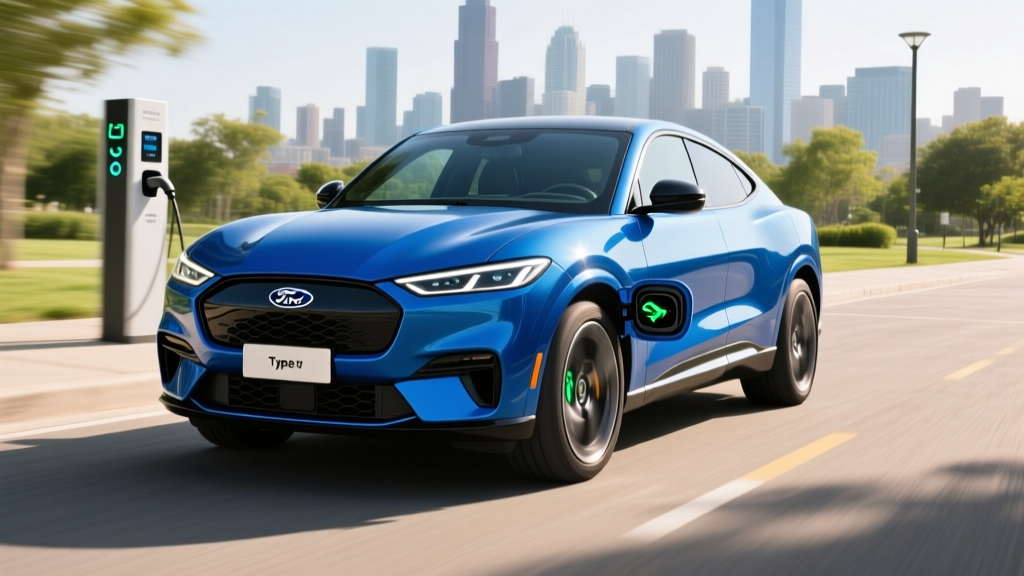
The Short Answer: There Is No Ford Mustang Mach-E Hybrid
Let's address the search directly: as of the 2026 model year, Ford does not offer a Mustang Mach-E in hybrid or plug-in hybrid (PHEV) form. The Mach-E is a battery electric vehicle (BEV) — it has no internal combustion engine, no fuel tank, and no hybrid variant in Ford's current or announced lineup. If you've landed here searching for a "Ford Mustang Mach-E hybrid," you're not alone. The Mustang nameplate's long history with gas engines, combined with Ford's expanding PHEV offerings elsewhere (notably the Escape PHEV), creates understandable confusion.
This guide clarifies what the Mach-E actually is, walks through the hybrid and PHEV alternatives Ford does sell, and gives you a concrete decision framework to determine which electrified Ford — or competitor — actually fits your driving needs, charging situation, and budget.
HEV vs. PHEV vs. BEV — Quick Refresher
- HEV (Hybrid Electric Vehicle): Gas engine + small electric motor. Battery recharges via regenerative braking and the engine. Never plugs in. Example: Ford Maverick Hybrid.
- PHEV (Plug-In Hybrid): Larger battery that plugs in for 25–40+ miles of electric-only driving, plus a gas engine for longer trips. Example: Ford Escape PHEV.
- BEV (Battery Electric Vehicle): 100% electric — no gas engine at all. Example: Ford Mustang Mach-E.
What the 2026 Ford Mustang Mach-E Actually Is
The 2026 Mustang Mach-E is a fully electric crossover SUV built on Ford's dedicated BEV platform. It competes with the Tesla Model Y, Hyundai Ioniq 5, and Chevrolet Blazer EV. Here are the core specs for the current lineup:
| Spec | Select (RWD) | Premium (AWD) | GT (AWD) |
|---|---|---|---|
| Powertrain | BEV | BEV | BEV |
| Battery (usable) | 70 kWh (LFP) | 91 kWh (NMC) | 91 kWh (NMC) |
| EPA Range | ~250 mi | ~290 mi | ~280 mi |
| Horsepower | 266 hp | 346 hp | 480 hp |
| 0–60 mph | ~6.3 sec | ~5.1 sec | ~3.5 sec |
| Peak DC Fast Charge | 115 kW | 150 kW | 150 kW |
| 10–80% DC Time | ~38 min | ~45 min | ~45 min |
| Base MSRP | ~$42,995 | ~$48,995 | ~$59,995 |
Real-world range note: EPA estimates assume a mix of city and highway driving at moderate temperatures. In our experience, sustained highway driving at 75 mph reduces range by roughly 10–15%, and cold weather (below 30°F) can cut range by 20–30% depending on cabin heat usage. A Premium AWD rated at 290 miles EPA may deliver closer to 230–250 miles on a cold-weather road trip. The Mach-E's heat pump (standard on higher trims) helps mitigate this, but physics is physics.
Ford's Actual Hybrid & PHEV Lineup for 2026
If you want a Ford with a gas-electric powertrain, here's what's actually available:
| Model | Type | City MPG | Hwy MPG | Combined | EV-Only Range |
|---|---|---|---|---|---|
| Escape PHEV | PHEV | 105 MPGe | — | 105 MPGe (elec) 40 MPG (gas) | ~37 mi |
| Maverick Hybrid | HEV | 42 | 33 | 38 | N/A |
| F-150 PowerBoost | HEV | 25 | 26 | 25 | N/A |
The Escape PHEV is the closest Ford comes to offering what a "Mach-E hybrid" buyer might want: a crossover with electric-only commuting range and a gas engine for longer trips. Its 2.5-liter Atkinson-cycle four-cylinder paired with an electric motor and a 14.4 kWh battery delivers roughly 37 miles of pure electric driving before the gas engine engages. Total combined range exceeds 500 miles.
The Maverick Hybrid is Ford's most popular conventional hybrid — a compact pickup that never plugs in and returns a real-world 38–42 MPG in city driving, often exceeding its EPA estimate thanks to the electric motor's dominance at low speeds.
Why Ford Hasn't Made a Mach-E Hybrid (and Probably Won't)
The Mach-E rides on Ford's dedicated BEV architecture, which was engineered from the ground up without a transmission tunnel, exhaust routing, or engine bay space for a combustion motor. Converting it to a PHEV would require a fundamentally different platform — essentially designing a new vehicle. Ford's PHEV strategy instead uses its flexible C2 architecture (shared with the Escape and Lincoln Corsair) to offer plug-in capability in a similar crossover footprint.
From a market perspective, Ford's position is clear: the Mach-E serves buyers ready for full electric, while the Escape PHEV serves those who want electric commuting with gas-engine flexibility. There's no gap in the lineup that a Mach-E PHEV would fill that the Escape PHEV doesn't already address.
Hybrid vs. PHEV vs. EV: Which One Fits You?
Decision Framework
Choose a conventional hybrid (HEV) if:
- You have no access to home or workplace charging
- You want maximum simplicity — just gas up and go
- Your driving is mostly city/stop-and-go (where hybrids shine)
- Budget is a priority (HEVs carry the smallest price premium)
Choose a plug-in hybrid (PHEV) if:
- You can install a Level 2 charger at home or charge at work
- Your daily commute is under 35 miles round-trip
- You regularly take road trips exceeding 250 miles
- You're not ready to rely on public DC fast-charging infrastructure
Choose a full BEV (like the Mach-E) if:
- You have reliable home Level 2 charging
- You want the lowest per-mile "fuel" cost and minimal maintenance
- Your daily driving is within the vehicle's real-world range
- You're comfortable planning road trips around DC fast-charger locations
Pricing, Tax Credits, and Incentives
Here's where the distinction between BEV, PHEV, and HEV matters significantly for your wallet:
| Vehicle | Base MSRP | Federal §30D Credit | Est. After Credit |
|---|---|---|---|
| Mach-E Select (BEV) | $42,995 | Up to $7,500* | ~$35,495 |
| Escape PHEV | ~$38,500 | Up to $7,500* | ~$31,000 |
| Maverick Hybrid (HEV) | ~$27,995 | $0 | $27,995 |
*Under current IRS §30D rules, the federal clean vehicle credit of up to $7,500 requires meeting all of the following: buyer income caps ($300K joint / $150K single), vehicle MSRP caps ($80K for SUVs, $55K for sedans), and critical mineral + battery component sourcing requirements that change annually. The credit can now be transferred to the dealer as a point-of-sale discount. Always verify current eligibility with your tax professional and the IRS before purchasing — sourcing rules have disqualified some previously eligible models.
Conventional hybrids like the Maverick Hybrid do not qualify for the §30D federal tax credit. Some states offer separate rebates for PHEVs and HEVs — check your state energy office or fueleconomy.gov for state-specific incentive details.
Battery Warranty, Reliability, and Replacement Costs
Hybrid & PHEV Battery Warranty — What's Covered
Federal law mandates that hybrid and PHEV battery packs carry a minimum warranty of 8 years or 100,000 miles (whichever comes first). In California Air Resources Board (CARB) states, that extends to 10 years or 150,000 miles.
For Ford specifically:
- Escape PHEV: 8 yr / 100,000 mi high-voltage battery warranty (10 yr / 150,000 mi in CARB states)
- Maverick Hybrid: 8 yr / 100,000 mi hybrid component warranty
- Mach-E (BEV): 8 yr / 100,000 mi battery warranty (covers degradation below 70% capacity)
Real-world reliability: Modern hybrid battery packs from Ford, Toyota, and Hyundai have proven remarkably durable. Data from long-term fleet studies shows most hybrid batteries retain 85–90%+ capacity after 150,000 miles. Complete failure before the warranty period is rare.
Replacement cost if out of warranty:
- HEV battery (Maverick Hybrid): $2,000–$4,000 (smaller pack, ~1.1 kWh)
- PHEV battery (Escape PHEV): $6,000–$9,000 (14.4 kWh pack)
- BEV battery (Mach-E): $15,000–$22,000 (70–91 kWh pack)
This cost differential is worth internalizing: the larger the battery, the more expensive a worst-case out-of-warranty replacement. However, actual replacements remain uncommon within the first 10–15 years of ownership based on current degradation data.
Charging the Escape PHEV: What to Expect
Since the Escape PHEV is the closest analog to what a "Mach-E hybrid" buyer likely wants, here's what charging looks like:
| Charge Level | Power (kW) | 0–100% Time | Connector |
|---|---|---|---|
| Level 1 (120V outlet) | 1.4 kW | ~10–11 hours | J1772 |
| Level 2 (240V home) | 3.7 kW | ~3.5–4 hours | J1772 |
| DC Fast Charge | Not supported — Escape PHEV cannot use DC fast chargers | ||
This is a critical limitation many first-time PHEV buyers miss: most plug-in hybrids, including the Escape PHEV, do not support DC fast charging. The charge port accepts only Level 1 and Level 2 AC power. This means public fast-charging stations (Electrify America, EVgo, Tesla Superchargers) are useless to you. Overnight home charging on Level 2 is the intended use case, and for a 37-mile electric range, a standard 120V outlet often suffices if you plug in every evening.
For the Mach-E (BEV), DC fast charging is fully supported — up to 150 kW on Premium and GT trims, adding roughly 50–60 miles of range in a 10-minute stop at a compatible station.
Real-World MPG: What Owners Actually Report
EPA estimates are a starting point, not a guarantee. Here's what real-world driving tends to produce:
- Escape PHEV (electric mode): 105 MPGe combined is realistic in moderate weather with gentle acceleration. Expect 85–95 MPGe in cold weather or aggressive driving.
- Escape PHEV (gas mode, battery depleted): 38–42 MPG combined. City driving often exceeds the EPA estimate due to regenerative braking recapturing energy at low speeds.
- Maverick Hybrid: Owners frequently report 40–45 MPG in city driving, exceeding the 42 MPG EPA city estimate. Highway driving drops to 30–33 MPG since the electric motor provides less benefit at sustained high speeds.
- Mach-E (BEV): Efficiency measured in kWh/100mi. Expect 3.0–3.5 mi/kWh in mixed driving, dropping to 2.5–2.8 mi/kWh on sustained highway runs or in cold weather. See fueleconomy.gov for official figures.
The pattern is consistent: hybrids and PHEVs overperform their EPA city estimates and underperform on the highway. BEVs are the opposite — they're more efficient at lower speeds and lose range at sustained highway velocities due to aerodynamic drag.
Competitor Alternatives for the Hybrid-Curious SUV Buyer
If the Mach-E's all-electric platform doesn't fit your needs and the Escape PHEV feels too conventional, here are strong crossover competitors offering PHEV or hybrid powertrains:
Toyota RAV4 Prime (PHEV)
- 42 miles EV-only range
- 302 combined HP
- 94 MPGe (elec) / 38 MPG (gas)
- AWD standard
- ~$44,500 MSRP
- Strong reliability track record
Hyundai Tucson PHEV
- 33 miles EV-only range
- 261 combined HP
- 80 MPGe (elec) / 35 MPG (gas)
- AWD standard
- ~$38,500 MSRP
- Good value for features
Both the RAV4 Prime and Tucson PHEV offer more cargo space and similar or better electric-only range compared to the Escape PHEV, though the RAV4 Prime commands a premium and often carries dealer markups due to high demand.
Frequently Asked Questions
Is there a Ford Mustang Mach-E hybrid or PHEV?
No. The 2026 Ford Mustang Mach-E is exclusively a battery electric vehicle (BEV). It has no gas engine and no hybrid variant exists in Ford's current or announced lineup. Ford's PHEV crossover offering is the Escape PHEV.
Does the Ford Mustang Mach-E use any gas?
Zero. The Mach-E is 100% electric. It has no internal combustion engine, no fuel tank, and no tailpipe. It runs entirely on its lithium-ion battery pack, charged via AC (home/workplace) or DC fast charging.
What Ford SUV has the best fuel economy?
Among Ford SUVs with a gas engine, the Escape PHEV delivers the highest efficiency: 105 MPGe when running on battery (37 miles electric-only), and 40 MPG combined once the battery is depleted. The conventional Escape Hybrid (non-plug-in) returns around 39–41 MPG combined.
Does the Ford Escape PHEV qualify for the federal tax credit?
The Escape PHEV has been eligible for up to $7,500 under IRS §30D, but eligibility depends on current-year battery sourcing rules, buyer income limits ($300K joint / $150K single modified AGI), and the $80,000 MSRP cap for SUVs. Always verify with the IRS and your tax professional before purchase, as sourcing requirements change annually and can disqualify previously eligible vehicles.
How long do Ford hybrid batteries last?
Ford warranties its hybrid and PHEV batteries for 8 years / 100,000 miles (10 years / 150,000 miles in CARB states). Real-world data from Ford's hybrid fleet (dating back to the 2005 Escape Hybrid) shows most packs retain 85%+ capacity well past 150,000 miles. Complete battery failure within the warranty period is uncommon. Out-of-warranty replacement costs range from roughly $2,000 (HEV) to $9,000 (PHEV).
Can I charge a PHEV at a Tesla Supercharger or DC fast-charging station?
No. The Ford Escape PHEV (and most PHEVs from any brand) does not support DC fast charging. It can only accept AC power via Level 1 (120V) or Level 2 (240V) using a J1772 connector. DC fast chargers at Electrify America, EVgo, and Tesla Supercharger stations are designed for BEVs with larger battery packs and DC-capable charge ports.
Should I buy the Mach-E (BEV) or the Escape PHEV?
Buy the Mach-E if you have home Level 2 charging, drive under 250 miles daily, want maximum performance and tech, and are comfortable with road-trip charging planning. Buy the Escape PHEV if you want electric-only commuting (up to 37 miles) but need the gas engine for frequent long trips, live in an area with sparse DC fast-charging infrastructure, or prefer a lower purchase price. See our decision framework above for a detailed breakdown.