The Mustang Goes Electrified: Separating Fact from Speculation
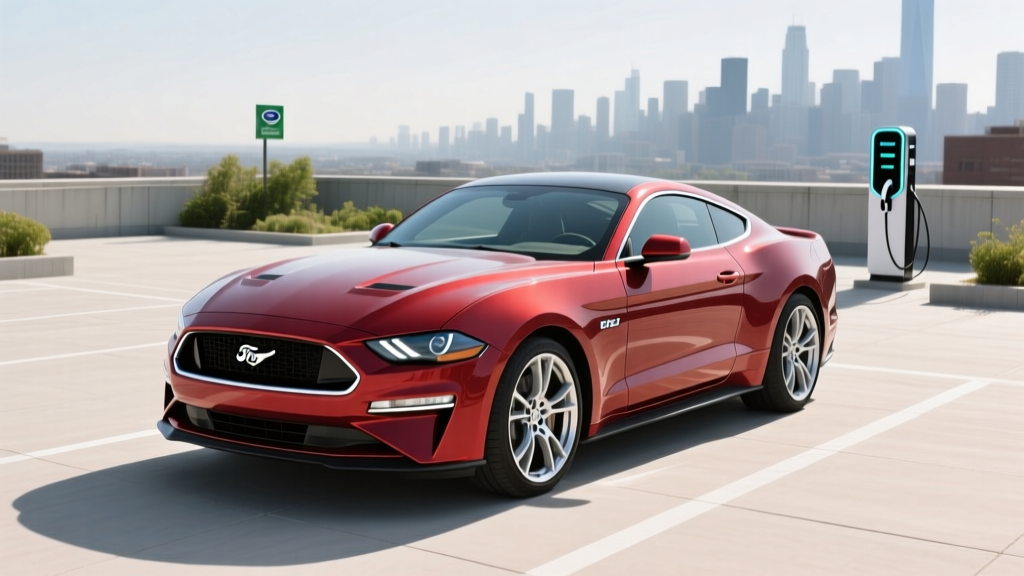
Ford's commitment to electrifying its most iconic nameplate has generated intense discussion among enthusiasts and efficiency-minded buyers alike. The Ford Mustang hybrid development story is one of the most closely watched powertrain evolutions in the industry — a signal that even the pony car segment cannot ignore tightening CAFE standards, rising fuel costs, and consumer demand for electrified performance.
As of early 2026, Ford has not officially released a production Mustang hybrid (HEV) or plug-in hybrid (PHEV) variant. However, multiple reports from Reuters and industry trade publications indicate that a hybridized Mustang is in active development, likely targeting the next generation or a significant mid-cycle refresh of the current S650 platform. Here's what the data, patents, and Ford's broader electrification strategy tell us about what to expect.
HEV vs PHEV: What's the Difference for a Mustang?
Conventional Hybrid (HEV): A small battery (typically 1–2 kWh) paired with an electric motor that assists the gas engine. The battery recharges through regenerative braking — no plug required. Expect modest MPG gains, especially in city driving.
Plug-in Hybrid (PHEV): A larger battery (typically 10–20 kWh) that can be plugged in to charge, offering 20–40 miles of electric-only driving before the gas engine engages. Requires access to charging (home or public) to maximize benefit.
Expected Powertrain: What a Hybrid Mustang Could Look Like
Ford's existing hybrid architecture provides strong clues. The automaker's 2.3L EcoBoost inline-four already serves as the entry-level Mustang engine, producing 315 horsepower in the 2025 model year. Pairing this engine with a hybrid module — similar to the system in the Ford Maverick Hybrid or the Escape Hybrid — is the most plausible path.
A more ambitious approach would hybridize the 5.0L Coyote V8, adding an electric motor between the engine and transmission (a P2 hybrid layout). This is the route Ford has explored in patents and the approach used in the F-150 PowerBoost Hybrid, which pairs a 3.5L V6 with a 35 kW electric motor for a combined 430 hp.
| Spec | HEV (2.3L I4 Hybrid) | PHEV (2.3L I4 PHEV) | HEV (5.0L V8 Hybrid) |
|---|---|---|---|
| Combined Horsepower | ~340–360 hp | ~350–380 hp | ~520–540 hp |
| Engine | 2.3L EcoBoost I4 | 2.3L EcoBoost I4 | 5.0L Coyote V8 |
| Electric Motor | ~35–50 kW | ~75–100 kW | ~35–50 kW |
| Battery Capacity | ~1.5 kWh (NiMH or NMC) | ~14–18 kWh (NMC) | ~1.5 kWh (NiMH or NMC) |
| Electric-Only Range | N/A (self-charging) | ~25–35 miles (est.) | N/A (self-charging) |
| DC Fast Charging | No | Unlikely (most PHEVs lack DCFC) | No |
| Transmission | 10-speed auto w/ hybrid module | 10-speed auto or e-CVT | 10-speed auto w/ hybrid module |
Note: All figures above are projected based on Ford's current hybrid systems and are not confirmed manufacturer specifications. Final specs will depend on the production announcement.
Fuel Economy: How Many MPG Would a Mustang Hybrid Get?
The current 2025 Mustang EcoBoost with the 2.3L I4 and 10-speed automatic achieves an EPA-estimated 22 city / 33 highway / 26 combined MPG according to fueleconomy.gov. The 5.0L V8 GT drops to roughly 16 city / 24 highway / 19 combined.
A hybrid system would primarily improve city MPG, where regenerative braking and electric-motor assist have the greatest impact. Based on comparable Ford hybrid applications:
| Configuration | City MPG | Highway MPG | Combined MPG |
|---|---|---|---|
| 2025 EcoBoost 2.3L (current) | 22 | 33 | 26 |
| 2025 GT 5.0L V8 (current) | 16 | 24 | 19 |
| Mustang 2.3L HEV (projected) | 30–34 | 33–36 | 31–35 |
| Mustang 5.0L V8 HEV (projected) | 20–23 | 24–27 | 22–25 |
| Mustang 2.3L PHEV (projected, combined gas+electric) | ~65–80 MPGe (electric phase); ~30–34 MPG (gas-only phase) | ||
Real-world MPG note: Conventional hybrids routinely exceed their EPA city estimates in stop-and-go traffic because regenerative braking recaptures energy that gas cars waste as heat. Highway MPG gains are smaller because the electric motor assists less at sustained speeds. A Mustang HEV rated at 32 city could realistically deliver 34–36 MPG in urban commuting, while highway numbers will track closer to the sticker. For the PHEV variant, real-world electric range will drop in cold weather (expect 15–25% loss below 40°F) and at highway speeds.
PHEV Electric-Only Range and Charging
If Ford pursues a PHEV Mustang, the electric-only range will be a critical selling point. Based on the 14–18 kWh battery size projected above and the Mustang's curb weight (~3,800–4,000 lbs), expect 25–35 miles of electric-only range — enough for most daily commutes without burning a drop of gasoline.
Total combined range (electric + full gas tank) could exceed 450–500 miles, eliminating range anxiety entirely while still offering meaningful electric driving.
Charging a PHEV Mustang would mirror other Ford PHEVs like the Escape PHEV:
- Level 1 (120V household outlet): ~5–6 hours for a full charge at ~1.4 kW
- Level 2 (240V home charger): ~2.5–3.5 hours at ~3.3–6.6 kW
- DC Fast Charging: Almost certainly not available. Most PHEVs — including the Toyota RAV4 Prime, Jeep Wrangler 4xe, and Ford Escape PHEV — omit DC fast charging because the small battery doesn't justify the added cost and weight.
Pricing and Tax Credit Eligibility
A hybrid Mustang would carry a price premium over the current EcoBoost models. The 2025 Mustang EcoBoost starts at approximately $32,515 (including destination). Based on the hybrid premiums Ford charges on other models ($1,500–$3,000 for HEV, $5,000–$8,000 for PHEV), projected pricing would be:
- Mustang HEV (2.3L hybrid): ~$34,500–$36,000 starting MSRP
- Mustang PHEV (2.3L plug-in hybrid): ~$39,000–$43,000 starting MSRP
- Mustang V8 HEV (5.0L hybrid): ~$46,000–$50,000 starting MSRP
Federal Tax Credit: What Applies to Hybrids?
Under current IRS §30D rules, only plug-in hybrids (PHEVs) and full battery-electric vehicles (BEVs) qualify for the federal clean vehicle credit — conventional HEVs do not. For a Mustang PHEV to qualify:
- The vehicle must have a battery capacity of at least 7 kWh
- MSRP must not exceed $55,000 (sedan/coupe cap) or $80,000 (SUV/van/pickup — unlikely to apply to Mustang)
- Buyer adjusted gross income must not exceed $150,000 (single) / $300,000 (joint)
- Battery components and critical minerals must meet phased-in domestic sourcing requirements (increasingly strict through 2026)
- The credit can now be transferred to the dealer as a point-of-sale discount
Bottom line: A Mustang PHEV priced under $55,000 could qualify for up to $7,500, but battery sourcing rules may reduce the credit to $3,750 or eliminate it entirely depending on the model year and supply chain. Always verify eligibility at fueleconomy.gov before purchasing. Conventional HEV buyers receive no federal tax credit.
Battery Longevity, Warranty, and Replacement Cost
Hybrid battery reliability is one of the most common concerns among first-time hybrid buyers, but the data is reassuring. Ford's hybrid battery packs are covered under the emissions-related warranty for 8 years or 100,000 miles (whichever comes first), with a capacity retention threshold typically set at 60–70% of original capacity. In states that follow California Air Resources Board (CARB) standards, coverage may extend to 10 years or 150,000 miles.
Real-world longevity data from Ford's existing hybrids (Escape Hybrid, Fusion Hybrid, Maverick Hybrid) shows that most hybrid batteries last well beyond the warranty period. Taxi fleets running Ford hybrid systems have logged 200,000+ miles on original battery packs. The smaller battery in a conventional HEV undergoes shallower charge-discharge cycles than a PHEV or BEV, which reduces degradation.
If replacement is eventually needed:
- HEV battery replacement: $2,000–$4,000 (small pack, 1–2 kWh)
- PHEV battery replacement: $6,000–$10,000 (larger pack, 14–18 kWh)
For context, a conventional gas car's transmission replacement can cost $3,000–$7,000, and timing chain or turbo failures on non-hybrid engines carry similar repair bills. The hybrid battery is not the financial liability many assume.
Who Should Wait for a Mustang Hybrid?
Choose a Mustang Hybrid (HEV) If:
- You want Mustang styling and performance with 30+ MPG in city driving
- You don't have access to home or workplace charging
- You want lower running costs without changing your fueling habits
- You plan to keep the car 5+ years and value long-term reliability
- You want a V8 option with slightly better fuel economy than the current GT
Choose a Mustang PHEV If:
- You have Level 2 home charging and a commute under 30 miles
- You want electric daily driving with gas-engine freedom for road trips
- You want to qualify for the federal tax credit (up to $7,500)
- You want the lowest possible operating cost in a Mustang
- You live in a state with additional PHEV incentives (CA, CO, NY, etc.)
Stick with the current gas Mustang if: You prioritize maximum power and track capability, don't care about fuel costs, and want the widest selection of trims and aftermarket support available today.
Consider a full EV (like the Ford Mustang Mach-E) if: You have reliable home charging, want zero tailpipe emissions, prefer instant torque with no transmission shifts, and are ready to commit to an all-electric lifestyle. The Mach-E GT delivers 480 hp and 290+ miles of range starting around $55,000.
Development Timeline: When Will It Arrive?
Ford has not announced a specific production date for a hybrid Mustang. However, several factors point to a likely reveal:
- The S650 platform is designed for electrification. The current seventh-generation Mustang (introduced for 2024) rides on an architecture that Ford engineers have confirmed can accommodate hybrid components.
- CAFE and emissions pressure. Corporate average fuel economy standards tighten significantly through 2030. Adding a high-volume hybrid to the Mustang lineup helps Ford's fleet average.
- Competitor precedent. The Chevrolet Camaro (now discontinued but potentially returning as an EV) and Dodge Challenger (ending ICE production) leave a gap. A hybrid Mustang could capture efficiency-minded buyers who still want a coupe.
- Ford's hybrid investment. Ford has committed billions to hybrid development as a bridge technology, publicly stating that hybrids will play a larger role alongside BEVs in its 2025–2030 product plan.
The most realistic timeline places a Mustang hybrid reveal in the 2027–2028 model year, potentially as part of a mid-cycle S650 refresh or an all-new S651 platform. A PHEV variant could follow 12–18 months after the initial HEV launch.
Frequently Asked Questions
Does a Mustang hybrid exist right now?
No. As of early 2026, Ford has not released a production Mustang hybrid or PHEV. The current Mustang lineup includes the 2.3L EcoBoost I4 and 5.0L Coyote V8, both gasoline-only. The all-electric Mustang Mach-E is a separate crossover model, not a hybrid.
How many MPG would a Mustang hybrid get?
Based on Ford's existing hybrid systems, a 2.3L I4 Mustang HEV could achieve approximately 30–34 city / 33–36 highway / 31–35 combined MPG — a significant improvement over the current EcoBoost's 22/33/26 rating, especially in city driving where hybrid systems excel.
Would a Mustang PHEV qualify for the $7,500 tax credit?
Possibly, but it depends on battery sourcing, MSRP, and buyer income. Under current IRS §30D rules, the vehicle must cost under $55,000 (coupe cap), the buyer must earn under $150K single / $300K joint, and battery components must meet domestic sourcing thresholds. Always check the latest eligibility list at fueleconomy.gov before purchasing.
Is a hybrid Mustang reliable? What about battery replacement?
Ford's hybrid systems in the Escape, Fusion, and Maverick have demonstrated strong reliability, with batteries commonly lasting 150,000+ miles. The hybrid battery warranty covers 8 years/100,000 miles (10/150,000 in CARB states). Replacement cost for an HEV battery is estimated at $2,000–$4,000 — comparable to major gas-engine repairs.
Would a hybrid Mustang be slower than the gas version?
Unlikely. Hybrid systems add electric torque fill, which can improve off-the-line acceleration even if peak horsepower is similar. The F-150 PowerBoost Hybrid produces more combined torque than its non-hybrid counterpart. A Mustang HEV could match or slightly beat the current EcoBoost's ~5.0-second 0–60 time while delivering better fuel economy.
Should I wait for the hybrid or buy a Mustang now?
If you need a car now and fuel economy isn't a priority, the current EcoBoost and GT models are proven, well-reviewed vehicles. If you're 12–24 months out from a purchase and want better MPG — especially for city commuting — waiting for the hybrid variant is reasonable. Just be aware that hybrid trims will carry a $2,000–$5,000 price premium.