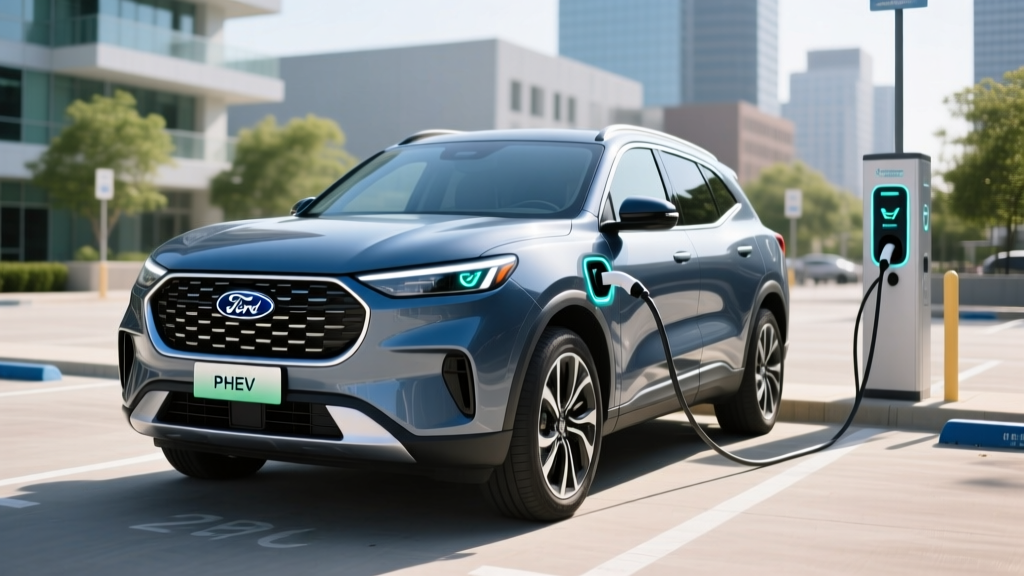
Ford's compact pickup has been a sales juggernaut since its 2022 debut, largely thanks to the standard hybrid powertrain that delivers over 40 MPG in the city. But for 2026, Ford has answered a growing chorus of buyer requests: the Ford Maverick plug-in hybrid is here, adding a larger battery pack, a charging port, and meaningful electric-only driving to the segment's most practical small truck.
If you've been watching the PHEV space, you know the formula — short electric range for daily commutes, a gas engine for road trips, and no range anxiety. The question is whether Ford's execution in a pickup form factor actually makes sense for real buyers. After digging into the EPA filings, spec sheets, and IRS credit rules, here's everything you need to know.
2026 Ford Maverick PHEV: Key Specs at a Glance
| Specification | 2026 Maverick PHEV |
|---|---|
| Powertrain | 1.5L turbo 3-cyl + electric motor |
| Combined Horsepower | 210 hp |
| Battery Capacity | 14.2 kWh (usable, NMC lithium-ion) |
| Electric-Only Range (EPA) | 37 miles |
| Total Combined Range | ~460 miles |
| MPGe (combined) | 80 MPGe |
| MPG (gas-only, combined) | 38 MPG |
| Level 2 Charge Time (0–100%) | ~2.5 hours at 7.2 kW |
| DC Fast Charging | Not available |
| 0–60 mph | ~7.8 seconds (estimated) |
| Max Towing | 2,000 lbs |
| Starting MSRP | $35,490 (XLT PHEV) |
| Battery Warranty | 8 years / 100,000 miles |
HEV vs. PHEV: Which Maverick Is Right for You?
Before we go further, let's clarify what separates the Maverick's two electrified options, because the naming can confuse first-time hybrid shoppers.
Maverick HEV (Standard Hybrid)
- No plug — charges itself via regenerative braking and the engine
- 2.5L 4-cylinder hybrid, 191 hp combined
- EPA: 42 city / 33 highway / 38 combined MPG
- Zero electric-only range — motor assists but doesn't drive alone
- Starting MSRP: ~$27,995
- No federal tax credit
Maverick PHEV (Plug-In Hybrid)
- Plug-in capable — charges via Level 1 (120V) or Level 2 (240V)
- 1.5L turbo 3-cylinder + electric motor, 210 hp combined
- EPA: 37 miles electric-only, then 38 MPG combined on gas
- 80 MPGe combined when using both electric and gas
- Starting MSRP: ~$35,490
- May qualify for up to $3,750 federal tax credit (§30D, subject to eligibility)
The HEV is the value play — lower price, excellent city fuel economy, zero lifestyle change required. The PHEV costs more upfront but can eliminate gasoline entirely for short commutes if you charge at home. Over a five-year ownership period with daily charging, the PHEV's fuel savings can narrow the $7,500 price gap significantly.
Fuel Economy: Real-World MPG vs. EPA Sticker
Ford's EPA-rated figures for the 2026 Maverick PHEV are strong, but as with any plug-in hybrid, your actual mileage depends heavily on charging habits.
| Driving Scenario | EPA Rating | Real-World Expectation |
|---|---|---|
| Electric-only (first 37 mi) | 80 MPGe | 70–85 MPGe (varies with temperature, terrain) |
| Gas-only city | 40 MPG | 38–44 MPG (hybrids often exceed EPA in stop-and-go) |
| Gas-only highway | 35 MPG | 32–36 MPG |
| Gas-only combined | 38 MPG | 35–39 MPG |
A few things worth noting from real-world PHEV ownership patterns:
- Cold weather cuts electric range 20–30%. In sub-freezing temperatures, expect 25–30 miles of EV range instead of the rated 37. Cabin heating draws heavily from the battery.
- Highway driving at 75+ mph drains the battery faster. Electric-only range drops to roughly 28–32 miles at sustained interstate speeds.
- If you never plug in, you're just carrying dead weight. The PHEV's heavier battery reduces gas-only MPG by 1–2 MPG versus the HEV. Plug-in hybrids only make financial sense if you charge regularly.
- City drivers see the biggest gains. Regenerative braking and low-speed electric propulsion mean urban commuters who charge nightly may visit a gas station once a month.
Electric-Only Range and Charging: What to Expect
The Maverick PHEV's 14.2 kWh usable battery delivers an EPA-rated 37 miles of electric-only driving. For context, the average American one-way commute is roughly 16 miles, according to the Bureau of Transportation Statistics — meaning most daily round trips fall well within this truck's EV envelope.
Charging options are straightforward:
- Level 1 (120V household outlet): ~8 hours for a full charge using the included cordset. Fine for overnight top-ups if you drive less than 30 miles daily.
- Level 2 (240V, 32A): ~2.5 hours for a full charge at 7.2 kW. A home Level 2 station (like a ChargePoint Home Flex or Ford Connected Charge Station) is strongly recommended for PHEV owners.
- DC Fast Charging: Not supported. This is typical for PHEVs — the battery is too small to justify the added cost and weight of DC hardware.
Home Level 2 installation typically costs $600–$1,500 including a 240V outlet or hardwired station and electrician labor, depending on your panel's proximity to the garage. If your electrical panel needs an upgrade to 200A, add $1,500–$3,000. Consult a licensed electrician for a site-specific quote.
Powertrain and Performance Details
The 2026 Maverick PHEV uses a 1.5-liter turbocharged three-cylinder engine paired with an electric motor integrated into the transmission. Combined output is 210 horsepower — a meaningful bump over the HEV's 191 hp and the base EcoBoost's 191 hp.
Acceleration is brisk enough for highway merging, with an estimated 0–60 mph time around 7.8 seconds. The electric motor delivers instant torque at low speeds, which makes the PHEV feel noticeably quicker off the line than the HEV in city driving. The transition between electric and gas power is well-managed — most drivers won't feel the engine engage unless they're watching the power-flow display.
One trade-off: the PHEV's added battery weight (~250 lbs more than the HEV) reduces maximum towing from the HEV's 2,000 lbs to the same 2,000 lbs (Ford has reinforced the rear suspension on PHEV trims). Payload capacity drops slightly to approximately 1,400 lbs.
Pricing, Trims, and Tax Credit Eligibility
The 2026 Ford Maverick PHEV is offered in two trims:
- XLT PHEV: Starting at $35,490 (includes destination charge)
- Lariat PHEV: Starting at $39,890
Both trims come standard with AWD, Ford Co-Pilot360 assist features, an 8-inch touchscreen with wireless Apple CarPlay/Android Auto, and the 7.2 kW onboard charger.
Federal Tax Credit (§30D)
Under current IRS rules, the Maverick PHEV may qualify for up to $3,750 in federal tax credits. Here's why it's $3,750 and not the full $7,500:
- Battery sourcing requirement: The $3,750 critical minerals component has NOT been fully met for the Maverick PHEV's battery supply chain as of early 2026. Only the $3,750 battery components credit applies.
- MSRP cap: The Maverick PHEV's MSRP falls well under the $80,000 truck/SUV cap. ✓
- Buyer income limits: AGI must not exceed $150,000 (single), $225,000 (head of household), or $300,000 (joint). ✓ (Verify your own status.)
- Point-of-sale transfer: Eligible buyers can transfer the credit to the dealer for an upfront price reduction at purchase.
Tax credit rules are complex and subject to change. Consult IRS.gov §30D guidance and a qualified tax professional before relying on credit eligibility for your purchase decision.
Battery Longevity, Warranty, and Replacement Cost
Maverick PHEV Battery Warranty
Coverage: 8 years / 100,000 miles (whichever comes first)
Capacity threshold: Ford warrants the battery against defects and excessive capacity loss below 70% of original capacity during the warranty period.
Chemistry: NMC (nickel manganese cobalt) lithium-ion — optimized for energy density and cycle life in a PHEV application.
PHEV batteries face a different aging profile than full EVs. Because the battery is smaller and cycled more frequently (daily full charge-discharge), calendar and cycle degradation both play a role. However, modern NMC cells with active thermal management typically retain 85–90% of original capacity after 8 years of PHEV use, based on data from similar powertrains in the Ford Escape PHEV and Toyota RAV4 Prime.
If out-of-warranty replacement becomes necessary (rare before 150,000+ miles), expect a battery pack cost in the $4,000–$7,000 range including labor, based on current PHEV replacement pricing across the industry. This is significantly less than a full EV battery replacement because the pack is much smaller.
For reliability context, Ford's hybrid powertrains have proven solid in the Escape and Maverick HEV, with no widespread battery failure patterns reported through the 2025 model year. The PHEV system shares architecture with the Escape PHEV, which has been on sale since 2020 with strong durability data.
Who Should Buy the Maverick PHEV — and Who Shouldn't?
Choose the Maverick PHEV if:
- Your daily round-trip commute is under 35 miles and you can charge at home nightly
- You want a pickup bed for weekend projects but don't need heavy towing
- You take 2–4 road trips per year and want zero range anxiety
- You want to reduce fuel costs without committing to a full EV
- You live in an area with unreliable public charging infrastructure
Choose the Maverick HEV instead if:
- You can't install a home charger (apartment, no garage, HOA restrictions)
- Budget is a priority — the HEV saves ~$7,500 upfront
- Your commute is mostly highway (the HEV's advantage is more consistent)
Choose a full EV instead if:
- You have reliable home and/or workplace charging
- Your daily driving exceeds 35 miles but stays under 250
- You want zero tailpipe emissions and minimal maintenance
- You're ready for the full EV ownership experience
Pros and Cons
Pros
- 37 miles of EV range covers most daily commutes
- Combined 210 hp makes it the most powerful Maverick
- Standard AWD on all PHEV trims
- Excellent city MPG (40) when the battery is depleted
- Practical 4.5-foot bed with clever storage solutions
- Eligible for up to $3,750 federal tax credit
- Lower running costs than any gas-only compact truck
Cons
- ~$7,500 price premium over the HEV
- No DC fast charging (typical for PHEVs)
- Electric range drops to ~25–30 miles in cold weather
- Towing limited to 2,000 lbs
- PHEV only available on XLT and Lariat trims
- $3,750 credit (not $7,500) due to battery sourcing rules
Frequently Asked Questions
How many MPG does the Ford Maverick plug-in hybrid get?
The 2026 Maverick PHEV is rated at 80 MPGe combined when using both electric and gas power. Once the battery is depleted, it operates as a conventional hybrid delivering 38 MPG combined (40 city / 35 highway). Real-world results vary: city drivers who charge daily may use very little gasoline, while highway-heavy drivers who never plug in will see roughly 35–36 MPG.
How far can the Maverick PHEV go on electric only?
The EPA rates the Maverick PHEV at 37 miles of electric-only range. In real-world conditions, expect 28–32 miles at highway speeds and 25–30 miles in cold weather (below 32°F). For gentle city driving in moderate temperatures, you may achieve the full 37 miles or slightly more.
Does the Ford Maverick PHEV qualify for a tax credit?
Under current IRS §30D rules, the Maverick PHEV qualifies for up to $3,750 in federal tax credits. It does not qualify for the full $7,500 because its battery does not yet meet the critical minerals sourcing requirement. Buyer income caps ($150K single / $300K joint) and point-of-sale transfer options apply. State incentives vary — check AFDC's state incentive database for local programs.
Is the Maverick PHEV reliable? What about battery replacement cost?
Ford's hybrid architecture (shared with the Escape PHEV) has a strong reliability track record since 2020, with no widespread battery or powertrain failure patterns. The battery is warranted for 8 years / 100,000 miles against defects and capacity loss below 70%. Out-of-warranty battery replacement is estimated at $4,000–$7,000, though most PHEV batteries last well beyond 150,000 miles with proper thermal management.
Can I charge the Maverick PHEV at a public DC fast charger?
No. The Maverick PHEV does not support DC fast charging. It charges via Level 1 (120V, ~8 hours) or Level 2 (240V, ~2.5 hours). This is standard for plug-in hybrids — the 14.2 kWh battery is too small to benefit from DC charging speeds, and the added hardware would increase cost and weight.
Hybrid vs. PHEV vs. EV — which should I choose?
Choose the HEV if you can't charge at home and want maximum simplicity. Choose the PHEV if you can charge at home, commute under 35 miles daily, and want a gas backup for road trips. Choose a full EV if you have reliable charging access, want zero emissions, and are comfortable planning longer trips around charging stops. The PHEV is the bridge option — it rewards daily charging with EV-like commuting while eliminating range anxiety entirely.
How much does it cost to charge the Maverick PHEV at home?
A full charge of the 14.2 kWh battery costs approximately $1.85–$2.85 at the U.S. average residential electricity rate of $0.13–$0.20/kWh. That works out to roughly $0.05–$0.08 per electric mile — compared to $0.14–$0.18 per mile for a 25 MPG gas truck at $3.50/gallon. Over a year of daily 30-mile commutes charged at home, you could save $800–$1,200 in fuel costs versus the gas-only Maverick.
Sources: EPA fuel economy data via fueleconomy.gov, Ford Motor Company 2026 Maverick specifications, IRS §30D Clean Vehicle Credits.