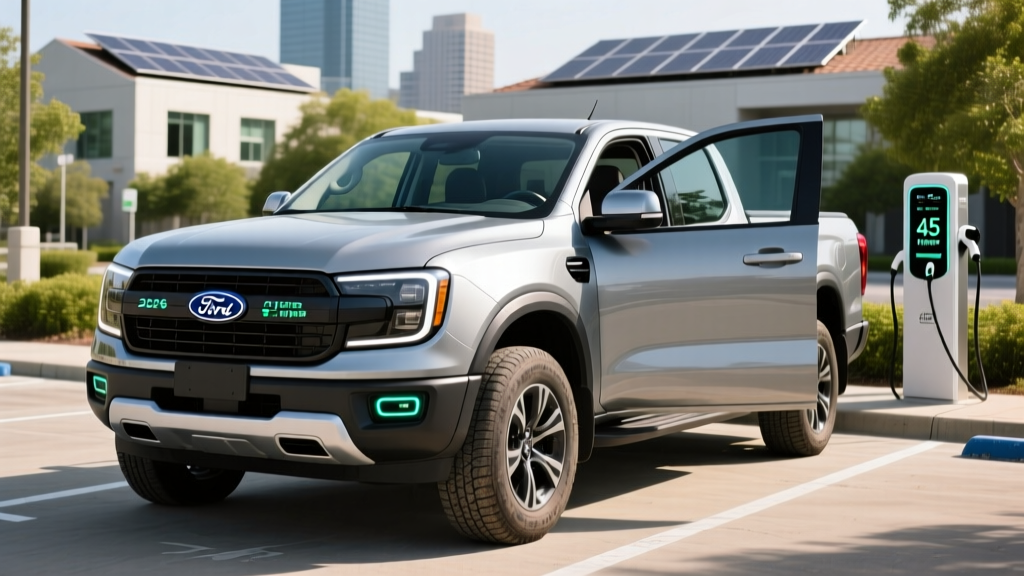
The Ford Maverick hybrid remains the most fuel-efficient small hybrid pickup you can buy in 2026, pairing a 2.5-liter Atkinson-cycle engine with an electric motor for an EPA-estimated 42 MPG city. With a starting MSRP of $28,490, it undercuts nearly every midsize truck on price while delivering cargo capability no sedan can match. This guide breaks down the Maverick hybrid's real-world fuel economy, powertrain specs, battery longevity, and whether it's the right truck for your needs.
2026 Ford Maverick Hybrid: Key Specifications
| Attribute | Specification |
|---|---|
| Base MSRP | $28,490 (XL trim) |
| EPA City/Highway/Combined | 42 / 33 / 37 MPG (FWD) |
| Powertrain | 2.5L I4 hybrid, 194 hp combined |
| Drivetrain | FWD standard; AWD available |
| 0-60 mph | ~7.8 seconds |
| Max Towing | 2,000 lbs (4,000 lbs with 4K Tow pkg) |
| Payload | 1,500 lbs |
| Hybrid Battery Warranty | 8 years / 100,000 miles |
| Federal Tax Credit | Not eligible (§30D is for PHEVs/BEVs only) |
How Many MPG Does the Maverick Hybrid Get?
The 2026 Ford Maverick hybrid with front-wheel drive earns an EPA-estimated 42 MPG city, 33 MPG highway, and 37 MPG combined. The AWD hybrid variant drops slightly to 38/35/37 MPG due to the added drivetrain weight and mechanical losses.
EPA Fuel Economy by Drivetrain
| Configuration | City | Highway | Combined |
|---|---|---|---|
| FWD Hybrid (2.5L) | 42 MPG | 33 MPG | 37 MPG |
| AWD Hybrid (2.5L) | 38 MPG | 35 MPG | 37 MPG |
| FWD Gas (2.0L EcoBoost) | 23 MPG | 30 MPG | 26 MPG |
| AWD Gas (2.0L EcoBoost) | 22 MPG | 29 MPG | 25 MPG |
Real-World MPG: What to Actually Expect
Hybrids thrive in stop-and-go driving, where regenerative braking recovers kinetic energy that would otherwise be wasted as heat. In real-world urban commuting, Maverick hybrid owners frequently report 40-45 MPG in city traffic — sometimes exceeding the EPA city estimate. Highway driving at 75+ MPH tells a different story: aerodynamic drag dominates at higher speeds, and the hybrid system has fewer opportunities to regenerate. Expect 30-33 MPG on the interstate, roughly matching the EPA highway figure.
Cold weather reduces fuel economy by roughly 10-15% in any hybrid. The engine runs longer to heat the cabin and bring the catalytic converter to operating temperature, and battery internal resistance increases. In sub-freezing conditions, plan for 33-36 MPG combined rather than 37. This is normal hybrid behavior, not a defect.
Hybrid (HEV) vs. Plug-In Hybrid (PHEV): What's the Difference?
The Maverick hybrid is a conventional hybrid (HEV), not a plug-in hybrid (PHEV). This is a critical distinction that confuses many truck shoppers:
| Feature | HEV (Maverick Hybrid) | PHEV (e.g., Chrysler Pacifica Hybrid) |
|---|---|---|
| Plugs in to charge? | No — charges via engine and regen braking | Yes — has a charge port |
| Electric-only range | None (motor assists engine only) | 20-40+ miles typical |
| Battery size | ~1.1 kWh (small buffer) | 12-20+ kWh |
| Federal tax credit | Not eligible | Up to $7,500 (if requirements met) |
| Home charging needed? | No | Yes, for full PHEV benefit |
| Complexity | Lower — no charging infrastructure | Higher — needs Level 2 for best experience |
The Maverick's hybrid battery is small — approximately 1.1 kWh — and serves as a buffer for energy recaptured during braking. The electric motor assists the gasoline engine during acceleration and can propel the truck at very low speeds (parking lots, traffic creep) for brief distances, but there is no meaningful electric-only driving range. You never plug it in; you simply fill it with gas and drive.
Powertrain: Engine, Motor, and Combined Output
The Maverick hybrid pairs a 2.5-liter Atkinson-cycle four-cylinder engine with a permanent-magnet electric motor integrated into the transmission. The Atkinson cycle sacrifices some low-end torque for greater thermal efficiency — a tradeoff that works well when an electric motor fills in the torque gap.
- Engine output: ~162 hp, 155 lb-ft torque
- Electric motor output: ~131 hp, 176 lb-ft torque
- Combined system output: 194 horsepower
- Transmission: eCVT (planetary gearset, not a belt-driven CVT)
Ford's eCVT is a power-split device, mechanically similar to Toyota's Hybrid Synergy Drive. It uses a planetary gearset to blend engine and motor power seamlessly — there are no belts, cones, or pulleys. This design has proven extremely durable in millions of Toyota and Ford hybrid vehicles over two decades.
The AWD hybrid variant adds a rear-mounted electric motor that provides rear-wheel traction when needed, engaging automatically during acceleration or low-grip conditions. Unlike the gas AWD model's mechanical driveshaft, the hybrid AWD is an "e-AWD" system — the rear wheels are driven purely by electricity.
Battery Warranty, Lifespan, and Replacement Cost
Ford Hybrid Battery Coverage
- Hybrid battery warranty: 8 years / 100,000 miles (whichever comes first)
- Capacity threshold: Ford covers the battery if it fails or loses capacity to the point of impaired function
- Hybrid system components: Also covered under the 8-year/100,000-mile warranty, including the electric motor, power electronics, and eCVT
The Maverick's nickel-metal hydride (NiMH) hybrid battery is far smaller and less stressed than a full EV battery pack. It operates within a narrow state-of-charge window (roughly 40-80%), which dramatically reduces degradation. Ford's hybrid system has been in production since the 2005 Escape Hybrid, and real-world data shows these batteries commonly last 150,000-200,000+ miles before needing replacement.
If replacement is needed out of warranty, a remanufactured hybrid battery for the Maverick runs approximately $2,000-$3,500 installed — a fraction of the cost of an EV traction battery. Ford dealerships and third-party hybrid specialists both offer replacement options.
Pricing, Trims, and Tax Credit Eligibility
The 2026 Ford Maverick hybrid is available across multiple trim levels:
| Trim | MSRP (FWD Hybrid) | Notable Features |
|---|---|---|
| XL | $28,490 | Base model, 8" touchscreen, Ford Co-Pilot360 |
| XLT | $30,995 | Alloy wheels, cruise control, upgraded interior |
| Lariat | $35,490 | Leatherette seats, power driver seat, ambient lighting |
| Tremor (AWD only) | $40,490 | Off-road suspension, skid plates, AWD standard |
Federal Tax Credit: Not Eligible
The Maverick hybrid is a conventional HEV, not a plug-in vehicle. Under IRS §30D rules, only battery electric vehicles (BEVs) and plug-in hybrids (PHEVs) with sufficient battery capacity qualify for the federal clean vehicle credit. The Maverick hybrid does not qualify for the $7,500 federal tax credit, nor does it qualify for the $4,000 used-EV credit.
Some states offer their own incentives for conventional hybrids, though these are increasingly rare as incentive programs shift toward plug-in vehicles. Check your state's energy office or department of environmental quality for current programs.
Hybrid vs. PHEV vs. Full EV: Which Truck Fits You?
Choose the Maverick Hybrid (HEV) If:
- You want maximum fuel efficiency without changing your fueling routine
- You don't have access to home charging (apartment, street parking, no garage)
- Your budget is under $35,000 and you need a truck bed
- You drive mostly in the city where hybrid efficiency peaks
- You want the lowest-complexity electrified option
Choose a Plug-In Hybrid (PHEV) Truck If:
- You have home Level 2 charging and a commute under 30 miles
- You want electric-only daily driving with gas-engine flexibility for road trips
- You want to qualify for the §30D federal tax credit (up to $7,500)
- You're willing to pay a higher upfront price for lower per-mile operating costs
Choose a Full EV Truck (e.g., Ford F-150 Lightning, Rivian R1T) If:
- You have reliable home charging and rarely tow near max capacity
- You want zero tailpipe emissions and the lowest cost-per-mile
- You can accommodate a larger vehicle (the Maverick is compact; EV trucks are midsize/full-size)
- You want instant torque, one-pedal driving, and a frunk
As of 2026, there is no compact PHEV pickup on the U.S. market. The Maverick hybrid occupies a unique niche: it's the smallest, most affordable, and most fuel-efficient truck available. If you need a compact bed, sub-$30K pricing, and 40+ MPG city driving, nothing else matches it.
Pros
- 42 MPG city — best-in-class for any pickup
- $28,490 starting price undercuts all competitors
- No plug-in charging required — zero lifestyle change
- Proven, durable eCVT powertrain
- 4.5-foot bed handles real cargo (4x8 plywood with tailgate down)
- 1,500-lb payload is practical for most truck tasks
Cons
- No federal tax credit eligibility
- Highway MPG drops to 33 — less impressive on road trips
- 2,000-lb base towing limit (4,000 with tow package) trails body-on-frame trucks
- AWD hybrid adds cost and drops city MPG to 38
- No electric-only driving mode
- Interior materials reflect the budget price point
Reliability and Long-Term Ownership
Ford's 2.5L hybrid powertrain has been in continuous production since the second-generation Ford Fusion Hybrid (2013), giving it over a decade of real-world validation. The eCVT power-split transmission has no clutch packs, torque converters, or belts to wear out — it's one of the most mechanically simple and reliable transmissions in production.
The Maverick hybrid received strong reliability scores in owner surveys, with the hybrid system proving more trouble-free than the 2.0L EcoBoost gas alternative in some model years. The smaller hybrid battery, operating in a narrow charge window, experiences minimal thermal stress compared to a full EV pack.
For long-term ownership (10+ years), the hybrid system's simplicity is an advantage. There's no turbocharger to fail, no multi-speed automatic transmission to rebuild, and the regenerative braking system reduces wear on the friction brakes — many hybrid owners report original brake pads lasting 80,000+ miles.
Frequently Asked Questions
How many MPG does the Maverick hybrid get in real-world driving?
In city driving with frequent stops, expect 40-45 MPG — sometimes beating the EPA's 42 MPG estimate. Highway driving at 70-75 MPH yields 30-33 MPG. Combined real-world driving typically lands at 35-39 MPG depending on your mix of city and highway miles. Cold weather reduces these figures by roughly 10-15%.
Does the Maverick hybrid need to be plugged in?
No. The Maverick hybrid is a conventional HEV. Its small battery charges through regenerative braking and the gasoline engine. There is no charge port. You fuel it exactly like a gas truck — the hybrid system operates automatically in the background.
Is the Maverick hybrid reliable, and what does a battery replacement cost?
Ford's 2.5L hybrid system has been in production for over a decade and is considered one of the most reliable powertrains in the Ford lineup. The hybrid battery is covered for 8 years/100,000 miles. Out-of-warranty replacement with a remanufactured unit costs approximately $2,000-$3,500, though most hybrid batteries last 150,000-200,000+ miles.
Does the Maverick hybrid qualify for any tax credit?
No. Under current IRS §30D rules, only plug-in vehicles (BEVs and PHEVs) qualify for the federal clean vehicle tax credit. The Maverick hybrid, as a conventional HEV, is not eligible. Some states may offer small hybrid incentives, but these are uncommon and vary by jurisdiction — check your state's official energy website.
Can the Maverick hybrid tow?
Yes. The base hybrid tows up to 2,000 pounds. With the optional 4K Tow package (available on select trims), towing capacity increases to 4,000 pounds — sufficient for a small utility trailer, a pair of jet skis, or a light camper. This is less than body-on-frame midsize trucks but adequate for most light-duty truck buyers.
How does the Maverick hybrid compare to the gas Maverick?
The gas-powered 2.0L EcoBoost Maverick gets 23/30/26 MPG (FWD) and produces 250 hp with a conventional 8-speed automatic. The hybrid sacrifices 56 hp but gains 11 MPG combined (37 vs 26). Over 15,000 miles per year at $3.50/gallon, the hybrid saves roughly $600-$700 annually in fuel costs. The hybrid also has a lower base MSRP than the EcoBoost, making it the value choice unless you need maximum towing or the Tremor off-road package.