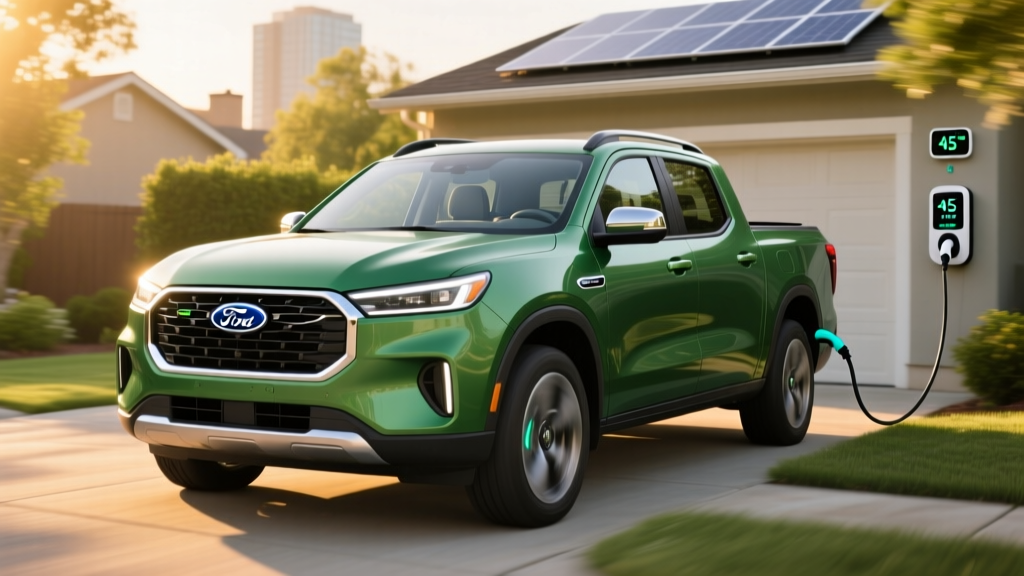
The Ford Maverick Hybrid occupies a rare position in the 2026 truck market: it's the only compact pickup that pairs genuine utility with hybrid-level efficiency, and it does so without requiring a plug. For buyers who want truck capability but cringe at the fuel pump, the Maverick Hybrid's fuel economy is the headline act. Let's break down exactly what the EPA says, what you'll actually see in the real world, and whether this HEV (hybrid electric vehicle) makes sense over a full EV, a PHEV, or the gas-only Maverick.
Ford Maverick Hybrid Fuel Economy: EPA Numbers vs. Real-World MPG
The 2026 Ford Maverick Hybrid carries over the proven 2.5-liter Atkinson-cycle four-cylinder hybrid powertrain with front-wheel drive. Here are the official EPA figures:
| Drive Cycle | EPA MPG | Real-World Expectation |
|---|---|---|
| City | 42 MPG | 40–46 MPG (hybrids often beat EPA in stop-and-go) |
| Highway | 33 MPG | 29–33 MPG (aerodynamic drag and speed hurt hybrids at 70+ mph) |
| Combined | 37 MPG | 34–40 MPG depending on driving mix |
The Maverick Hybrid's city MPG advantage is no accident. Toyota-derived hybrid synergy drive architecture means the electric motor handles low-speed propulsion where gasoline engines are least efficient. In urban testing with frequent stops, owners routinely report 43–46 MPG on the trip computer. Highway driving tells a different story: at 75 mph on flat interstate, expect 29–31 MPG. If your commute is 80% city, you'll land closer to 40 MPG combined. If you're a highway-heavy driver, plan for mid-30s.
HEV vs. PHEV vs. EV: Where Does the Maverick Hybrid Fit?
The Maverick Hybrid is a conventional hybrid (HEV), not a plug-in hybrid (PHEV). This distinction matters because it defines your entire ownership experience:
| Feature | HEV (Maverick Hybrid) | PHEV (e.g., RAV4 Prime) | BEV (e.g., F-150 Lightning) |
|---|---|---|---|
| Plug-in Charging | No — self-charging via regen + engine | Yes — Level 1/2 | Yes — Level 1/2/DC fast |
| Electric-Only Range | ~1 mile at low speed | 35–42 miles typical | 250–350+ miles |
| Fuel/Charging Infra Needed | Gas station only | Gas + home outlet (120V minimum) | Home Level 2 strongly recommended |
| Federal Tax Credit (§30D) | Not eligible | Up to $7,500 (if eligible) | Up to $7,500 (if eligible) |
| Best For | No home charging access; simple ownership | Short commutes + road trips | Home charging + daily driving under 250 mi |
The Maverick Hybrid makes sense if you want better fuel economy without changing your refueling habits. There is no plug, no charging cable, no range anxiety about finding a charger. You fill up at a gas station like any other truck — you just visit less often.
Ford does not currently offer a Maverick PHEV. If plug-in hybrid truck capability is a priority, the closest alternatives are SUV-based PHEVs like the Toyota RAV4 Prime (42 miles electric-only, 94 MPGe combined) or waiting for future PHEV truck announcements.
Powertrain Deep Dive: Engine, Motor, and Combined Output
| Specification | Value |
|---|---|
| Engine | 2.5L Atkinson-cycle inline-4 |
| Engine Power | 162 hp @ 5,600 rpm |
| Electric Motor Power | 126 hp (94 kW) |
| Combined System Output | 191 hp |
| Transmission | eCVT (planetary gearset, no fixed gears) |
| Drivetrain | FWD (hybrid); AWD unavailable on hybrid trim |
| Battery Type | Lithium-ion, ~1.1 kWh (hybrid buffer, not plug-in) |
| 0–60 mph | ~7.8 seconds (estimated) |
| Towing Capacity | 2,000 lbs (standard); 4,000 lbs with tow package not available on hybrid |
| Payload Capacity | 1,500 lbs |
The eCVT is not a traditional continuously variable transmission with a belt and pulleys. It uses a planetary gearset that blends engine and motor power seamlessly — a design proven over decades in the Toyota Prius and Camry Hybrid. There are no gear shifts to feel, and the system decides in real time whether to run on electric motor, gasoline engine, or both.
One trade-off: the Maverick Hybrid is FWD only. If you need AWD for snow, mud, or light off-road work, you'll need the 2.0L EcoBoost gas model (which gets a significantly lower 23/30/26 MPG EPA combined). The hybrid's 2,000-lb tow rating is also lower than the EcoBoost's 4,000-lb max with the tow package.
2026 Pricing, Trims, and Tax Credit Eligibility
| Trim | Base MSRP | Hybrid Powertrain |
|---|---|---|
| XL | ~$28,490 | Included (hybrid is standard on XL) |
| XLT | ~$30,490 | Included |
| Lariat | ~$34,990 | Included |
| Tremor (AWD EcoBoost only) | ~$40,490 | Not available |
Federal Tax Credit: The Maverick Hybrid does not qualify for the IRS §30D Clean Vehicle Credit. Under current law, only plug-in electric vehicles (PHEVs and BEVs) with a battery capacity of at least 7 kWh are eligible. The Maverick Hybrid's ~1.1 kWh battery is far below that threshold. There is no federal tax credit for conventional hybrids as of 2026.
Some states and utilities offer rebates or incentives for hybrid purchases. These vary widely by jurisdiction — check your state energy office or utility provider for current programs. For federal credit rules, always verify at IRS.gov.
Battery Warranty, Reliability, and Replacement Cost
The hybrid battery in the Maverick is small (~1.1 kWh) and operates within a narrow state-of-charge window (roughly 40–80%). This shallow cycling is the key to longevity — lithium-ion batteries degrade fastest when regularly drained to 0% or charged to 100%. Because the hybrid system's computer manages the battery conservatively, degradation is minimal.
Ford's hybrid powertrain architecture traces its lineage to the Toyota-sourced Hybrid Synergy Drive, one of the most proven hybrid systems in history. Toyota Prius taxis routinely exceed 300,000 miles on original hybrid batteries. While Ford's implementation differs in calibration, the fundamental engineering principles are identical.
Replacement Cost: If the hybrid battery does fail outside warranty, a replacement battery pack for the Maverick Hybrid is estimated at $2,500–$4,000 (parts and labor). This is far less than a full EV battery replacement ($8,000–$20,000+) because the pack is small. Independent hybrid specialists often offer refurbished packs for 30–50% less than OEM pricing.
Who Should Buy the Maverick Hybrid — And Who Shouldn't
Choose the Maverick Hybrid If:
- Your driving is 50%+ city/stop-and-go (where you'll see 40+ MPG)
- You don't have access to home or workplace EV charging
- You want a pickup bed for occasional hauling without truck-level fuel bills
- You prefer simple ownership — no plugs, no charging apps, no range planning
- Your towing needs stay under 2,000 lbs
Look Elsewhere If:
- You need AWD for snow, trails, or job sites (get the EcoBoost or a different truck)
- You tow more than 2,000 lbs regularly
- Your commute is 90%+ highway at 75+ mph (hybrid advantage shrinks to ~29 MPG)
- You want electric-only driving for air-quality or HOV-lane benefits (consider a PHEV)
- You want the $7,500 federal tax credit (only PHEVs/BEVs qualify)
Maverick Hybrid vs. the Competition: MPG and Price
| Vehicle | Powertrain | EPA Combined MPG | Starting MSRP |
|---|---|---|---|
| Ford Maverick Hybrid | 2.5L HEV (FWD) | 37 MPG | ~$28,490 |
| Ford Maverick EcoBoost | 2.0L Turbo (FWD) | 26 MPG | ~$28,490 |
| Hyundai Santa Cruz | 2.5L Turbo (AWD) | 22 MPG | ~$30,990 |
| Toyota Tacoma (i-FORCE MAX Hybrid) | 2.4L Turbo HEV | 24 MPG | ~$40,990 |
| Chevrolet Colorado | 2.7L Turbo (2WD) | 22 MPG | ~$31,990 |
The Maverick Hybrid has no direct competitor in the compact truck segment. The Hyundai Santa Cruz does not offer a hybrid variant. Midsize trucks like the Tacoma Hybrid are significantly heavier, more expensive, and less efficient. In pure fuel economy per dollar, the Maverick Hybrid stands alone.
Data sourced from fueleconomy.gov and Ford.com.
Frequently Asked Questions
How many MPG does the Ford Maverick Hybrid actually get?
The EPA rates it at 42 city / 33 highway / 37 combined. In real-world city-heavy driving, many owners report 40–46 MPG. Highway-only driving at 75 mph drops this to 29–31 MPG. Your actual results depend heavily on your city-to-highway ratio.
Does the Ford Maverick Hybrid need to be plugged in?
No. The Maverick Hybrid is a conventional HEV (hybrid electric vehicle). It charges its small battery through regenerative braking and the gasoline engine. You never plug it in — you simply refuel at a gas station.
Can I get AWD with the Maverick Hybrid?
No. As of the 2026 model year, the Maverick Hybrid is available only with front-wheel drive. All-wheel drive is exclusive to the 2.0L EcoBoost gasoline model. Ford has not announced a hybrid AWD variant.
Is the Maverick Hybrid reliable? What about battery replacement?
Ford's hybrid system is derived from proven Toyota Hybrid Synergy Drive architecture, one of the most reliable hybrid platforms ever built. The hybrid battery is warranted for 8 years/100,000 miles (10 years/150,000 in CARB states). Out-of-warranty replacement is estimated at $2,500–$4,000 — far less than a full EV battery.
Does the Maverick Hybrid qualify for any tax credit?
The Maverick Hybrid does not qualify for the federal §30D Clean Vehicle Credit, which requires a plug-in vehicle with at least 7 kWh of battery capacity. Some state or utility incentives may apply — check your local programs. See IRS.gov for federal rules.
How does the Maverick Hybrid compare to a full EV truck like the F-150 Lightning?
The F-150 Lightning offers 240–320 miles of electric range, 580+ hp, and 7,700+ lbs of towing — but starts around $55,000 and requires home Level 2 charging for practical ownership. The Maverick Hybrid costs roughly half as much, needs no charging infrastructure, tows up to 2,000 lbs, and delivers 37 MPG combined. They serve fundamentally different buyers and budgets.