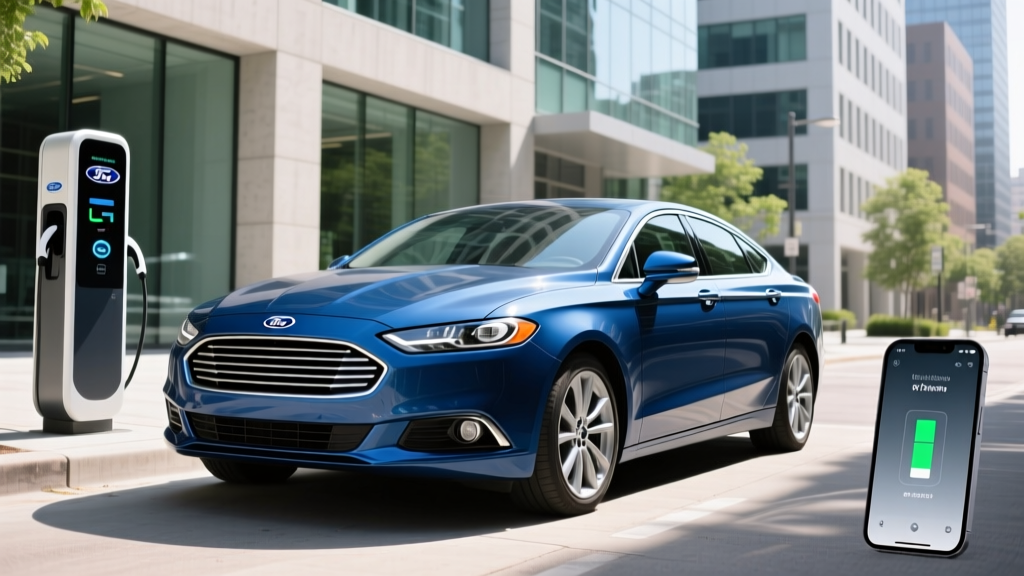
Quick Verdict: The Last Great Ford Sedan Hybrid
Ford discontinued the Fusion after the 2020 model year, but the Ford Fusion Hybrid Titanium remains one of the most sought-after used midsize hybrid sedans on the market. As the top trim of Ford's conventional hybrid (HEV) lineup, the Titanium delivers premium features, a refined ride, and an EPA-rated 43 MPG combined — figures that still rival current-generation hybrid competitors in 2026.
This guide covers everything a used-car buyer needs to know: real-world MPG, battery longevity, replacement costs, and how the Fusion Hybrid stacks up against the PHEV variant (the Fusion Energi) and modern full EVs. If you're weighing a pre-owned Fusion Hybrid Titanium against a new Toyota Camry Hybrid or a used Tesla Model 3, the data below will help you decide.
HEV vs PHEV: Fusion Hybrid vs Fusion Energi Explained
Ford sold two electrified Fusions, and confusing them is the most common buyer mistake. Here's the critical distinction:
| Attribute | Fusion Hybrid (HEV) | Fusion Energi (PHEV) |
|---|---|---|
| Type | Conventional Hybrid | Plug-in Hybrid |
| Plug-in charging required? | No — self-charging via engine + regen | Yes — plug in for electric-only miles |
| Battery capacity | 1.4 kWh (usable ~1.0 kWh) | 9.0 kWh (usable ~7.6 kWh) |
| Electric-only range | N/A (EV assist only, ~1 mile at low speed) | 26 miles EPA (electric only) |
| EPA MPG (combined) | 43 MPG (hybrid mode) | 42 MPG (hybrid mode) / 103 MPGe (electric) |
| Total range | ~610 miles | ~610 miles (gas + electric combined) |
| Combined horsepower | 195 HP | 195 HP |
| DC fast charging | No | No — Level 1/Level 2 only |
| Federal tax credit (new) | None | Expired for Ford before discontinuation |
Bottom line: The Fusion Hybrid (HEV) is a traditional hybrid — you never plug it in. The battery recharges through regenerative braking and the gasoline engine. The Fusion Energi (PHEV) has a larger battery you plug in, giving ~26 miles of electric-only driving before the gas engine kicks in. The Titanium trim was available on both, but this guide focuses on the Fusion Hybrid Titanium HEV.
Fuel Economy: EPA Ratings vs Real-World MPG
The 2020 Ford Fusion Hybrid carries the following EPA fuel economy ratings:
| Driving Cycle | EPA Rating | Real-World Expectation |
|---|---|---|
| City | 43 MPG | 41–47 MPG |
| Highway | 41 MPG | 36–42 MPG |
| Combined | 43 MPG | 38–44 MPG |
Why Hybrids Often Beat EPA in the City
Unlike gas-only cars, hybrids like the Fusion shine in stop-and-go traffic. Every brake application feeds energy back into the battery via regenerative braking, and the electric motor handles low-speed driving where gas engines are least efficient. Many Fusion Hybrid owners report 45–48 MPG in city commuting during mild weather. On sustained highway drives above 70 mph, expect numbers closer to 36–39 MPG — aerodynamic drag dominates, and the engine does most of the work.
Cold Weather Impact
In winter conditions (below 35°F), expect a 10–15% fuel economy drop. The engine runs more frequently to generate cabin heat and maintain battery temperature. Owners in northern climates typically see 36–39 MPG combined in January versus 43–46 MPG in July.
Powertrain and Performance Specs
| Specification | Value |
|---|---|
| Engine | 2.0L Atkinson-cycle inline-4 |
| Engine horsepower | 141 HP @ 6,000 RPM |
| Electric motor output | 118 HP (88 kW) |
| Combined system horsepower | 195 HP |
| Transmission | eCVT (electronic continuously variable) |
| Drivetrain | Front-wheel drive |
| 0–60 MPH | ~7.8 seconds |
| Battery type | Lithium-ion, 1.4 kWh gross |
| Fuel tank capacity | 13.5 gallons |
| Total range (est.) | ~580–610 miles |
| Cargo volume (trunk) | 12.0 cu ft |
| Curb weight | ~3,684 lbs |
The eCVT isn't a traditional belt-driven CVT — it's a planetary gearset that blends engine and motor power seamlessly. There are no fixed gear shifts, and the result is smooth, linear acceleration. The 195 combined HP is adequate for highway merging and passing, though it won't feel sporty. The Titanium trim adds paddle-mounted regen selectors that let you modulate regenerative braking intensity — useful for maximizing one-pedal-like driving in traffic.
Ford Fusion Hybrid Titanium Trim Features
The Titanium sat at the top of the Fusion Hybrid lineup, typically commanding a $5,000–$7,000 premium over the base SE Hybrid when new (2020 MSRP was approximately $34,595 before destination). Key Titanium-exclusive features include:
- Leather-trimmed heated and ventilated front seats
- 10-way power driver seat with memory
- Sony premium audio system (12 speakers)
- SYNC 3 infotainment with 8-inch touchscreen, Apple CarPlay, and Android Auto
- Adaptive cruise control with stop-and-go
- Lane-keeping system and blind-spot monitoring (BLIS)
- Hands-free power trunklid
- 18-inch machine-finish aluminum wheels
- Ambient interior lighting
The adaptive cruise control with stop-and-go is a notable inclusion — it handles full-speed-range following in highway traffic, reducing fatigue on long commutes. Note that this is a driver-assist feature (SAE Level 1), not autonomous driving. You must keep your hands on the wheel and remain attentive at all times.
Battery Warranty, Lifespan, and Replacement Cost
Battery longevity is the single most common concern for used hybrid buyers. Here's what the data shows:
Ford Fusion Hybrid Battery Warranty (Original)
- Hybrid battery warranty: 8 years / 100,000 miles (whichever comes first)
- Extended in CARB states: 10 years / 150,000 miles in California and states adopting CARB emissions standards (including NY, MA, NJ, CT, RI, VT, ME, OR, WA, MD, CO, MN, NV, NM, and others)
- Capacity threshold: Ford warrants the battery against failure and significant capacity loss (typically below ~60% of original capacity)
- Transferable: Yes — warranty transfers to subsequent owners automatically
Real-World Battery Degradation
The Fusion Hybrid's 1.4 kWh lithium-ion battery is small and managed conservatively by Ford's battery management system. Because the system uses only a narrow state-of-charge window (roughly 40–60% SoC in normal operation), stress on the cells is minimal. Real-world data from high-mileage Fusion Hybrids (taxis, fleet vehicles) shows:
- 100,000–150,000 miles: Minimal degradation — most owners report no noticeable MPG loss
- 150,000–200,000 miles: Slight capacity reduction (~5–10%), rarely impacting drivability
- 200,000+ miles: Some units may require cell module replacement or full pack swap
Battery Replacement Cost
If the hybrid battery fails outside warranty:
- Dealer full replacement: $2,500–$4,000 (parts + labor)
- Independent hybrid specialist: $1,500–$2,500
- Refurbished/remanufactured pack: $1,200–$2,000
- Individual cell module repair: $500–$1,200 (if only specific modules have failed)
For context, a 2020 Fusion Hybrid with 80,000 miles in 2026 likely still has 2+ years of factory hybrid battery coverage remaining. Always verify the in-service date and current mileage against the 8-year/100k threshold before purchasing.
Used Pricing and Tax Credit Eligibility
Because the Fusion Hybrid was discontinued after 2020, all available examples are pre-owned. As of early 2026, typical used-market pricing:
- 2017–2018 Fusion Hybrid Titanium (60k–90k miles): $13,000–$17,000
- 2019 Fusion Hybrid Titanium (40k–70k miles): $16,000–$20,000
- 2020 Fusion Hybrid Titanium (25k–55k miles): $18,000–$24,000
Federal Tax Credit Status
The Ford Fusion Hybrid (HEV) does not qualify for the federal §30D Clean Vehicle Credit. Under current IRS rules, conventional hybrids that cannot be plugged in are ineligible — the credit applies only to battery electric vehicles (BEVs) and plug-in hybrids (PHEVs) meeting battery capacity, critical mineral sourcing, MSRP caps, and buyer income limits.
The Fusion Energi (PHEV) was eligible for a portion of the federal credit when new, but Ford's cumulative EV/PHEV sales surpassed the original manufacturer cap long before discontinuation. For used PHEVs, the Used Clean Vehicle Credit (§25E) may apply — up to $4,000 or 30% of the sale price (whichever is less) for PHEVs and BEVs priced at $25,000 or below, subject to buyer income limits. However, since the Fusion Energi's battery (9.0 kWh) falls below the 7 kWh minimum threshold for §25E eligibility, it likely does not qualify. Always confirm with a tax professional before relying on credit eligibility.
State and Local Incentives
Some states offer rebates or HOV lane access for used hybrid purchases, though these programs change frequently. Check your state's energy office or DMV for current offerings. California's Clean Vehicle Rebate Project (CVRP), for example, has historically focused on new BEVs and PHEVs rather than conventional HEVs.
Fusion Hybrid vs New Hybrids and EVs: What Should You Buy?
| Scenario | Best Choice | Why |
|---|---|---|
| Budget under $20K, no home charging | Used Fusion Hybrid Titanium | 43 MPG, no plug needed, premium features, proven reliability |
| Budget $20K–$28K, short commute, home charging available | Used PHEV (e.g., Prius Prime, Clarity PHEV) | 25–47 mi electric commute, gas backup for road trips |
| Budget $30K+, home charging, want lowest running cost | New/used BEV (Model 3, Ioniq 6, Bolt EUV) | ~$0.04–0.06/mi electricity vs $0.09–0.12/mi hybrid fuel cost |
| Want warranty coverage, latest safety tech | New Toyota Camry Hybrid or Hyundai Sonata Hybrid | Full factory warranty, updated ADAS, 44–52 MPG EPA |
| Long highway commuter (500+ mi/week) | Fusion Hybrid or new Camry Hybrid | Hybrids excel at steady-state efficiency, no range anxiety |
The Fusion Hybrid Titanium occupies a specific sweet spot: budget-conscious buyers who want a premium-feeling, high-MPG sedan without the complexity or cost of plug-in charging. It's particularly compelling if you lack reliable home or workplace charging — a barrier that eliminates BEVs and PHEVs from consideration for many apartment dwellers and street parkers.
However, if you have home charging and a commute under 30 miles round-trip, a PHEV lets you do most daily driving on electricity alone (cheaper per mile than gas), with the gas engine available for longer trips. And if your budget allows $30K+, a used Tesla Model 3 or Chevrolet Bolt offers dramatically lower per-mile energy costs and the latest in over-the-air updates and driver-assist technology.
Reliability, Safety, and Ownership Costs
Reliability
The Fusion Hybrid's powertrain has proven durable in fleet and taxi service, with many examples exceeding 200,000 miles without major hybrid system issues. The eCVT transmission is gear-based (no belt or chain to fail) and has an excellent track record. Common non-hybrid complaints from owners include:
- Infotainment touchscreen responsiveness (SYNC 3 is generally stable but dated vs 2026 systems)
- Minor electrical gremlins (12V battery drain if the car sits for extended periods)
- Suspension wear at higher mileage (standard for the platform, not hybrid-specific)
Safety Ratings
The 2020 Fusion earned strong crash-test scores. The NHTSA gave it a 5-star overall safety rating. The IIHS rated it "Good" in all crashworthiness categories. The Titanium's standard adaptive cruise, lane-keeping, and blind-spot monitoring provide a solid active-safety suite for a vehicle of this vintage.
Estimated Annual Ownership Costs
- Fuel: ~$1,100–$1,300/year (15,000 mi at $3.20/gal, 43 MPG)
- Insurance: ~$1,200–$1,600/year (varies by state, driver profile)
- Maintenance: ~$400–$600/year (oil changes, filters, brakes — regen extends brake life significantly)
- Total annual running cost: ~$2,700–$3,500/year (excluding depreciation and financing)
Compared to a comparable gas-only midsize sedan getting 28 MPG combined, the Fusion Hybrid saves approximately $500–$700/year in fuel at current gas prices — a meaningful advantage that compounds over years of ownership.
Pros and Cons
Pros
- 43 MPG combined EPA — still competitive with 2026 hybrids
- No plug-in charging required — ideal for apartment dwellers
- Titanium trim offers premium features at used-car prices
- Smooth eCVT with no shift shock
- Proven hybrid system reliability with 200K+ mile examples common
- Hybrid battery warranty may still apply on 2018–2020 models
- Regenerative braking extends brake pad life (60K–80K+ miles typical)
- Adaptive cruise with stop-and-go standard on Titanium
Cons
- Discontinued — no new examples available, limited CPO inventory
- Trunk space reduced to 12.0 cu ft (battery packaging vs 16.0 cu ft gas model)
- Dated infotainment vs 2026 competitors (no wireless CarPlay/Android Auto)
- FWD only — no AWD option (unlike current Camry Hybrid)
- Modest 195 HP — adequate but not quick
- No federal tax credit eligibility (HEV)
- SYNC 3 interface feels dated compared to current Ford SYNC 4
- Parts availability may tighten as the platform ages
Frequently Asked Questions
How many MPG does the Ford Fusion Hybrid Titanium get?
The EPA rates the 2020 Ford Fusion Hybrid at 43 MPG city, 41 MPG highway, and 43 MPG combined. In real-world driving, many owners report 44–48 MPG in city commuting and 36–39 MPG on sustained highway trips. Cold weather typically reduces fuel economy by 10–15%.
Do I need to plug in the Ford Fusion Hybrid?
No. The Fusion Hybrid is a conventional hybrid (HEV). It charges its small battery through regenerative braking and the gasoline engine. You never plug it in. If you want plug-in capability, look at the Fusion Energi (PHEV), which offers 26 miles of electric-only range when charged.
Is the Ford Fusion Hybrid reliable, and what does battery replacement cost?
Yes — the Fusion Hybrid powertrain has a strong reliability record, with many examples surpassing 200,000 miles. The hybrid battery is warrantied for 8 years/100,000 miles (10 years/150,000 in CARB states). Out-of-warranty replacement costs $1,500–$4,000 depending on whether you go dealer, independent, or refurbished.
Does the Ford Fusion Hybrid qualify for any tax credit?
No. The Fusion Hybrid (HEV) does not qualify for the federal §30D Clean Vehicle Credit, which applies only to plug-in vehicles (BEVs and PHEVs). Some states may offer minor incentives for used hybrid purchases — check your state energy office. The Fusion Energi (PHEV) may have qualified when new but is likely ineligible under current used-vehicle credit rules due to its sub-7 kWh battery.
How does the Fusion Hybrid compare to a 2026 Toyota Camry Hybrid?
The 2026 Camry Hybrid achieves up to 52 MPG combined (LE trim) and offers AWD, a modern infotainment system, and Toyota's latest Safety Sense suite. However, a new Camry Hybrid starts around $30,000. A used Fusion Hybrid Titanium at $16,000–$22,000 delivers similar real-world MPG and premium features at a significantly lower purchase price — the trade-off is older tech, no remaining factory bumper-to-bumper warranty, and no AWD option.
What should I check before buying a used Fusion Hybrid Titanium?
Verify the hybrid battery warranty status (check the in-service date against the 8-year/100k-mile threshold). Request a pre-purchase inspection from a hybrid-qualified mechanic. Check for any outstanding NHTSA recalls. Review maintenance records — the gas engine still requires regular oil changes. Test the regenerative braking feel and ensure the battery state-of-charge gauge cycles normally during a test drive.