Quick Verdict: The Ford Fusion Hybrid SE Still Earns Its Reputation
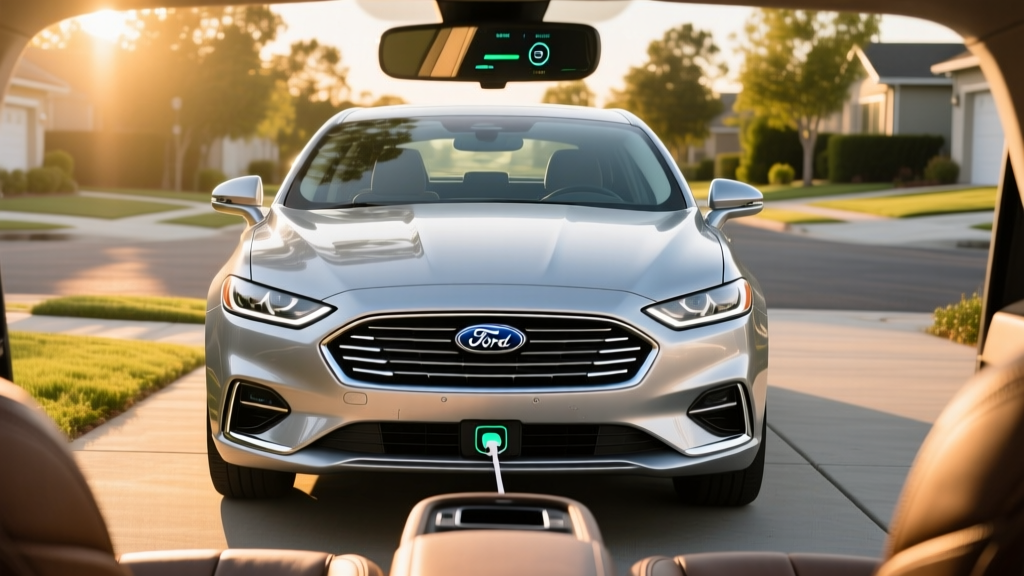
The Ford Fusion Hybrid SE remains one of the most practical midsize hybrid sedans on the used market, even years after Ford discontinued the nameplate after the 2020 model year. With an EPA-rated 42 MPG combined, a proven 2.0L Atkinson-cycle powertrain, and a hybrid battery backed by an 8-year/100,000-mile warranty, the Fusion Hybrid SE offers a low-risk entry into hybrid ownership for buyers who aren't ready to commit to a full battery-electric vehicle.
If you're searching for a Ford Fusion Hybrid SE in 2026, you're almost certainly shopping the used market. This guide covers everything you need to know — from real-world MPG expectations and battery longevity to what you'll pay at the pump versus a comparable gas-only sedan.
Ford Fusion Hybrid SE: Powertrain and Specifications
| Specification | Value |
|---|---|
| Powertrain Type | Conventional Hybrid (HEV) — no plug-in required |
| Engine | 2.0L Atkinson-cycle 4-cylinder |
| Electric Motor | Permanent-magnet AC synchronous, 88 kW (118 hp) |
| Combined System Horsepower | 195 hp |
| Transmission | eCVT (electronic continuously variable) |
| Hybrid Battery | 1.4 kWh lithium-ion (usable capacity ~1.0 kWh) |
| Drivetrain | Front-wheel drive |
| 0–60 mph | ~8.0 seconds |
| EPA Fuel Economy | 43 city / 41 highway / 42 combined MPG |
| Fuel Tank | 13.5 gallons |
| Total Range | ~567 miles (EPA combined) |
| Original MSRP (2020) | $28,290 (SE trim, before destination) |
| Used Price Range (2026) | ~$14,000–$20,500 depending on mileage/condition |
The Fusion Hybrid SE pairs its 2.0L gasoline engine with an electric motor integrated into the transaxle. Unlike a plug-in hybrid (PHEV), this conventional hybrid never needs to be plugged in. The system captures energy through regenerative braking and engine-driven generation, storing it in a compact 1.4 kWh lithium-ion battery mounted behind the rear seats. The result is seamless electric-assisted driving at low speeds and improved efficiency across all driving conditions.
Fuel Economy: EPA Ratings vs. Real-World MPG
| Driving Scenario | EPA Rating | Real-World Expectation |
|---|---|---|
| City | 43 MPG | 42–48 MPG (hybrids often exceed EPA in stop-and-go) |
| Highway | 41 MPG | 36–41 MPG (sustained 70+ mph reduces regen benefit) |
| Combined | 42 MPG | 38–45 MPG depending on driving mix |
| Cold Weather (below 32°F) | — | 34–38 MPG (engine runs more for cabin heat) |
The Fusion Hybrid SE actually carries a higher EPA city rating (43 MPG) than its highway rating (41 MPG) — a hallmark of conventional hybrids. In city driving, frequent stops allow regenerative braking to recharge the battery, and the electric motor handles low-speed propulsion where gasoline engines are least efficient. According to fueleconomy.gov, owners report an average of about 40 MPG in mixed driving, which aligns closely with the EPA combined estimate.
On pure highway runs at 75 mph, expect fuel economy to dip into the mid-to-upper 30s. The hybrid system provides less benefit when the engine runs continuously at steady speed, and aerodynamic drag dominates. In cold weather, the gasoline engine must run more frequently to provide cabin heat (the Fusion Hybrid SE uses engine coolant heat rather than an electric heat pump), which typically drops real-world MPG by 10–15%.
HEV vs. PHEV vs. Full EV: Where the Fusion Hybrid Fits
The Fusion lineup historically included both a conventional hybrid (HEV) and a plug-in variant called the Fusion Energi (PHEV). Understanding the difference is critical before you shop:
Conventional Hybrid (HEV) — Fusion Hybrid SE
- No plug-in charging required — the battery charges via regenerative braking and the engine
- 1.4 kWh battery — too small for meaningful electric-only driving
- 42 MPG combined regardless of charging access
- No electric-only range to manage
- Lower purchase price, simpler ownership
Plug-In Hybrid (PHEV) — Fusion Energi
- Must be plugged in to realize electric-only range and fuel savings
- 7.6 kWh usable battery (later model years), ~26 miles electric-only range
- 42 MPG combined once the battery is depleted (gas-only mode)
- 104 MPGe when operating in blended electric mode
- Higher purchase price, requires home charging access for maximum benefit
If you have reliable home charging and a commute under 25 miles, a PHEV like the Fusion Energi can eliminate most gasoline use on weekdays. But if you lack charging access — apartment living, street parking, or frequent long road trips — the Fusion Hybrid SE delivers consistent fuel savings with zero lifestyle change. A full BEV (battery-electric vehicle) offers the lowest operating cost but requires charging infrastructure and acceptance of range planning for longer trips.
Who Should Choose the Fusion Hybrid SE?
- Choose this HEV if: You want 40+ MPG without plugging in, drive 12,000–18,000 miles/year, and want a proven, low-risk powertrain on a used-car budget.
- Consider a PHEV if: You can install a Level 2 home charger, commute under 30 miles round-trip, and want to minimize gasoline use on weekdays.
- Consider a full EV if: You have home charging, drive under 250 miles/day, want zero tailpipe emissions, and are ready for a different fueling paradigm.
Battery Warranty, Longevity, and Replacement Cost
Hybrid Battery Warranty & Lifespan
Original warranty: 8 years / 100,000 miles (federally mandated minimum for hybrid components). In California and states adopting CARB emissions standards, coverage extends to 10 years / 150,000 miles.
Real-world longevity: Ford's lithium-ion hybrid battery in the Fusion is designed to last the life of the vehicle. Taxi fleet data and owner reports routinely show these packs exceeding 150,000–200,000 miles with minimal capacity loss. The 1.4 kWh pack is small and conservatively managed — it rarely cycles through its full depth of discharge, which significantly extends cell life.
Replacement cost (if needed): $2,000–$3,500 for a refurbished or new OEM battery pack, plus $300–$600 in labor. Independent hybrid shops can sometimes recondition individual cells for $800–$1,500.
Hybrid battery anxiety is common among first-time hybrid buyers, but the data is reassuring. The Fusion Hybrid's battery management system keeps the pack operating in a narrow state-of-charge window — typically between 40% and 80% — which dramatically reduces degradation compared to a full EV battery that cycles from 10% to 90% daily. Most Fusion Hybrid batteries will outlast the vehicle's economic life without needing replacement.
For a 2019–2020 model purchased in 2026, the original 8-year/100,000-mile warranty may still have remaining coverage depending on the vehicle's mileage. A 2020 model with 55,000 miles, for example, would retain hybrid battery warranty coverage through 2028 or 100,000 miles (whichever comes first). Always verify warranty transfer status with a Ford dealer using the VIN before purchasing.
Reliability and Ownership Costs
The Ford Fusion Hybrid SE benefits from one of the most mature hybrid powertrains in the industry. Ford's hybrid system, shared across the Escape Hybrid and Lincoln MKZ Hybrid, has been in production since 2005 with continuous refinement. The eCVT transmission — which uses planetary gearsets rather than belts or chains — has no traditional wear components like clutch packs or torque converters.
Key reliability considerations for a used Fusion Hybrid SE:
- Hybrid battery: Very low failure rate. Most issues are individual cell imbalances fixable by reconditioning.
- eCVT transmission: Extremely durable; no fluid changes required under normal service.
- Brakes: Regenerative braking reduces pad wear significantly. Original brake pads often last 80,000–100,000+ miles.
- 12V auxiliary battery: Like any vehicle, the standard 12V battery needs replacement every 4–6 years ($150–$250).
- Coolant system: The hybrid system has a separate coolant loop; follow Ford's 100,000-mile coolant replacement interval.
Insurance costs for the Fusion Hybrid SE are typically 5–10% lower than the gas-only Fusion Titanium with the 2.0L EcoBoost, reflecting the hybrid's lower performance profile and strong safety ratings. The Fusion earned a Top Safety Pick rating from the IIHS for the 2019–2020 model years when equipped with optional front crash prevention.
Tax Credits and Incentives
The Ford Fusion Hybrid SE does not qualify for the federal §30D clean vehicle tax credit. Under current IRS rules, the §30D credit (up to $7,500) is available only for plug-in electric vehicles — battery-electric vehicles (BEVs) and plug-in hybrids (PHEVs) with at least 7 kWh of battery capacity. Conventional hybrids like the Fusion Hybrid SE are excluded.
The Fusion Energi (PHEV variant) originally qualified for a $4,007 federal tax credit when new, but that credit is only available at the time of initial purchase and does not transfer to used buyers. Under current §30D rules, the used clean vehicle credit (up to $4,000, or 30% of sale price) applies only to eligible BEVs and PHEVs purchased from a dealer for $25,000 or less — the Fusion Energi may qualify under this provision if priced within the cap, though battery sourcing requirements apply.
Some states and local utilities offer rebates for hybrid vehicle purchases or registrations. These vary widely by jurisdiction, so check your state's energy office or utility provider for current programs.
Pros, Cons, and Final Assessment
Pros
- 42 MPG combined — real-world city driving often exceeds 45 MPG
- No plug-in charging needed; zero lifestyle adjustment from a gas car
- Spacious midsize cabin with comfortable seating for five
- Proven, mature hybrid powertrain with excellent reliability data
- Strong regenerative braking extends brake pad life significantly
- Competitive used pricing ($14K–$20K range)
- Available Ford Co-Pilot360 driver-assist suite (2019+)
Cons
- Discontinued after 2020 — no new models available
- Trunk space reduced to 12.0 cu ft due to hybrid battery placement
- Highway MPG drops to mid-30s at sustained 75+ mph
- No DC fast charging (not applicable — HEV does not plug in)
- Cold-weather fuel economy loss of 10–15% without a heat pump
- Ford's Sync 3 infotainment is dated compared to 2026 systems
- Some used examples may be approaching hybrid warranty expiration
Frequently Asked Questions
How many MPG does the Ford Fusion Hybrid SE get?
The EPA rates the 2019–2020 Ford Fusion Hybrid SE at 43 city / 41 highway / 42 combined MPG. In real-world driving, many owners report 40–48 MPG in city conditions and 36–41 MPG on the highway. Cold weather and sustained high-speed driving will reduce these figures.
Does the Ford Fusion Hybrid need to be plugged in?
No. The Fusion Hybrid SE is a conventional hybrid (HEV). Its 1.4 kWh battery charges entirely through regenerative braking and engine-generated power. You never plug it in. If you want plug-in capability with electric-only range, look at the Fusion Energi (PHEV) instead.
How long will the hybrid battery last?
Ford's hybrid battery is designed to last the vehicle's lifetime. The original warranty covers 8 years/100,000 miles (10 years/150,000 miles in CARB states). Real-world data from fleet and owner reports shows these batteries routinely exceeding 150,000–200,000 miles. Replacement, if ever needed, costs $2,000–$3,500.
Is the Ford Fusion Hybrid SE reliable?
Yes. The Fusion Hybrid uses Ford's second-generation hybrid powertrain, which has been refined since 2005. The eCVT transmission has no belts or clutch packs to wear out, and regenerative braking extends brake pad life to 80,000+ miles. Overall reliability is considered above average for the midsize sedan segment.
Does the Fusion Hybrid SE qualify for a tax credit?
No. Conventional hybrids (HEVs) do not qualify for the federal §30D clean vehicle tax credit, which is reserved for plug-in electric vehicles (BEVs and PHEVs). Some state or utility incentives may apply — check local programs.
What should I look for when buying a used Fusion Hybrid SE?
Check the remaining hybrid battery warranty (verify via VIN at a Ford dealer), review maintenance records for coolant service intervals, test the regenerative braking feel, and confirm that the hybrid system indicator shows normal battery state-of-charge behavior. A pre-purchase inspection at a Ford dealer can include a hybrid battery health check.