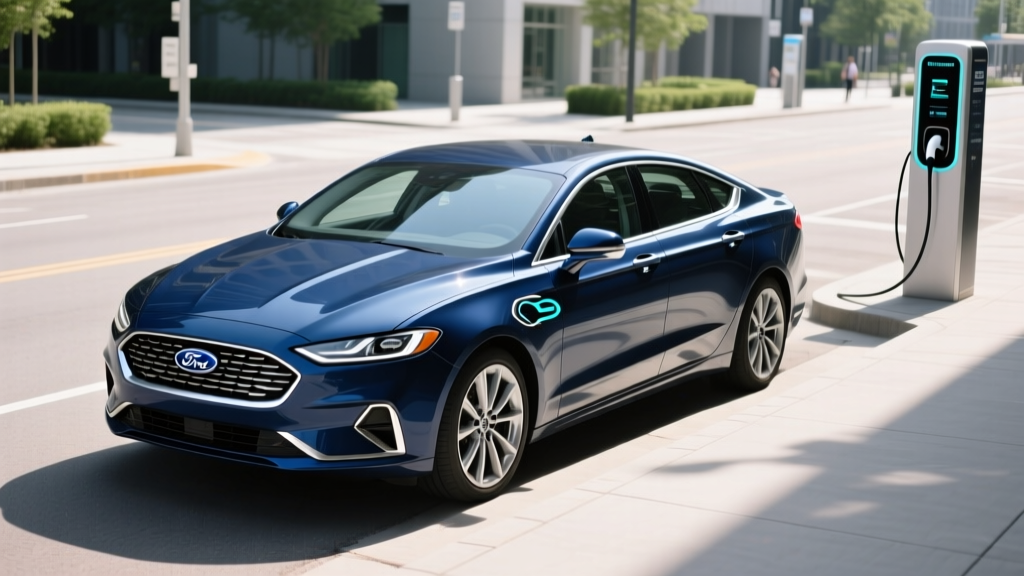
The Ford Fusion Hybrid was one of the most fuel-efficient midsize sedans on the road during its production run (2010–2020). Though Ford discontinued the Fusion after the 2020 model year, it remains a high-demand used hybrid, with buyers regularly searching for the original Ford Fusion Hybrid MSRP to benchmark what they should pay today. This guide breaks down the exact EPA fuel economy, powertrain specs, battery longevity, real-world ownership costs, and how the Fusion Hybrid stacks up against plug-in hybrids and full EVs in 2026.
Ford Fusion Hybrid MSRP: Original Pricing and Used Market Values
When new, the Ford Fusion Hybrid carried an MSRP that varied by trim and model year. Here is a breakdown of base MSRPs across the final generation:
| Model Year | Base MSRP | Top Trim MSRP (Titanium) |
|---|---|---|
| 2020 | $23,300 | $32,550 |
| 2019 | $23,270 | $32,450 |
| 2018 | $23,170 | $32,150 |
| 2017 | $25,295 | $33,475 |
| 2013 (2nd gen launch) | $27,200 | $32,600 |
On the used market in early 2026, a 2019–2020 Ford Fusion Hybrid in good condition typically lists between $16,000 and $23,000 depending on mileage, condition, and trim. Lower-mileage Titanium models can push toward $25,000. Compared to a new 2026 Toyota Camry Hybrid (starting around $29,500), a well-maintained used Fusion Hybrid can save buyers $8,000–$13,000 upfront while delivering nearly identical fuel economy.
EPA Fuel Economy: Fusion Hybrid MPG Breakdown
The Fusion Hybrid's fuel economy improved noticeably with the second-generation model introduced for 2013. Here are the official EPA figures from fueleconomy.gov:
| Generation | City | Highway | Combined |
|---|---|---|---|
| 2020 (2.0L Atkinson + eCVT) | 43 | 41 | 42 |
| 2017–2019 (2.0L Atkinson + eCVT) | 43 | 41 | 42 |
| 2013–2016 (2.0L Atkinson + eCVT) | 44 | 41 | 42 |
| 2010–2012 (2.5L Atkinson + eCVT) | 41 | 36 | 39 |
Powertrain Specs: Engine, Motor, and Combined Output
| Specification | Value |
|---|---|
| Engine | 2.0L Atkinson-cycle 4-cylinder |
| Engine horsepower | 141 HP @ 6,000 RPM |
| Electric motor output | 118 HP (88 kW) |
| Combined system horsepower | 195 HP |
| Transmission | eCVT (planetary gearset) |
| Hybrid battery (NiMH, 2013–2020) | 1.4 kWh gross (~1.0 kWh usable) |
| 0–60 mph | ~7.8 seconds |
| Drivetrain | Front-wheel drive |
| Curb weight | ~3,615 lbs |
The Fusion Hybrid uses Ford's parallel hybrid architecture — the gasoline engine and electric motor can drive the wheels independently or together. The eCVT is not a traditional belt-and-pulley CVT; it uses a planetary gearset that seamlessly blends power sources without the "rubber band" feel of conventional CVTs. The result is smooth, linear acceleration that feels more natural than most non-hybrid CVTs.
Fusion Hybrid vs. Fusion Energi (PHEV): Key Differences
Ford also sold the Fusion Energi, a plug-in hybrid variant, from 2013 through 2020. It's critical to understand the difference before buying:
| Feature | Fusion Hybrid (HEV) | Fusion Energi (PHEV) |
|---|---|---|
| Plug-in charging | No — self-charging only | Yes — Level 1/Level 2 |
| Electric-only range | N/A (brief EV mode at low speed) | 26 miles (2020 EPA) |
| Total range | ~588 miles (14-gal tank) | ~497 miles (EV + gas) |
| Battery capacity | 1.4 kWh (NiMH) | 7.6 kWh (Li-ion, 2017+) |
| Level 2 charge time | N/A | ~2.5 hours (3.3 kW onboard) |
| DC fast charging | No | No |
| Combined MPGe (charge-depleting) | N/A | 103 MPGe |
| Gas-only MPG (charge-sustaining) | 42 combined | 42 combined |
| Trunk space | 12.0 cu ft | 8.2 cu ft (battery intrusion) |
| Original base MSRP (2020) | $23,300 | $35,380 |
The Energi's larger lithium-ion battery enables 26 miles of electric-only driving — enough for many short commutes without using gasoline. However, the battery pack intrudes into the trunk, reducing cargo capacity by nearly a third. The Energi also carried a $12,000+ price premium when new. On the used market in 2026, expect to pay $18,000–$26,000 for a 2018–2020 Fusion Energi.
Battery Warranty, Lifespan, and Replacement Cost
Real-world battery degradation on the Fusion Hybrid has been modest. The NiMH pack in 2013–2020 models is relatively small (1.4 kWh) and operates within a conservative state-of-charge window — Ford's battery management system rarely allows full 100% or 0% charge, which extends cell life. High-mileage owner reports on Ford forums indicate most Fusion Hybrid batteries retain sufficient capacity at 150,000+ miles to maintain near-original fuel economy.
If replacement becomes necessary:
- OEM dealership replacement: $3,000–$4,500 (part + labor)
- Refurbished/remanufactured pack: $1,500–$2,500 from third-party hybrid specialists
- Individual module replacement: $300–$800 if only a few cells are degraded (common with NiMH)
For context, the Fusion Hybrid's NiMH battery is far less expensive to replace than a full EV's 60–80 kWh lithium-ion pack ($10,000–$20,000+). This lower replacement risk is a meaningful advantage for used-hybrid buyers.
Tax Credits: Does the Fusion Hybrid Qualify?
Under current 2026 IRS rules for the §30D Clean Vehicle Credit:
- Ford Fusion Hybrid (HEV): Does not qualify for any federal tax credit. Conventional hybrids are ineligible — only plug-in vehicles with ≥4 kWh battery capacity and plug-in capability qualify under §30D.
- Ford Fusion Energi (PHEV): Originally qualified for up to $4,007 in federal credits when new, but as a used vehicle in 2026, it may be eligible for the Used Clean Vehicle Credit (up to $4,000 or 30% of sale price, whichever is lower) if purchased from a licensed dealer, the sale price is $25,000 or less, and the buyer meets income caps ($75,000 single / $150,000 joint). Verify current eligibility on IRS.gov before purchasing, as sourcing and model-year requirements apply.
Some states offer additional hybrid incentives — check your state's energy office or the AFDC incentive database for local programs.
Reliability Record and Common Issues
The Fusion Hybrid has compiled a solid reliability record over its production run. Key points:
- NHTSA: The 2017–2020 Fusion received a 5-star overall safety rating.
- IIHS: 2017–2019 models earned Top Safety Pick+ with optional front crash prevention.
- Common complaints: Some owners report intermittent battery cooling fan noise, infotainment (SYNC 3) sluggishness, and occasional eCVT shudder at low-speed transitions — typically addressed under TSBs by Ford dealers.
- Recalls: Check NHTSA.gov by VIN for open recalls. Some 2013–2014 models had a battery cooling fan recall; some 2019–2020 models had a brake system software recall.
Overall, the Fusion Hybrid ranks as one of the more reliable midsize hybrids of its era, though it trails the Toyota Camry Hybrid slightly in long-term powertrain durability surveys.
Pros
- 42 MPG combined — competitive with 2026 hybrids
- Smooth eCVT without rubber-band feel
- Low used prices ($16K–$23K for 2019–2020)
- Inexpensive battery replacement vs. EV
- Strong safety ratings (5-star NHTSA)
- No plug-in needed — gas-and-go simplicity
Cons
- Discontinued — no new models available
- Trunk space reduced by battery (12.0 cu ft)
- No federal tax credit for HEV version
- FWD only — no AWD option (unlike Camry Hybrid)
- Infotainment aging (SYNC 3 vs. modern systems)
- Warranty expired or expiring on most examples
Fusion Hybrid vs. PHEV vs. Full EV: Which Fits You?
Choose the Ford Fusion Hybrid (HEV) if: You want maximum fuel savings without changing your fueling habits, you lack home charging access, your budget is under $25,000, and you drive a mix of city and highway miles. It's the simplest path to 40+ MPG.
Choose a used Fusion Energi (PHEV) if: You have home Level 2 charging, your daily commute is under 25 miles, and you want electric-only driving for errands with gas-engine backup for road trips. You may also qualify for the used-EV tax credit.
Choose a full EV (BEV) if: You have reliable home charging, want zero tailpipe emissions, your daily driving is under 250 miles, and you're ready to invest $30,000+ in a newer vehicle like a Chevy Bolt, Hyundai Ioniq 5, or Tesla Model 3.
Frequently Asked Questions
How many MPG does the Ford Fusion Hybrid get?
The 2017–2020 Ford Fusion Hybrid is EPA-rated at 43 city / 41 highway / 42 combined MPG. Real-world owners report 40–44 MPG combined depending on driving style and climate. The earlier 2010–2012 generation is rated at 39 MPG combined.
Does the Ford Fusion Hybrid need to be plugged in?
No. The Fusion Hybrid is a conventional (self-charging) hybrid. It recovers energy through regenerative braking and the gasoline engine — you never plug it in. Only the Fusion Energi (PHEV) requires plug-in charging to access its electric-only range.
What was the original Ford Fusion Hybrid MSRP?
The 2020 Ford Fusion Hybrid started at $23,300 MSRP for the base S trim, climbing to approximately $32,550 for the Titanium. Earlier model years ranged from $23,170 to $27,200 at base trim.
How long does the Fusion Hybrid battery last?
Most Fusion Hybrid batteries last well beyond 150,000 miles with normal use. Ford warranted the battery for 8 years/100,000 miles (10 years/150,000 miles in CARB states). The conservative charge window managed by Ford's battery management system contributes to longevity. If replacement is needed, expect $1,500–$4,500 depending on whether you choose refurbished or OEM.
Does the Ford Fusion Hybrid qualify for a tax credit?
No federal tax credit applies to the Fusion Hybrid (HEV) — only plug-in vehicles qualify under §30D. The Fusion Energi (PHEV) may qualify for the Used Clean Vehicle Credit (up to $4,000) when purchased from a dealer at $25,000 or less, subject to buyer income caps. Consult a tax professional and verify on IRS.gov before purchasing.
Is the Ford Fusion Hybrid reliable?
Yes. The Fusion Hybrid has a solid reliability record, with the eCVT and hybrid system proving durable over hundreds of thousands of fleet and owner-reported miles. NHTSA awarded it 5 stars overall, and IIHS named it a Top Safety Pick+. Check for open recalls by VIN and address any TSBs at a Ford dealer.