Ford Fusion Hybrid MPG: The Numbers That Matter
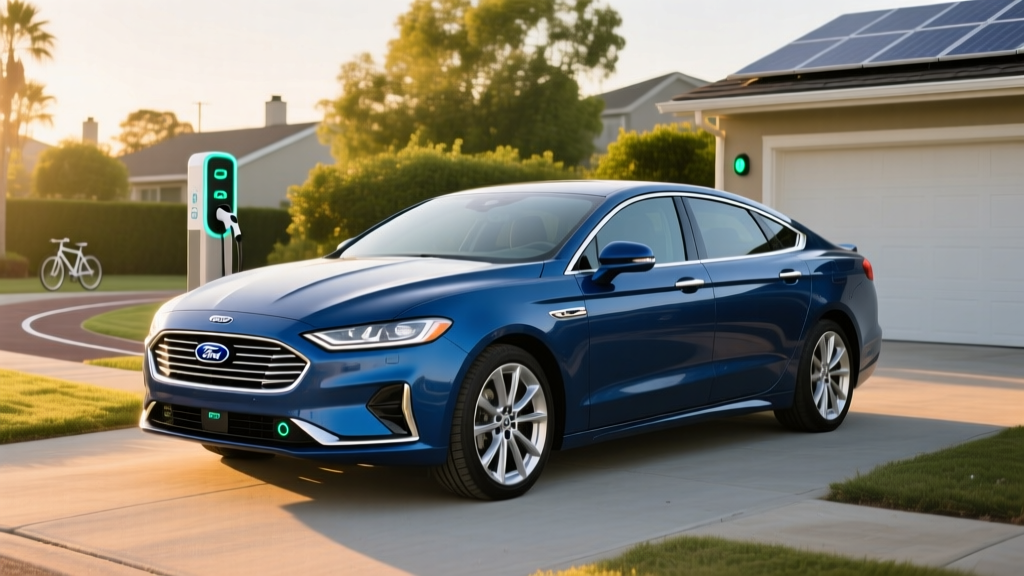
If you're researching the mpg of ford fusion hybrid sedans, you're likely shopping the used market. Ford discontinued the Fusion after the 2020 model year as part of its shift toward SUVs and trucks, but the Fusion Hybrid remains one of the most efficient midsize sedans ever sold in the U.S. — and a strong value proposition on the pre-owned market in 2026.
The Fusion Hybrid was offered in two flavors: a conventional hybrid (HEV) that never needs plugging in, and a plug-in hybrid variant called the Fusion Energi (PHEV). Both deliver outstanding fuel economy, but they serve different drivers. Let's break down exactly what each delivers in MPG, range, and ownership cost.
| Model | Powertrain | City MPG | Highway MPG | Combined MPG | MPGe (PHEV) |
|---|---|---|---|---|---|
| Fusion Hybrid | 2.0L HEV | 43 | 41 | 42 | N/A |
| Fusion Energi | 2.0L PHEV | 43 (hybrid mode) | 41 (hybrid mode) | 42 (hybrid mode) | 103 MPGe |
Source: EPA / fueleconomy.gov
HEV vs. PHEV: Which Fusion Is Which?
This is the single most important distinction when shopping a used Fusion Hybrid. Ford sold two electrified Fusions, and confusing them leads to bad purchase decisions.
| Attribute | Fusion Hybrid (HEV) | Fusion Energi (PHEV) |
|---|---|---|
| Needs to plug in? | No — self-charging via regen & engine | Yes — for electric-only driving |
| Electric-only range | ~1 mile (low-speed only) | 26 miles (2020 model) |
| Battery size | 1.4 kWh (usable) | 7.6 kWh (usable) |
| Total range | ~620 miles | ~550 miles (EV + gas combined) |
| DC fast charging | No | No — AC Level 2 only |
| Level 2 charge time (0–100%) | N/A | ~2.75 hours at 240V / 3.3 kW |
| Trunk space | 16.0 cu ft | 8.2 cu ft (battery intrusion) |
| Original MSRP (base, 2020) | ~$28,890 | ~$36,385 |
The Fusion Hybrid is a conventional HEV: it captures energy from braking and the engine to charge a small battery, then uses that electric assist to reduce fuel consumption. You never plug it in. Think of it as a vastly more efficient gas car.
The Fusion Energi is a PHEV: it has a larger battery you charge by plugging in, giving you up to 26 miles of pure electric driving before the gasoline engine kicks in. Once the battery is depleted, it operates exactly like the standard hybrid, returning the same 42 MPG combined.
Powertrain Specs: What's Under the Hood
| Spec | Fusion Hybrid | Fusion Energi |
|---|---|---|
| Engine | 2.0L Atkinson-cycle I-4 | 2.0L Atkinson-cycle I-4 |
| Engine horsepower | 141 hp | 141 hp |
| Electric motor | Permanent-magnet AC synchronous | Permanent-magnet AC synchronous |
| Combined system output | 195 hp | 195 hp |
| Transmission | eCVT (planetary gearset) | eCVT (planetary gearset) |
| 0–60 mph | ~8.1 seconds | ~8.4 seconds (heavier) |
| Drivetrain | FWD | FWD |
Both use Ford's third-generation hybrid powertrain, which pairs a 2.0-liter Atkinson-cycle four-cylinder with an electric motor through an electronically controlled continuously variable transmission (eCVT). This is not a belt-driven CVT like you'd find in a Nissan — it's a planetary gearset design, similar to Toyota's Hybrid Synergy Drive, known for durability and smoothness.
Real-World MPG: Do Hybrids Beat the EPA Sticker?
EPA Combined: 42 MPG
Real-world expectation: 38–47 MPG depending on driving style
Hybrids tend to exceed their EPA city rating in stop-and-go traffic (regenerative braking recovers more energy) and fall slightly short on sustained highway driving. Owner-reported averages on fueleconomy.gov cluster around 40–44 MPG for mixed driving.
Several factors shift real-world MPG for the Fusion Hybrid:
- City-heavy commuting (under 45 mph): Expect 44–48 MPG. The hybrid system shines here, running the electric motor extensively at low speeds and shuttling the engine off at stops.
- Highway cruising (70–80 mph): Expect 36–40 MPG. Aerodynamic drag dominates at higher speeds, and the engine runs more often.
- Cold weather (below 32°F): Expect a 5–10% drop. The engine runs more frequently to provide cabin heat and warm up the catalytic converter, reducing electric-only operation.
- Aggressive acceleration: Heavy throttle inputs engage the gas engine immediately, negating the hybrid advantage. Drivers who use smooth inputs and let the car coast to stops consistently report 45+ MPG.
The Fusion Energi returns the same 42 MPG combined once the battery is depleted, but your effective fuel cost is lower if you can complete daily driving within the 26-mile electric range — essentially running on electricity for commutes and gasoline only for longer trips.
Battery Longevity, Warranty & Replacement Cost
Battery lifespan is the top concern for used hybrid buyers, and it's a valid one. Here's what the data shows:
Original Battery Warranty: 8 years / 100,000 miles (10 years / 150,000 miles in CARB states including CA, CT, MA, ME, MD, NJ, NY, OR, RI, VT, WA)
Warranty capacity threshold: Battery must retain sufficient capacity to function — Ford defines failure as inability to hold charge or significant capacity loss below operational norms.
Real-world lifespan: Ford's hybrid batteries from this generation (2013–2020) have proven durable. Taxi fleet data and owner reports show many reaching 150,000–200,000+ miles without replacement. The 1.4 kWh HEV battery experiences shallow charge cycles, which are gentler on lithium-ion cells than the deep cycles in full EVs.
If a battery replacement is needed out of warranty:
- Fusion Hybrid (HEV) battery replacement: $2,000–$3,500 (parts + labor at an independent hybrid specialist; dealer pricing may be higher)
- Fusion Energi (PHEV) battery replacement: $4,000–$6,500 (larger 7.6 kWh pack, more complex)
- Refurbished/remanufactured options: Available for $1,200–$2,000 for the HEV pack from third-party suppliers
For a 2017–2020 Fusion Hybrid purchased in 2026, some factory battery warranty coverage may still remain (the 8-year/100,000-mile window on a 2020 model extends to 2028). Always check the vehicle's in-service date and current mileage against warranty limits before purchasing.
Tax Credits & Incentives in 2026
Because the Fusion Hybrid and Fusion Energi are discontinued, you'll only find them on the used market in 2026. Here's how incentives apply:
- Used clean vehicle credit (§25E): Up to $4,000 or 30% of the sale price (whichever is less) for qualified used EVs and PHEVs purchased from a dealer. The Fusion Energi qualifies as a PHEV. The standard Fusion Hybrid (HEV) does not qualify for this credit — only BEVs and PHEVs are eligible.
- Sale price cap: The vehicle must sell for $25,000 or less to qualify for the used credit.
- Buyer income limits: AGI must not exceed $75,000 (single), $112,500 (head of household), or $150,000 (joint) — per current IRS §25E rules.
- Vehicle age requirement: Must be at least 2 model years old (easily satisfied since production ended in 2020).
- Dealer requirement: Must be purchased from a licensed dealer, not a private party.
- New vehicle §30D credit: No longer applicable — the Fusion is not in production.
Practically, this means a 2019–2020 Fusion Energi purchased from a dealer for under $25,000 could net up to $4,000 off your tax bill, bringing the effective price into the low $20,000s. The standard Fusion Hybrid, while ineligible for federal credits, is typically cheaper to purchase outright — often $12,000–$18,000 depending on year, mileage, and condition.
Who Should Buy a Fusion Hybrid vs. a Full EV or Gas Car?
Choose the Fusion Hybrid (HEV) if:
- You want maximum MPG with zero lifestyle change — no plugging in, no range planning
- You drive 10,000–15,000 miles/year and want fuel costs around $900–$1,100 annually (at $3.20/gal)
- You're on a budget of $12,000–$20,000 and want a reliable, comfortable midsize sedan
- You lack access to home or workplace charging
Choose the Fusion Energi (PHEV) if:
- Your daily commute is under 26 miles round-trip and you can charge at home
- You want electric-only commuting but also need the flexibility for 500+ mile road trips without charging stops
- You want to capture the $4,000 used clean vehicle credit
- You can accept reduced trunk space (8.2 cu ft vs. 16.0)
Choose a full EV (BEV) instead if:
- You have reliable home Level 2 charging
- Your daily driving is predictable and within 200–250 miles
- You want zero tailpipe emissions and minimal maintenance (no oil changes, no engine)
- You're willing to spend $25,000+ on a used EV or $35,000+ new
Stick with a conventional gas car if:
- You drive mostly highway miles at 80+ mph (hybrid advantage diminishes)
- You're on a very tight budget under $10,000
- You prefer a vehicle still in production for easier parts availability long-term
Fusion Hybrid Pros
- 42 MPG combined EPA — among the best midsize sedans ever
- No plug-in required — works with existing habits
- Smooth, quiet eCVT with no belt-driven CVT drone
- Comfortable ride, spacious rear seat, good visibility
- Strong reliability record; proven powertrain shared with Escape Hybrid
- Low used pricing: $12,000–$18,000 typical
Fusion Hybrid Cons
- Discontinued after 2020 — no new models available
- FWD only — no AWD option for snow-belt drivers
- 8-second 0–60 is adequate, not quick
- Infotainment (SYNC 3) feels dated vs. 2026 systems
- Rising parts cost as the model ages
Frequently Asked Questions
How many MPG does the Ford Fusion Hybrid get?
The EPA rates the 2017–2020 Ford Fusion Hybrid at 43 MPG city, 41 MPG highway, and 42 MPG combined. In real-world driving, owners typically report 38–47 MPG depending on driving conditions. City-heavy routes with frequent stops tend to yield higher MPG than sustained highway driving.
How far can the Fusion Energi go on electric only?
The 2019–2020 Fusion Energi achieves 26 miles of EPA-rated electric-only range on a full charge. Earlier model years (2013–2016) managed 19–21 miles. Once the battery is depleted, the Energi operates as a standard hybrid, returning 42 MPG combined.
Does the Ford Fusion Hybrid need to be plugged in?
No. The standard Fusion Hybrid (HEV) charges its own battery through regenerative braking and the gasoline engine. You never plug it in. Only the Fusion Energi (PHEV) variant benefits from plugging in to access its 26-mile electric range.
Is the Ford Fusion Hybrid reliable?
Yes. The Fusion Hybrid's powertrain — particularly the 2.0L Atkinson-cycle engine and eCVT — has proven very reliable. The hybrid battery is warrantied for 8 years/100,000 miles and frequently lasts 150,000+ miles. Common maintenance items are the same as any sedan: brakes (which last longer due to regen), tires, and standard fluid changes. The hybrid system itself requires no routine maintenance.
How much does it cost to replace a Fusion Hybrid battery?
A replacement battery for the Fusion Hybrid (HEV) typically costs $2,000–$3,500 installed at an independent hybrid specialist, or more at a Ford dealer. Refurbished packs are available for $1,200–$2,000. The Fusion Energi (PHEV) battery is larger and costs $4,000–$6,500 to replace. Most owners never need a replacement within typical ownership periods.
Does the Fusion Hybrid qualify for a tax credit in 2026?
The standard Fusion Hybrid (HEV) does not qualify for any federal tax credit. The Fusion Energi (PHEV) may qualify for the used clean vehicle credit (§25E) of up to $4,000 if purchased from a dealer for $25,000 or less and the buyer meets income limits. Consult a tax professional for eligibility based on your specific situation.
Should I buy a Fusion Hybrid or a newer EV?
It depends on your budget and charging access. If you have $12,000–$18,000, lack home charging, or regularly drive 300+ mile routes, the Fusion Hybrid offers outstanding value and zero range anxiety. If you have $30,000+ and home Level 2 charging, a newer EV like a used Chevy Bolt, Hyundai Ioniq 5, or Tesla Model 3 delivers lower operating costs and modern tech — but at a higher purchase price.