Quick Verdict: The Only Full-Size Hybrid Pickup That Earns Its Keep
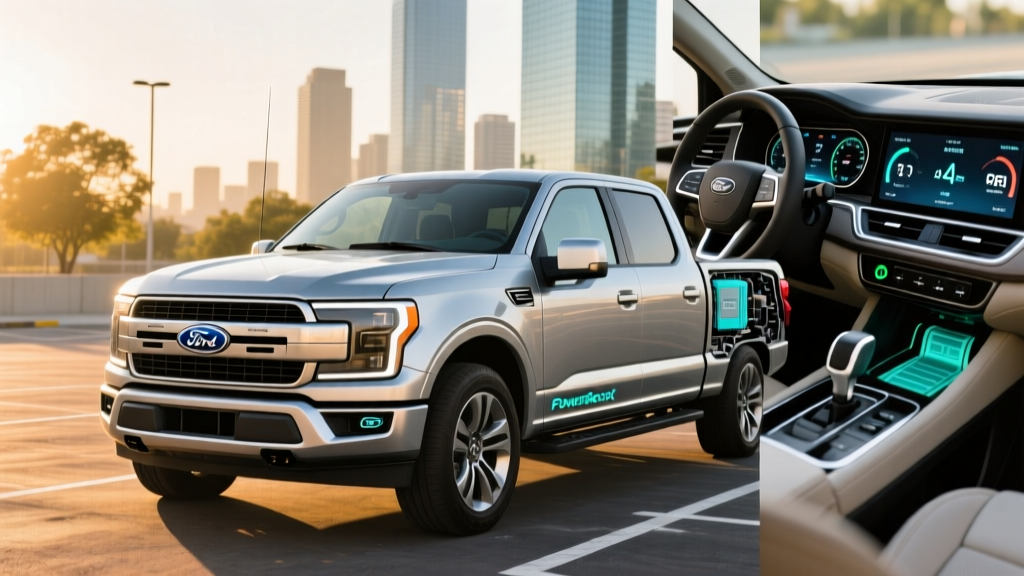
The Ford F-150 PowerBoost stands alone in 2026 as the only conventional full-hybrid pickup on the market. Toyota killed the Tundra Hybrid's availability in most trims, Ram hasn't electrified the 1500, and the Chevy Silverado Hybrid remains a rumor. That leaves Ford's 3.5-liter twin-turbo V6 paired with a 47-hp electric motor and a 1.5 kWh lithium-ion battery as the default choice for truck buyers who want hybrid efficiency without plugging in.
The result is an EPA-estimated 24 MPG combined — a meaningful gain over the non-hybrid 3.5L EcoBoost's 20 MPG combined — while actually producing more horsepower (430 hp) and torque (570 lb-ft). The trade-off is a roughly $3,000 premium over the equivalent gas powertrain and slightly reduced maximum payload. For high-mileage truck owners, contractors logging highway miles, or anyone who tows regularly and hates fuel stops, the math works out in 2-3 years.
The PowerBoost is a conventional hybrid (HEV), not a plug-in hybrid (PHEV). It charges its small 1.5 kWh battery through regenerative braking and the gasoline engine. You never plug it in. There is no electric-only driving mode for meaningful distances. If you want a plug-in truck with electric-only range, you'd look at the Ford F-150 Lightning (full EV) or wait for upcoming PHEV pickups from rival brands.
EPA Fuel Economy and Real-World MPG
According to fueleconomy.gov, the 2026 Ford F-150 PowerBoost with 4WD carries the following EPA ratings:
| Metric | 2WD (RWD) | 4WD |
|---|---|---|
| City MPG | 25 | 23 |
| Highway MPG | 26 | 24 |
| Combined MPG | 25 | 24 |
| Fuel Tank | 30.6 gal | 30.6 gal |
| Total Range | ~765 miles | ~735 miles |
Hybrids typically exceed their EPA city rating in stop-and-go driving because regenerative braking recaptures energy the gas engine would waste. Owner-reported data on Fuelly and F-150 forums consistently shows 4WD PowerBoost owners averaging 22-26 MPG combined in mixed driving. Highway-only trips at 75+ mph tend to drop to 20-22 MPG — aerodynamics dominate at speed, and the hybrid system contributes less. City-heavy commutes with frequent stops can push 26-28 MPG in the 2WD model. Towing a 5,000-lb trailer drops economy to roughly 12-15 MPG regardless of powertrain.
Powertrain: Engine, Motor, and Performance Specs
The PowerBoost system pairs Ford's 3.5-liter twin-turbo EcoBoost V6 with a 35 kW (47 hp) electric motor integrated into the 10-speed automatic transmission. Combined output lands at 430 horsepower and 570 lb-ft of torque — figures that beat the standard 3.5L EcoBoost (400 hp / 500 lb-ft) and rival some V8 configurations from competitors.
| Specification | Value |
|---|---|
| Engine | 3.5L Twin-Turbo V6 |
| Electric Motor | 35 kW (47 hp) |
| Combined Output | 430 hp / 570 lb-ft |
| Transmission | 10-speed automatic |
| Hybrid Battery | 1.5 kWh lithium-ion |
| 0-60 mph (4WD) | ~5.7 seconds |
| Max Towing (properly equipped) | 11,200 lbs |
| Max Payload | ~1,730 lbs (varies by trim) |
| Pro Power Onboard | Up to 7.2 kW (optional) |
The Pro Power Onboard feature deserves special mention: the hybrid's battery and inverter can supply up to 7.2 kW of continuous 120V/240V power through bed-mounted outlets. That's enough to run a job-site table saw, welder, or power an entire tailgate — a genuinely useful capability that gas-only F-150s can't match without a separate generator.
HEV vs PHEV vs Full EV: Which F-150 Fits You?
Ford offers three electrification paths in the F-150 lineup. Understanding the distinction prevents costly purchase mistakes:
| Feature | PowerBoost HEV | Lightning (BEV) |
|---|---|---|
| Plug-in required? | No | Yes |
| Electric-only range | None (motor assists only) | 230-320 mi (EPA) |
| Combined efficiency | 24 MPG | 70-78 MPGe |
| Total range | ~735 mi | 230-320 mi |
| Home charging needed? | No | Yes (Level 2 strongly recommended) |
| Federal tax credit (§30D) | No | Up to $7,500* |
| Starting MSRP (2026) | ~$54,000 | ~$52,000 |
| Max towing | 11,200 lbs | 10,000 lbs |
*Federal tax credit eligibility for the F-150 Lightning depends on IRS §30D rules including buyer income caps, MSRP limits, battery critical-mineral sourcing, and point-of-sale transfer. Verify current eligibility at irs.gov before purchasing. Conventional hybrids like the PowerBoost do not qualify for §30D credits.
Choose the PowerBoost HEV if: You drive 15,000+ miles per year, tow frequently, don't have reliable home charging access, or need 700+ miles of range for remote job sites. The hybrid premium pays back in fuel savings within 2-4 years for high-mileage drivers.
Choose the Lightning (BEV) if: You have Level 2 home charging, mostly drive under 250 miles daily, want the lowest operating cost per mile, and qualify for the federal tax credit. Towing range drops significantly — plan for 100-150 miles when pulling a heavy trailer.
Choose the gas EcoBoost if: Your annual mileage is under 10,000 miles, the hybrid premium doesn't justify fuel savings in your timeline, or you need maximum payload capacity.
Pricing, Trims, and Tax Credit Eligibility
The PowerBoost hybrid is available on Lariat, King Ranch, Platinum, and Limited trims — it is not offered on the base XL or XLT. This positions it as a premium feature, and pricing reflects that:
| Trim (4WD SuperCrew) | Approx. MSRP | PowerBoost Availability |
|---|---|---|
| Lariat | ~$58,500 | Optional (+$3,000 over 3.5L EB) |
| King Ranch | ~$68,000 | Optional (+$3,000) |
| Platinum | ~$72,000 | Standard |
| Limited | ~$86,000 | Standard |
Tax credit reality check: The F-150 PowerBoost is a conventional hybrid — it does not qualify for the federal §30D new clean vehicle credit (up to $7,500). That credit is reserved for plug-in vehicles (BEVs and PHEVs) meeting battery-sourcing and income requirements. Some states offer modest hybrid incentives (check your state energy office), but there is no federal purchase incentive for HEVs in 2026.
Battery Warranty, Reliability, and Replacement Cost
Ford covers the PowerBoost hybrid battery for 8 years or 100,000 miles (whichever comes first) in most states, and 10 years or 150,000 miles in California Air Resources Board (CARB) states including CA, NY, MA, WA, OR, and others adopting CARB standards. This warranty covers defects and capacity loss below a defined threshold — typically 60-70% of original capacity.
The 1.5 kWh hybrid battery in the PowerBoost is far smaller than an EV battery, which means two things: replacement cost is dramatically lower, and degradation has minimal impact on daily driving. Unlike an EV where battery loss means range loss, the PowerBoost's battery primarily smooths power delivery and captures regen energy. Even with significant degradation, the truck drives normally — the gas engine simply runs more often.
Replacement cost estimate: Based on Ford hybrid parts pricing and dealer labor rates, a PowerBoost hybrid battery replacement runs approximately $2,500-$4,000 out of warranty. This is a fraction of EV battery replacements ($10,000-$20,000+) and comparable to a major engine service on a conventional truck.
Reliability track record: Ford's hybrid system has been in production since the Escape Hybrid in 2005, and the 3.5L EcoBoost V6 has been in the F-150 since 2011. The PowerBoost-specific components (electric motor integrated into the transmission, inverter, battery pack) have been in the field since the 2021 model year. While long-term 10-year data on the PowerBoost specifically isn't yet available, Ford's hybrid architecture has proven durable in taxi and fleet service. The NHTSA lists any active recalls or technical service bulletins — check before purchasing a used example.
Who Should Buy the F-150 PowerBoost Hybrid?
✓ Strong Fit
- Contractors and tradespeople driving 20,000+ miles/year
- Owners who tow 3,000-8,000 lbs regularly and want fewer fuel stops
- Fleet operators calculating total cost of ownership
- Rural drivers far from EV charging infrastructure
- Job-site users who need Pro Power Onboard (7.2 kW)
- Buyers who want hybrid efficiency without changing fueling habits
✗ Poor Fit
- Low-mileage drivers (under 8,000 mi/yr — hybrid premium won't pay back)
- Buyers expecting plug-in electric-only driving
- Those seeking federal tax credits (not eligible)
- Maximum payload seekers (hybrid adds ~200 lbs, reducing payload)
- XL/XLT trim shoppers (PowerBoost not available on base trims)
- Off-road enthusiasts (hybrid adds complexity to underbody; consider Raptor instead)
Frequently Asked Questions
How many MPG does the Ford F-150 hybrid get?
The EPA rates the 2026 F-150 PowerBoost 4WD at 23 city / 24 highway / 24 combined MPG. The 2WD model achieves 25/26/25. Real-world owner averages typically fall between 22-26 MPG combined, with city-heavy driving yielding the best results due to regenerative braking.
Does the F-150 hybrid need to be plugged in?
No. The PowerBoost is a conventional hybrid (HEV), not a plug-in hybrid. The 1.5 kWh battery charges itself through regenerative braking and the gasoline engine. You fuel it exactly like a regular F-150 at any gas station.
Can the F-150 hybrid drive on electric power alone?
Only at very low speeds for extremely short distances (under a mile, typically in parking lots). The electric motor primarily assists the gas engine during acceleration and captures energy during braking. There is no meaningful electric-only range — if that's what you need, consider the F-150 Lightning (full EV) or wait for a future PHEV pickup.
Does the F-150 PowerBoost qualify for a tax credit?
Not the federal §30D clean vehicle credit — that applies only to plug-in vehicles (BEVs and PHEVs). The PowerBoost is a conventional hybrid and receives no federal purchase incentive. Some states may offer small hybrid rebates; check your state energy office. The F-150 Lightning (full EV) may qualify for up to $7,500 depending on income, MSRP caps, and battery sourcing rules per IRS guidelines.
How much does it cost to replace the F-150 hybrid battery?
Out-of-warranty replacement runs approximately $2,500-$4,000 including parts and labor. The battery is covered for 8 years/100,000 miles (10 years/150,000 miles in CARB states). Because the hybrid battery is only 1.5 kWh — compared to 75-130 kWh in an EV — replacement cost is manageable and comparable to a major conventional repair.
Is the F-150 hybrid reliable for towing?
Yes. The PowerBoost is rated to tow up to 11,200 lbs when properly equipped — competitive with the gas 3.5L EcoBoost. The hybrid system's instant electric torque actually improves low-speed trailer maneuvering. Expect fuel economy to drop to 12-15 MPG while towing a 5,000-lb load, which is typical for any full-size truck regardless of powertrain.
How does the PowerBoost compare to the F-150 Lightning?
The PowerBoost offers 735 miles of total range, no plug-in requirement, and higher towing capacity (11,200 vs 10,000 lbs). The Lightning offers 230-320 miles of electric range, far lower per-mile fuel cost (~$0.04/mile electricity vs ~$0.16/mile gas), and potential $7,500 federal tax credit. The Lightning suits home-charging owners with predictable routes; the PowerBoost suits high-mileage, towing-heavy, or rural drivers without charging access.