Ford F-150 PowerBoost MPG: The Numbers That Actually Matter
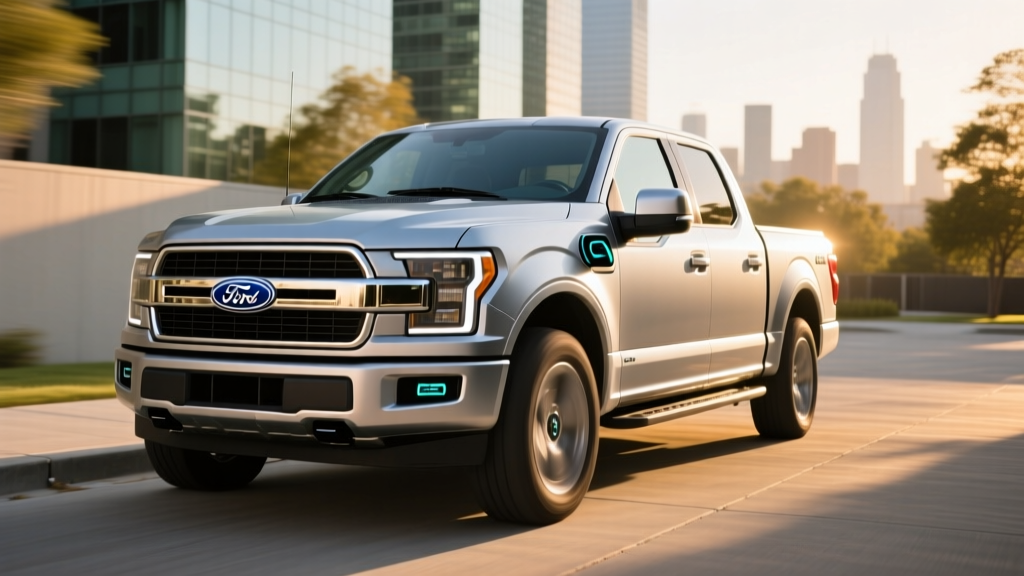
The Ford F-150 PowerBoost hybrid pairs a 3.5-liter twin-turbo V6 with a 47-hp electric motor integrated into the 10-speed automatic transmission, delivering 430 combined horsepower and 570 lb-ft of torque. But for most truck shoppers researching Ford F-150 hybrid miles per gallon, the headline figure is the EPA rating: 25 mpg combined for the 4x2 model. That's roughly a 30% improvement over the non-hybrid 3.5L EcoBoost V6, which returns 19-20 mpg combined depending on configuration.
The PowerBoost is a conventional hybrid (HEV), not a plug-in. It never needs to be plugged in — the 1.5 kWh lithium-ion battery recharges through regenerative braking and the gasoline engine. You fuel it exactly like a standard F-150, and the hybrid system works invisibly in the background.
| Drivetrain | City MPG | Highway MPG | Combined MPG | Estimated Range (mi) |
|---|---|---|---|---|
| 4x2 | 25 | 26 | 25 | ~750 |
| 4x4 | 23 | 24 | 23 | ~690 |
Source: fueleconomy.gov — EPA estimates. Your mileage will vary based on driving conditions, payload, and towing.
Real-World MPG vs. EPA Sticker: What Owners Actually See
EPA estimates are a starting point, not a guarantee. The PowerBoost's real-world fuel economy depends heavily on how you drive and what you haul.
- City/suburban driving (unloaded): 22-25 mpg — hybrids shine here, with the electric motor handling low-speed acceleration and stop-and-go traffic.
- Highway cruising (unloaded, 70 mph): 21-24 mpg — the hybrid advantage narrows at sustained high speeds where aerodynamic drag dominates.
- Mixed daily driving (unloaded): 22-24 mpg for 4x4 models.
- Towing a 5,000-lb trailer: 12-15 mpg — towing demolishes fuel economy in every truck, hybrid included. The PowerBoost's electric motor helps smooth acceleration under load, but don't expect dramatic MPG gains while pulling heavy.
- Bed loaded with 1,000+ lbs payload: 18-20 mpg — payload hits efficiency less than towing but still noticeably.
The hybrid system's biggest efficiency advantage appears in city driving, where regenerative braking recaptures energy during deceleration and the electric motor supplements the gas engine during acceleration. Owners who do mostly suburban and urban driving report consistently beating the EPA city figure by 1-2 mpg. Highway-only drivers see less benefit, sometimes falling 1-2 mpg below the EPA highway estimate.
Cold weather reduces fuel economy by roughly 10-15% in winter months — the engine runs more frequently to generate cabin heat, and the battery is less efficient at low temperatures. This penalty affects all hybrids and gas vehicles, not just the PowerBoost.
PowerBoost Powertrain: How the Hybrid System Works
Ford's PowerBoost system is a full parallel hybrid. The 3.5L EcoBoost V6 produces 400 hp and 500 lb-ft of torque on its own, while the 47-hp (35 kW) electric motor adds 30 hp and 70 lb-ft at the transmission input. Combined output is 430 hp and 570 lb-ft — more torque than the standard 3.5L EcoBoost and competitive with many V8 configurations.
The 1.5 kWh lithium-ion battery pack sits under the rear seat, preserving bed space and cabin room. It's small by EV standards (a Tesla Model Y carries ~75 kWh), but that's intentional: the battery only needs to store enough energy for short electric-only bursts at low speeds and to buffer regenerative braking energy. The gas engine remains the primary power source.
| Specification | Value |
|---|---|
| Engine | 3.5L twin-turbo V6 (EcoBoost) |
| Engine Output | 400 hp / 500 lb-ft |
| Electric Motor | 47 hp (35 kW) / 70 lb-ft |
| Combined System Output | 430 hp / 570 lb-ft |
| Transmission | 10-speed automatic (modular hybrid) |
| Battery Capacity | 1.5 kWh (lithium-ion) |
| Battery Location | Under rear seat |
| Max Towing Capacity | 12,700 lbs (properly equipped) |
| Pro Power Onboard | Up to 7.2 kW generator output |
| 0-60 mph | ~5.8 seconds (4x4) |
One uniquely practical feature is Pro Power Onboard, available in 2.0 kW and 7.2 kW configurations. The hybrid battery and engine combine to function as a mobile generator, supplying 120V and 240V outlets in the bed. The 7.2 kW version can run power tools, a welder, or even back up essential home circuits during an outage — functionality no conventional gas F-150 offers without a separate generator.
HEV vs. PHEV vs. Full EV: Which F-150 Is Right for You?
Ford currently offers the F-150 in three powertrain configurations relevant to electrified buyers: the PowerBoost hybrid (HEV), and the all-electric F-150 Lightning (BEV). There is no F-150 plug-in hybrid (PHEV) as of the 2026 model year.
| Factor | PowerBoost Hybrid (HEV) | F-150 Lightning (BEV) |
|---|---|---|
| Powertrain Type | Gasoline + electric motor (no plug) | Battery electric only |
| EPA Combined MPG / MPGe | 23-25 mpg | 66-70 MPGe (combined) |
| Total Range | ~690-750 miles | 230-320 miles (EPA) |
| Refueling/Recharging | Gas station, ~5 minutes | Level 2: 10+ hrs; DC fast: 45 min (10-80%) |
| Towing Range Impact | 12-15 mpg towing | Range cut by ~50% while towing heavy |
| Base MSRP (2026) | ~$56,000 (XLT PowerBoost) | ~$55,000 (Lightning Pro) |
| Federal Tax Credit (§30D) | Not eligible | Up to $7,500 (eligibility varies) |
| Best For | Frequent towing, no home charging, long rural trips | Home charging available, daily commuting, lower operating cost |
- Choose the PowerBoost Hybrid if: You tow frequently over long distances, lack access to home Level 2 charging, drive in remote areas with sparse charging infrastructure, or need 700+ miles of range between fill-ups.
- Choose the F-150 Lightning if: You can charge at home, primarily commute and run errands within 150 miles of home, want the lowest per-mile fuel cost, and tow only occasionally or locally.
- Choose the standard EcoBoost (gas) if: You want the lowest purchase price, don't drive enough miles per year for fuel savings to matter, or prefer the simplest powertrain with the widest service network.
Pricing, Trim Availability, and Tax Credit Eligibility
The PowerBoost hybrid is not a standalone trim — it's a powertrain option available on select F-150 trims. For the 2026 model year, it's offered on the XLT, Lariat, King Ranch, and Platinum trims. The hybrid powertrain typically adds a $2,500-$3,500 premium over the standard 3.5L EcoBoost, depending on the trim and configuration.
| Trim | Approximate Starting MSRP | PowerBoost Availability |
|---|---|---|
| XLT | ~$56,000 | Available (4x2 and 4x4) |
| Lariat | ~$63,000 | Available (4x2 and 4x4) |
| King Ranch | ~$72,000 | Available (4x4) |
| Platinum | ~$74,000 | Available (4x4) |
Prices include destination charge. Actual dealer pricing may vary. Check Ford's official F-150 page for current build-and-price figures.
Federal tax credit: The F-150 PowerBoost hybrid does not qualify for the IRS §30D Clean Vehicle Credit. That credit applies only to plug-in electric vehicles (BEVs and PHEVs) meeting battery sourcing, MSRP, and buyer income requirements. As a conventional hybrid with no plug, the PowerBoost is ineligible. Some states offer minor hybrid incentives, but these vary widely — check your state energy office or a tax professional for current local programs.
Battery Warranty, Reliability, and Long-Term Ownership Costs
Hybrid battery longevity is the top concern for buyers new to electrified powertrains. Ford backs the F-150 PowerBoost's hybrid battery and related components with an 8-year / 100,000-mile warranty (whichever comes first), which meets the federal minimum for hybrid/emission components. In states that follow California Air Resources Board (CARB) standards — including California, New York, Massachusetts, and others — the hybrid battery warranty extends to 10 years / 150,000 miles.
- Standard warranty: 8 years / 100,000 miles (hybrid battery + components)
- CARB-state warranty: 10 years / 150,000 miles
- Powertrain warranty: 5 years / 60,000 miles (engine, transmission)
- Battery replacement cost (out of warranty): Estimated $3,000-$5,000 for the hybrid battery pack — significantly less than a full EV battery replacement because the pack is only 1.5 kWh
- Expected battery lifespan: Most modern hybrid batteries last 150,000-200,000+ miles before significant degradation. Toyota and Ford hybrid systems have strong long-term track records.
The 1.5 kWh battery in the PowerBoost is far smaller and less stressed than an EV battery. It operates in a narrow state-of-charge window (roughly 40-60%), which minimizes degradation. The battery never fully charges or fully depletes during normal operation — the hybrid control system manages this to maximize lifespan.
Reliability data for the PowerBoost specifically is still maturing (introduced for the 2021 model year), but Ford's hybrid system shares architecture with the Escape Hybrid and Maverick Hybrid, both of which have shown solid durability. The 3.5L EcoBoost V6 is one of Ford's most proven engines, now in its third generation with extensive real-world mileage data.
Insurance costs for the F-150 PowerBoost are typically 5-10% higher than the standard EcoBoost F-150, reflecting the higher replacement cost of hybrid components and the vehicle's greater MSRP. Get quotes from your insurer before purchasing to budget accurately.
Does the Hybrid Premium Pay Off? Fuel Cost Savings Breakdown
Whether the $2,500-$3,500 hybrid premium is worth it depends on your annual mileage and fuel costs. Here's a practical calculation:
| Metric | PowerBoost Hybrid (23 mpg) | 3.5L EcoBoost V6 (19 mpg) |
|---|---|---|
| Annual miles driven | 15,000 | 15,000 |
| Gallons per year | 652 | 789 |
| Annual fuel cost ($3.50/gal) | $2,282 | $2,762 |
| 5-year fuel cost | $11,410 | $13,810 |
| 5-year fuel savings (hybrid) | $2,400 | |
Based on EPA combined MPG and $3.50/gallon regular unleaded. Adjust for your local fuel prices and actual driving mix. Source for MPG: fueleconomy.gov.
At 15,000 miles per year and $3.50/gallon gas, the PowerBoost saves roughly $480/year in fuel compared to the standard 3.5L EcoBoost 4x4. Over five years, that's about $2,400 — close to the hybrid powertrain premium. Drivers who cover more miles, pay more for gas, or do more city driving (where the hybrid advantage is greatest) will break even faster. Lower-mileage drivers may not recoup the premium through fuel savings alone, though the hybrid's additional torque, Pro Power Onboard capability, and potentially higher resale value add non-fuel benefits.
Pros, Cons, and the Bottom Line on F-150 Hybrid Efficiency
- 23-25 mpg combined — best-in-class for a full-size truck with this power output
- 570 lb-ft torque, 430 hp — no performance trade-off for efficiency
- Pro Power Onboard (7.2 kW) turns the truck into a mobile generator
- No plug-in required — zero infrastructure or behavior change
- 8-yr/100,000-mi hybrid battery warranty (10 yr in CARB states)
- 700+ mile total range between fill-ups
- $2,500-$3,500 premium over standard EcoBoost
- No federal tax credit (HEV, not PHEV or BEV)
- Real-world highway MPG close to non-hybrid — biggest gains in city driving
- Towing fuel economy still drops to 12-15 mpg
- Not available on base XL trim
- Hybrid battery replacement cost ($3,000-$5,000) after warranty
The Ford F-150 PowerBoost delivers meaningful fuel savings for a full-size truck — particularly for drivers whose daily routine involves frequent stops, suburban errands, and moderate-speed driving. If your truck use leans heavily toward unloaded commuting and city work, the hybrid system earns its premium. If you primarily tow heavy trailers long distances, the MPG advantage narrows considerably, and your payback period extends.
Frequently Asked Questions
How many miles per gallon does the Ford F-150 hybrid actually get?
The EPA rates the 2026 F-150 PowerBoost 4x2 at 25 city / 26 highway / 25 combined mpg, and the 4x4 at 23 city / 24 highway / 23 combined mpg. In real-world driving, expect 22-25 mpg mixed for the 4x4, with city driving yielding the best results and heavy towing dropping efficiency to 12-15 mpg.
Do you have to plug in the Ford F-150 hybrid?
No. The F-150 PowerBoost is a conventional hybrid (HEV), not a plug-in hybrid. The small 1.5 kWh battery charges through regenerative braking and the gasoline engine. You refuel at a gas station exactly like a standard F-150.
Does the F-150 hybrid qualify for a federal tax credit?
No. The IRS §30D Clean Vehicle Credit applies only to plug-in electric vehicles (battery-electric and plug-in hybrids). The F-150 PowerBoost is a conventional hybrid with no plug-in capability, making it ineligible for the federal credit. Check with your state for any local hybrid incentives.
How long will the F-150 hybrid battery last?
Ford warranties the hybrid battery for 8 years/100,000 miles (10 years/150,000 miles in CARB states). Based on data from Ford and Toyota hybrid systems, most modern hybrid batteries last 150,000-200,000+ miles before needing replacement. The PowerBoost's 1.5 kWh pack operates in a narrow charge window, which reduces stress and extends lifespan.
What does it cost to replace the F-150 PowerBoost hybrid battery?
Out-of-warranty replacement for the 1.5 kWh hybrid battery is estimated at $3,000-$5,000 including parts and labor. This is far less than an EV battery replacement because the pack is much smaller. Many hybrid batteries never need replacement during typical ownership.
Is the F-150 hybrid good for towing?
The PowerBoost offers a maximum towing capacity of 12,700 lbs (properly equipped), which is competitive with the standard 3.5L EcoBoost. The electric motor's instant torque smooths acceleration under load. However, fuel economy while towing drops to roughly 12-15 mpg — similar to non-hybrid trucks. The hybrid advantage is modest when towing heavy.
How does the F-150 hybrid compare to the F-150 Lightning electric truck?
The Lightning offers lower per-mile operating costs, instant torque, and a frunk, but has 230-320 miles of EPA range that can be cut in half while towing. The PowerBoost offers 690-750 miles of range, faster refueling, and better towing practicality for long trips, but higher fuel costs and no tax credit. Choose the Lightning for home-charging commuters; choose the PowerBoost for long-distance towing and rural use.