Quick Verdict: The Original Hybrid SUV Pioneer in 2026
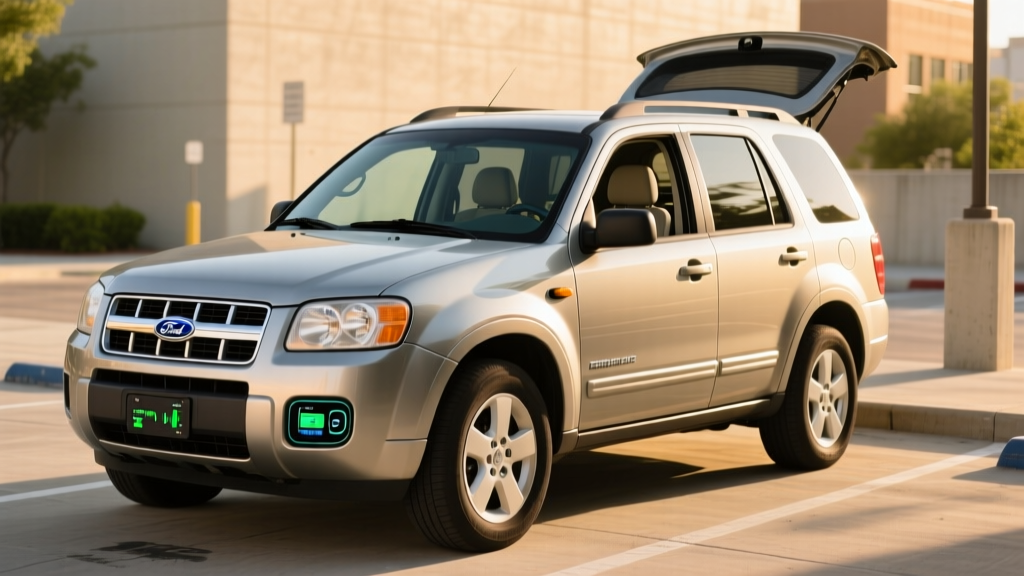
When Ford launched the Escape Hybrid in 2005, it became the first hybrid SUV on the American market — beating Toyota's Highlander Hybrid to showrooms by months. Two decades later, the 2005 Escape Hybrid remains a fascinating case study in early hybrid engineering and a budget-friendly used option for drivers who want hybrid efficiency without a plug. If you're evaluating a surviving 2005 Escape Hybrid in 2026, this guide covers exactly what you need to know about its fuel economy, battery lifespan, real-world reliability, and whether it still makes financial sense against modern hybrids and EVs.
Important distinction: The 2005 Ford Escape Hybrid is a conventional hybrid (HEV), not a plug-in hybrid (PHEV). It charges its own battery through regenerative braking and the gasoline engine — you never plug it in. Ford did not offer a plug-in Escape until the 2020 Escape PHEV, which is an entirely different vehicle. This article focuses exclusively on the original 2005 HEV model.
Fuel Economy: EPA Ratings and Real-World MPG
The 2005 Ford Escape Hybrid's fuel economy was rated by the EPA under the older pre-2008 testing methodology. When adjusted to modern standards, here is what you get:
| Configuration | City MPG | Highway MPG | Combined MPG |
|---|---|---|---|
| FWD Hybrid | 33 | 29 | 31 |
| AWD (4x4) Hybrid | 33 | 29 | 31 |
Source: fueleconomy.gov
Real-World MPG vs. EPA: What Owners Actually Report
Because the 2005 Escape Hybrid uses a full-hybrid system similar to Toyota's synergy drive (Ford licensed several Toyota patents for this generation), it tends to exceed EPA city estimates in real-world stop-and-go driving. Owners on Fuelly and hybrid forums commonly report:
- City driving: 30–36 MPG (hybrid systems shine in traffic where regen braking and electric-only low-speed operation dominate)
- Highway driving: 26–30 MPG (the 2.3L Atkinson-cycle engine runs more often at sustained speeds)
- Combined average: 28–33 MPG depending on driving mix, tire condition, and climate
2026 reality check: A 20-year-old hybrid battery that has degraded will reduce electric-assist time, dropping real-world MPG by 2–5 MPG below original figures. Cold weather (below 32°F) also forces the gasoline engine to run longer for cabin heat, cutting city MPG by roughly 10–15%. Expect 27–30 MPG combined in winter for northern-state drivers.
Powertrain: How the Original Hybrid System Works
The 2005 Escape Hybrid pairs a 2.3-liter Atkinson-cycle inline-4 engine with an electric motor/generator through a planetary gearset — the same eCVT architecture Toyota used in the Prius. This is not a traditional transmission; it seamlessly blends engine and motor power without fixed gear ratios.
| Component | Specification |
|---|---|
| Gasoline Engine | 2.3L Atkinson-cycle I4, 133 HP @ 6,000 RPM |
| Electric Motor | Permanent-magnet AC synchronous, 94 HP (70 kW) |
| Combined System Output | 155 HP (net) |
| Transmission | eCVT (planetary power-split device) |
| Drivetrain Options | FWD or AWD (eCVT-driven rear axle on AWD) |
| 0–60 MPH (estimated) | ~10.8 seconds |
| Fuel Tank | 16.5 gallons |
| Total Driving Range | ~510 miles (at 31 MPG combined) |
HEV vs. PHEV: Where the 2005 Escape Fits
Conventional Hybrid (HEV) — 2005 Escape Hybrid:
- Battery: 1.3 kWh nickel-metal hydride (NiMH) — very small
- Electric-only driving: Up to ~25 MPH for short distances (under 1 mile)
- Plug-in charging: No — self-charging via regen and engine
- Gasoline required: Yes, always
Plug-in Hybrid (PHEV) — 2020+ Escape PHEV for comparison:
- Battery: 14.4 kWh lithium-ion
- Electric-only range: 37 miles (EPA)
- Plug-in charging: Yes — Level 1 (120V) or Level 2 (240V)
- Gasoline required: Only beyond electric range
The 2005 Escape Hybrid's NiMH battery is far too small for meaningful electric-only driving. Think of the hybrid system as an efficiency multiplier, not an electric car. The motor assists the engine during acceleration (the most fuel-thirsty phase) and captures energy during braking that would otherwise be wasted as heat.
Battery Lifespan, Degradation, and Replacement Cost
The 2005 Escape Hybrid uses a nickel-metal hydride (NiMH) high-voltage battery pack manufactured by Sanyo. It consists of 250 individual cells in a sealed module mounted beneath the cargo floor. NiMH chemistry was the standard for early hybrids — the Toyota Prius used it for over a decade before switching to lithium-ion.
Battery Warranty & Lifespan — 2005 Escape Hybrid
Original warranty: 8 years / 100,000 miles (10 years / 150,000 miles in CARB states including CA, NY, MA, and others)
Warranty status in 2026: All original factory battery warranties have expired.
Typical NiMH lifespan: 150,000–200,000 miles before significant capacity loss, though many units survive 200,000+ miles with moderate degradation.
Replacement cost (2026):
- New OEM battery from Ford: $2,500–$3,500 (parts only, limited availability)
- Remanufactured battery (GreenTech, Dorman): $1,200–$2,000
- Used/salvage battery: $400–$800 (risky — unknown remaining life)
- Individual cell replacement (specialist shops): $600–$1,200
- Labor for swap: $300–$600 (2–3 hours)
Signs Your 2005 Escape Hybrid Battery Is Failing
At 20+ years old, most surviving 2005 Escape Hybrids have either had a battery replacement or are running on degraded cells. Watch for:
- Reduced MPG: A 3–6 MPG drop from your baseline often signals cell imbalance
- More frequent engine cycling: The engine starts and stops more than usual because the battery can't sustain electric assist
- State-of-charge (SoC) gauge swings: Rapid jumps between charge levels on the dashboard display
- Diagnostic trouble codes: P0A80 (replace hybrid battery pack) or individual cell-balance codes
Pro tip for 2026 buyers: Before purchasing any 2005 Escape Hybrid, have a hybrid-qualified mechanic perform a battery load test using a scan tool that reads individual cell voltages. A healthy pack should show no more than 0.2V variance between the highest and lowest cell. Anything above 0.3V variance indicates cell imbalance and near-term failure.
Reliability and Long-Term Ownership
The 2005 Escape Hybrid's powertrain has proven surprisingly durable, largely because the eCVT planetary gearset has no clutch packs, bands, or torque converter to wear out — it's one of the most mechanically simple "transmissions" ever put in a production vehicle. The 2.3L Atkinson-cycle engine is under-stressed (running below its peak power most of the time), which contributes to longevity.
Common Issues Beyond the Hybrid Battery
- Brake actuator assembly: The electro-hydraulic brake system (which enables regen braking) can develop faults around 120,000–160,000 miles. Replacement runs $800–$1,400.
- 12V auxiliary battery: Like all cars, the standard 12V battery needs replacement every 4–6 years. The 2005 Escape Hybrid is sensitive to a weak 12V battery — it can prevent the high-voltage system from engaging.
- Coolant system: The hybrid system has a separate inverter coolant loop. Neglected coolant changes can lead to inverter failure ($1,500–$2,500 replacement).
- Rust: The 2005–2007 Escape platform is prone to rear subframe and rocker panel corrosion, especially in salt-belt states. This is a body/chassis issue, not hybrid-specific, but it kills many otherwise-running examples.
Is the 2005 Escape Hybrid Reliable in 2026?
For its age, yes — if maintained. The hybrid components are actually among the most reliable parts of the vehicle. The risk with any 20-year-old car is deferred maintenance, corrosion, and parts availability. Ford still supports some hybrid-specific parts, but availability is narrowing. Independent hybrid specialists (particularly those who service Priuses) can typically work on the Escape Hybrid's power-split system.
Tax Credits and Purchase Economics in 2026
The 2005 Ford Escape Hybrid originally qualified for a federal income tax credit of up to $2,600 under the Energy Policy Act of 2005 — but that credit was phased out for Ford after the company hit the 60,000-unit manufacturer cap in 2006. In 2026, there are no federal tax credits available for purchasing a used 2005 Escape Hybrid.
Current Federal Incentive Landscape
Under IRS §30D, the Used Clean Vehicle Credit provides up to $4,000 (or 30% of the sale price, whichever is lower) for qualifying used EVs and PHEVs. However, the 2005 Escape Hybrid is a conventional HEV — it does not qualify for the used-vehicle credit, which requires the vehicle to have a plug-in capability and a minimum 4 kWh battery.
For buyers comparing a used 2005 Escape Hybrid against a newer used PHEV or EV:
- A used 2020+ Escape PHEV may qualify for up to $4,000 under the used-clean-vehicle credit (subject to income caps: $75K single / $150K married, and a $25,000 maximum sale price)
- A used 2020+ EV (Chevy Bolt, Nissan Leaf) similarly qualifies under the same rules
- The 2005 HEV qualifies for no federal incentive
Source: IRS Used Clean Vehicle Credit
Total Cost of Ownership: 2005 Escape Hybrid vs. Alternatives
| Vehicle | Purchase Price | Annual Fuel | Annual Insurance | Maintenance/yr | Year 1 Total |
|---|---|---|---|---|---|
| 2005 Escape Hybrid (used) | $2,500–$5,000 | $1,400–$1,700 | $800–$1,200 | $600–$1,000 | $5,300–$8,900 |
| 2020 Escape PHEV (used) | $16,000–$21,000 | $600–$1,000 | $1,100–$1,500 | $300–$500 | $18,000–$24,000 |
| 2022 Chevy Bolt EV (used) | $14,000–$18,000 | $500–$700 | $1,200–$1,600 | $200–$400 | $15,900–$20,700 |
| 2005 Escape Gas (non-hybrid) | $2,000–$4,000 | $1,900–$2,300 | $800–$1,200 | $700–$1,100 | $5,400–$8,600 |
Fuel estimates based on 12,000 miles/year, $3.20/gallon regular, and $0.14/kWh home electricity. Actual costs vary by region. Insurance estimates are approximate — get quotes for your ZIP code.
Who Should Buy the 2005 Escape Hybrid in 2026?
Decision Framework
Choose the 2005 Escape Hybrid if:
- Your budget is under $5,000 and you need an SUV with AWD capability
- You drive mostly in the city (under 35 MPH) where hybrid efficiency peaks
- You have no access to plug-in charging (apartment, street parking, no garage outlet)
- You want a simple hybrid with no plug-in routine and minimal learning curve
- You accept the risk of a potential $1,500–$3,000 battery replacement
Choose a used PHEV or EV instead if:
- You can charge at home (even a 120V outlet works for PHEVs overnight)
- Your daily commute is under 30 miles (a PHEV covers this on electricity alone)
- You want to qualify for the $4,000 used-vehicle federal tax credit
- You want modern safety features (backup camera, blind-spot monitoring, AEB — none of which the 2005 Escape has)
- You plan to keep the vehicle 5+ years (parts availability will continue shrinking)
Choose a gas-only SUV if:
- You drive primarily highway miles (hybrid advantage shrinks to near-zero above 65 MPH)
- You live in a salt-belt state and corrosion is a major concern on older vehicles
- You want the lowest possible upfront cost and can find a well-maintained gas Escape for under $3,000
Frequently Asked Questions
How many MPG does the 2005 Ford Escape Hybrid get?
The EPA rates the 2005 Escape Hybrid at 33 MPG city, 29 MPG highway, and 31 MPG combined for both FWD and AWD configurations. In real-world 2026 driving, expect 28–33 MPG combined depending on battery condition, driving style, and climate. City driving with a healthy battery can yield 34–36 MPG.
Does the 2005 Escape Hybrid need to be plugged in?
No. The 2005 Escape Hybrid is a conventional hybrid (HEV). It charges its own small battery through regenerative braking and the gasoline engine. You simply fill it with regular unleaded gasoline and drive. There is no plug, no charging cable, and no electric-only commuting range to manage.
How much does it cost to replace the hybrid battery?
In 2026, expect to pay $1,500–$3,500 total for a hybrid battery replacement on the 2005 Escape Hybrid. Remanufactured packs from aftermarket suppliers run $1,200–$2,000 for the battery plus $300–$600 in labor. New OEM batteries are scarce and cost $2,500–$3,500 for parts alone. Some specialist shops can replace individual failed cells for $600–$1,200, extending the pack's life at lower cost.
Is the 2005 Escape Hybrid a good buy in 2026?
It can be — at the right price and with a verified battery. At $2,500–$5,000, it's one of the cheapest hybrid SUVs available on the used market, and its city MPG still beats most non-hybrid crossovers. However, it lacks modern safety technology, the battery is a financial risk, and parts availability is declining. Budget $1,000–$2,000 beyond the purchase price for immediate maintenance needs and potential battery work.
Hybrid vs. PHEV vs. EV — which fits me?
If you cannot charge at home and drive mostly in the city, a conventional hybrid (HEV) like the 2005 Escape makes sense. If you can plug in at home and commute under 30 miles daily, a PHEV gives you electric-only weekday driving with gas-engine backup for road trips. If you can charge at home, drive under 250 miles daily, and want the lowest operating cost, a full EV eliminates gasoline entirely. The 2005 Escape Hybrid is a no-plug, no-compromise option for drivers who simply want better MPG without changing their fueling habits.
Does the 2005 Escape Hybrid qualify for any tax credit?
No. The original federal tax credit for the 2005 Escape Hybrid (up to $2,600) expired when Ford hit the manufacturer cap in 2006. In 2026, no federal, state, or local incentives apply to the purchase of a used conventional hybrid. Only plug-in vehicles (PHEVs and EVs) qualify for current federal credits under IRS §25E.