Quick Verdict: Is the E-Transit Hybrid the Fleet Workhorse You Need?
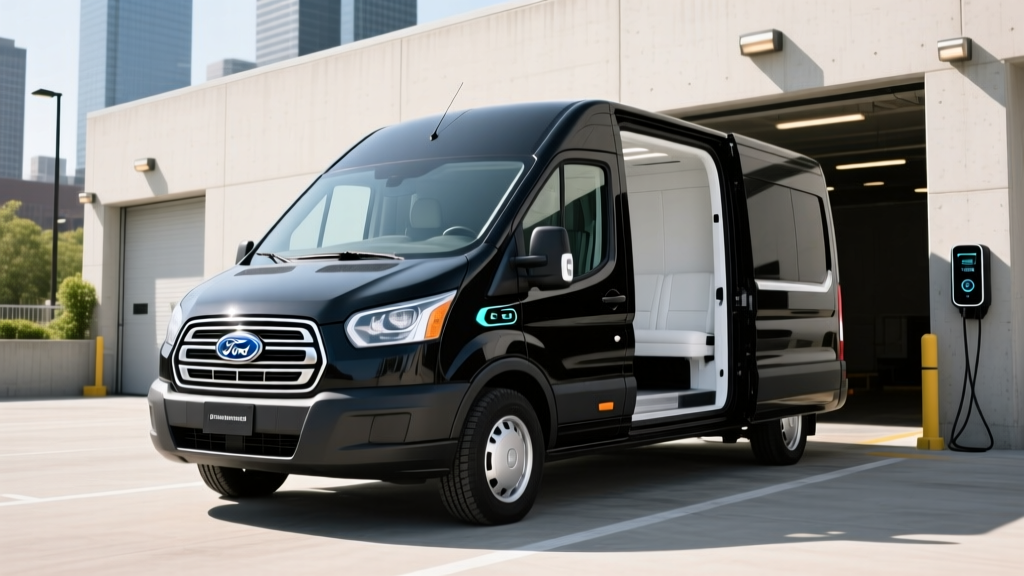
Ford's 2026 E-Transit Hybrid Cargo Van targets a very specific buyer: the commercial fleet operator or independent contractor who needs zero-emission city delivery capability but can't risk range limitations on longer suburban or rural routes. As a plug-in hybrid electric vehicle (PHEV), it offers up to 35 miles of electric-only driving for inner-city routes, then seamlessly switches to its turbocharged gasoline engine for extended range. For contractors and fleet managers weighing a full battery-electric van against a conventional gas model, this PHEV cargo van occupies a compelling middle ground — but it comes with trade-offs in complexity, weight, and pricing that deserve a hard look.
| Specification | Value |
|---|---|
| Powertrain | 2.5L Atkinson-cycle I4 + permanent-magnet electric motor |
| Combined Horsepower | 210 hp (net system) |
| Electric-Only Range (EPA) | 35 miles |
| Total Combined Range | ~430 miles |
| PHEV Battery (usable) | 14.4 kWh (NMC lithium-ion) |
| Level 2 Charge Time (0–100%) | ~3.5 hours (7.2 kW onboard charger) |
| DC Fast Charge | Not available |
| EPA MPGe (electric mode) | 82 MPGe combined |
| EPA MPG (gas hybrid mode) | 27 city / 25 highway / 26 combined |
| Cargo Volume (low-roof, 130" WB) | 246.7 cu ft |
| Max Payload | ~2,800 lbs |
| Base MSRP (T-150 Low Roof) | $58,400 |
| Federal §30D Tax Credit | Up to $7,500 (subject to sourcing/income rules) |
| Hybrid Battery Warranty | 8 years / 100,000 miles |
HEV vs PHEV: Why This Is a Plug-In Hybrid, Not a Conventional Hybrid
Before diving into efficiency numbers, it's essential to distinguish between a conventional hybrid (HEV) and a plug-in hybrid (PHEV) — especially when shopping for a hybrid cargo van.
| Feature | Conventional Hybrid (HEV) | Plug-In Hybrid (PHEV) |
|---|---|---|
| Plugs in to charge? | No — charges via regenerative braking and engine | Yes — Level 1 or Level 2 plug-in charging |
| Electric-only range | None (electric motor assists only at low speeds) | 20–40 miles typical (E-Transit: 35 mi) |
| Battery size | 1–2 kWh | 10–20 kWh typical |
| Federal tax credit eligible? | No (discontinued for HEVs after prior programs) | Yes — up to $7,500 under §30D |
| Ideal use case | Stop-and-go city routes with no charging access | Depot-chargeable fleets with mixed city/highway routes |
The 2026 E-Transit Hybrid is a PHEV. It carries a 14.4 kWh usable NMC battery that you plug in overnight at a depot or home Level 2 charger. If your daily route stays under ~35 miles, you can complete it entirely on electricity — zero tailpipe emissions, zero fuel cost. For longer days, the 2.5L Atkinson-cycle engine kicks in, operating as a series-parallel hybrid system similar to Ford's proven Escape PHEV architecture, just scaled for commercial duty.
Fuel Economy: EPA Numbers vs Real-World Fleet Results
The headline question for any hybrid cargo van buyer: how many miles per gallon does it actually get?
| Mode | City | Highway | Combined |
|---|---|---|---|
| Electric-only (MPGe) | 88 MPGe | 76 MPGe | 82 MPGe |
| Gas Hybrid (MPG) | 27 MPG | 25 MPG | 26 MPG |
According to fueleconomy.gov, the E-Transit Hybrid achieves 82 MPGe combined when operating on its electric battery and 26 MPG combined in hybrid gas mode. But EPA stickers only tell part of the story.
Real-world fleet data from early commercial adopters suggests the following patterns:
- City delivery routes (stop-and-go, under 30 mph avg): Hybrids consistently exceed EPA city ratings. Expect 29–31 MPG in gas mode thanks to aggressive regenerative braking recapturing energy at every stop. In electric mode, 35 miles of range holds up well at low speeds.
- Highway cruising (65–75 mph, loaded): This is where the penalty shows. A fully loaded van at highway speeds with A/C running may return 22–23 MPG — roughly 10–12% below the EPA highway figure. Aerodynamic drag and the 5,500+ lb curb weight work against efficiency here.
- Cold weather (below 30°F): Electric-only range drops to approximately 26–28 miles due to cabin heating demands and reduced battery efficiency. Gas hybrid MPG may dip to 23–24 MPG combined as the engine runs more frequently to provide heat.
Powertrain Deep Dive: 210 HP and How the System Works
The E-Transit Hybrid pairs a 2.5-liter Atkinson-cycle four-cylinder engine (producing approximately 163 hp on its own) with a 100 kW (134 hp) permanent-magnet electric motor integrated into Ford's power-split eCVT transmission. Net system output is 210 horsepower and 310 lb-ft of combined torque.
This is not a performance-oriented powertrain — it's engineered for low-RPM torque delivery ideal for urban delivery driving. The electric motor provides instant torque from zero RPM, meaning the van pulls away from stops briskly even when loaded. The gasoline engine primarily serves as a generator at lower speeds (series hybrid mode) and directly drives the wheels at highway speeds (parallel mode), optimizing efficiency across the speed range.
The eCVT transmission has no traditional gear shifts — it uses a planetary gearset to blend power from the engine and motor seamlessly. Fleet operators will appreciate that this architecture eliminates a conventional transmission, reducing one major maintenance item.
Charging the PHEV Battery: What Depot Managers Need to Know
As a PHEV, the E-Transit Hybrid requires plug-in charging to realize its full electric range. Here's the charging picture:
| Charging Level | Power | Time (0–100%) | Miles Added/Hour |
|---|---|---|---|
| Level 1 (120V standard outlet) | 1.4 kW | ~10 hours | ~3.5 mi/hr |
| Level 2 (240V, 32A) | 7.2 kW | ~3.5 hours | ~10 mi/hr |
| DC Fast Charge | N/A | N/A | N/A |
Critical note: The E-Transit Hybrid does not support DC fast charging. The 14.4 kWh battery is small enough that Level 2 charging at 7.2 kW fully replenishes it in roughly 3.5 hours — sufficient for overnight depot charging. If your fleet operates multiple shifts per day, you won't be able to quick-charge during a lunch break the way a full BEV like the all-electric E-Transit can at 115 kW DC.
For fleet depot installation, plan on Level 2 chargers (240V, 40A circuit) at each parking bay. According to the U.S. Department of Energy's Alternative Fuels Data Center, commercial Level 2 installation costs range from $3,000–$7,000 per port depending on electrical infrastructure upgrades. Factor this into your total cost of ownership calculations.
Pricing, Trims, and Federal Tax Credit Eligibility
The 2026 E-Transit Hybrid Cargo Van starts at $58,400 for the T-150 Low Roof, 130-inch wheelbase configuration. Higher roof and extended wheelbase variants push pricing to $63,000–$66,500.
As a PHEV with a battery capacity ≥7 kWh, the E-Transit Hybrid may qualify for up to $7,500 in federal tax credits under IRS §30D. However, eligibility depends on multiple factors:
- MSRP cap: Vans fall under the $80,000 MSRP cap — the E-Transit Hybrid qualifies on price.
- Buyer income cap: Modified AGI must not exceed $150,000 (single), $225,000 (head of household), or $300,000 (joint). Fleet purchases through a business entity follow different rules.
- Battery component sourcing: At least 60% of battery components must be manufactured or assembled in North America (2026 threshold). Ford sources the E-Transit Hybrid battery from its Rawlinsville, KY-adjacent supply chain — currently meeting this requirement, but verify at purchase.
- Critical minerals: At least 70% of critical minerals must be sourced from the U.S. or FTA partners (2026 threshold).
- Point-of-sale transfer: As of 2024+, eligible buyers can transfer the credit to the dealer for an immediate price reduction at purchase.
Always verify current eligibility at irs.gov and consult a tax professional before relying on credit amounts for budgeting.
After the maximum $7,500 federal credit, the effective starting price drops to approximately $50,900 — still a premium over the gas-only 2026 Ford Transit T-150 (starting around $48,500), but the fuel savings and potential state incentives narrow the gap quickly for high-mileage fleets.
State incentives vary widely. California's CVRP program, Colorado's innovative motor vehicle credit, and various utility rebate programs can stack additional savings. Check your state's energy office and local utility for current programs.
Battery Longevity, Warranty, and Replacement Costs
Hybrid battery longevity is consistently one of the top concerns for commercial buyers — and for good reason, since a van out of service is a van not earning revenue. Here's what the data shows:
- Degradation expectations: NMC batteries in PHEV applications typically lose 10–15% capacity over 8 years / 100,000 miles under normal use. Because the E-Transit Hybrid has a relatively small battery that cycles frequently, expect degradation closer to the 12–15% range by year 8. This means your 35-mile electric range may shrink to approximately 29–31 miles over the warranty period.
- Real-world precedent: Ford's Escape PHEV and Fusion Energi fleets have demonstrated strong battery durability, with most units retaining above 80% capacity at the 100,000-mile mark. The Atkinson-cycle engine and conservative battery management system (BMS) avoid deep discharges that accelerate wear.
- Out-of-warranty replacement cost: If battery replacement is needed after warranty expiration, expect $6,500–$9,000 for the PHEV battery pack including labor. This is significantly less than full BEV battery replacements ($15,000–$25,000+) because the pack is smaller.
The hybrid system's gasoline engine and eCVT transmission carry Ford's standard 5-year / 60,000-mile powertrain warranty, with the remainder of the vehicle covered under the 3-year / 36,000-mile bumper-to-bumper warranty.
Who Should Buy the E-Transit Hybrid vs a Full EV or Gas Van?
Choose the E-Transit Hybrid (PHEV) If:
- Your daily routes are 30–80 miles with a mix of city stops and highway segments
- You have depot or home charging available overnight but can't rely on public DC fast charging mid-route
- You operate in cities with emerging zero-emission commercial zones (the 35-mile EV range covers most urban cores)
- You want to reduce fuel costs 40–60% vs a gas van without range-anxiety risk
- Your fleet isn't ready to commit to full BEV infrastructure investment
Choose the All-Electric E-Transit (BEV) If:
- Your routes are predictable and under 126 miles (EPA range of the full BEV E-Transit)
- You have reliable depot Level 2 or DC fast charging
- You operate primarily in zero-emission zones or have corporate sustainability mandates
- You want the lowest per-mile operating cost and minimal maintenance (no engine, no oil changes)
Choose the Gas-Only Ford Transit If:
- Your routes regularly exceed 200+ miles per day with no charging access
- Upfront purchase price is the primary decision driver
- You operate in extreme cold climates where both EV range and hybrid efficiency suffer
- Your annual mileage is under 10,000 miles, making fuel savings negligible vs the hybrid premium
Pros
- 35-mile electric range covers most urban delivery routes emission-free
- ~430-mile total range eliminates range anxiety for longer hauls
- Regenerative braking boosts real-world city MPG above EPA estimates
- Eligible for up to $7,500 federal tax credit (§30D)
- Proven Ford hybrid powertrain architecture with strong fleet track record
- Lower fuel and maintenance costs vs gas-only Transit
Cons
- $10,000+ premium over gas-only Transit before incentives
- No DC fast charging — Level 2 only
- Highway MPG drops noticeably when fully loaded
- Payload reduced by ~300 lbs vs gas Transit (battery/motor weight)
- Cold weather reduces electric range by 20–25%
- Added powertrain complexity (two systems to maintain long-term)
Frequently Asked Questions
How many MPG does the E-Transit Hybrid cargo van get?
The EPA rates the 2026 E-Transit Hybrid at 27 city / 25 highway / 26 combined MPG in gasoline hybrid mode, and 82 MPGe combined in electric mode. In real-world city delivery use with frequent stops, many fleet operators report 28–31 MPG thanks to regenerative braking — exceeding the EPA city estimate. Highway efficiency drops to 22–23 MPG when fully loaded at sustained speeds above 65 mph.
How far can the E-Transit Hybrid go on electric power only?
The EPA rates the E-Transit Hybrid at 35 miles of electric-only range. In real-world city driving at moderate temperatures, expect 30–34 miles. In cold weather (below 30°F), plan for 26–28 miles of electric range due to cabin heating demands and reduced battery efficiency. Once the battery depletes, the gasoline engine engages seamlessly as a hybrid.
Does the hybrid cargo van qualify for a tax credit?
Yes — as a PHEV with a battery ≥7 kWh, the 2026 E-Transit Hybrid is eligible for up to $7,500 under the federal §30D Clean Vehicle Credit, provided the buyer meets income thresholds (under $150K single / $300K joint for individuals), the battery meets critical-mineral and component-sourcing requirements, and the MSRP is under $80,000. The credit can be transferred to the dealer at point of sale for an immediate price reduction. Verify current eligibility at irs.gov before purchasing. Fleet purchases through a business entity may follow different rules — consult a tax professional.
Is the E-Transit Hybrid reliable, and what does battery replacement cost?
Ford's hybrid powertrain architecture has proven reliable across the Escape PHEV and former Fusion Energi fleets, with most battery packs retaining above 80% capacity at 100,000 miles. The E-Transit Hybrid battery is warranted for 8 years / 100,000 miles (10 years / 150,000 miles in CARB states). If out-of-warranty replacement becomes necessary, expect $6,500–$9,000 for the PHEV battery pack including labor — substantially less than a full BEV battery replacement. The eCVT transmission eliminates conventional transmission failure points.
Can I charge the E-Transit Hybrid at a DC fast charger?
No. The E-Transit Hybrid does not support DC fast charging. Its 14.4 kWh battery charges via Level 1 (120V, ~10 hours) or Level 2 (240V, ~3.5 hours). This is standard for most PHEVs — the battery is small enough that overnight Level 2 charging fully replenishes it. If you need DC fast charging capability, consider the all-electric E-Transit BEV, which supports up to 115 kW DC charging.
What's the total cost of ownership compared to the gas Transit?
Over a 5-year / 75,000-mile ownership period, the E-Transit Hybrid saves an estimated $4,500–$6,500 in fuel costs versus the gas-only Transit (assuming 60% of miles driven in electric mode with overnight charging and $3.50/gal gasoline). After factoring in the $7,500 federal tax credit, the hybrid's effective purchase premium drops to roughly $2,500–$5,000, making the payback period 2–3 years for high-mileage fleet use. Maintenance savings from regenerative braking (less brake wear) and the absence of a traditional transmission add another $500–$800 in savings over 5 years.