The Ford C-Max Hybrid in 2026: A Used-Market Standout
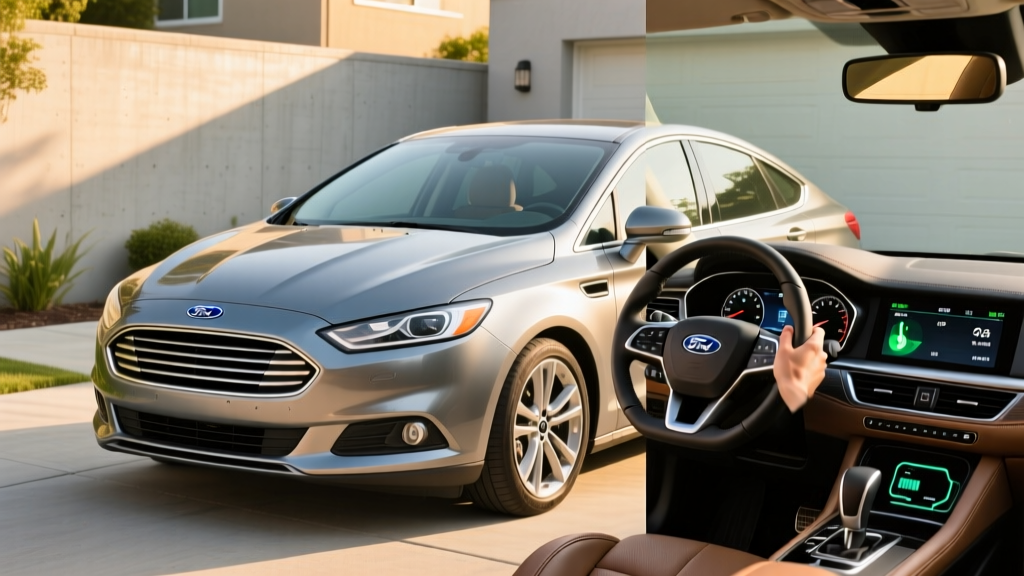
Ford discontinued the C-Max Hybrid after the 2018 model year, but this compact hybrid hatchback remains a fixture on the used-car market. With EPA-rated 42 MPG combined, generous cargo space, and a proven Toyota-rivaling powertrain, the C-Max Hybrid (and its plug-in sibling, the C-Max Energi) still attracts buyers who want hybrid efficiency without paying new-car premiums. This guide covers everything you need to know about buying, owning, and maintaining a Ford C-Max Hybrid today — from real-world MPG to battery replacement costs.
Ford C-Max Hybrid Fuel Economy: EPA vs. Real World
The headline number for the C-Max Hybrid is its EPA-rated fuel economy. Ford revised the C-Max Hybrid's ratings downward after the 2013 model year following customer complaints and an EPA review. Here are the official numbers by model year, sourced from fueleconomy.gov:
| Model Year | City MPG | Highway MPG | Combined MPG |
|---|---|---|---|
| 2013 | 47 | 47 | 47 |
| 2014–2018 | 42 | 38 | 40 |
Real-world MPG: Hybrid hatchbacks like the C-Max tend to exceed their EPA city rating in stop-and-go driving, where regenerative braking recaptures the most energy. Owners on Fuelly and similar forums consistently report 40–45 MPG in mixed city/highway driving. Highway-only trips at 75+ MPH typically drop to 34–37 MPG due to aerodynamic drag and less regenerative opportunity. In cold weather (below 32°F), expect a 5–10% reduction as the engine runs more often to heat the cabin and warm the battery.
C-Max Energi (PHEV) Fuel Economy and Electric Range
If you're considering the plug-in variant, the C-Max Energi offers:
- Electric-only range: 20–21 miles (EPA, varies by model year)
- Battery capacity: 7.6 kWh total / ~5.8 kWh usable (lithium-ion)
- Combined MPGe: 97 MPGe (electric + gas combined)
- Gas-only MPG: 38 combined once the battery is depleted
- Total combined range: ~520–550 miles (full tank + full charge)
- Level 2 charging time: ~2.5 hours at 240V / 3.3 kW
- DC fast charging: Not supported — AC Level 1 and Level 2 only
The Energi's 20-mile electric range covers many commutes, but it falls well short of modern PHEVs like the Toyota RAV4 Prime (42 miles) or the Hyundai Tucson PHEV (33 miles). If your daily driving exceeds 25 miles, the Energi's advantage narrows considerably.
Powertrain and Performance Specs
| Specification | C-Max Hybrid (HEV) | C-Max Energi (PHEV) |
|---|---|---|
| Engine | 2.0L Atkinson-cycle I4 | 2.0L Atkinson-cycle I4 |
| Engine horsepower | 141 HP | 141 HP |
| Electric motor output | 118 HP (88 kW) | 118 HP (88 kW) |
| Combined system output | 188 HP | 195 HP |
| Transmission | eCVT (planetary gearset) | eCVT (planetary gearset) |
| Traction battery | 1.4 kWh (NiMH, 2013) / 1.4 kWh (Li-ion, 2014+) | 7.6 kWh (Li-ion) |
| 0–60 MPH (est.) | ~8.5 sec | ~8.1 sec |
| Drivetrain | FWD | FWD |
Ford's hybrid powertrain uses a planetary eCVT — the same architecture Toyota pioneered with the Prius. There are no traditional gears or a belt-driven CVT; instead, the engine and motor blend power through a gearset. This design is exceptionally durable, with few wear components. The 188 HP combined output gives the C-Max Hybrid respectable acceleration for a 3,600-lb hatchback, noticeably quicker than the contemporaneous Prius (134 HP combined).
HEV vs. PHEV vs. EV: Which C-Max Fits You?
C-Max Hybrid (HEV)
Choose this if: You want maximum MPG with zero behavior change. No plugging in, no range planning. The gas engine and regenerative braking handle everything. Best for apartment dwellers without charging access.
C-Max Energi (PHEV)
Choose this if: You have home Level 2 charging and a short commute (<20 miles). You'll drive mostly electric on weekdays and use gas for weekend trips. You need more cargo room than a Prius Prime offers.
Modern Full EV (BEV)
Consider instead if: You have reliable home charging, drive under 250 miles daily, and want zero tailpipe emissions plus minimal maintenance. A used Chevrolet Bolt EV or Nissan Leaf offers similar cargo space with lower running costs.
Battery Lifespan, Warranty, and Replacement Cost
How Long Does the C-Max Hybrid Battery Last?
The C-Max Hybrid's small 1.4 kWh battery operates within a narrow state-of-charge window (roughly 40–60% SoC), which dramatically reduces stress on the cells. This is standard practice for conventional hybrids — the battery is never fully charged or fully depleted. As a result, hybrid battery packs routinely last 150,000–200,000+ miles before significant degradation.
The C-Max Energi's larger 7.6 kWh battery sees deeper cycling (full EV drains), so degradation is more pronounced over time. Expect 10–15% capacity loss by 100,000 miles, which translates to roughly 2–3 fewer electric-only miles. Most Energi batteries remain functional well past 120,000 miles.
Battery Replacement Cost
- C-Max Hybrid (HEV): $2,000–$3,500 for a new OEM battery pack installed. Aftermarket and refurbished packs run $1,000–$2,000.
- C-Max Energi (PHEV): $5,000–$7,500 for a new OEM pack installed. Refurbished options range from $3,000–$4,500.
Before replacing a battery, have a qualified hybrid technician check for individual cell failures. In many cases, replacing a single module ($200–$500) restores the pack rather than needing a full swap.
Pricing, Tax Credits, and Ownership Costs
Since Ford discontinued the C-Max after 2018, all examples are purchased used. Here's what to expect in the 2026 used market:
| Model | Model Year Range | Typical Mileage | Price Range |
|---|---|---|---|
| C-Max Hybrid SE | 2013–2018 | 80K–130K mi | $7,500–$12,000 |
| C-Max Hybrid Titanium | 2013–2018 | 70K–120K mi | $9,000–$14,500 |
| C-Max Energi (PHEV) | 2013–2017 | 70K–110K mi | $9,500–$15,000 |
Tax Credit Eligibility
New purchase credits: The C-Max Hybrid (HEV) never qualified for the federal §30D plug-in EV tax credit because it lacks a plug. The C-Max Energi qualified for a $3,750 federal tax credit when new, but this credit expired for Ford when the manufacturer hit its 200,000-vehicle cap under the old rules.
Used EV credit (IRS §25E): Under current IRS rules, the C-Max Energi (PHEV) may qualify for the used clean vehicle credit — up to $4,000 or 30% of the sale price, whichever is less. Requirements include:
- Sale price must be $25,000 or less (easily met for used C-Max Energi)
- Buyer income caps: $75,000 single / $112,500 head of household / $150,000 joint
- Vehicle must be at least 2 model years old
- Must purchase from a licensed dealer (private-party sales do not qualify)
- Credit is non-refundable and can only be claimed once per vehicle
The conventional C-Max Hybrid (HEV) does not qualify for the §25E used credit because it is not a plug-in vehicle. Always consult a tax professional to confirm eligibility based on your specific situation.
Reliability and Common Issues
The C-Max Hybrid's powertrain is one of Ford's most reliable offerings. The planetary eCVT has no clutches, belts, or bands to wear out — it's essentially a set of gears that cannot slip. The 2.0L Atkinson-cycle engine runs under less stress than a conventional engine due to the electric motor handling low-speed loads.
Common issues reported by owners:
- 12V auxiliary battery drain: The small 12V battery (which powers electronics, not the drivetrain) can die if the car sits for 2+ weeks. This is common in all hybrids.
- A/C compressor noise: Some 2013–2015 models developed electric A/C compressor issues. Replacement runs $800–$1,200.
- Door latch recalls: Ford issued recalls for door latch assemblies on 2013–2014 models. Verify recall completion via NHTSA's VIN lookup.
- Regenerative braking feel: The transition between regen and friction braking can feel abrupt. This is a characteristic of the system, not a defect.
Overall, the C-Max Hybrid earns strong reliability marks. Major failures before 150,000 miles are uncommon when routine maintenance (oil changes, coolant flushes, inverter coolant) is followed.
Pros and Cons of a Used C-Max Hybrid
Pros
- 40–45 MPG real-world combined — excellent for a spacious hatchback
- 188 HP — quicker than most competitors in its class
- 52.7 cu ft cargo volume with rear seats folded (more than Prius v)
- Proven eCVT powertrain with low failure rates
- Affordable used pricing ($7,500–$14,500)
- Strong regenerative braking with one-pedal-like feel at low speeds
Cons
- Discontinued after 2018 — no new models available
- Highway MPG drops to 34–37 (aerodynamic penalty of tall hatchback shape)
- Infotainment system (SYNC) is dated by 2026 standards
- No Apple CarPlay / Android Auto on most model years
- C-Max Energi's 20-mile EV range is modest vs. modern PHEVs
- Reduced dealer familiarity as hybrid-specialist technicians retire or move on
Who Should Buy a Ford C-Max Hybrid?
The C-Max Hybrid is a strong used-car pick for:
- Urban commuters who drive 15–40 miles daily in mixed city/highway conditions and want 40+ MPG without plugging in.
- Small families who need hatchback cargo versatility (strollers, groceries, gear) without stepping up to an SUV.
- Rideshare drivers seeking low fuel costs and a comfortable rear seat, especially in cities where the hybrid system shines.
- Budget-conscious buyers who want hybrid efficiency but can't justify a $30,000+ new hybrid like the Toyota Prius or Hyundai Ioniq.
Look elsewhere if: You need AWD (the C-Max is FWD only), you want the latest safety tech (no automatic emergency braking on most trims), or your commute is almost entirely highway at 80 MPH where the MPG advantage narrows.
Frequently Asked Questions
How many MPG does the Ford C-Max Hybrid get?
The 2014–2018 Ford C-Max Hybrid is EPA-rated at 42 city / 38 highway / 40 combined MPG. Real-world owners commonly report 40–45 MPG in mixed driving, with highway-only trips yielding 34–37 MPG. The earlier 2013 model was originally rated at 47 MPG combined but was revised downward by Ford.
How far can the C-Max Energi go on electric only?
The C-Max Energi (PHEV) delivers 20–21 miles of EPA-rated electric-only range. In mild weather at city speeds, some owners report up to 24 miles. In cold weather or at highway speeds, expect 15–17 miles before the gas engine engages.
Is the Ford C-Max Hybrid reliable?
Yes. The C-Max Hybrid uses Ford's proven planetary eCVT and 2.0L Atkinson-cycle engine, both of which have strong long-term reliability records. The hybrid battery typically lasts 150,000–200,000+ miles. Common issues are minor (12V battery drain, A/C compressor on early models). Check NHTSA for open recalls before purchasing.
What does a C-Max Hybrid battery replacement cost?
A new OEM hybrid battery for the C-Max Hybrid (HEV) costs $2,000–$3,500 installed. The C-Max Energi (PHEV) battery runs $5,000–$7,500 for a new OEM pack. Refurbished and aftermarket options can reduce these costs by 30–50%. Many high-mileage C-Max examples reach 200K+ miles on the original battery.
Does the Ford C-Max qualify for any tax credit?
The conventional C-Max Hybrid (HEV) does not qualify for any federal tax credit because it does not plug in. The C-Max Energi (PHEV) may qualify for the IRS §25E used clean vehicle credit of up to $4,000 when purchased from a dealer, subject to buyer income limits and the $25,000 sale-price cap. Consult a tax professional for your specific eligibility.
Does the C-Max Hybrid need to be plugged in?
No. The conventional C-Max Hybrid (HEV) charges its small battery entirely through regenerative braking and the gasoline engine. You never plug it in. Only the C-Max Energi (PHEV) has a charging port and benefits from plugging in.