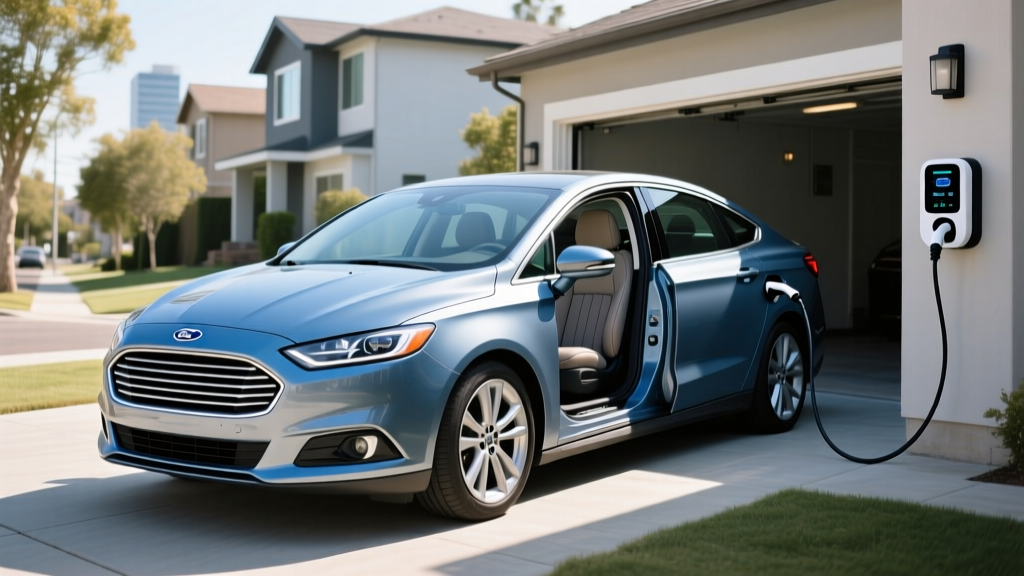
Ford C-Max Hybrid SEL: The Compact Hybrid That Punches Above Its Weight
The Ford C-Max Hybrid was discontinued after the 2018 model year, but the SEL trim remains one of the most sought-after used compact hybrids on the market. If you're searching for a C-Max Hybrid SEL in 2026, you're likely weighing its 42 MPG EPA combined rating against newer alternatives — and wondering about long-term battery reliability, real-world fuel economy, and whether this Ford hybrid still delivers value nearly a decade after its last production run.
This guide breaks down everything you need to know: exact fuel economy figures, powertrain specs, battery longevity data, used-market pricing, and how the C-Max Hybrid SEL stacks up against modern hybrids and plug-in alternatives.
Fuel Economy: EPA Ratings vs. Real-World MPG
The C-Max Hybrid's fuel economy was a headline feature when it launched, and it remains competitive even against 2026 models. Here are the official EPA figures for the C-Max Hybrid (all trims including the SEL):
| Driving Condition | EPA Rating | Real-World Expectation |
|---|---|---|
| City | 42 MPG | 40–46 MPG |
| Highway | 38 MPG | 35–40 MPG |
| Combined | 40 MPG | 38–43 MPG |
Source: fueleconomy.gov
Like most conventional hybrids, the C-Max Hybrid actually tends to exceed its EPA city rating in stop-and-go traffic, where regenerative braking recaptures energy most effectively. Highway driving at sustained speeds above 70 mph reduces efficiency because the 2.0L Atkinson-cycle engine does more of the work without regenerative assistance.
In cold weather (below 35°F), expect a 5–10% reduction in fuel economy. The engine runs more frequently to maintain cabin heat and bring the catalytic converter up to operating temperature, reducing the electric motor's contribution.
HEV vs. PHEV: Understanding the C-Max Hybrid (and the C-Max Energi)
This is a critical distinction that trips up many used-car shoppers. Ford sold two electrified C-Max variants, and confusing them leads to wrong expectations:
| Feature | C-Max Hybrid (HEV) | C-Max Energi (PHEV) |
|---|---|---|
| Powertrain Type | Conventional Hybrid | Plug-In Hybrid |
| Plugs In to Charge? | No — self-charging via engine + regen | Yes — Level 1/Level 2 |
| Battery Capacity | 1.4 kWh (usable ~0.9 kWh) | 7.6 kWh (usable ~5.8 kWh) |
| Electric-Only Range | N/A (EV assist only, ~1 mile at low speed) | 20 miles (EPA) |
| Total Range | ~550 miles | ~550 miles (gas + electric) |
| EPA Combined MPG / MPGe | 40 MPG | 42 MPG / 95 MPGe (charge-sustaining: 38 MPG) |
| DC Fast Charging | No | No |
| Level 2 Charge Time | N/A | ~2.5 hours (240V, 3.3 kW) |
If you're looking specifically at the C-Max Hybrid SEL, you're looking at the conventional HEV. It does not plug in. It charges its small battery entirely through regenerative braking and the gasoline engine. You fuel it like any other car and never need to think about charging infrastructure.
The C-Max Energi is the PHEV variant — it offers 20 miles of electric-only driving but requires plugging in to realize that benefit. If you have home charging access and a short commute, the Energi can run almost entirely on electricity for daily driving while retaining the gas engine for longer trips.
Powertrain and Performance Specs
| Specification | C-Max Hybrid SEL (2013–2018) |
|---|---|
| Engine | 2.0L Atkinson-cycle I4 |
| Engine Horsepower | 141 hp |
| Electric Motor Output | 118 hp (88 kW) |
| Combined System Horsepower | 188 hp |
| Transmission | eCVT (planetary gearset, no fixed gears) |
| Drivetrain | Front-wheel drive |
| 0–60 mph | ~8.2 seconds |
| Battery Chemistry | Lithium-ion (2013+); earlier NiMH in some markets |
| Battery Capacity | 1.4 kWh gross |
| Cargo Volume (rear seats up) | 24.5 cu ft |
| Cargo Volume (rear seats folded) | 52.6 cu ft |
The C-Max Hybrid's eCVT is not a belt-driven CVT like those in some Nissan models. It uses a planetary gearset to blend power from the engine and electric motor — essentially the same architecture Toyota pioneered with the Prius. This design is extremely durable because it has no belts, clutches, or traditional gear shifts to wear out.
At 188 combined horsepower, the C-Max Hybrid has noticeably more passing power than a contemporary Prius (134 hp combined for the 2015–2018 generation). The SEL trim adds paddle-mounted regenerative braking controls, letting you modulate how aggressively the car recaptures energy on deceleration.
SEL Trim: What You Get Over the Base SE
The SEL was the premium trim in the C-Max Hybrid lineup. Key additions over the base SE included:
- Leather-trimmed seats with heated front seats
- MyFord Touch (later SYNC 3 in 2017–2018 models) with 8-inch touchscreen
- Sony premium audio system (9 speakers)
- Rear parking sensors and available rearview camera
- Push-button start with intelligent access
- 17-inch aluminum wheels (vs. steel on SE)
- Ambient interior lighting
- Available panoramic fixed glass roof (a popular option that floods the cabin with light)
For the 2017–2018 model years, Ford updated the C-Max Hybrid with SYNC 3, which replaced the notoriously laggy MyFord Touch system. If infotainment responsiveness matters to you, prioritize a 2017 or 2018 model year.
Battery Longevity, Warranty, and Replacement Cost
Hybrid Battery Warranty (When New)
Ford covered the C-Max Hybrid's battery pack for 8 years / 100,000 miles (10 years / 150,000 miles in California Air Resources Board states including CA, NY, MA, and others that adopted CARB emissions standards).
The warranty guaranteed the battery would retain sufficient capacity to operate the hybrid system. If capacity dropped below a functional threshold, Ford replaced it at no cost.
Real-world battery longevity data: As of 2026, most C-Max Hybrid vehicles are 8–13 years old. Based on owner reports and hybrid battery failure databases:
- The 1.4 kWh lithium-ion pack in the C-Max Hybrid has proven highly durable. The small capacity means shallow charge/discharge cycles, which is gentler on cells.
- Most C-Max Hybrid batteries are still on their original packs at 100,000+ miles.
- Isolated cell failures can sometimes be repaired by replacing individual modules rather than the full pack.
- Full battery replacement cost: approximately $2,500–$4,000 for a refurbished or aftermarket pack, or $4,500–$6,000 for a new OEM Ford pack (including labor).
The eCVT transmission is essentially maintenance-free — there is no transmission fluid to change on a set interval (Ford calls it "filled for life"), and the planetary gearset design rarely fails.
Used Market Pricing in 2026
Since the C-Max Hybrid was discontinued after 2018, all available examples are used. Here's what the market looks like as of early 2026:
| Model Year Range | Mileage Range | Typical Asking Price (SEL) |
|---|---|---|
| 2013–2014 | 90,000–140,000 mi | $6,500–$9,500 |
| 2015–2016 | 70,000–110,000 mi | $9,000–$12,500 |
| 2017–2018 (SYNC 3) | 45,000–85,000 mi | $12,000–$16,500 |
The SEL trim commands a $1,000–$2,000 premium over the SE at comparable mileage. Low-mileage 2017–2018 examples with the panoramic roof and SYNC 3 sit at the top of this range.
Does the C-Max Hybrid Qualify for Any Tax Credit?
No. The federal §30D tax credit applies only to new plug-in electric vehicles (BEVs and PHEVs) with sufficient battery capacity. The C-Max Hybrid is a conventional HEV with a 1.4 kWh battery — it has never qualified for the federal EV credit, even when it was sold new.
The C-Max Energi (PHEV variant) did qualify for a $4,007 federal tax credit when new, but that credit is only available at the point of original sale and does not transfer to used buyers.
For used electrified vehicles, the IRS §25E used clean vehicle credit offers up to $4,000 (or 30% of sale price, whichever is less) for qualifying used BEVs and PHEVs purchased from a dealer for under $25,000. However, this credit requires a minimum 7 kWh battery — the C-Max Hybrid's 1.4 kWh pack does not qualify. The C-Max Energi's 7.6 kWh pack may qualify if other requirements (income caps, dealer sale, price cap) are met.
Who Should Choose the C-Max Hybrid SEL?
Pros
- 40+ MPG combined with zero plug-in requirement
- 188 hp — peppy for a hybrid hatchback
- Generous cargo space (52.6 cu ft folded) rivals small SUVs
- Proven, durable eCVT powertrain
- Strong used-market value — affordable entry to hybrid ownership
- SEL trim offers premium features (leather, Sony audio, pano roof)
Cons
- Discontinued — no new models available, limited CPO options
- Original battery warranty likely expired on 2013–2016 models
- MyFord Touch (2013–2016) is sluggish; prioritize 2017+ SYNC 3
- No DC fast charging (not applicable for HEV, but limits Energi variant)
- Ride quality firm compared to some competitors
- Rear visibility compromised by hatchback design (backup camera recommended)
Hybrid vs. PHEV vs. Full EV: Which Fits You?
The C-Max Hybrid SEL makes sense if:
- You can't charge at home or work. A conventional HEV requires zero charging infrastructure. You just drive and refuel.
- Your budget is under $17,000. No current-production hybrid or EV undercuts the used C-Max Hybrid SEL on price-per-MPG.
- You want a hatchback with real cargo room. The C-Max's 52.6 cu ft beats many compact crossovers.
- Your daily commute is over 40 miles. A PHEV's electric-only range (typically 20–45 miles in current models) won't cover your full commute, so a high-MPG HEV may be more practical than a PHEV you can't fully use in EV mode.
Consider a PHEV (like a used Toyota RAV4 Prime or new Hyundai Tucson PHEV) if you have home Level 2 charging and a commute under 35 miles — you'll do most daily driving on electricity while keeping the gas engine for road trips.
Consider a full BEV (like a Chevrolet Equus EV or Hyundai Ioniq 5) if you have reliable home charging, your daily driving is under 250 miles, and you want to eliminate fuel and oil-change costs entirely. A BEV's total cost of ownership often undercuts a hybrid over 5+ years despite a higher purchase price.
Frequently Asked Questions
How many MPG does the C-Max Hybrid SEL get?
The EPA rates the C-Max Hybrid at 42 MPG city, 38 MPG highway, and 40 MPG combined. In real-world driving, many owners report 38–46 MPG depending on driving style, terrain, and temperature. City driving with frequent stops maximizes regenerative braking and often yields higher-than-EPA numbers.
Does the C-Max Hybrid need to be plugged in?
No. The C-Max Hybrid is a conventional HEV. It charges its 1.4 kWh battery through regenerative braking and the gasoline engine. You never plug it in. If you want a plug-in C-Max, look for the C-Max Energi (PHEV), which is a separate model with a 7.6 kWh battery and 20 miles of electric-only range.
Is the C-Max Hybrid reliable, and what does a battery replacement cost?
The C-Max Hybrid has strong reliability records. The eCVT planetary gearset is one of the most durable transmissions in any vehicle. The lithium-ion hybrid battery typically lasts 150,000+ miles. If replacement is needed, expect to pay $2,500–$4,000 for a refurbished pack or $4,500–$6,000 for a new OEM unit, including labor.
Does the C-Max Hybrid SEL qualify for any federal tax credit?
No. The C-Max Hybrid is a conventional HEV and has never qualified for the federal §30D new vehicle credit or the §25E used vehicle credit. Only plug-in vehicles (BEVs and PHEVs with ≥7 kWh batteries) are eligible for these credits. The C-Max Energi PHEV may qualify for the used EV credit if purchased from a dealer for under $25,000 and the buyer meets income requirements.
What's the difference between the C-Max Hybrid SE and SEL?
The SEL adds leather heated seats, Sony premium audio, push-button start, 17-inch alloy wheels, ambient lighting, and (on 2017–2018 models) the SYNC 3 infotainment system. The SE is well-equipped but uses cloth seats and a simpler audio system. The SEL typically commands a $1,000–$2,000 premium on the used market.
Should I buy a 2013–2016 or 2017–2018 C-Max Hybrid?
The 2017–2018 models are significantly better due to the SYNC 3 infotainment upgrade, which replaced the slow and frustrating MyFord Touch system. SYNC 3 supports Apple CarPlay and Android Auto, making it far more usable in 2026. If budget allows, prioritize a 2017 or 2018 model year.
Fuel economy data sourced from fueleconomy.gov. Tax credit information based on current IRS §25E guidelines. Verify eligibility with a tax professional before purchase.