The Ford C-Max Hybrid at a Glance
The Ford C-Max Hybrid was Ford's answer to the Toyota Prius v — a tall-hatchback hybrid built for families who needed cargo space without sacrificing fuel economy. Produced from the 2013 through 2018 model years (with the Energi plug-in variant ending in 2017), the C-Max is no longer sold new. But on the used market, it remains one of the most practical and affordable hybrid hatchbacks available, routinely fetching between $8,000 and $16,000 depending on year, mileage, and condition.
If you're searching for a Ford C-Max Hybrid in 2026, you're likely weighing it against newer hybrids, plug-in hybrids, and full EVs. This guide covers every spec that matters — EPA MPG, real-world fuel economy, powertrain details, battery longevity, and whether this discontinued model still makes sense for your commute.
| Spec | Value |
|---|---|
| EPA MPG (City / Highway / Combined) | 42 / 38 / 40 |
| Combined Horsepower | 188 hp |
| Engine | 2.0L Atkinson-cycle I-4 |
| Electric Motor | 88 kW permanent-magnet AC |
| Hybrid Battery | 1.4 kWh (usable ~1.0 kWh), Lithium-Ion |
| Transmission | Electronic CVT (eCVT) |
| 0–60 mph | ~7.9 seconds |
| Cargo Volume (rear seats up / folded) | 24.5 / 52.6 cu ft |
| Curb Weight | ~3,650 lbs |
| Drivetrain | Front-wheel drive |
HEV vs. PHEV: Understanding the C-Max Lineup
Ford sold two distinct versions of the C-Max, and confusing them is a common mistake among used buyers. Here's the breakdown:
| Feature | C-Max Hybrid (HEV) | C-Max Energi (PHEV) |
|---|---|---|
| Plug-in Charging Required? | No — self-charging via regen & engine | Yes — plug in to access electric-only range |
| Battery Capacity | 1.4 kWh | 7.6 kWh (usable ~5.5 kWh) |
| Electric-Only Range | None (EV assist only at low speeds) | ~20 miles (EPA, 2013–2016); ~22 miles (2017) |
| Total Combined Range | ~570 miles | ~550 miles (electric + gas) |
| EPA Combined MPG / MPGe | 40 MPG combined | 42 MPG combined (gas); 95 MPGe (electric+gas) |
| DC Fast Charging | No | No — Level 1 (120V) only, ~7 hours |
| Model Years Available | 2013–2018 | 2013–2017 |
| Federal Tax Credit (Original) | None | Up to $4,007 (expired; not available on used purchases under current §30D rules) |
The critical difference: The standard C-Max Hybrid is a conventional HEV — it never plugs in. It recovers energy through regenerative braking and uses the gasoline engine to recharge the small battery. The C-Max Energi is a plug-in hybrid (PHEV) with a larger battery that you charge from a wall outlet, giving you roughly 20 miles of electric-only driving before the gas engine kicks in.
Fuel Economy: EPA Ratings vs. Real-World MPG
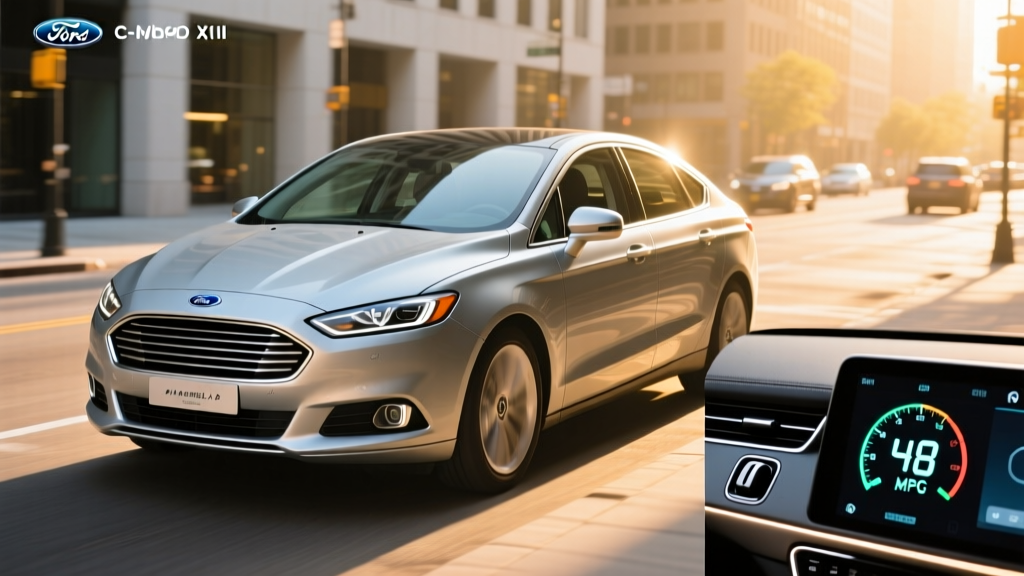
For the final 2018 model year, the EPA rates the Ford C-Max Hybrid at 42 MPG city / 38 MPG highway / 40 MPG combined. Earlier model years (2013–2014) originally carried a 47 MPG combined sticker, but Ford revised those ratings downward after an audit, settling a class-action lawsuit with owners.
| Model Years | City | Highway | Combined |
|---|---|---|---|
| 2013–2014 (original sticker) | 47 | 47 | 47 |
| 2013–2014 (revised/corrected) | 42 | 37 | 40 |
| 2015–2018 | 42 | 38 | 40 |
Real-World MPG: What Owners Actually Report
Like most conventional hybrids, the C-Max Hybrid tends to exceed its EPA city rating in stop-and-go traffic, where regenerative braking captures the most energy. Owners on Fuelly and hybrid forums commonly report:
- City driving: 43–48 MPG — the electric motor handles low-speed acceleration, and the engine shuts off at stops
- Highway driving: 35–39 MPG — aerodynamic drag on the tall hatchback body hurts efficiency at sustained speeds above 65 mph
- Mixed commute: 39–44 MPG combined, aligning closely with the EPA's 40 MPG figure
- Cold weather penalty: Expect a 5–10% drop in winter months (roughly 36–38 MPG combined) as the engine runs more frequently to provide cabin heat and warm the catalytic converter
Compared to a 2026 Toyota Prius (57 MPG combined EPA), the C-Max trails by a significant margin — a reflection of nearly a decade of hybrid powertrain advancement. But against a typical compact gasoline car averaging 28–32 MPG, the C-Max still cuts fuel consumption by roughly 25%.
Powertrain and Driving Impressions
The C-Max Hybrid pairs a 2.0-liter Atkinson-cycle four-cylinder engine (141 hp on its own) with an 88 kW electric motor, delivering a combined system output of 188 horsepower. That's substantially more than the contemporary Prius v (134 hp) and gives the C-Max confident highway merging and passing ability.
The electronic CVT (eCVT) operates differently from a traditional belt-driven CVT. Ford uses a planetary gearset that blends engine and motor power without fixed gear ratios — there are no rubber belts to wear out, which contributes to the powertrain's long-term durability.
Driving the C-Max feels more like a conventional car than early hybrids. The brake pedal feel — historically a weak point in hybrids due to the transition between regenerative and friction braking — is reasonably linear in the 2015+ models after Ford recalibrated the system. Steering is heavier than a Prius, which some drivers prefer for highway stability.
Battery Health, Warranty, and Replacement Costs
The conventional C-Max Hybrid uses a compact 1.4 kWh lithium-ion battery pack mounted beneath the rear cargo floor. Unlike full EVs with 60–100 kWh packs, this small battery undergoes relatively shallow charge-discharge cycles — it rarely drops below 40% or charges above 80% state of charge, which dramatically reduces degradation.
Ford Hybrid Battery Warranty
Original coverage: 8 years / 100,000 miles (10 years / 150,000 miles in California and states adopting CARB emissions standards)
What's covered: Battery capacity falling below a defined threshold (typically ~60–70% of original capacity) or complete cell/module failure
For 2026 used buyers: A 2018 model's 8-year/100,000-mile factory warranty has expired by calendar year. However, the robust design of Ford's hybrid batteries means most units remain well within functional spec at 100,000+ miles.
How Long Do C-Max Hybrid Batteries Last?
Based on owner reports and fleet data, Ford's hybrid battery packs in the C-Max and Fusion Hybrid routinely last 150,000 to 200,000+ miles before significant capacity loss. The shallow cycling strategy and active thermal management (air cooling from the cabin) keep cell stress low.
If replacement becomes necessary, expect these costs in 2026:
- Dealer replacement (new OEM pack): $2,500–$4,000 including labor
- Independent hybrid specialist (reconditioned pack): $1,200–$2,200
- Individual cell module replacement: $300–$800 if only one or two modules have failed (a common repair at specialist shops)
Before purchasing a used C-Max, request a hybrid battery health report. Many Ford dealers can pull a State of Health (SoH) reading via the OBD-II diagnostic port, and third-party tools like FORScan allow owners to check cell voltage balance independently.
C-Max Energi (PHEV): Electric-Only Range and Charging
If you're considering the plug-in variant, the C-Max Energi offers approximately 20–22 miles of electric-only range (depending on model year) from its 7.6 kWh battery pack. After the battery depletes, the car operates as a conventional hybrid at roughly 40 MPG.
Charging the Energi is straightforward but slow by modern standards:
- Level 1 (120V household outlet): ~7 hours for a full charge — practical for overnight charging
- Level 2 (240V): ~2.5 hours for a full charge using a standard 3.3 kW onboard charger
- DC Fast Charging: Not supported. The Energi uses a J1772 connector for AC charging only.
The Energi's 20-mile electric range is modest compared to 2026 PHEVs like the Toyota RAV4 Prime (42 miles) or the Hyundai Tucson PHEV (33 miles). But for short commutes under 20 miles with nightly charging, it effectively operates as an EV on weekdays, with the gas engine available for longer weekend trips.
Used Pricing and Tax Credit Eligibility
As a discontinued model, the C-Max is only available on the used market in 2026. Pricing varies significantly by year, mileage, and condition:
| Model Year Range | Typical Mileage | Price Range |
|---|---|---|
| 2013–2014 | 100,000–150,000 mi | $7,000–$10,500 |
| 2015–2016 | 70,000–110,000 mi | $10,000–$13,500 |
| 2017–2018 | 45,000–85,000 mi | $13,000–$17,000 |
Does the Ford C-Max Qualify for Any Tax Credit?
No. Under current IRS §30D clean vehicle rules, the federal tax credit applies only to new qualifying vehicles (and a separate used-EV credit of up to $4,000 under §25E applies to used BEVs and PHEVs priced under $25,000 from a dealer). The standard C-Max Hybrid (HEV) has never qualified for a federal tax credit. The C-Max Energi (PHEV) originally qualified for up to $4,007 when new, but that credit is no longer available.
For the used C-Max Energi (PHEV), the §25E used clean vehicle credit could theoretically apply if the vehicle is purchased from a dealer for under $25,000 and meets income limits (AGI under $75,000 single / $150,000 joint). However, given the Energi's age and the credit's requirement that the vehicle be at least two model years old with a sale price under $25,000, most Energi listings do qualify on price — but you should verify current IRS rules and consult a tax professional before relying on this credit.
Some states offer additional incentives for used hybrid or PHEV purchases. Check your state's energy office or Alternative Fuels Data Center for current local programs.
Who Should Buy the Ford C-Max Hybrid — and Who Shouldn't
Reasons to Choose the C-Max Hybrid
- Budget-friendly entry into hybrid ownership — under $15K for a low-mileage 2017–2018 model
- Strong 188 hp powertrain outperforms most competitors in its class
- Hatchback cargo versatility (24.5 cu ft behind rear seats, 52.6 cu ft folded)
- Proven hybrid system with low battery failure rates
- No plug-in infrastructure needed — just drive and refuel like a gas car
- Comfortable ride quality with a compliant suspension
Reasons to Look Elsewhere
- Discontinued — no new models, limited future dealer support for body/parts
- EPA ratings trail current hybrids by 15–20 MPG (2026 Prius: 57 combined)
- Infotainment system (SYNC 3) feels dated; no wireless CarPlay/Android Auto
- Highway MPG disappointing for a hybrid (38 EPA, often 35–37 real-world)
- No advanced driver-assist features beyond basic rear camera and BLIS
- Energi PHEV's 20-mile electric range is short by current standards
Decision Framework: C-Max Hybrid vs. Alternatives
Choose the Ford C-Max Hybrid if: Your budget is under $15,000, you want a spacious hatchback with proven hybrid efficiency, you don't have access to home or workplace charging (making a PHEV or EV impractical), and you value stronger acceleration over maximum MPG.
Choose a newer hybrid (Prius, Hyundai Ioniq, Kia Niro) if: You can spend $22,000+ and want current-generation efficiency (50+ MPG), modern safety tech (automatic emergency braking, lane keeping), and remaining factory warranty coverage.
Choose a PHEV (Prius Prime, RAV4 Prime) if: You have reliable home Level 2 charging, your daily commute is under 40 miles round-trip, and you want to drive mostly on electricity while keeping a gas engine for road trips.
Choose a full EV (Bolt, Model 3, ID.4) if: You have home charging, your daily driving is under 250 miles, you want zero tailpipe emissions, minimal maintenance, and access to HOV lanes and federal/state EV incentives on new purchases.
Frequently Asked Questions
How many MPG does the Ford C-Max Hybrid actually get?
The EPA rates the 2015–2018 C-Max Hybrid at 42 city / 38 highway / 40 combined MPG. In real-world driving, owners typically see 43–48 MPG in city traffic and 35–39 MPG on the highway. Cold weather can reduce combined economy to roughly 36–38 MPG.
Does the Ford C-Max Hybrid need to be plugged in?
No. The standard C-Max Hybrid is a conventional HEV that charges its own battery through regenerative braking and the gasoline engine. You never plug it in. Only the C-Max Energi (PHEV variant) requires plug-in charging to access its electric-only range.
How far can the C-Max Energi go on electric only?
The C-Max Energi provides approximately 20 miles of electric-only range (2013–2016 models) or 22 miles (2017 model) on a full charge, per EPA estimates. After the battery depletes, it operates as a conventional hybrid at roughly 40 MPG combined.
Is the Ford C-Max Hybrid reliable?
Yes. The C-Max's hybrid powertrain — shared with the Ford Fusion Hybrid — has a strong reliability record. The eCVT transmission uses a durable planetary gearset with no wear-prone belts. The hybrid battery typically lasts 150,000–200,000+ miles. Common non-powertrain complaints include SYNC infotainment glitches, interior rattles, and 12V battery drain if the car sits unused for weeks.
What does a C-Max Hybrid battery replacement cost?
A new OEM hybrid battery from a Ford dealer costs roughly $2,500–$4,000 installed. Reconditioned packs from independent hybrid specialists run $1,200–$2,200. Individual module repairs can cost as little as $300–$800. Most C-Max batteries last well beyond 150,000 miles, making replacement uncommon for typical ownership periods.
Does the Ford C-Max Hybrid qualify for a tax credit in 2026?
The standard C-Max Hybrid (HEV) does not qualify for any federal tax credit — it never has. The C-Max Energi (PHEV) originally qualified for up to $4,007 when purchased new, but that credit is no longer available. Under the §25E used clean vehicle credit, a used C-Max Energi purchased from a dealer for under $25,000 may qualify for up to $4,000 if you meet income requirements — consult a tax professional to verify eligibility.
Is the Ford C-Max Hybrid a good buy in 2026?
For budget-conscious buyers who want hybrid fuel economy without the cost of a new vehicle, the C-Max Hybrid is a strong used-market option. Its 188 hp powertrain is more engaging than competitors, cargo space is generous, and the hybrid system is proven. The main trade-offs are its discontinuation (limiting parts availability long-term), dated technology, and lower MPG compared to current-generation hybrids. If you can spend more, a 2022+ Prius or Niro Hybrid will deliver significantly better efficiency and modern safety features.