Quick Verdict: The Practical Hybrid Hatchback That Punches Above Its Weight
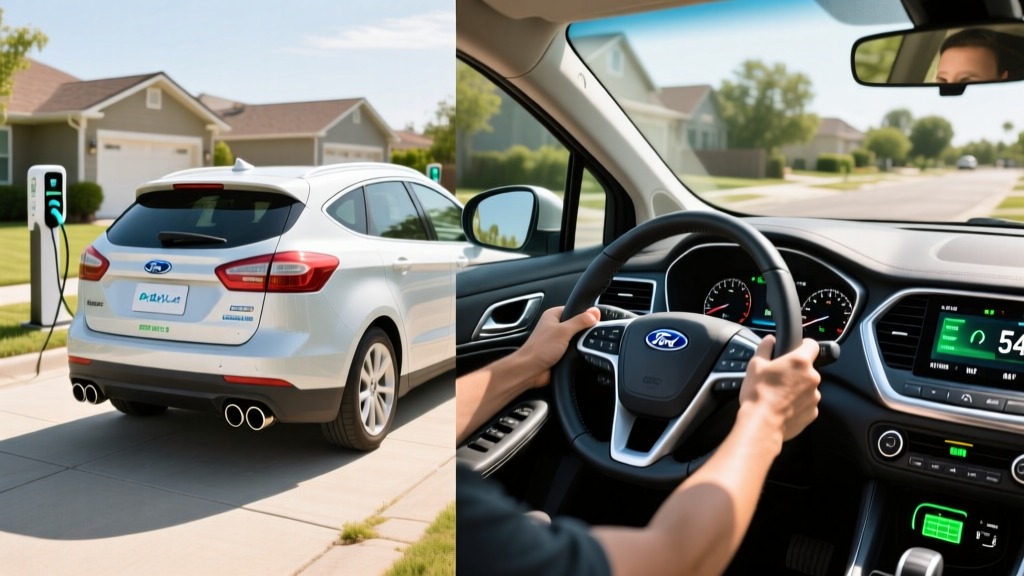
The Ford C-Max Hybrid hatchback occupies a specific niche that few vehicles fill: a tall-hatchback hybrid with genuine cargo versatility, real-world fuel economy that often exceeds its EPA sticker in city driving, and a used-market price that makes it one of the most accessible hybrid vehicles available. Discontinued after the 2018 model year, the C-Max Hybrid (and its plug-in sibling, the C-Max Energi) remain compelling choices for budget-conscious hybrid shoppers who want Prius-level efficiency with more interior volume.
If you're searching for a Ford C-Max Hybrid hatchback in 2026, you're looking at the used market — and that's actually good news. Prices have settled into the $8,000–$16,000 range depending on year, mileage, and condition, making this one of the cheapest ways into proven hybrid ownership. But before you pull the trigger, you need to understand the real-world MPG, the battery longevity question, and whether the C-Max Hybrid or the plug-in Energi variant is the better fit for your driving pattern.
| Specification | C-Max Hybrid (HEV) | C-Max Energi (PHEV) |
|---|---|---|
| Powertrain Type | Conventional Hybrid (HEV) | Plug-In Hybrid (PHEV) |
| Combined Horsepower | 188 hp (2.0L I4 + electric motor) | 188 hp (2.0L I4 + electric motor) |
| EPA Combined MPG / MPGe | 42 MPG combined | 97 MPGe (electric) / 38 MPG (gas-only) |
| EPA City / Highway MPG | 42 city / 38 highway | 38 city / 38 highway (gas mode) |
| Electric-Only Range | N/A (not plug-in) | 21 miles (Energi, 2017–2018) |
| Battery Capacity | 1.4 kWh (usable, NiMH/Li-ion by year) | 7.6 kWh usable (Li-ion) |
| Total Combined Range | ~550–600 miles | ~550 miles (gas + electric) |
| DC Fast Charging | No | No (Level 2 only) |
| Level 2 Charge Time | N/A (self-charging) | ~2.5 hours (240V) |
| Cargo Volume (behind rear seats) | 24.5 cu ft | 19.2 cu ft (battery intrudes) |
| 0–60 mph | ~8.1 seconds | ~8.4 seconds |
| Hybrid Battery Warranty (original) | 8 yr / 100,000 mi | 8 yr / 100,000 mi |
Ford C-Max Hybrid MPG: EPA Numbers vs Real-World Results
The C-Max Hybrid's EPA rating of 42 MPG combined (42 city / 38 highway) was competitive when the vehicle launched and remains solid today. But the real story is how this hybrid performs in actual driving — and here, the C-Max has a reputation for exceeding expectations in city conditions while falling slightly short on sustained highway runs.
| Driving Scenario | EPA Estimate | Real-World Expectation |
|---|---|---|
| City (stop-and-go, under 45 mph) | 42 MPG | 43–48 MPG (hybrids excel here) |
| Highway (65–75 mph sustained) | 38 MPG | 35–38 MPG (aero drag on tall body) |
| Combined mixed driving | 42 MPG | 38–44 MPG (depends on route mix) |
| Cold weather (below 35°F, short trips) | — | 33–38 MPG (engine runs more for heat) |
This pattern — better-than-EPA city, slightly worse highway — is typical of conventional hybrids. The C-Max's 1.4 kWh battery and regenerative braking system recapture energy during deceleration and low-speed driving, which is where city commuters benefit most. On the highway, the tall hatchback profile creates more aerodynamic drag than a lower-slung sedan like the Prius, which accounts for the slight highway deficit.
For context, the EPA's fueleconomy.gov listing for the 2017 C-Max Hybrid confirms the 42/38/42 split. Owners who do mostly urban and suburban driving consistently report 43–46 MPG in real-world use, while those with long highway commutes should budget for 36–38 MPG.
C-Max Hybrid (HEV) vs C-Max Energi (PHEV): Which One Fits Your Life?
Ford offered the C-Max in two electrified variants, and confusing them is one of the most common mistakes used buyers make. Here's the critical distinction:
| Factor | C-Max Hybrid (HEV) | C-Max Energi (PHEV) |
|---|---|---|
| Plug-in required? | No — refuels at gas station only | Yes — plug in to access electric-only range |
| Electric-only driving | Brief EV assist at low speeds only | 21 miles fully electric (2017–2018) |
| Home charging needed? | No | Recommended (120V works, 240V preferred) |
| Cargo space | 24.5 cu ft | 19.2 cu ft (larger battery reduces space) |
| Best for | No home charging access; long highway commutes | Short daily commutes with home Level 1 or 2 charging |
| Used price range (2026) | $8,000–$14,000 | $10,000–$16,000 |
Choose the C-Max Hybrid (HEV) if: You don't have access to home or workplace charging, your commute is longer than 30 miles each way, or you want maximum cargo space. The HEV requires zero behavior change from a gas car — just fill up and drive.
Choose the C-Max Energi (PHEV) if: Your daily round-trip commute is under 20 miles, you can plug in at home (even a standard 120V outlet works overnight), and you want to do most weekday driving on electricity. The Energi's 21-mile electric-only range covers the average American's daily driving, and the gas engine eliminates range anxiety for longer weekend trips.
The Energi's 7.6 kWh lithium-ion battery charges in roughly 7 hours on a standard 120V household outlet (Level 1) or about 2.5 hours on a 240V Level 2 charger. It does not support DC fast charging — this is common for PHEVs of this era, as the smaller battery doesn't justify the added cost and weight of DC hardware.
Powertrain Deep Dive: What's Under the Hood
Both C-Max variants use Ford's 2.0-liter Atkinson-cycle four-cylinder engine paired with an electric motor and a continuously variable transmission (CVT). Combined output is 188 horsepower — notably more than the contemporary Prius (121 hp for the 2017 generation), which gives the C-Max a more confident feel during highway merging and passing.
The Atkinson-cycle engine sacrifices some low-RPM torque for improved thermal efficiency, which is exactly the right trade-off in a hybrid where the electric motor fills in the torque gap at low speeds. The result is a powertrain that feels adequately quick around town (the electric motor's instant torque helps) while delivering the fuel economy you'd expect from a dedicated hybrid.
One practical note: the C-Max Hybrid uses a 1.4 kWh battery pack (nickel-metal hydride in early 2013 models, switching to lithium-ion in later years). This small battery is never fully charged or fully depleted — the hybrid system keeps it in a narrow state-of-charge window (roughly 40–80%) to maximize longevity. This buffer strategy is why hybrid batteries routinely last well beyond their warranty periods.
Battery Longevity, Warranty, and Replacement Costs
Original Hybrid Battery Warranty: 8 years / 100,000 miles (10 years / 150,000 miles in California and states adopting CARB emissions standards). The warranty covers battery capacity falling below a defined threshold — typically around 60–65% of original capacity for the HEV, and a similar retention standard for the Energi's larger pack.
Battery replacement cost is the number-one concern for used hybrid buyers, and it's worth addressing directly. Here's what you need to know:
- C-Max Hybrid (HEV) battery replacement: A new OEM battery pack from Ford runs approximately $2,500–$3,500 including labor. Refurbished or salvaged packs are available for $1,000–$1,800 installed. Because the HEV battery is small (1.4 kWh), replacement costs are significantly lower than a full EV battery.
- C-Max Energi (PHEV) battery replacement: The larger 7.6 kWh lithium-ion pack is more expensive — roughly $4,000–$6,000 for a new OEM replacement. Refurbished options exist in the $2,500–$3,500 range.
- Real-world longevity: Data from hybrid fleet operators and owner forums indicates that most C-Max Hybrid batteries last 150,000–200,000+ miles before significant degradation. The Energi's larger pack, which cycles more deeply, may show measurable capacity loss sooner, but the 21-mile EV range typically degrades to around 16–18 miles over 100,000 miles — still functional for most commutes.
When evaluating a used C-Max, ask for a battery health readout from a Ford dealer or an independent hybrid specialist. The Energi's battery state-of-health (SoH) can be read via the dashboard menu or an OBD-II scanner. For the HEV, a dealer diagnostic tool can report hybrid battery condition. If the vehicle has over 120,000 miles and no battery service history, budget $1,500–$3,000 as a contingency.
Tax Credits, Pricing, and the Used-EV Credit
Because the C-Max Hybrid and Energi are discontinued, you'll be buying on the used market. This changes the incentive landscape significantly compared to new-vehicle purchases.
New-vehicle federal credits (no longer applicable at original sale): The C-Max Energi originally qualified for up to a $4,007 federal tax credit under the pre-2023 rules. The conventional C-Max Hybrid never qualified for a federal plug-in credit because it doesn't plug in. These original credits are irrelevant for current used purchases.
Used clean vehicle credit (§25E): Under current IRS rules for the Used Clean Vehicle Credit, the C-Max Energi may qualify for a credit equal to 30% of the sale price, up to a maximum of $4,000, if purchased from a licensed dealer. Key eligibility requirements:
- Sale price must be $25,000 or less (easily met for used C-Max Energi)
- Buyer income must not exceed $75,000 (single), $112,500 (head of household), or $150,000 (married filing jointly)
- Vehicle must be at least two model years old (all C-Max models qualify)
- The same vehicle can only trigger the used credit once every three years
- Must purchase from a dealer — private-party sales do not qualify
- The conventional C-Max Hybrid (HEV) does not qualify for §25E — only plug-in vehicles with at least 7 kWh of battery capacity are eligible, and the HEV's 1.4 kWh pack falls short
This means the C-Max Energi is the more financially attractive option on the used market if you meet the income requirements. A $12,000 Energi purchased from a dealer could net a $3,600 credit (30% of sale price), effectively bringing the cost to around $8,400 — a remarkable entry point into plug-in hybrid ownership.
Note: The conventional C-Max Hybrid, while ineligible for the federal used credit, is typically $2,000–$3,000 cheaper on the used market than the Energi, partially offsetting the incentive gap.
Who Should Choose the C-Max Hybrid vs a Full EV or Gas Car?
Choose the Ford C-Max Hybrid if:
- You want hybrid efficiency without changing any habits — no plugging in, no range planning
- You lack reliable home or workplace charging access (apartment dwellers, street parkers)
- Your budget is under $15,000 and you want proven hybrid reliability
- You need more cargo versatility than a Prius sedan offers (the C-Max's 24.5 cu ft hatchback area is genuinely useful)
- Your annual mileage is moderate (10,000–15,000 miles), where fuel savings over a gas car are meaningful but don't justify a full EV premium
Choose the C-Max Energi (PHEV) if:
- Your daily commute is under 20 miles round-trip and you can charge at home
- You want electric-only weekday driving but need gas-engine flexibility for weekend road trips
- You qualify for the §25E used clean vehicle credit and want to maximize value
- You're not ready for a full EV but want to reduce gasoline consumption significantly
Choose a full BEV (like a used Bolt EV or Model 3) instead if:
- You have reliable home Level 2 charging
- Your daily driving rarely exceeds 200 miles
- You want to eliminate gasoline costs and maintenance entirely
- You're willing to spend $15,000–$25,000+ on the used market for a longer-range EV
Stick with a conventional gas car if:
- You drive very low annual miles (under 6,000) where fuel savings won't offset any hybrid premium
- You frequently tow or carry very heavy loads (the C-Max is not rated for towing)
Reliability: What Owners and Data Show
The C-Max Hybrid's reliability record is generally positive, with the powertrain proving durable across high-mileage examples. The 2.0L Atkinson-cycle engine is understressed, the eCVT transmission has no traditional gears or belts to fail, and the hybrid system components have been used across multiple Ford models (Fusion Hybrid, Lincoln MKZ Hybrid) with similar longevity.
Common issues reported by owners and tracked by NHTSA include:
- 12V auxiliary battery drain: Like many hybrids, the C-Max can experience 12V battery issues if the vehicle sits for extended periods. This is not a hybrid battery issue — it's the standard 12V battery that powers electronics.
- Door latch recalls: Certain 2013–2015 model years had door latch recalls. Verify recall completion via NHTSA's VIN lookup tool before purchasing.
- Transmission shudder (rare): A small number of owners report CVT shudder at low speeds, typically addressed by a software update or fluid service.
- Infotainment quirks: The MyFord Touch system in 2013–2016 models is slow and occasionally unresponsive. The Sync 3 system (2016.5+ models) is a significant improvement — prioritize these if tech usability matters to you.
Overall, the C-Max Hybrid ranks as an average-to-above-average reliability proposition in the used hybrid segment. It doesn't have the Toyota Prius's bulletproof reputation, but it also doesn't have any widespread catastrophic failure patterns. A pre-purchase inspection by a hybrid-experienced mechanic is always recommended for any used hybrid purchase.
Pros
- Real-world city MPG often exceeds 42 EPA rating
- 188 hp is noticeably quicker than most hybrid competitors from this era
- Tall hatchback body offers excellent cargo versatility (24.5 cu ft)
- Very affordable on the used market ($8K–$16K)
- Energi PHEV eligible for up to $4,000 used clean vehicle credit
- Hybrid battery replacement cost is manageable ($2,500–$3,500 HEV)
Cons
- Discontinued — no new models available, limited dealer support in some areas
- Highway MPG falls slightly below EPA estimate due to tall body aero
- MyFord Touch infotainment (pre-2016.5) is dated and frustrating
- Energi's larger battery reduces cargo space to 19.2 cu ft
- No DC fast charging on Energi (not unusual for PHEVs of this era)
- Cold-weather fuel economy drops noticeably on short trips
Frequently Asked Questions
How many MPG does the Ford C-Max Hybrid get?
The EPA rates the C-Max Hybrid at 42 MPG combined (42 city / 38 highway). In real-world city driving, many owners report 43–48 MPG thanks to regenerative braking. Highway driving typically yields 35–38 MPG. Cold weather and short trips can drop combined economy to the 33–38 MPG range.
How far can the C-Max Energi go on electric only?
The 2017–2018 C-Max Energi is EPA-rated for 21 miles of electric-only range. Earlier 2013–2016 models are rated at 19–20 miles. In real-world use with a fully healthy battery, expect 18–22 miles depending on temperature, terrain, and driving style. Once the battery is depleted, the gas engine takes over seamlessly and the car operates as a conventional hybrid at roughly 38 MPG.
Is the Ford C-Max Hybrid reliable, and what does battery replacement cost?
The C-Max Hybrid has a solid reliability record with no widespread powertrain failures. Hybrid battery replacement costs approximately $2,500–$3,500 for the HEV and $4,000–$6,000 for the Energi PHEV (OEM new). Refurbished batteries are available for less. Most hybrid batteries last 150,000–200,000+ miles before significant degradation.
Does the Ford C-Max Hybrid qualify for any tax credit?
The conventional C-Max Hybrid (HEV) does not qualify for any federal tax credit because it doesn't plug in. The C-Max Energi (PHEV) may qualify for the IRS §25E Used Clean Vehicle Credit — up to $4,000 (30% of sale price) if purchased from a dealer for $25,000 or less, subject to buyer income limits ($75K single / $150K married). Consult a tax professional or the IRS page on §25E to confirm your eligibility.
Can I charge the C-Max Hybrid at home?
The conventional C-Max Hybrid (HEV) does not plug in — it charges its small battery through regenerative braking and the gas engine. The C-Max Energi (PHEV) can charge at home using a standard 120V outlet (about 7 hours for a full charge) or a 240V Level 2 charger (about 2.5 hours). No DC fast charging is available on the Energi.
How does the C-Max Hybrid compare to a Toyota Prius?
The C-Max Hybrid offers more horsepower (188 hp vs the Prius's 121 hp for that era), more cargo space in hatchback form, and a more car-like driving experience. The Prius typically achieves 2–4 MPG better combined fuel economy and has a stronger long-term reliability reputation. On the used market, the C-Max is often $2,000–$4,000 cheaper than a comparable Prius, making it a value play for hybrid shoppers.
What should I look for when buying a used C-Max Hybrid?
Prioritize models with the Sync 3 infotainment system (2016.5 and later), verify all NHTSA recalls have been completed, request a hybrid battery health diagnostic from a Ford dealer, check maintenance records for regular oil changes and transmission fluid service, and budget $1,500–$3,000 as a contingency for battery replacement if the vehicle has over 120,000 miles.