Quick Verdict: Two Flavors of Electrified C-Max
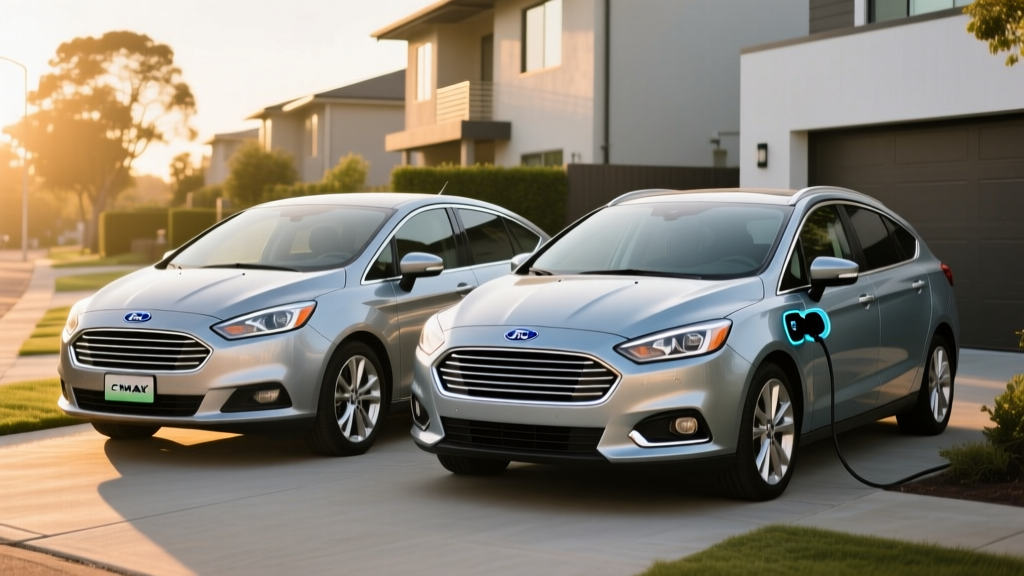
If you're searching for a Ford C-Max Hybrid Energi, you're actually navigating two distinct powertrains that Ford sold under the C-Max nameplate: the conventional C-Max Hybrid (HEV) and the plug-in C-Max Energi (PHEV). Both were discontinued after the 2018 model year in the United States, which means every C-Max on the road today is a used vehicle — and that changes the buying calculus significantly compared to shopping for a new electrified car.
The C-Max Hybrid delivers a solid 42 MPG combined without ever needing a plug, while the C-Max Energi offers 21 miles of electric-only driving before its gasoline engine kicks in. Both remain practical choices on the used market for buyers who want hybrid efficiency without the range anxiety or charging infrastructure demands of a full battery-electric vehicle (BEV). Let's break down exactly what each version delivers, what ownership costs look like in 2026, and whether a used C-Max still makes sense.
C-Max Hybrid vs. C-Max Energi: HEV vs. PHEV Explained
The single biggest mistake shoppers make with the C-Max lineup is conflating the two models. Here's the fundamental difference:
C-Max Hybrid (HEV — Conventional Hybrid)
- No plug required. The battery recharges through regenerative braking and the gasoline engine.
- You fuel it like a normal car — just more efficiently.
- Small 1.4 kWh battery pack assists the engine during acceleration and enables low-speed electric assist.
- Best for: Drivers without access to home or workplace charging who still want strong fuel economy.
C-Max Energi (PHEV — Plug-In Hybrid)
- Plugs in to charge — Level 1 (120V household outlet) or Level 2 (240V home charger).
- 7.6 kWh battery pack (usable capacity ~6.5 kWh) provides 21 miles of electric-only range.
- Once the battery depletes, it operates as a conventional hybrid with ~38 MPG combined.
- Best for: Drivers with home charging access and commutes under 25 miles who want EV-like daily driving with gas-engine backup for longer trips.
This distinction matters because your charging access, commute length, and driving habits determine which version saves you more money and frustration. A C-Max Energi you never plug in is just a heavier, less efficient C-Max Hybrid.
Fuel Economy: EPA MPG and Real-World Numbers
Fuel economy is the headline spec for any hybrid buyer. Here's the full EPA breakdown for both C-Max variants, sourced from fueleconomy.gov:
| Metric | C-Max Hybrid (HEV) | C-Max Energi (PHEV) |
|---|---|---|
| City MPG | 42 MPG | 40 MPG (charge-sustaining) |
| Highway MPG | 38 MPG | 36 MPG (charge-sustaining) |
| Combined MPG | 40 MPG | 38 MPG (charge-sustaining) |
| MPGe (electric mode, Energi only) | N/A | 100 MPGe |
| Electric-Only Range (Energi only) | N/A | 21 miles |
| Total Range | ~540 miles | ~550 miles (gas + electric) |
Powertrain Specs: What's Under the Hood
| Specification | C-Max Hybrid | C-Max Energi |
|---|---|---|
| Engine | 2.0L Atkinson-cycle I4 | 2.0L Atkinson-cycle I4 |
| Engine Horsepower | 141 hp | 141 hp |
| Electric Motor Output | 88 kW (118 hp) | 88 kW (118 hp) |
| Combined System Horsepower | 188 hp | 195 hp |
| Transmission | eCVT (power-split) | eCVT (power-split) |
| Battery Capacity | 1.4 kWh (Li-ion) | 7.6 kWh total / ~6.5 kWh usable (Li-ion) |
| 0–60 mph | ~8.1 sec | ~8.4 sec |
| Drivetrain | FWD | FWD |
| Curb Weight | ~3,607 lbs | ~3,859 lbs |
Both models use Ford's power-split eCVT architecture — the same basic system found in the Fusion Hybrid and Escape Hybrid of the same era. It's a proven, Toyota-derived design that blends engine and motor power seamlessly. The Energi's slightly higher output (195 hp vs. 188 hp) comes from a marginally more aggressive battery discharge strategy, but the extra 250 pounds of battery mass offsets any performance gain.
C-Max Energi Charging: What Plug-In Owners Need to Know
If you're considering the Energi PHEV, charging logistics will define your ownership experience:
- Level 1 (120V household outlet): The Energi comes with a 120V portable charge cord. A full charge from empty takes approximately 7 hours at 12 amps. This works for overnight charging if your daily electric-only needs are under 21 miles.
- Level 2 (240V home charger): With a 240V Level 2 station (such as a ChargePoint Home Flex or Ford Connected Charge Station), a full charge takes roughly 2.5 hours at 3.3 kW. This is the recommended setup for Energi owners.
- DC Fast Charging: The C-Max Energi does not support DC fast charging. There is no CCS, CHAdeMO, or NACS port. This is typical for PHEVs of this era — the small battery doesn't justify the added cost and weight of DC fast-charge hardware.
Battery Warranty, Lifespan, and Replacement Cost
Hybrid Battery Warranty (Original)
C-Max Hybrid: 8 years / 100,000 miles (whichever comes first) in most states. In California Air Resources Board (CARB) states, the warranty extends to 10 years / 150,000 miles.
C-Max Energi: Same coverage — 8 years / 100,000 miles standard, 10 years / 150,000 miles in CARB states.
Coverage threshold: Ford warranted the battery against capacity loss below approximately 60% of original capacity during the warranty period.
Since the newest C-Max rolled off the line in 2018, most examples are now 7–8 years old as of 2026. This means:
- Some C-Max hybrids and Energi models are approaching or have just exceeded the standard 8-year/100k-mile battery warranty window.
- Vehicles originally sold in CARB states (California, New York, Massachusetts, and others) may still carry battery warranty coverage through 2028 if under 150,000 miles.
- Always verify warranty transfer status with a Ford dealer using the VIN before purchasing.
Battery Replacement Cost: If you're buying a used C-Max out of warranty, budget awareness is critical. A replacement high-voltage battery pack for the C-Max Hybrid runs approximately $2,500–$4,000 (parts and labor) through a Ford dealer, while the Energi's larger 7.6 kWh pack can cost $4,000–$6,500. Third-party hybrid battery rebuild services often offer refurbished packs for $1,500–$2,500, which can be a cost-effective option for an older vehicle. Individual cell module replacement is sometimes possible for $300–$800 if only a few modules have degraded.
Real-World Battery Degradation: Ford's hybrid system uses a relatively conservative charge/discharge strategy — the C-Max Hybrid never fully charges or fully depletes its small 1.4 kWh battery, which significantly extends cycle life. Many C-Max Hybrids have logged 150,000+ miles with minimal measurable degradation. The Energi's larger battery sees deeper cycling in EV mode, so some capacity loss (typically 10–20% over 8 years) is expected. An Energi that originally delivered 21 electric-only miles might realistically provide 17–19 miles after several years of use.
Pricing in 2026: Used Market and Tax Credit Reality
Because the C-Max was discontinued after 2018, there are no new models available. Here's what the used market looks like in early 2026:
- C-Max Hybrid (2013–2018): $8,000–$15,000 depending on year, mileage, condition, and trim (SE or Titanium).
- C-Max Energi (2013–2017): $9,000–$16,000, with lower-mileage examples commanding premiums.
Federal Tax Credit Status
The C-Max Energi originally qualified for a $4,007 federal tax credit when purchased new. However, this credit applied only to the original buyer and does not transfer to subsequent used owners under current IRS §30D rules.
For used EVs and PHEVs, the IRS offers a Used Clean Vehicle Credit of up to $4,000 (30% of the sale price, capped at $4,000) under IRS guidelines, but the vehicle must meet several requirements:
- Sale price must be $25,000 or less (most used C-Max models qualify).
- Buyer income must be below $75,000 (single), $112,500 (head of household), or $150,000 (joint).
- The vehicle must be at least two model years old (all C-Max models qualify).
- The vehicle must be purchased from a licensed dealer (private-party sales do not qualify).
- The credit can only be claimed once per vehicle — if the original buyer claimed the new-vehicle credit, the car may still qualify for the used credit, but only if it hasn't been claimed under the used-vehicle provision since 2023.
The C-Max Hybrid (conventional HEV) does not qualify for any federal tax credit — neither new nor used — because it is not a plug-in vehicle.
Who Should Buy a Used C-Max — and Who Shouldn't
Pros
- Strong real-world MPG, especially in city driving (42+ MPG achievable)
- Energi's 21-mile EV range covers most short commutes emissions-free
- Proven, Toyota-derived power-split hybrid system with strong reliability track record
- Hatchback cargo versatility (52.6 cu ft with rear seats folded)
- Affordable used pricing ($8K–$16K) for an electrified vehicle
- No range anxiety — gasoline engine provides 540+ total miles
Cons
- Discontinued since 2018 — no new models, limited dealer support for some parts
- Most examples are approaching or past the 8-year hybrid battery warranty
- Energi's 3.3 kW onboard charger means slow Level 2 charging
- No DC fast charging capability on Energi
- Energi's larger battery reduces cargo space (battery occupies part of the rear load floor)
- Ford's Sync infotainment system from this era is dated and slow
- Hybrid (non-Energi) does not qualify for any federal tax credit
Decision Framework: Which C-Max Fits You?
Choose the C-Max Hybrid (HEV) if: You lack home charging access, want maximum simplicity, drive a mix of city and highway miles, and want the lowest upfront cost. You'll get 40+ MPG combined with zero behavior changes.
Choose the C-Max Energi (PHEV) if: You have access to a 120V or 240V outlet at home, your daily commute is under 25 miles round-trip, and you want to drive mostly on electricity during the week while keeping gas-engine flexibility for weekend road trips.
Look at a full BEV instead if: You have reliable home Level 2 charging, your daily driving is under 250 miles, you want zero tailpipe emissions, and you're willing to spend $25,000+ on a newer used EV (like a Chevrolet Bolt EV or Nissan Leaf) or $35,000+ on a new one.
Stick with a conventional gas car if: You drive very low annual miles (under 8,000/year), where the fuel savings of a hybrid won't offset even the modest used-car premium, or you need AWD and higher ground clearance (the C-Max is FWD only).
Reliability: What Owners and Data Show
The C-Max's power-split hybrid system is one of the most thoroughly proven in Ford's lineup, sharing architecture with the Fusion Hybrid and Escape Hybrid. Key reliability points:
- Engine: The 2.0L Atkinson-cycle I4 is under-stressed and generally trouble-free well past 200,000 miles with regular maintenance.
- eCVT transmission: Unlike traditional automatics or belt-driven CVTs, the power-split eCVT has no belts, clutches, or friction bands to wear out. It's essentially a planetary gearset connecting the engine and two motor-generators. Failure is rare.
- Hybrid battery: Li-ion packs in the C-Max have shown strong longevity. Ford's conservative state-of-charge window (never fully charging or depleting the Hybrid's battery) minimizes degradation. High-mileage examples (150K+) with original batteries are common.
- Known issues: Some owners report 12V auxiliary battery drain if the vehicle sits unused for extended periods, occasional coolant pump failures on early models, and Sync 3 infotainment glitches. None are hybrid-system related.
For safety data, the NHTSA gave the C-Max a 4-star overall safety rating. The IIHS rated it "Good" in moderate overlap front and side impact tests, though it was not tested in the newer small overlap and pedestrian categories that are standard today.
Frequently Asked Questions
How many MPG does the Ford C-Max Hybrid get?
The C-Max Hybrid is EPA-rated at 42 MPG city, 38 MPG highway, and 40 MPG combined. In real-world city-heavy driving, many owners report 42–45 MPG thanks to regenerative braking. Highway-only driving at 75+ mph typically yields 35–37 MPG.
How far can the C-Max Energi go on electric power alone?
The EPA rates the C-Max Energi at 21 miles of electric-only range when the battery is fully charged. In real-world conditions, expect 18–21 miles in warm weather and 15–18 miles in cold weather (below 40°F). After the battery depletes, the Energi operates as a conventional hybrid at approximately 38 MPG combined.
Does the Ford C-Max Hybrid or Energi qualify for a tax credit in 2026?
Since both models are only available used, the original new-vehicle federal tax credit no longer applies. The C-Max Energi may qualify for the IRS Used Clean Vehicle Credit (up to $4,000) if purchased from a licensed dealer for $25,000 or less, and if the buyer meets income limits ($75K single / $150K joint). The conventional C-Max Hybrid does not qualify for any federal tax credit. Always verify current eligibility at irs.gov before purchasing.
Is the C-Max hybrid battery expensive to replace?
A replacement high-voltage battery for the C-Max Hybrid costs approximately $2,500–$4,000 at a Ford dealer, while the Energi's larger pack runs $4,000–$6,500. Third-party rebuilt batteries can reduce this to $1,500–$2,500. However, widespread battery failures are uncommon — most C-Max vehicles reach 150,000+ miles on the original pack with minimal degradation.
Can the C-Max Energi DC fast charge?
No. The C-Max Energi only supports AC charging via its J1772 port — Level 1 (120V, ~7 hours for a full charge) or Level 2 (240V, ~2.5 hours at 3.3 kW). There is no DC fast-charge capability. This is standard for PHEVs of this generation.
Hybrid vs. PHEV vs. full EV — which should I choose?
If you have no home charging and want simplicity: C-Max Hybrid (HEV). If you have home charging and a short commute but want road-trip flexibility: C-Max Energi (PHEV). If you have reliable home charging, drive under 250 miles daily, and want the lowest operating cost and zero tailpipe emissions: a full BEV like a used Chevy Bolt EV, Nissan Leaf, or a newer model like the Hyundai Ioniq 5. The C-Max lineup occupies a practical middle ground — more efficient than a gas car, more flexible than a BEV, and more affordable than most new electrified vehicles.