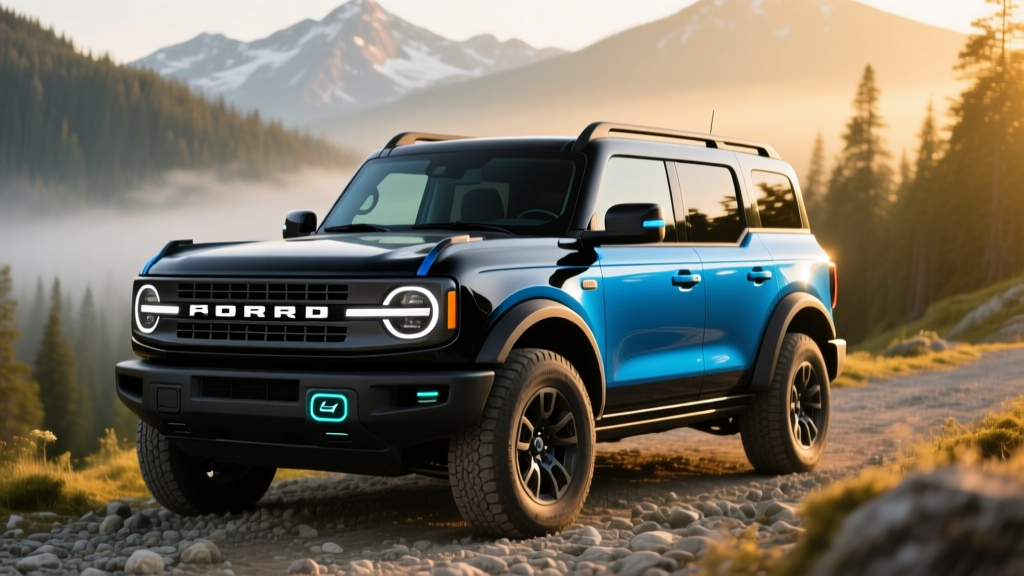
If you've been searching for a Bronco hybrid, you've likely noticed a confusing mix of rumors, wishful forum posts, and concept renders. Ford has offered the Bronco Sport Hybrid and the Bronco with a mild-hybrid 2.3L EcoBoost for recent model years, but a full Bronco plug-in hybrid (PHEV) has been a long-rumored addition to the lineup. For the 2026 model year, here's a data-driven breakdown of what's actually available, what the EPA numbers say, and whether the Bronco hybrid platform fits your driving and ownership needs.
2026 Bronco Hybrid Lineup: HEV, PHEV, or Mild Hybrid?
Before comparing numbers, it's critical to distinguish between three electrification levels Ford uses across the Bronco family. These are fundamentally different powertrains with different ownership experiences.
| Type | Plug In? | Electric-Only Range | How It Works |
|---|---|---|---|
| Mild Hybrid (MHEV) | No | 0 miles (electric motor assists only) | Small 48V motor smooths stop/start and provides brief torque fill; cannot drive on electric power alone |
| Hybrid (HEV) | No | ~1–2 miles at low speed | Gas engine + electric motor work together; battery recharges via regenerative braking and engine; never plugged in |
| Plug-In Hybrid (PHEV) | Yes | 25–40 miles (typical for SUVs this size) | Larger battery + more powerful motor; can drive on electricity alone for daily commutes; gas engine for longer trips |
For the 2026 model year, the full-size Ford Bronco is offered with the 2.3L EcoBoost I4 engine, which features a mild-hybrid system on select trims. The Bronco Sport offers a dedicated hybrid (HEV) powertrain. A Bronco PHEV has been widely reported as under development but remains unannounced for retail sale as of this writing — any specs circulating online are preliminary estimates, not confirmed production figures.
Bronco Sport Hybrid (HEV): EPA MPG and Powertrain Specs
The Bronco Sport Hybrid pairs a 2.5L Atkinson-cycle four-cylinder engine with an electric motor and a 1.1 kWh (usable) lithium-ion battery pack. Combined output is approximately 194 horsepower. This is a conventional hybrid — you never plug it in. The battery recharges through regenerative braking and the gasoline engine.
| Metric | Bronco Sport Hybrid (AWD) | Bronco Sport Gas (2.0T AWD) |
|---|---|---|
| EPA City MPG | 38 MPG | 21 MPG |
| EPA Highway MPG | 35 MPG | 26 MPG |
| EPA Combined MPG | 37 MPG | 23 MPG |
| Combined Horsepower | 194 hp | 250 hp |
| 0–60 mph (est.) | ~8.5 sec | ~6.9 sec |
| Fuel Tank | 16.0 gal | 16.0 gal |
| Total Range (est.) | ~592 miles | ~368 miles |
Source: EPA fueleconomy.gov (figures reflect most recent published Bronco Sport Hybrid data; verify 2026 model year updates at the link).
Real-World MPG: What Owners Actually See
Conventional hybrids like the Bronco Sport HEV often exceed EPA city estimates in stop-and-go traffic, where the electric motor handles more of the workload. On the highway, where the gas engine runs continuously, real-world MPG may drop to 30–33 MPG at sustained 75+ mph speeds. In mixed suburban driving, expect 34–38 MPG — closely tracking the EPA combined figure.
Full-Size Bronco: The Mild-Hybrid 2.3L EcoBoost Explained
The full-size Bronco (two-door and four-door) does not currently offer a full hybrid or plug-in hybrid powertrain. The 2.3L EcoBoost I4 available on multiple trims uses a mild-hybrid system — a small belt-driven motor/generator that assists with stop/start transitions and provides brief torque fill under acceleration. This is not a hybrid in the traditional sense:
- It cannot propel the vehicle on electric power alone
- It does not meaningfully improve EPA fuel economy (expect 20–21 MPG combined, similar to the non-mild-hybrid version)
- It requires no behavioral change from the driver — no plugging in, no driving mode selection
| Spec | 2026 Bronco 2.3L EcoBoost (Mild Hybrid) |
|---|---|
| EPA Combined MPG | ~20–21 MPG |
| EPA City / Highway | ~20 city / 22 highway |
| Horsepower | 300 hp |
| Torque | 325 lb-ft |
| Transmission | 10-speed automatic |
| Battery (48V system) | ~0.5 kWh |
| Electric-Only Range | None (assist only) |
| Base MSRP (Big Bend 4dr) | ~$41,295 |
Bronco PHEV: What We Know About the Rumored Plug-In
Industry reports and Ford's own electrification roadmap suggest a Bronco PHEV is in development, potentially sharing architecture with the Ford Escape PHEV or Explorer PHEV powertrains. If it arrives, here's what to expect based on comparable Ford PHEV platforms:
- Battery size: 14–18 kWh (usable), likely NMC chemistry
- Electric-only range: 28–38 miles (EPA estimate)
- DC fast charging: Unlikely — most Ford PHEVs charge only on Level 1 (120V) or Level 2 (240V). Expect 0–100% in roughly 3.5 hours on a Level 2 home charger at 3.6–7.2 kW
- Combined horsepower: 220–270 hp (estimated)
- Estimated starting MSRP: $50,000–$55,000
Important: These figures are preliminary estimates based on comparable platforms. Ford has not officially announced a Bronco PHEV for sale. We will update this article with confirmed EPA data once published.
Tax Credit Eligibility: Does the Bronco Hybrid Qualify?
Under current IRS §30D rules for the federal clean vehicle credit, eligibility depends on several factors that differ sharply between HEV and PHEV:
Federal Tax Credit Checklist (§30D)
- Conventional Hybrid (HEV): Does NOT qualify for the §30D credit. Only plug-in vehicles with a minimum battery capacity of 7 kWh are eligible.
- Mild Hybrid (MHEV): Does NOT qualify.
- Plug-In Hybrid (PHEV) — if/when available: May qualify for up to $7,500, subject to:
- — Buyer AGI income caps ($150K single / $300K joint)
- — Vehicle MSRP cap of $80,000 for SUVs
- — Battery component and critical mineral sourcing requirements (phased thresholds tighten annually)
- — Must be assembled in North America
- — Point-of-sale transfer available (applied as a dealer discount at purchase)
Always verify current-year eligibility on IRS.gov and consult a tax professional. Battery sourcing rules change annually and can disqualify otherwise eligible vehicles mid-year.
Battery Warranty, Lifespan, and Replacement Cost
Ford Hybrid Battery Warranty
Hybrid (HEV) battery: 8 years / 100,000 miles (whichever comes first), covering defects and capacity loss below a defined threshold. In California Air Resources Board (CARB) states, coverage extends to 10 years / 150,000 miles.
48V mild-hybrid battery: Typically covered under the standard powertrain warranty of 5 years / 60,000 miles.
PHEV battery (future): Expected to follow the same 8yr/100k-mile hybrid component warranty.
Hybrid battery replacement costs vary by model. For the Bronco Sport Hybrid, expect a replacement battery pack to cost between $2,500 and $4,000 (parts) plus $500–$1,000 in labor, based on comparable Ford hybrid platforms. Mild-hybrid 48V batteries are smaller and less expensive to replace ($800–$1,500).
In practice, modern hybrid batteries rarely need replacement within the warranty period. NHTSA complaint data and long-term fleet reports show most Ford hybrid batteries retain 85–90%+ capacity at 100,000 miles. Degradation is gradual, not catastrophic — you'll see slightly reduced electric assist and marginally lower MPG over time, not sudden failure.
Bronco Hybrid vs. Full EV vs. Gas: Which Fits You?
Decision Framework
Choose the Bronco Sport Hybrid (HEV) if:
- You want better fuel economy without any charging routine
- You drive 12,000–18,000 miles/year in mixed city/highway conditions
- You don't have access to home or workplace charging
- You want lower fuel costs with zero behavioral change (~$1,200–$1,500/year in fuel vs. $2,000–$2,400 for the gas Bronco Sport)
Wait for a Bronco PHEV (or consider the Escape PHEV now) if:
- You have home Level 2 charging and a commute under 35 miles
- You want to drive on electricity daily but need gas range for weekend off-road trips
- You want to potentially claim the $7,500 federal tax credit
Choose a full EV (like the Ford Mustang Mach-E or a future electric Bronco) if:
- You have reliable home charging
- Your daily driving is under 250 miles and you road-trip infrequently
- You want to eliminate gasoline costs entirely and minimize maintenance
Stick with the gas Bronco if:
- You tow frequently (5,000+ lbs — hybrids/PHEVs may have reduced tow ratings)
- You do serious off-roading and want maximum ground clearance and simplicity
- Upfront cost is the primary concern (gas trims start $5,000–$8,000 lower)
Pros and Cons at a Glance
✅ Pros — Bronco Sport Hybrid
- 37 MPG combined EPA — a 60% improvement over the gas 2.0T
- No plug-in required; zero change to refueling habits
- Strong city MPG due to regenerative braking
- 8-year/100k-mile battery warranty (10yr/150k in CARB states)
- AWD standard with hybrid powertrain
- Competitive starting price (~$34,000–$36,000)
❌ Cons — Bronco Sport Hybrid
- Lower peak horsepower (194 hp) vs. gas 2.0T (250 hp)
- Not eligible for the federal §30D tax credit
- Highway MPG drops noticeably above 75 mph
- Reduced cargo space vs. full-size Bronco
- Not designed for serious rock crawling or high-tow applications
- Full-size Bronco still lacks a true hybrid option
Frequently Asked Questions
How many MPG does the Bronco hybrid get?
The Bronco Sport Hybrid achieves an EPA-estimated 38 city / 35 highway / 37 combined MPG. The full-size Bronco with the mild-hybrid 2.3L EcoBoost returns approximately 20–21 MPG combined — the mild-hybrid system does not significantly change fuel economy.
Can the Bronco hybrid drive on electric power alone?
The Bronco Sport Hybrid (HEV) can creep at very low speeds on electric power for roughly 1 mile, but it cannot sustain highway speeds without the gas engine. A future Bronco PHEV would offer 28–38 miles of electric-only driving based on comparable Ford platforms.
Do I need to plug in the Bronco Sport Hybrid?
No. The Bronco Sport Hybrid is a conventional hybrid (HEV). The battery charges through regenerative braking and the gasoline engine. There is no plug and no charging cable.
Is the Bronco hybrid reliable?
Ford's hybrid powertrain has a solid reliability track record, particularly the 2.5L Atkinson-cycle engine used in the Escape Hybrid and Bronco Sport Hybrid. This engine is naturally aspirated with no turbocharger, reducing mechanical complexity. The hybrid battery is warrantied for 8 years / 100,000 miles.
What does a Bronco hybrid battery replacement cost?
Based on comparable Ford hybrid platforms, expect $2,500–$4,000 for the battery pack plus $500–$1,000 in labor. Most hybrid batteries last well beyond 100,000 miles with gradual (not sudden) degradation. The 48V mild-hybrid battery in the full-size Bronco is smaller and cheaper to replace ($800–$1,500).
Does the Bronco hybrid qualify for a tax credit?
The Bronco Sport Hybrid (HEV) and the full-size Bronco mild hybrid do NOT qualify for the federal §30D clean vehicle credit — only plug-in vehicles with 7+ kWh batteries are eligible. A future Bronco PHEV could qualify for up to $7,500, subject to income caps, MSRP limits, and battery sourcing rules. Some states offer separate hybrid rebates — check your state's energy office.
Will Ford release a Bronco PHEV?
Ford has not officially announced a Bronco PHEV as of this writing. Industry reports suggest development is underway, potentially arriving for the 2027 or 2028 model year. We will update this guide with confirmed specs once Ford publishes them.