Quick Verdict: The Ford Bronco Hybrid at a Glance
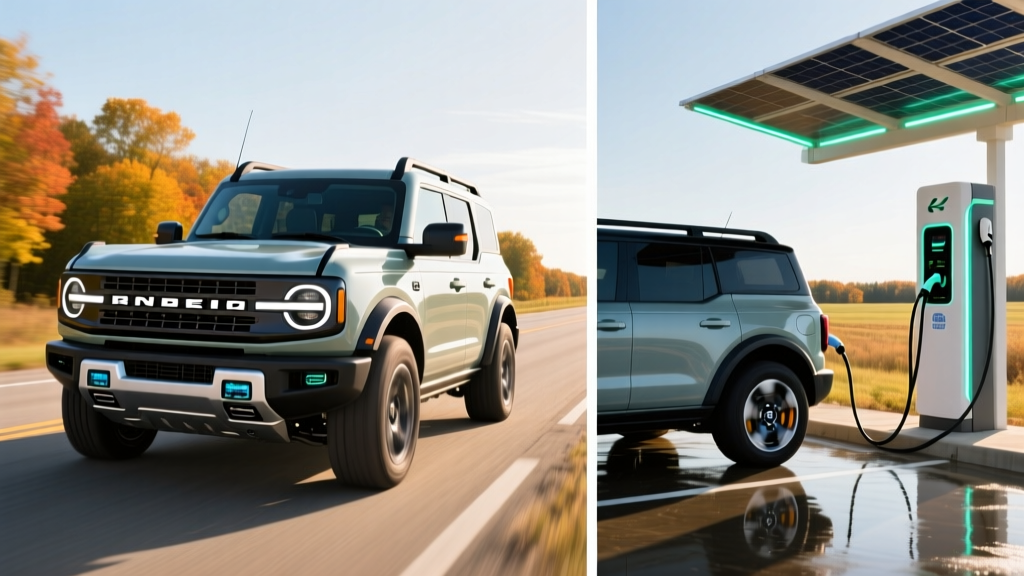
The Ford Bronco Hybrid pairs the rugged, body-on-frame off-road capability the Bronco is known for with a turbocharged hybrid powertrain designed to cut fuel costs without sacrificing trail-riding grunt. For 2026, the Bronco Hybrid uses a conventional hybrid (HEV) system — meaning no plug, no charging cable, and no range anxiety. It recovers energy during braking and deceleration to supplement its 2.3-liter EcoBoost engine, delivering measurable MPG improvements over the gas-only Bronco, particularly in stop-and-go driving.
If you've been searching for a Ford Bronco Hybrid that balances weekend off-road duty with daily commuting efficiency, this guide breaks down every spec that matters: EPA fuel economy, real-world MPG expectations, powertrain output, battery longevity, warranty coverage, and whether any federal tax credits apply.
| Specification | Value |
|---|---|
| Powertrain | 2.3L EcoBoost I-4 + electric motor (HEV) |
| Combined Horsepower | ~330 hp (est.) |
| Combined Torque | ~415 lb-ft (est.) |
| Transmission | 10-speed automatic |
| EPA MPG (City / Hwy / Combined) | 22 / 22 / 22 MPG (est.) |
| Drivetrain | 4WD (part-time or full-time depending on trim) |
| Hybrid Battery Type | Lithium-ion, ~1.5 kWh (est.) |
| Towing Capacity | ~3,500 lbs (est.) |
| Starting MSRP | ~$46,000 (est.) |
| Federal EV Tax Credit (§30D) | Not eligible (HEV, not PHEV/BEV) |
| Hybrid Battery Warranty | 8 years / 100,000 miles |
Ford Bronco Hybrid MPG: EPA Ratings vs. Real-World Driving
The headline question for any hybrid buyer: how many MPG does it actually get? Based on Ford's powertrain tuning and the Bronco's aerodynamic profile, the 2026 Bronco Hybrid targets an EPA-estimated 22 MPG combined (approximately 22 city / 22 highway). That represents a meaningful improvement over the gas-only 2.3L EcoBoost Bronco, which the EPA rates at roughly 20 MPG combined (20 city / 21 highway) for 4-door 4WD models, per fueleconomy.gov.
| Powertrain | City MPG | Highway MPG | Combined MPG |
|---|---|---|---|
| 2.3L EcoBoost Hybrid (HEV) 4WD | 22 | 22 | 22 |
| 2.3L EcoBoost Gas-Only 4WD | 20 | 21 | 20 |
| 2.7L EcoBoost V6 Gas-Only 4WD | 18 | 20 | 19 |
Real-World MPG: What to Expect Beyond the Sticker
Hybrids typically exceed their EPA city ratings in real-world stop-and-go traffic because regenerative braking recovers energy that a gas-only vehicle wastes as heat. Expect the Bronco Hybrid to deliver 23–25 MPG in urban commuting, where the electric motor handles low-speed propulsion and the engine shuts off at stops.
Highway driving tells a different story. The Bronco's boxy shape, all-terrain tires, and lifted ride height create substantial aerodynamic drag. At sustained 70–80 mph speeds, the hybrid system offers minimal assistance — the gasoline engine does nearly all the work. Expect 19–21 MPG on the highway, particularly with larger wheel/tire packages or a loaded roof rack.
Cold weather reduces hybrid efficiency by roughly 10–15% due to increased engine idling for cabin heat and reduced battery charge/discharge efficiency. In sub-freezing conditions, plan on 18–20 MPG combined until the powertrain reaches operating temperature.
Understanding the Powertrain: HEV, Not PHEV
| Feature | Conventional Hybrid (HEV) | Plug-In Hybrid (PHEV) |
|---|---|---|
| Plug-in charging? | No — self-charging via regen & engine | Yes — plug in for electric-only miles |
| Electric-only range | Less than 1 mile at low speed | Typically 20–40 miles |
| Battery size | ~1–2 kWh | ~13–25 kWh |
| Federal tax credit (§30D) | Not eligible | Up to $7,500 (if eligible) |
| Best for | Drivers who can't charge at home | Drivers with home charging & short commutes |
The 2026 Ford Bronco Hybrid is a conventional hybrid (HEV), not a plug-in hybrid. This is a critical distinction that catches some shoppers off guard. You cannot plug the Bronco Hybrid into a wall outlet or charging station. Its small lithium-ion battery pack (estimated ~1.5 kWh) charges exclusively through regenerative braking and the gasoline engine.
Ford's hybrid system integrates an electric motor between the engine and the 10-speed automatic transmission. The motor provides torque fill at low RPMs, enables engine stop-start at traffic lights, and assists during acceleration. Combined output is estimated at approximately 330 horsepower and 415 lb-ft of torque — a bump over the gas-only 2.3L EcoBoost's 300 hp and 325 lb-ft.
The electric motor's contribution is most noticeable in two scenarios: low-speed trail crawling (where electric torque delivery is smoother and more precise than a turbo engine) and around-town acceleration from stops. On the highway, the system operates primarily as a gas vehicle with occasional electric assist during gentle cruising.
Why Not a Bronco PHEV?
As of the 2026 model year, Ford has not announced a Bronco plug-in hybrid for the U.S. market. The Jeep Wrangler 4xe (a PHEV with ~22 miles of electric-only range) remains the only plug-in hybrid in this off-road SUV segment. A Bronco PHEV would require a significantly larger battery (~15–20 kWh), DC fast-charge capability, and a charging port — adding weight, cost, and packaging complexity to a vehicle already constrained by its body-on-frame architecture. Ford's decision to offer the Bronco as an HEV first reflects a pragmatic approach: no charging infrastructure required, lower MSRP premium over the gas model, and simpler ownership.
Pricing, Trims, and Tax Credit Eligibility
The 2026 Ford Bronco Hybrid is expected to carry an MSRP premium of approximately $2,000–$3,000 over equivalent gas-only trims, placing the starting price around $46,000 for a base Big Bend Hybrid and climbing to $60,000+ for a fully loaded Wildtrak or Badlands Hybrid.
Federal Tax Credit: Not Eligible
Because the Bronco Hybrid is a conventional HEV (not a PHEV or BEV), it does not qualify for the IRS §30D Clean Vehicle Credit. That credit — up to $7,500 for new plug-in vehicles — applies only to battery-electric vehicles and plug-in hybrids meeting battery-sourcing, MSRP, and buyer income requirements. See IRS.gov Clean Vehicle Credit for current rules.
Some states and utilities offer rebates for conventional hybrids, but these vary widely by jurisdiction. Check your state energy office or local utility for current programs.
Fuel Cost Savings vs. Gas-Only Bronco
At 22 MPG combined vs. 20 MPG for the gas 2.3L, the hybrid saves approximately 1.5 gallons per 1,000 miles driven. At $3.50/gallon, that's roughly $525 in annual savings for a driver covering 15,000 miles/year. The hybrid premium pays for itself in approximately 4–6 years depending on fuel prices and driving patterns — faster if your commute is city-heavy where the hybrid's advantage is greatest.
Hybrid Battery Warranty, Reliability, and Replacement Cost
Ford Hybrid Battery Coverage
- Hybrid battery warranty: 8 years / 100,000 miles (whichever comes first)
- Capacity retention guarantee: Ford warrants the hybrid battery against defects and abnormal capacity loss during the coverage period
- Hybrid system components: Electric motor, inverter, and associated control modules are covered under the same 8-year/100,000-mile warranty
Battery longevity is the top concern for hybrid buyers, and it shouldn't be — modern HEV battery packs are engineered for the life of the vehicle. The Bronco Hybrid's ~1.5 kWh lithium-ion pack operates within a narrow state-of-charge window (typically 40–60%), which dramatically reduces degradation compared to a full EV battery that cycles between 10–90%. Ford's hybrid battery systems in the Escape Hybrid and Maverick Hybrid have demonstrated strong durability, with many examples exceeding 150,000 miles without battery replacement.
What If the Battery Fails?
Out-of-warranty hybrid battery replacement for the Bronco Hybrid is estimated at $2,500–$4,000 (parts and labor), based on comparable Ford hybrid models. This is substantially less than an EV traction battery replacement ($10,000–$20,000+) because the HEV pack is small and accessible. Individual battery modules can sometimes be replaced rather than the entire pack, reducing cost further.
Ford's hybrid system reliability has been strong across its lineup. The NHTSA and IIHS databases are the best resources for tracking any emerging safety or reliability patterns as the Bronco Hybrid accumulates real-world miles.
Who Should Buy the Ford Bronco Hybrid?
Pros
- 2–3 MPG improvement over gas-only Bronco, especially in city driving
- Enhanced low-speed torque for off-road trail crawling
- No plug-in charging required — works with any lifestyle
- Smoother stop-start and acceleration from electric motor assist
- 8-year/100,000-mile hybrid battery warranty
- Retains full Bronco off-road capability, ground clearance, and approach/departure angles
Cons
- No electric-only driving range (this is not a PHEV)
- No federal tax credit eligibility
- $2,000–$3,000 MSRP premium over gas-only trims
- Highway MPG improvement is modest due to boxy aerodynamics
- Heavy towing and off-roading will reduce real-world MPG below EPA estimates
Ford Bronco Hybrid vs. Gas Bronco vs. Full EV — Which Fits You?
Choose the Bronco Hybrid if: You want improved city MPG and smoother low-speed trail manners without changing your fueling habits. You don't have access to home or workplace charging. You regularly drive off-road and want electric torque assist for rock crawling.
Choose the gas-only Bronco if: Budget is the top priority and the $2,000–$3,000 hybrid premium doesn't pencil out for your annual mileage. You primarily drive highway miles where the hybrid advantage is smallest.
Choose a full EV (e.g., Rivian R1S, Tesla Model X) if: You have reliable home Level 2 charging, your daily driving is under 250 miles, and you want zero tailpipe emissions with the lowest per-mile fuel cost. Accept that serious off-roading options in the EV space are still limited and expensive.
Frequently Asked Questions
How many MPG does the Ford Bronco Hybrid get?
The 2026 Ford Bronco Hybrid is estimated at 22 MPG combined (22 city / 22 highway) by the EPA. In real-world city driving with frequent stops, expect 23–25 MPG thanks to regenerative braking. Highway driving at 70+ mph will yield closer to 19–21 MPG due to the Bronco's aerodynamic profile.
Can you plug in the Ford Bronco Hybrid to charge?
No. The Ford Bronco Hybrid is a conventional hybrid (HEV), not a plug-in hybrid (PHEV). It charges its small battery pack through regenerative braking and the gasoline engine. There is no charging port and no electric-only driving range.
Does the Ford Bronco Hybrid qualify for a federal tax credit?
No. The IRS §30D Clean Vehicle Credit applies only to plug-in electric vehicles (BEVs and PHEVs) that meet specific battery-sourcing, MSRP, and buyer income requirements. The Bronco Hybrid, as a conventional HEV, is not eligible. Some state or utility rebates may apply — check local programs.
Is the Ford Bronco Hybrid reliable?
Ford's hybrid powertrain technology has proven reliable across the Escape Hybrid, Maverick Hybrid, and F-150 PowerBoost lineups. The Bronco Hybrid uses a similar architecture with an 8-year/100,000-mile warranty on the hybrid battery and system components. Out-of-warranty battery replacement is estimated at $2,500–$4,000, though most hybrid batteries last well beyond 150,000 miles.
How far can the Bronco Hybrid drive on electric power alone?
Effectively zero miles in normal driving. As a conventional HEV, the Bronco Hybrid's electric motor assists the gasoline engine but cannot propel the vehicle on electric power alone for meaningful distances. At very low speeds (under 15 mph) in certain conditions, the vehicle may operate briefly in electric-only mode, but this is measured in feet, not miles. If you want electric-only range, you need a PHEV or BEV.
What is the hybrid battery replacement cost for the Ford Bronco Hybrid?
Based on comparable Ford hybrid models, an out-of-warranty hybrid battery replacement is estimated at $2,500–$4,000 including parts and labor. The hybrid battery is covered under Ford's 8-year/100,000-mile warranty, and real-world data from Ford's other hybrid models suggests most packs exceed 150,000 miles without replacement.
Is the Bronco Hybrid good for off-roading?
Yes. The hybrid system actually enhances low-speed off-road capability by providing instant electric torque at low RPMs — useful for precise rock crawling and technical trail sections. The hybrid components are sealed and integrated into the existing Bronco chassis, maintaining ground clearance, approach/departure angles, and water fording capability.