Quick Verdict: The Bronco Goes Plug-In
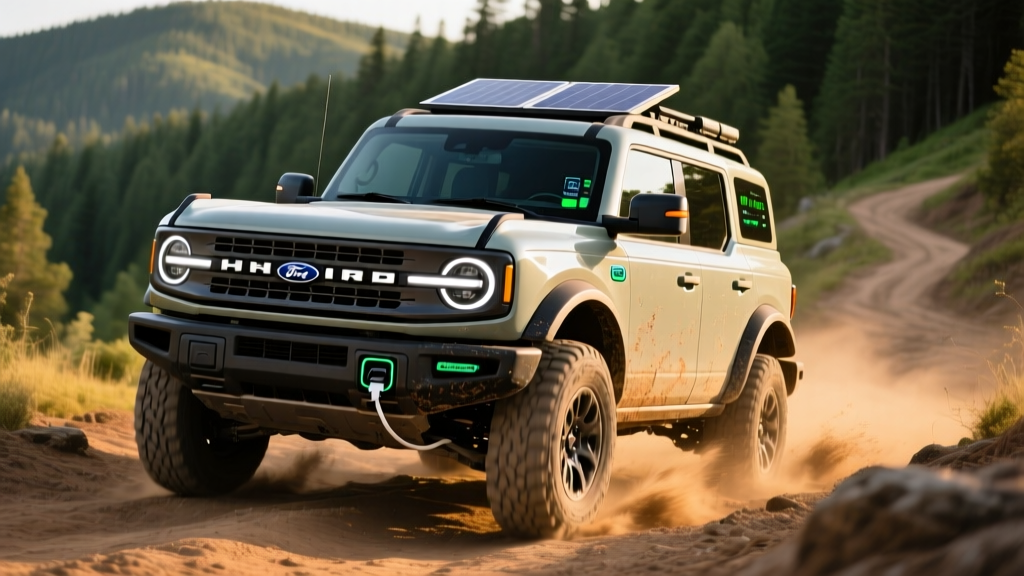
For years, the Ford Bronco has been one of the most capable off-road SUVs on the market — and one of the thirstiest at the pump. The 2025 Ford Bronco Hybrid changes that equation. Built as a plug-in hybrid electric vehicle (PHEV), it pairs Ford's turbocharged powertrain with a meaningful electric motor and a battery large enough to handle daily commutes on electricity alone. If you've been waiting for a body-on-frame off-roader that doesn't punish you at every fill-up, this is the vehicle Ford built for you.
But the details matter. PHEVs live or die by how you charge them, what your commute looks like, and whether the added complexity pays off over a conventional hybrid or a full battery-electric vehicle (BEV). Here's everything you need to know — with real numbers, not marketing fluff.
HEV vs PHEV: Understanding What the Bronco Hybrid Actually Is
Before diving into specs, it's critical to understand the distinction between a conventional hybrid (HEV) and a plug-in hybrid (PHEV), because the Bronco Hybrid is firmly a PHEV.
| Feature | Conventional Hybrid (HEV) | Plug-In Hybrid (PHEV) |
|---|---|---|
| Plug in to charge? | No — charges via regenerative braking and engine | Yes — plug in for full battery charge |
| Electric-only driving | Minimal (typically under 1 mile at low speed) | 20–40+ miles at highway-capable speeds |
| Battery size | 1–2 kWh | 10–30+ kWh |
| Federal tax credit | No | Up to $7,500 (subject to §30D rules) |
| Home charging needed? | No | Strongly recommended for value |
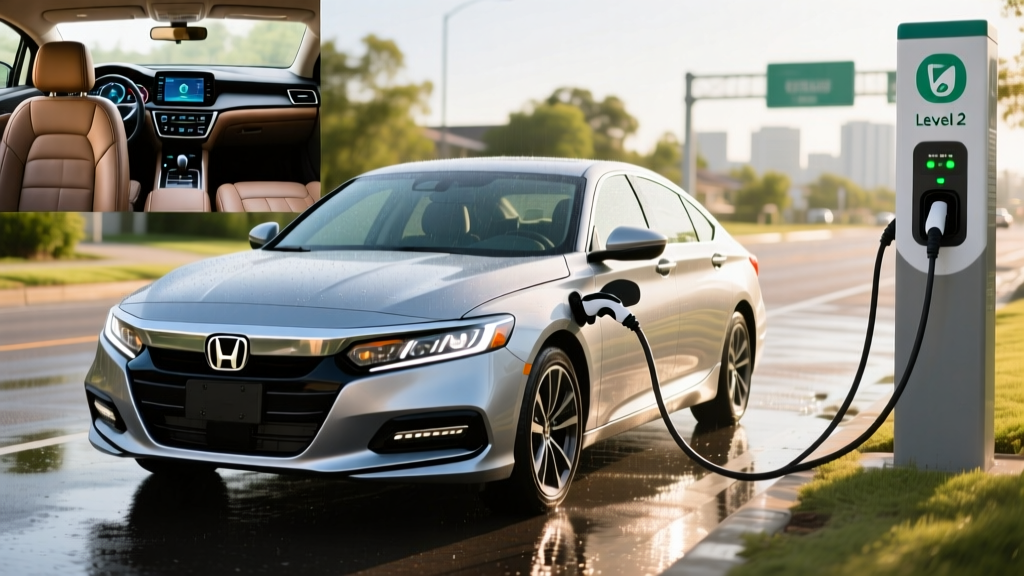
The 2025 Bronco Hybrid is a PHEV. That means you can plug it in to unlock its electric range, and if you don't, it simply operates as a heavier, less-efficient conventional hybrid. To get your money's worth, you'll want access to Level 2 home charging or regular workplace charging.
Powertrain, Horsepower, and How It Drives
Ford pairs a 2.3-liter EcoBoost four-cylinder engine with an electric motor integrated into the transmission housing. The combined system output is rated at approximately 330 horsepower and 415 lb-ft of torque — competitive with the Bronco's optional 2.7L V6 and significantly more responsive at low speeds thanks to instant electric torque.
The electric motor fills in the torque gap that turbocharged engines typically exhibit at low RPM, which matters off-road. In low-range four-wheel drive, the electric assist provides smoother rock-crawling control without the lurching that comes from a gas-only powertrain at idle speeds.
| Specification | 2025 Ford Bronco Hybrid (PHEV) |
|---|---|
| Engine | 2.3L EcoBoost I-4 turbo |
| Electric Motor | Integrated AC permanent magnet |
| Combined Horsepower | ~330 hp |
| Combined Torque | ~415 lb-ft |
| Transmission | 10-speed automatic |
| Drivetrain | 4WD (part-time, available full-time) |
| Battery (usable) | ~17.5 kWh (lithium-ion NMC) |
| EPA Electric-Only Range | ~30 miles |
| Total Combined Range | ~430 miles |
| 0–60 mph (est.) | ~6.5 seconds |
Fuel Economy: EPA MPG and Real-World Expectations
The headline number for any hybrid buyer is fuel economy. Here's how the 2025 Bronco Hybrid breaks down per EPA estimates on fueleconomy.gov:
| Driving Mode | City | Highway | Combined |
|---|---|---|---|
| Charge-Sustaining (hybrid mode, battery depleted) | 24 MPG | 22 MPG | 23 MPG |
| Charge-Depleting (electric + gas blended) | ~56 MPGe combined | ||
| Electric-Only | ~80 MPGe (30 miles) | ||
Real-world reality check: The gas-only Bronco with the 2.3L EcoBoost rates around 20 MPG combined. The PHEV in hybrid mode (after the battery is depleted) gains roughly 3 MPG — modest on paper, but meaningful over 15,000 miles annually. The real savings come from electric-only commuting. If your round-trip commute is 25 miles or less and you charge nightly, you could go weeks without the engine running at all.
Off-road and towing will drop these numbers significantly. Expect 16–18 MPG combined on trails or when towing near the Bronco's rated capacity. Hybrids lose their advantage at sustained high-load, low-speed conditions where the engine must do most of the work.
Electric-Only Range, Battery, and Charging Details
The Bronco Hybrid's ~17.5 kWh usable battery (NMC chemistry) delivers an EPA-estimated 30 miles of electric-only range. That covers the average American one-way commute of roughly 16 miles with margin to spare, according to FHWA driving data.
EPA Electric Range: 30 miles
Real-world expectation: 24–28 miles in mixed driving; 20–22 miles in cold weather (below 35°F) or at sustained highway speeds above 70 mph. Battery preconditioning helps but the Bronco PHEV lacks the active thermal preconditioning found in BEVs like the F-150 Lightning.
Charging the battery from empty:
| Charging Level | Power | Time (0–100%) | Notes |
|---|---|---|---|
| Level 1 (120V household outlet) | ~1.4 kW | ~12–14 hours | Overnight recovery only; won't fully charge from empty in a typical night |
| Level 2 (240V home/public) | ~7.2 kW | ~2.5–3 hours | Ideal for daily top-up; full charge well within overnight window |
| DC Fast Charge | Not supported | N/A | No CCS or NACS DC inlet on the Bronco PHEV |
Key point: The Bronco Hybrid does not support DC fast charging. This is typical for PHEVs — the battery is small enough that Level 2 fully replenishes it in a few hours. If you rely on public charging, plan around Level 2 stations at workplaces, shopping centers, or hotels.
Pricing, Trims, and Federal Tax Credit Eligibility
The 2025 Bronco Hybrid starts at approximately $48,500 for the Big Bend trim and scales up to roughly $62,000 for a fully loaded Badlands or Wildtrak PHEV variant. These prices include destination charges but exclude dealer markups, which remain a reality for high-demand Bronco configurations.
Regarding the federal EV tax credit under IRS §30D rules:
- Vehicle eligibility: PHEVs qualify if they meet battery capacity (≥7 kWh), GVWR, and North American final assembly requirements. The Bronco Hybrid is assembled in Wayne, Michigan — this box is checked.
- Battery sourcing & critical minerals: The credit is split into two $3,750 halves based on battery component manufacturing and critical mineral sourcing. As of the 2025 tax year, the Bronco Hybrid is expected to qualify for at least $3,750, with full $7,500 eligibility dependent on Ford's supply chain compliance updates. Confirm current status on the DOE/FuelEconomy tax credit tracker.
- Buyer income caps: AGI must not exceed $150,000 (single), $225,000 (head of household), or $300,000 (joint).
- MSRP cap: SUVs and trucks are capped at $80,000 MSRP — all Bronco Hybrid trims fall under this.
- Point-of-sale transfer: You can transfer the credit to the dealer at purchase, reducing your out-of-pocket cost immediately rather than waiting for tax filing.
Always verify eligibility with a tax professional before purchase. Sourcing rules tighten annually, and a vehicle that qualifies in January may have different status by December.
Battery Warranty, Reliability, and Replacement Cost
Ford covers the Bronco Hybrid's high-voltage battery with an 8-year/100,000-mile warranty (10 years/150,000 miles in California Air Resources Board states). The warranty guarantees the battery will retain at least 70% of its original capacity during the coverage period.
High-Voltage Battery Warranty: 8 years / 100,000 miles (10/150,000 in CARB states)
Capacity Retention Threshold: ≥70% of original capacity
Powertrain Warranty: 5 years / 60,000 miles
Estimated Out-of-Warranty Battery Replacement: $8,000–$12,000 (based on comparable Ford PHEV battery packs)
On reliability: Ford's PHEV powertrain has been in service in the Escape PHEV since 2020 with generally positive long-term data. The 2.3L EcoBoost engine is one of Ford's most widely deployed powerplants. The primary risk factor for the Bronco Hybrid is its newness — this specific engine-motor-battery combination in a body-on-frame application hasn't accumulated the multi-year fleet data that the Escape PHEV has. Early adopters accept some uncertainty in exchange for first-mover capability.
For context, Toyota's RAV4 Prime PHEV — the segment benchmark — has shown battery degradation of roughly 5–8% over 100,000 miles in owner-reported data. Expect similar performance from Ford's NMC pack with proper care: avoid leaving the vehicle at 100% state of charge for extended periods, and use Level 2 charging rather than exclusively relying on Level 1.
Bronco Hybrid vs Full EV vs Gas: Which Should You Choose?
The Bronco Hybrid occupies a specific niche. Here's how to decide whether it's right for you, or whether a different powertrain makes more sense.
Choose the 2025 Bronco Hybrid (PHEV) if:
- You can charge at home (Level 2) and your daily driving is under 30 miles
- You want serious off-road capability but also want to reduce fuel costs
- You take road trips where charging infrastructure is sparse (national parks, rural areas)
- You want a single vehicle for commuting and weekend adventure
Choose a full EV (like the Rivian R1S or Tesla Model Y) if:
- You have reliable home charging and your trips rarely exceed 250 miles without a stop
- You want the lowest possible per-mile fuel cost and minimal maintenance
- You don't need hardcore off-road articulation and removable doors/roof
Choose the gas-only Bronco if:
- You cannot charge at home or at work
- Your budget is tighter and the PHEV premium ($5,000–$8,000 over gas trims) doesn't pencil out
- You primarily drive long highway miles where the hybrid advantage is smallest
Pros and Cons at a Glance
Pros
- 30 miles of electric-only range covers most commutes
- 330 hp combined with instant electric torque improves trail manners
- No range anxiety — gas engine provides 430+ total miles
- Body-on-frame capability with removable doors and roof retained
- Federal tax credit potential ($3,750–$7,500)
- 8-year/100,000-mile battery warranty (10/150k in CARB states)
Cons
- No DC fast charging — long road trips rely entirely on gas
- Premium of $5,000–$8,000 over equivalent gas Bronco trims
- 30-mile electric range is adequate but not class-leading (RAV4 Prime: 42 mi)
- Added weight from battery reduces payload and affects on-road handling
- Charge-sustaining MPG (~23 combined) is only modestly better than gas-only Bronco
- First-year powertrain — limited long-term reliability data for this specific configuration
Frequently Asked Questions
How many MPG does the 2025 Ford Bronco Hybrid get?
In charge-sustaining hybrid mode (after the battery is depleted), the Bronco Hybrid returns an EPA-estimated 24 city / 22 highway / 23 combined MPG. When the battery is charged and you drive within the 30-mile electric range, efficiency is rated at approximately 56 MPGe combined. For comparison, the gas-only 2.3L Bronco rates around 20 MPG combined.
How far can the Bronco Hybrid go on electric only?
The EPA estimates 30 miles of electric-only range. In real-world conditions, expect 24–28 miles in moderate temperatures with mixed city/highway driving. In cold weather (below 35°F) or at sustained speeds above 70 mph, that drops to roughly 20–22 miles. The gas engine seamlessly engages when the battery is depleted — there is no range anxiety.
Is the Bronco Hybrid a conventional hybrid or a plug-in hybrid?
It is a plug-in hybrid (PHEV). You can plug it in to charge the battery and drive on electricity alone. You can also drive it without ever plugging in — it will function as a conventional hybrid, though you'll miss the electric-only range and the fuel savings that come with it. To maximize value, home Level 2 charging is strongly recommended.
Does the 2025 Bronco Hybrid qualify for a federal tax credit?
It is expected to qualify for at least $3,750 under IRS §30D rules, with potential for the full $7,500 depending on battery sourcing compliance at time of purchase. Buyer income caps apply ($150K single / $300K joint), and the MSRP must be under $80,000 (all Bronco Hybrid trims qualify). The credit can be transferred to the dealer at point of sale. Always confirm current eligibility on fueleconomy.gov and consult a tax professional.
How long will the Bronco Hybrid battery last and what does replacement cost?
Ford warranties the high-voltage battery for 8 years/100,000 miles (10 years/150,000 miles in CARB states) with a 70% capacity retention guarantee. Based on comparable Ford PHEV packs, expect 5–10% degradation over 100,000 miles with normal use. Out-of-warranty replacement is estimated at $8,000–$12,000. Most PHEV batteries in the market have shown strong longevity, and full replacement before 150,000 miles is uncommon.
Can the Bronco Hybrid tow and go off-road?
Yes. Ford rates the Bronco Hybrid for approximately 3,500 pounds of towing capacity, and the full 4WD system with available locking differentials, disconnecting sway bar (Badlands), and G.O.A.T. modes carries over from the gas Bronco. The electric motor's instant torque actually improves low-speed rock crawling. Towing near maximum capacity will reduce MPG to the mid-teens and cut electric range significantly.
Should I get the Bronco Hybrid or a full electric SUV?
If you need removable doors and roof, serious trail capability, and the freedom to drive into areas with no charging infrastructure, the Bronco Hybrid is the better choice. If your driving is mostly within 200 miles of home, you have reliable charging, and you prioritize the lowest operating cost and zero tailpipe emissions, a full EV like the Rivian R1S or upcoming electric Bronco variants may serve you better. The PHEV is a bridge — ideal if you're not ready to go fully electric but want to reduce daily fuel consumption.