Understanding the 3.5L PowerBoost Full Hybrid V6 in the Ford F-150
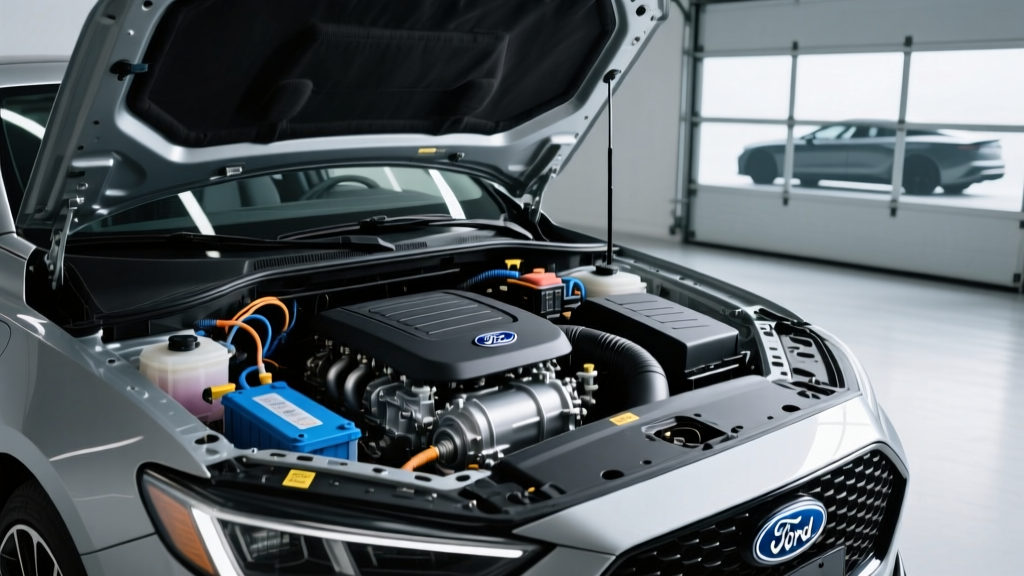
The Ford 3.5L PowerBoost Full Hybrid V6 pairs a twin-turbocharged 3.5-liter EcoBoost V6 engine with a 47-hp (35 kW) electric motor integrated into the 10-speed automatic transmission. Combined output is 430 horsepower and 570 lb-ft of torque. This is a conventional hybrid (HEV), not a plug-in hybrid — it charges its 1.5 kWh lithium-ion battery through regenerative braking and the gasoline engine, meaning you never plug it in.
The PowerBoost debuted in the 2021 F-150 and continues through the 2026 model year as the highest-output non-Raptor F-150 powertrain. Buyers searching for 3.5L PowerBoost Full Hybrid V6 problems are typically weighing this powertrain against the standard 3.5L EcoBoost V6, the 5.0L Coyote V8, or the all-electric F-150 Lightning. Below, we break down every documented issue, real-world fuel economy, battery longevity, and total ownership cost.
How Many MPG Does the F-150 PowerBoost Get?
The EPA rates the 2026 Ford F-150 PowerBoost at 25 MPG combined for the 4x2 configuration and 23 MPG combined for the 4x4. These figures represent a meaningful improvement over the non-hybrid 3.5L EcoBoost V6, which returns 20 MPG combined (4x2) or 19 MPG combined (4x4).
| Configuration | EPA City | EPA Highway | EPA Combined | Real-World Combined (Observed) |
|---|---|---|---|---|
| 4x2 SuperCrew | 25 MPG | 26 MPG | 25 MPG | 23–26 MPG |
| 4x4 SuperCrew | 23 MPG | 23 MPG | 23 MPG | 20–24 MPG |
| 3.5L EcoBoost (non-hybrid) 4x4 | 17 MPG | 22 MPG | 19 MPG | 17–20 MPG |
Source: fueleconomy.gov
Real-world note: Hybrid trucks, like all hybrids, tend to outperform their EPA city ratings in stop-and-go traffic where regenerative braking and electric-only low-speed driving shine. Highway mileage often dips below the EPA sticker because the gasoline engine does nearly all the work at sustained speeds. Owners who tow should expect 12–15 MPG combined while pulling a 5,000+ lb trailer — the hybrid advantage narrows significantly under heavy load.
Documented 3.5L PowerBoost Full Hybrid V6 Problems
No powertrain is without faults. Based on NHTSA complaints, TSBs (Technical Service Bulletins), and owner forums, here are the most commonly reported issues with the 3.5L PowerBoost:
Transmission Shudder and Hesitation
The most frequent complaint centers on the 10-speed automatic's behavior during the transition between electric-only and engine-driven propulsion. Owners report a noticeable shudder or lurch at low speeds (5–15 mph) when the gasoline engine engages. Ford has issued multiple TSBs addressing transmission calibration, and most 2024–2026 models have received updated software that significantly reduces this behavior. Early 2021–2022 models are more susceptible.
Electrical System Glitches
The PowerBoost's complex electrical architecture — managing both a 12V system and a high-voltage hybrid system — has produced intermittent reports of instrument cluster resets, SYNC 4 infotainment freezes, and 12V battery drain in models that sit unused for extended periods. The 12V battery is particularly sensitive because the high-voltage system does not maintain it when the truck is off for days.
Cam Phaser Rattle (Carryover from EcoBoost)
The 3.5L EcoBoost V6's cam phaser noise on cold start has been a known issue since the engine's introduction. The PowerBoost inherits this architecture. While Ford redesigned the cam phasers for the 2021+ generation, some owners still report a brief rattling noise during cold starts. This is generally cosmetic rather than a failure indicator, but it remains a concern for long-term buyers.
Pro Power Onboard Issues
The PowerBoost's signature feature — up to 7.2 kW of onboard power export (Pro Power Onboard) — has seen occasional reports of GFCI trips and inverter faults, particularly when running high-draw appliances like welders or multiple space heaters simultaneously. These are typically usage-limit issues rather than systemic defects.
Oil Dilution Concerns
Like many direct-injection turbocharged engines that operate with frequent start-stop cycles, some owners have reported fuel dilution in the engine oil, detectable by a gasoline smell on the dipstick. Ford's recommended oil change interval is 7,500–10,000 miles under normal conditions, but owners who do extensive short-trip, cold-climate driving may want to shorten this to 5,000 miles.
PowerBoost Pros
- 430 hp / 570 lb-ft — highest torque of any F-150 short of the Raptor R
- 23–25 MPG combined — best-in-class for a full-size truck
- Up to 7.2 kW Pro Power Onboard — jobsite and tailgate generator
- 12,700 lb max towing capacity (properly equipped)
- No plug-in required — seamless ownership experience
PowerBoost Cons
- $2,500–$3,300 premium over 3.5L EcoBoost depending on trim
- Low-speed engine engagement shudder (improved but not eliminated)
- Complex powertrain — higher potential repair costs out of warranty
- 12V battery drain if truck sits unused for weeks
- Hybrid MPG advantage nearly vanishes while towing heavy loads
PowerBoost Battery Warranty, Lifespan, and Replacement Cost
Ford Hybrid Battery Warranty
Coverage: 8 years / 100,000 miles (whichever comes first) for hybrid battery components, per Ford's Hybrid/Electric Vehicle Component Warranty. In California Air Resources Board (CARB) states, coverage extends to 10 years / 150,000 miles.
Capacity threshold: Ford covers the hybrid battery if it falls below a defined state-of-health threshold, typically around 60–70% of original capacity during the warranty period.
The 1.5 kWh lithium-ion battery pack in the PowerBoost is small compared to a full EV or PHEV battery, and it operates within a narrow state-of-charge window (roughly 40–60% SoC) to minimize degradation. This shallow-cycling strategy is the same approach Toyota has used for decades in its hybrids and is proven to extend battery life well beyond 150,000 miles in most cases.
Replacement cost: If the hybrid battery fails out of warranty, expect a replacement cost of approximately $2,000–$4,000 for the battery module, plus $500–$1,000 in labor. This is dramatically lower than a full EV battery replacement because the PowerBoost pack is small and modular. Third-party refurbished hybrid batteries are also becoming available for older model years.
HEV vs. PHEV vs. EV: Which F-150 Powertrain Fits You?
The F-150 lineup offers three electrification-adjacent choices. Here's how they compare:
| Attribute | PowerBoost HEV | F-150 Lightning (BEV) | 3.5L EcoBoost (Gas) |
|---|---|---|---|
| Powertrain Type | Conventional Hybrid (HEV) | Battery Electric (BEV) | Turbocharged Gas |
| Combined Output | 430 hp / 570 lb-ft | 580 hp / 775 lb-ft (ER) | 400 hp / 500 lb-ft |
| EPA Combined MPG / MPGe | 23–25 MPG | 70–77 MPGe | 19–20 MPG |
| Plug-In Required? | No | Yes | No |
| Total Range | ~650–700 miles | 240–320 miles (EPA) | ~550–600 miles |
| Max Towing | 12,700 lbs | 10,000 lbs | 14,000 lbs |
| Starting MSRP (2026) | ~$57,000 (Lariat SCrew 4x4) | ~$55,000 (Pro) | ~$53,500 (Lariat SCrew 4x4) |
| Federal Tax Credit (§30D) | Not eligible (HEV) | Up to $7,500 (varies) | Not eligible |
Choose the PowerBoost HEV if: You want the best fuel economy in a full-size truck without changing your fueling habits, you tow regularly (especially over 8,000 lbs), you need the 7.2 kW Pro Power Onboard for jobsite or emergency power, or you live in an area with limited charging infrastructure.
Choose the Lightning BEV if: You have reliable home Level 2 charging, your daily driving is under 200 miles, you prioritize performance (775 lb-ft is transformative), and you want to eliminate fuel costs and engine maintenance.
Choose the 3.5L EcoBoost if: You need maximum towing capacity (14,000 lbs), you want the lowest upfront cost, and fuel economy is a secondary concern.
Does the PowerBoost Qualify for a Federal Tax Credit?
No. The Ford F-150 PowerBoost is a conventional hybrid (HEV) and does not qualify for the IRS §30D Clean Vehicle Credit, which requires a vehicle to be propelled primarily by an electric motor drawing from a battery of at least 7 kWh with plug-in charging capability. The PowerBoost's 1.5 kWh battery is far below this threshold and cannot be plugged in.
- §30D eligibility: Requires plug-in capability, ≥7 kWh battery, MSRP caps ($80K trucks/SUVs), buyer income caps ($300K MFJ / $150K single), and domestic battery/critical-mineral sourcing — per IRS.gov.
- PowerBoost status: Not eligible — HEV with 1.5 kWh non-plug-in battery.
- F-150 Lightning status: Potentially eligible for up to $7,500, but battery sourcing requirements change annually. Verify current eligibility on the IRS Clean Vehicle Credit list before purchase.
- State incentives: Some states offer separate rebates for hybrids (e.g., Colorado's innovative motor vehicle income tax credit covers hybrids). Check your state's energy office for current programs.
F-150 PowerBoost Ownership Costs: 5-Year Breakdown
Here's how the PowerBoost stacks up against the standard 3.5L EcoBoost over five years and 75,000 miles of ownership, assuming $3.50/gallon regular unleaded and 15,000 miles/year:
| Cost Category | PowerBoost HEV (4x4) | 3.5L EcoBoost (4x4) |
|---|---|---|
| Purchase Price (MSRP est.) | $57,000 | $53,500 |
| Fuel Cost (75K mi) | $11,413 | $13,816 |
| Estimated Maintenance | $3,800 | $4,200 |
| Insurance (avg) | $9,500 | $9,000 |
| Depreciation (est. 5yr) | $22,800 | $21,400 |
| 5-Year Total | ~$104,513 | ~$101,916 |
| Cost Per Mile | ~$1.39 | ~$1.36 |
The PowerBoost's $2,400 fuel savings over five years partially offsets its higher purchase price and slightly higher depreciation (hybrid trucks carry a modest resale premium that is still stabilizing). The break-even point versus the EcoBoost arrives around year 6–7 for high-mileage drivers. For lower-mileage owners, the fuel savings alone may not justify the upfront premium — the value proposition is strongest for commercial fleets and drivers covering 20,000+ miles annually.
PowerBoost Full Hybrid V6 Problems: FAQ
Is the 3.5L PowerBoost reliable for long-term ownership?
Moderately reliable. The underlying 3.5L EcoBoost V6 has been in production since 2011 with millions of units on the road, and the hybrid system adds a relatively simple motor-generator and small battery. The main reliability risks are the 10-speed transmission calibration (largely addressed by 2024+ software updates) and the electrical system complexity. Ford's 5-year/60,000-mile powertrain warranty and 8-year/100,000-mile hybrid component warranty provide solid coverage. For reference, NHTSA.gov complaint data shows a moderate complaint volume for the PowerBoost relative to its sales volume.
How much does it cost to replace the PowerBoost hybrid battery?
Expect $2,500–$5,000 total (parts and labor) for an out-of-warranty replacement. The 1.5 kWh pack is small and modular compared to an EV battery, keeping costs manageable. Under Ford's hybrid warranty (8yr/100K mi, or 10yr/150K mi in CARB states), replacement is covered if the battery drops below its state-of-health threshold.
Does the PowerBoost need to be plugged in?
No. The PowerBoost is a conventional hybrid (HEV). Its 1.5 kWh battery charges exclusively through regenerative braking and the gasoline engine. There is no plug, no charging cable, and no electric-only range to speak of (the electric motor assists at low speeds for brief periods but cannot propel the truck alone at meaningful distances or speeds).
What is the real-world MPG when towing with the PowerBoost?
Expect 12–15 MPG combined while towing a 5,000–7,000 lb trailer. The hybrid system's fuel economy advantage shrinks dramatically under heavy load because the gasoline engine operates near full output. If towing is your primary use case, the PowerBoost's MPG benefit over the standard 3.5L EcoBoost is marginal — roughly 1–2 MPG better while towing.
Should I get the PowerBoost or the F-150 Lightning?
Choose the PowerBoost if you need 600+ miles of range without stopping, tow over 10,000 lbs frequently, or lack home charging access. Choose the Lightning if you have Level 2 home charging, drive under 200 miles daily, want the lowest per-mile fuel cost (roughly $0.04–0.08/mile on home electricity vs. $0.15–0.17/mile on gas), and prioritize instant torque and near-silent operation. The Lightning's real-world range drops significantly when towing (often to 100–150 miles), making the PowerBoost the pragmatic choice for heavy-duty use.
Has Ford issued any recalls for the PowerBoost?
Ford has issued several TSBs (not full recalls) for the PowerBoost related to transmission calibration, software updates for the hybrid control module, and instrument cluster display issues. Check NHTSA's recall lookup with your specific VIN for the most current recall and TSB status. As of early 2026, no major safety recalls specific to the hybrid system have been issued.
Final Verdict: Is the PowerBoost Worth the Premium?
The 3.5L PowerBoost Full Hybrid V6 delivers on its core promise: best-in-class fuel economy for a full-size gasoline truck, combined with class-leading torque and genuine onboard power generation. The documented problems — transmission shudder, electrical gremlins, and cam phaser noise — are real but not catastrophic, and Ford has addressed the most significant issues through software updates in the 2024–2026 model years.
For buyers who drive 15,000+ miles per year in mixed city/highway conditions, the PowerBoost's fuel savings are tangible and the ownership experience requires no behavioral change. For low-mileage drivers or those who primarily tow heavy loads, the $2,500–$3,300 premium over the standard 3.5L EcoBoost takes longer to recoup. And for buyers with home charging access and shorter commutes, the F-150 Lightning offers a fundamentally lower cost-per-mile and a more refined driving experience — at the trade-off of range and towing flexibility.