Ferrari's Electrified Lineup: What Buyers Need to Know
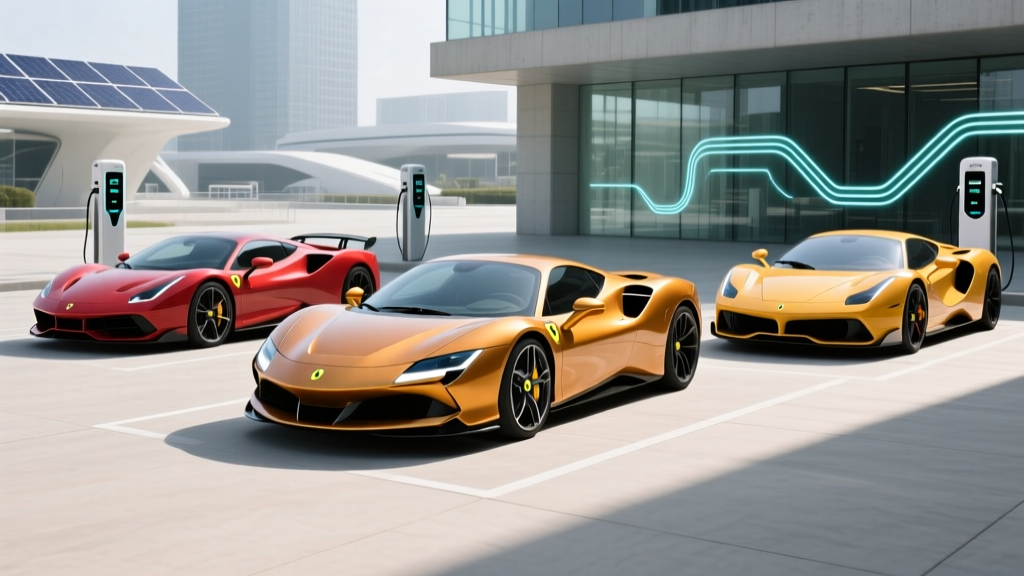
Ferrari's transition to hybrid powertrains isn't about fuel savings — it's about extracting more performance from every combustion cycle. The brand currently offers three hybrid models spanning a $350,000 to $650,000+ price range, each using electrification differently. Two are plug-in hybrids (PHEVs) with measurable electric-only range; one is a conventional hybrid (HEV) that never plugs in. Understanding which architecture lives under each car's sculpted bodywork is essential before writing a check.
This guide breaks down every current Ferrari hybrid car by powertrain type, real-world efficiency, battery specifications, warranty coverage, and whether any federal tax incentives apply. If you're cross-shopping a 296 GTB against an SF90 XX or weighing the new 12Cilindri against its predecessors, the numbers below tell the full story.
Ferrari 296 GTB and 296 GTS: The Everyday Hybrid Supercar
The 296 GTB coupe and its retractable-hardtop GTS sibling represent Ferrari's volume hybrid — if you can call a $350,000+ car "volume." The powertrain pairs a 120-degree twin-turbocharged 3.0-liter V6 with a single rear-mounted electric motor integrated into the 8-speed dual-clutch transmission. Combined output reaches 819 horsepower (654 hp from the V6, 165 hp from the electric motor).
296 GTB/GTS Powertrain and Battery Specs
| Specification | 296 GTB / GTS |
|---|---|
| Engine | 3.0L twin-turbo V6 |
| Combined HP | 819 hp |
| Electric Motor | 165 hp (rear axle) |
| Battery Capacity | 7.45 kWh (usable) |
| Battery Chemistry | NMC (nickel manganese cobalt) |
| Hybrid Type | PHEV (plug-in hybrid) |
| Electric-Only Range (EPA) | ~16 miles |
| Total Combined Range | ~340 miles |
| Level 2 Charge Time (0–100%) | ~2.5 hours at 7.4 kW |
| DC Fast Charging | Not available |
| 0–60 mph | 2.9 seconds (GTB) |
| Top Speed | 205 mph |
| Drive Configuration | Rear-wheel drive |
MPG and Real-World Efficiency
| Metric | EPA Estimate | Real-World Expectation |
|---|---|---|
| Combined MPG (hybrid mode) | 19 MPG | 16–21 MPG depending on driving style |
| City MPG | 18 MPG | 19–22 MPG (regen braking helps in stop-and-go) |
| Highway MPG | 22 MPG | 18–20 MPG (aero drag and turbo boost at speed) |
| MPGe (electric + gas combined) | 41 MPGe | 35–45 MPGe on short trips using eDrive |
The 296's real-world MPG swings dramatically based on how you use the eDrive mode. On short commutes under 15 miles where the electric motor handles most of the work, you'll burn minimal fuel. On canyon runs or track sessions, the V6 is doing all the heavy lifting and fuel consumption reflects a 654-hp turbocharged engine's appetite. Expect 14–16 MPG during aggressive driving.
The 7.45 kWh battery charges via a standard J1772 connector on Level 2 (240V) power. There is no DC fast-charging capability — a deliberate choice given the small battery size. A full Level 2 charge takes roughly 2.5 hours. On a standard 120V household outlet (Level 1), expect 6–8 hours for a full charge.
Ferrari SF90 Stradale and SF90 Spider: The Flagship PHEV
The SF90 was Ferrari's first production plug-in hybrid and remains the brand's performance benchmark. A twin-turbocharged 4.0-liter V8 teams with three electric motors — one on the rear axle and two on the front axle — to produce a staggering 986 horsepower in standard trim. The SF90 XX variant pushes this to 1,016 hp with track-focused aerodynamics and software calibration.
Unlike the rear-wheel-drive 296, the SF90's twin front motors give it all-wheel drive and torque-vectoring capability. The result is a 0–60 mph time of 2.0 seconds for the SF90 XX — among the quickest production cars ever measured.
SF90 Powertrain and Battery Specs
| Specification | SF90 Stradale / Spider |
|---|---|
| Engine | 4.0L twin-turbo V8 |
| Combined HP (Standard) | 986 hp |
| Combined HP (XX Variant) | 1,016 hp |
| Electric Motors | 3 (1 rear, 2 front) |
| Battery Capacity | 7.9 kWh (usable) |
| Battery Chemistry | NMC lithium-ion |
| Hybrid Type | PHEV (plug-in hybrid) |
| Electric-Only Range (EPA) | ~16 miles |
| Total Combined Range | ~340 miles |
| Level 2 Charge Time | ~2.5 hours at 7.4 kW |
| DC Fast Charging | Not available |
| 0–60 mph (XX) | 2.0 seconds |
| Top Speed | 211 mph (Stradale) |
| Drive Configuration | AWD (eAWD with twin front motors) |
SF90 Fuel Economy
| Metric | EPA Estimate | Real-World Expectation |
|---|---|---|
| Combined MPG | 16 MPG | 13–18 MPG |
| City MPG | 14 MPG | 15–17 MPG (eDrive offsets some city consumption) |
| Highway MPG | 19 MPG | 16–19 MPG |
| MPGe (combined) | 35 MPGe | 30–40 MPGe on short electric-assisted trips |
The SF90's larger, heavier V8 and AWD system extract a fuel-economy penalty versus the 296. However, the eDrive mode — which powers the car solely through the front electric motors — delivers genuinely silent, zero-tailpipe-emission driving for short urban commutes. Ferrari's eManettino selector on the steering wheel lets drivers toggle between eDrive, Hybrid, Performance, and Qualify modes, each changing the power split and battery usage strategy.
Ferrari 12Cilindri: The V12 HEV Grand Tourer
Announced in 2024 and entering production for the 2025 model year, the 12Cilindri replaces the 812 Superfast as Ferrari's front-engine V12 grand tourer. It uses a conventional hybrid (HEV) system — meaning it never plugs in. A naturally aspirated 6.5-liter V12 produces 819 horsepower on its own, supplemented by a mild-hybrid system that smooths torque delivery and enables brief electric assist during acceleration.
Because the 12Cilindri is an HEV, there is no electric-only driving mode, no charging port, and no plug-in capability. The small battery recharges exclusively through regenerative braking and engine-driven generation. This architecture prioritizes performance enhancement over efficiency — the hybrid system fills torque gaps during gear changes and provides launch-assist boost, but it doesn't meaningfully reduce fuel consumption.
12Cilindri Powertrain and Efficiency
| Specification | 12Cilindri / 12Cilindri Spider |
|---|---|
| Engine | 6.5L naturally aspirated V12 |
| Combined HP | 819 hp |
| Hybrid System | Mild HEV (no plug-in) |
| Electric-Only Range | None (HEV — no EV mode) |
| Charging Port | None |
| 0–60 mph | 2.9 seconds |
| Top Speed | 211 mph |
| Combined MPG (EPA est.) | 13–14 MPG |
| Base MSRP | ~$430,000 (coupe) |
Fuel economy figures for the 12Cilindri are preliminary as EPA certification was ongoing at launch. Expect combined MPG in the 13–14 range, with city driving dropping to 11–12 MPG and highway cruising reaching 16–17 MPG. The mild-hybrid system provides marginal efficiency benefit — perhaps 1–2 MPG versus a non-hybrid V12 — but its real value is in drivetrain refinement and transient torque response.
Pricing, Tax Credits, and Ownership Costs
Ferrari's hybrid lineup occupies the uppermost tier of automotive pricing. Here's where each model starts and how federal incentives apply:
| Model | Base MSRP | §30D Federal Tax Credit | Typical Out-the-Door |
|---|---|---|---|
| 296 GTB | ~$351,000 | Not eligible (MSRP exceeds $80,000 cap) | $370,000–$420,000+ with options |
| 296 GTS | ~$381,000 | Not eligible (MSRP exceeds $80,000 cap) | $400,000–$460,000+ |
| SF90 Stradale | ~$524,000 | Not eligible (MSRP exceeds $80,000 cap) | $550,000–$700,000+ |
| SF90 Spider | ~$574,000 | Not eligible | $600,000–$750,000+ |
| SF90 XX Stradale | ~$850,000 | Not eligible | Allocation-only pricing |
| 12Cilindri | ~$430,000 | Not eligible (MSRP exceeds cap; also HEV) | $460,000–$550,000+ |
Insurance, Maintenance, and Depreciation
Ownership economics for a Ferrari hybrid extend well beyond the purchase price. Annual insurance premiums typically run $8,000–$18,000 depending on driver profile, location, and coverage limits. Ferrari's standard warranty covers 3 years/36,000 miles for the vehicle and 7 years of complimentary scheduled maintenance — a genuine value-add that offsets routine service costs during the ownership period.
Depreciation varies sharply by model. Limited-production variants like the SF90 XX and special-series 296 models may hold or appreciate in value. Standard-production 296 GTBs and SF90 Stradales typically depreciate 15–25% over three years, which on a $400,000 car means $60,000–$100,000 in value loss.
Battery Warranty, Reliability, and Replacement Costs
Battery Longevity and Replacement
Ferrari's hybrid batteries are engineered for performance duty cycles rather than maximum range. The 7.45 kWh pack in the 296 and the 7.9 kWh pack in the SF90 are relatively small, meaning each charge cycle uses a moderate depth of discharge. This actually favors longevity — deep cycling (0–100% daily) accelerates degradation more than the partial cycles typical of PHEV use.
Based on NMC chemistry degradation data from similar-performance applications, expect the battery to retain 85–90% of original capacity after 8–10 years of normal use. Ferrari's thermal management system actively conditions the battery during driving and charging to minimize heat-related degradation.
If a battery replacement is needed out of warranty, costs are substantial. Industry estimates for Ferrari hybrid battery replacement range from $25,000 to $40,000+ including parts and specialized labor. However, individual cell module replacement (rather than the full pack) may be possible at lower cost, depending on the failure mode. Ferrari's dealer network handles all high-voltage service — independent shops cannot perform warranty-covered battery work.
Reliability Considerations
Ferrari's hybrid powertrains have proven mechanically robust in early ownership data. The 296 GTB's V6, co-developed with F1-derived engineering, uses a 120-degree bank angle for a lower center of gravity and has shown no systemic issues in the first production years. The SF90's more complex three-motor AWD system adds potential failure points, but Ferrari's 7-year maintenance program covers scheduled inspections that catch issues early.
According to NHTSA recall databases, Ferrari has issued limited recalls for early SF90 models related to software calibration in the hybrid control unit — addressed via dealer software updates rather than hardware replacement. As with any low-volume supercar, reliability data sets are smaller than mass-market vehicles, making long-term predictions less certain.
Which Ferrari Hybrid Fits Your Garage?
Choose the 296 GTB/GTS If:
- You want the most approachable Ferrari hybrid for daily driving
- Rear-wheel-drive dynamics and V6 turbo sound appeal to you
- 16 miles of electric-only range covers your short commutes
- You prefer a lighter, more agile chassis (3,300 lbs dry)
- Budget is $350,000–$450,000
Choose the SF90 If:
- Maximum performance is the priority (986–1,016 hp, AWD)
- You want sub-2.0-second 0–60 capability
- All-weather traction from eAWD matters in your climate
- You plan occasional track use and want Qualify mode
- Budget exceeds $500,000
Choose the 12Cilindri If:
- Naturally aspirated V12 character is non-negotiable
- You prefer grand touring comfort over track focus
- You don't need or want plug-in charging capability
- Long-distance comfort and refinement are priorities
- Budget is $430,000–$550,000
Ferrari Hybrid vs Full EV vs Gas Supercar
The decision between a Ferrari hybrid, a full-electric supercar (like the Lotus Evija or upcoming Lamborghini Lanzador), and a traditional gas-only exotic comes down to use case:
- Hybrid PHEV (296/SF90): Best for owners who want electric-only urban commuting but unrestricted range for road trips and track days. No charging infrastructure dependency for longer drives.
- Full EV: Best for owners with reliable home and destination charging who prioritize instant torque, lower running costs, and zero tailpipe emissions. Limited by charging speed on road trips and battery weight.
- Gas-only / HEV (12Cilindri): Best for purists who value engine character, lightweight dynamics, and zero plug-in complexity. Fuel costs and emissions are highest, but the driving experience is unfiltered.
Frequently Asked Questions
How many MPG does a Ferrari hybrid get?
The Ferrari 296 GTB achieves an EPA-estimated 19 MPG combined (18 city / 22 highway) in hybrid mode, with an MPGe rating of 41 when factoring in electric-only driving. The SF90 Stradale returns approximately 16 MPG combined. The V12 12Cilindri, as a conventional HEV, averages around 13–14 MPG combined. Real-world figures vary significantly with driving style — aggressive driving can drop MPG into the low teens across all models.
How far can the Ferrari 296 and SF90 go on electric power alone?
Both the 296 GTB and SF90 Stradale carry enough battery for approximately 16 miles of EPA-rated electric-only range. In real-world conditions with climate control and mixed speeds, expect 12–15 miles. This is sufficient for short urban commutes, neighborhood driving, and silent departures from residential areas. Neither car offers more than 16 miles of EV range — the batteries are sized for performance boost, not extended electric driving.
Does any Ferrari hybrid qualify for a federal tax credit?
No. Under current IRS §30D rules, the federal clean vehicle credit has MSRP caps of $55,000 for sedans and $80,000 for SUVs, vans, and pickups. Every Ferrari hybrid car starts well above $300,000, disqualifying the entire lineup regardless of battery sourcing or buyer income. The 12Cilindri is additionally ineligible as a conventional HEV with no plug-in capability. Consult a tax professional for any applicable state-level incentives.
Is the Ferrari hybrid battery reliable and what does replacement cost?
Ferrari covers the high-voltage battery for 7 years with unlimited mileage — one of the strongest warranties in the supercar segment. NMC chemistry in these applications shows projected 85–90% capacity retention after 8–10 years. Out-of-warranty battery replacement is estimated at $25,000–$40,000+, though module-level repairs may reduce this cost. The 7-year complimentary maintenance program includes hybrid system inspections that help identify issues before warranty expiration.
Can I charge a Ferrari hybrid at a public fast charger?
No Ferrari hybrid currently supports DC fast charging. Both the 296 GTB and SF90 accept Level 2 AC charging at up to 7.4 kW via a standard J1772 connector. A full charge takes approximately 2.5 hours on a 240V Level 2 station. The batteries are small enough (7.45–7.9 kWh) that DC fast charging would offer minimal time savings and add weight and complexity. Level 1 charging on a standard 120V outlet is possible but slow at 6–8 hours for a full charge.
Should I buy a Ferrari hybrid or wait for a full-electric Ferrari?
Ferrari has confirmed its first full-electric model is in development, expected to arrive around 2027–2028. If you want a Ferrari now with some electrified capability, the current PHEV lineup offers a bridge — electric-only urban driving with unrestricted V6/V8 range. If zero-emission driving and maximum torque delivery are priorities and you can wait, the upcoming EV Ferrari may redefine the brand's performance envelope. However, early full-electric Ferraris will likely carry a significant price premium over current hybrids.