What the Ferrari Hybrid 2014 Actually Is
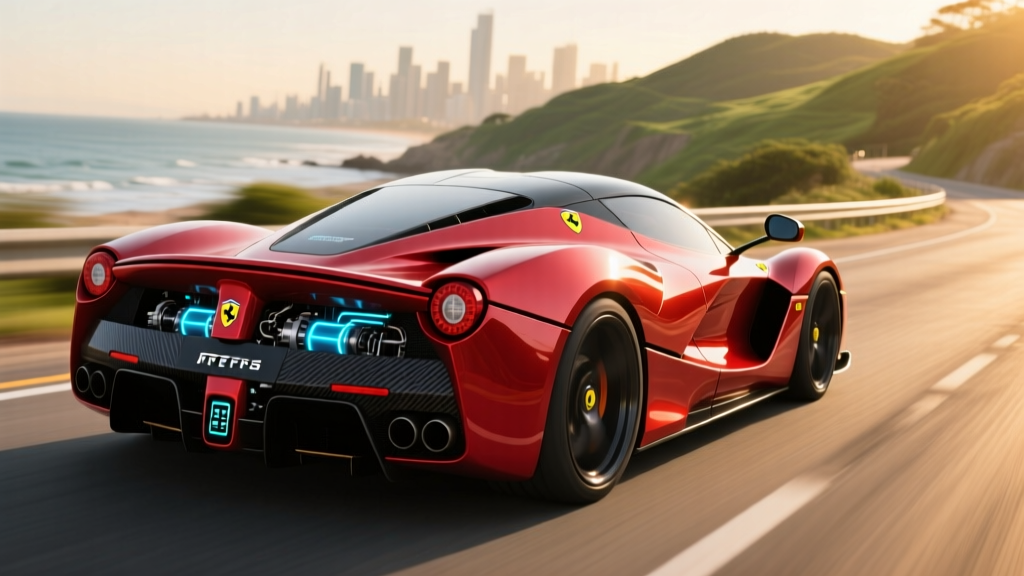
When enthusiasts search for a "Ferrari hybrid 2014," they are almost always looking for the LaFerrari — Maranello's limited-run hypercar that debuted at the 2013 Geneva Motor Show and entered production for the 2014 model year. Only 499 coupes were built, followed by 210 open-top Aperta variants. With a combined output of 950 horsepower and a 6.3-liter naturally aspirated V12 paired with a kinetic energy recovery system (KERS), the LaFerrari was Ferrari's first production hybrid and a direct answer to the Porsche 918 Spyder and McLaren P1.
In 2026, the LaFerrari is no longer a new-car purchase — it is a blue-chip collector asset trading well above its original $1.4 million MSRP. But understanding its hybrid architecture, real-world efficiency, battery longevity, and ownership costs remains essential for prospective buyers, collectors evaluating long-term reliability, and enthusiasts curious how Ferrari's first electrified powertrain holds up more than a decade later.
HEV vs PHEV: Where the LaFerrari Fits
The LaFerrari is a conventional hybrid electric vehicle (HEV), not a plug-in hybrid (PHEV). This is a critical distinction that buyers and researchers frequently confuse.
HEV vs PHEV — LaFerrari Classification
| Feature | HEV (LaFerrari) | PHEV (e.g., Ferrari 296 GTB) |
|---|---|---|
| Plugs in to charge? | No — battery charges via regen and V12 | Yes — external charging required for EV range |
| Electric-only range | ~1.2 miles (low-speed assist only) | ~15 miles (296 GTB) |
| Battery size | ~2.3 kWh (lithium-ion) | 7.45 kWh usable (296 GTB) |
| Primary purpose of hybrid system | Performance boost + torque fill | Emissions compliance + electric city driving |
| Federal §30D tax credit | Not eligible (not a PHEV/BEV) | Not eligible (exceeds MSRP cap; income/sourcing rules apply) |
The LaFerrari's KERS system was designed to eliminate turbo lag by delivering instant electric torque alongside the V12 — not to enable zero-emission commuting. If you want a Ferrari you can plug in, the modern 296 GTB (PHEV, $350,000+) or SF90 Stradale (PHEV, discontinued after 2024) are the relevant models.
Powertrain and Performance Specs
The LaFerrari's hybrid system is a performance-first architecture derived from Ferrari's Formula 1 KERS program. Here is the complete breakdown:
| Specification | Value |
|---|---|
| Engine | 6.3L naturally aspirated V12 (F140 FE) |
| Engine output | 789 hp @ 9,000 rpm / 516 lb-ft torque |
| Electric motor (KERS) | 163 hp / 199 lb-ft torque |
| Combined system output | 950 hp / 664 lb-ft |
| Hybrid battery | ~2.3 kWh lithium-ion (120 cells, floor-mounted) |
| Transmission | 7-speed dual-clutch automatic (DCT) |
| 0–60 mph | ~2.4 seconds |
| Top speed | 217 mph (electronically limited) |
| Drivetrain | Rear-wheel drive |
| Curb weight | ~2,767 lbs |
The KERS motor is mounted directly to the rear of the DCT gearbox and provides torque fill in the lower RPM range where the V12 is still building power. The electric motor also powers auxiliary systems (A/C, power steering) to reduce parasitic drag on the engine. Energy is recovered under braking and during coasting, with the V12 acting as a generator during sustained high-load driving to keep the small battery pack charged.
Fuel Economy: EPA MPG and Real-World Numbers
Fuel economy was never the LaFerrari's priority, but hybridization does yield measurable efficiency gains over a comparable naturally aspirated V12 Ferrari of the era (such as the F12berlinetta).
| Metric | EPA Estimate | Real-World Expectation |
|---|---|---|
| City MPG | 12 mpg | 11–13 mpg (stop-and-go regen helps slightly) |
| Highway MPG | 16 mpg | 14–17 mpg (cruising at 70–80 mph) |
| Combined MPG | 14 mpg | 12–15 mpg depending on driving style |
| Fuel tank | 23.8 gallons | ~310–340 miles total range |
Source: fueleconomy.gov — 2014 Ferrari LaFerrari
For context, the non-hybrid F12berlinetta (6.3L V12, 730 hp) from the same era achieves an EPA combined 13 mpg. The LaFerrari's KERS system delivers roughly a 7–8% efficiency improvement while producing 220 more horsepower — a meaningful gain in the hypercar segment. Real-world MPG is highly driving-style-dependent: aggressive track use will drop figures to single digits, while gentle grand-touring on flat highways can push toward the upper range.
Battery Longevity, Warranty, and Replacement Cost
For a 2014-model hypercar now over a decade old, hybrid battery health is the single most important mechanical question for prospective buyers.
LaFerrari Hybrid Battery — What You Need to Know
- Original warranty: Ferrari's hybrid battery was covered under the standard 3-year/unlimited-mileage new-vehicle warranty, extended to 7 years under Ferrari's Power15 maintenance program for original owners.
- Battery chemistry: Lithium-ion (120 pouch cells), designed for high power density rather than deep cycling. The pack operates in a narrow state-of-charge (SoC) window — typically 20–80% — to minimize degradation.
- Expected degradation: Ferrari's KERS system is low-stress by design. The battery never fully charges or fully discharges during normal operation. Owners and specialists report minimal capacity loss (under 5%) over 10+ years when the car has been stored properly and driven regularly.
- Replacement cost: A full hybrid battery replacement is estimated at $25,000–$40,000 through Ferrari's dealer network, though this figure is rarely needed. Individual cell or module repairs may cost significantly less.
- Storage risk: The greatest threat to LaFerrari battery health is prolonged storage without a battery tender. Ferrari recommends keeping the car on its dedicated battery maintainer when not in use. A deeply discharged 2.3 kWh pack that sits for months can suffer irreversible cell damage.
Unlike mass-market hybrids (Toyota Prius, Honda Accord Hybrid) where battery replacement is a routine $2,000–$4,000 service, LaFerrari battery work requires Ferrari-certified technicians and proprietary diagnostic tools. Most examples on the collector market have low mileage (under 5,000 miles) and have been maintained on battery tenders, which actually favors long-term pack health compared to a daily-driven hybrid subjected to thousands of charge cycles.
Pricing, Collector Market, and Tax Credit Status
The LaFerrari was never an affordable car, and its collector-market trajectory has only pushed prices higher.
- Original MSRP (2014): ~$1,416,000 (coupe); ~$2,200,000 (Aperta, 2016–2017)
- 2026 collector-market range: $2.8M–$4.5M (coupe, depending on spec, mileage, provenance); $5M–$8M+ (Aperta)
- Federal §30D tax credit: Not eligible. The LaFerrari is a conventional HEV, not a plug-in hybrid or battery electric vehicle. The IRS §30D credit applies only to qualifying BEVs and PHEVs that meet battery-sourcing, critical-mineral, MSRP cap ($55,000 sedans / $80,000 SUVs), and buyer income requirements.
- State incentives: No state offers hybrid purchase incentives for a vehicle in this price class. California's CVRP and similar programs have income and MSRP caps that exclude the LaFerrari entirely.
For buyers evaluating the LaFerrari as an investment, the hybrid system is actually a net positive for long-term value. It represents Ferrari's first electrified production car, a technological milestone that collectors prize. The KERS architecture also means lower mechanical complexity than the turbocharged hybrid systems in the SF90 Stradale, which some collectors view as more fragile over decades-long ownership horizons.
Who Should Choose the LaFerrari vs a Modern Ferrari Hybrid or Full EV?
Choose the LaFerrari If
- You want a historically significant V12 hypercar with blue-chip appreciation potential
- You value naturally aspirated engine character (9,250 rpm redline) over electric-only driving
- You accept 14 MPG combined as the cost of 950 hp
- You plan to drive sparingly and store on a battery tender
- You have access to Ferrari Classiche or a certified Ferrari specialist for maintenance
Consider a Modern Alternative If
- You want plug-in electric range for daily driving → Ferrari 296 GTB (PHEV, ~15 mi EV range, ~$350K)
- You want full EV performance with no gas → Lotus Evija or Pininfarina Battista (BEV hypercars)
- You want a usable grand tourer with hybrid efficiency → Ferrari Roma (gas) or wait for Ferrari's first BEV (announced for 2025+)
- You need daily-driver reliability, warranty coverage, and dealer support → any mass-market PHEV (Toyota RAV4 Prime, BMW X5 xDrive50e)
- Budget is under $500K → the LaFerrari is not in play at this price point
The LaFerrari occupies a unique position: it is simultaneously a hybrid pioneer and a collector-grade analog driving machine. Its hybrid system was designed for lap times, not fuel savings. Buyers who approach it as a museum-grade investment with occasional driving use will be well-served. Those seeking practical electrified transportation should look at Ferrari's modern PHEV lineup or mainstream hybrid options.
Hybrid vs PHEV vs EV — Which Fits You?
| Factor | HEV (LaFerrari type) | PHEV (296 GTB type) | BEV (full electric) |
|---|---|---|---|
| Plugs in? | No | Yes | Yes (required) |
| Electric-only range | ~1 mi (assist only) | 15–50 mi typical | 200–400+ mi |
| Fuel/energy cost per mile | ~$0.25–0.30/mi (premium gas) | ~$0.05/mi (electric) + gas when depleted | ~$0.03–0.05/mi (home charging) |
| Best for | Performance boost, no charging needed | Short electric commutes + gas road trips | Daily driving, lowest running costs |
| §30D tax credit | Not eligible | Eligible if MSRP/income/sourcing rules met | Eligible if MSRP/income/sourcing rules met |
Frequently Asked Questions
How many MPG does the 2014 Ferrari LaFerrari hybrid get?
The EPA rates the LaFerrari at 12 city / 16 highway / 14 combined MPG. Real-world figures vary from 11–17 MPG depending on driving style. The KERS hybrid system provides a modest efficiency gain (~7–8%) over the non-hybrid F12berlinetta while adding 163 electric horsepower.
How far can the LaFerrari go on electric only?
Approximately 1.2 miles at very low speeds — but this was never the system's intent. The KERS motor provides torque fill and performance enhancement, not zero-emission commuting. The LaFerrari cannot sustain highway speeds on electric power alone. If electric-only range matters to you, Ferrari's PHEV models (296 GTB: ~15 miles, SF90 Stradale: ~15 miles) are the correct vehicles.
Is the LaFerrari hybrid system reliable after 10+ years?
Yes, with proper maintenance. The KERS system is mechanically simpler than turbocharged hybrid setups. The 2.3 kWh battery operates in a narrow SoC window (20–80%) that minimizes degradation. The primary risk is prolonged storage without a battery tender, which can cause irreversible cell damage. Most collector-market LaFerraris have low mileage and have been stored correctly, which favors long-term reliability.
What does a LaFerrari hybrid battery replacement cost?
Estimated at $25,000–$40,000 through Ferrari's dealer network for a complete pack replacement. However, this is rarely necessary. The low-stress KERS design and narrow SoC operating window mean that batteries in well-maintained examples show minimal degradation. Individual cell or module repairs may be possible at lower cost through specialized Ferrari service centers.
Does the 2014 LaFerrari qualify for any tax credit?
No. The LaFerrari is a conventional HEV, not a plug-in hybrid or battery electric vehicle. The IRS §30D federal clean vehicle credit applies only to qualifying BEVs and PHEVs. Additionally, even if it were a PHEV, its original MSRP of ~$1.4 million far exceeds the §30D caps ($55,000 for sedans, $80,000 for SUVs/trucks). No state incentives apply to vehicles in this price class.
Should I buy a LaFerrari or a modern Ferrari hybrid like the 296 GTB?
These serve entirely different purposes. The LaFerrari is a collector-grade investment vehicle with historical significance, a naturally aspirated V12, and minimal hybrid complexity — but 14 MPG and no electric-only range. The 296 GTB ($350K+) is a usable daily-driver PHEV with 15 miles of electric range, 818 combined hp from a twin-turbo V6 + electric motor, and modern infotainment. Choose the LaFerrari for investment and legacy; choose the 296 GTB for regular driving and practical electrification.