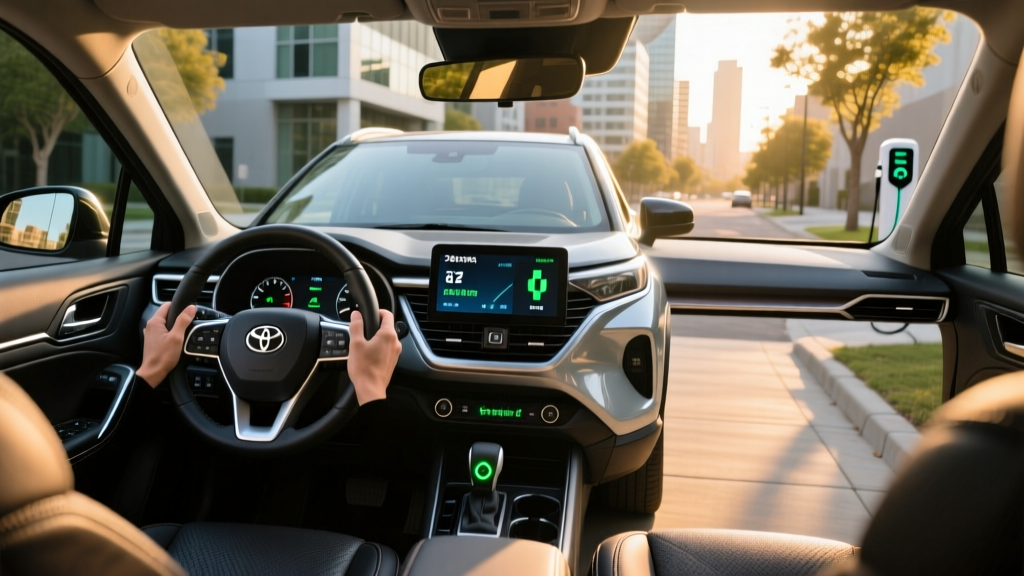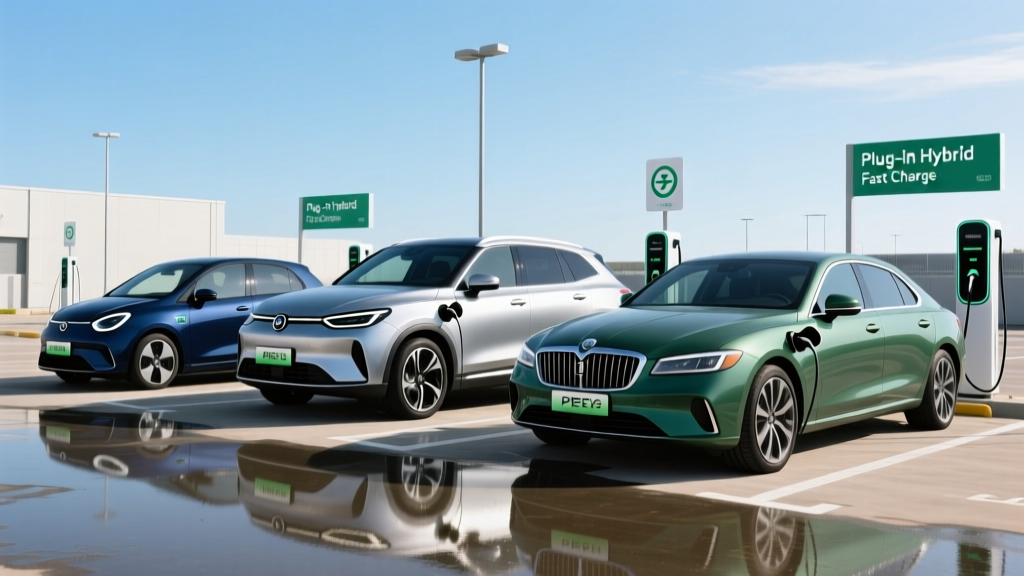
Back in the first half of 2019, something quietly significant happened in the European auto market: plug-in vehicle registrations surged past 250,000 units, with plug-in hybrids (PHEVs) claiming roughly 40% of that total. The EV Volumes Europe plug-in sales for 2019 H1 report became a benchmark dataset that analysts still reference when tracing how PHEVs evolved from niche products into mainstream bridge vehicles between gas and full electric.
Fast-forward to 2026, and the lessons from that inflection point matter more than ever for US buyers weighing a hybrid purchase. Europe's 2019 data proved that PHEV adoption accelerates when three conditions align: electric-only range hits 25–40 miles, charging infrastructure becomes accessible, and total cost of ownership undercuts pure gas vehicles. Today's PHEV lineup finally meets all three.
This guide uses that historical lens to help you navigate the current hybrid and plug-in hybrid landscape — with exact MPG figures, electric-only range data, battery specs, and tax-credit eligibility you need to make a decision.
HEV vs PHEV: The Distinction That Drives Every Spec
Before comparing specific models, the fundamental split between conventional hybrids and plug-in hybrids dictates everything from your daily fuel cost to your tax-credit eligibility.
Conventional Hybrid (HEV)
- Battery: Small (1–2 kWh), recharged by regenerative braking and the engine
- Plug in? No — you never plug in a conventional hybrid
- Electric-only driving: Minimal (under 1 mile at low speeds)
- Fuel economy: 40–58 MPG combined typical
- Tax credit: Not eligible for federal §30D credit
- Best for: Drivers without home charging access who want better MPG
Plug-In Hybrid (PHEV)
- Battery: Larger (13–25 kWh usable), recharged by plugging in + regen + engine
- Plug in? Yes — Level 1 (120V) or Level 2 (240V) charging
- Electric-only driving: 25–45 miles EPA typical
- Fuel economy: 30–50 MPG combined on gas after battery depletes; 70–100+ MPGe on electric
- Tax credit: Eligible for up to $7,500 federal §30D credit (subject to MSRP, income, and sourcing rules)
- Best for: Drivers with home charging who commute under 40 miles daily but need road-trip range
The critical mistake buyers make: assuming "hybrid" always means plug-in. A Toyota Camry Hybrid is an HEV — it never plugs in and gets 52 MPG combined. A Toyota RAV4 Prime is a PHEV — it plugs in for 42 miles of electric range, then operates as a hybrid. Both are "hybrids" but serve fundamentally different use cases.
2026 PHEV Benchmark: Toyota RAV4 Prime Specs Breakdown
The RAV4 Prime remains the PHEV that best illustrates what the 2019 European data predicted would succeed: enough electric range to cover most commutes, competitive gas MPG after depletion, and broad availability. Here are the exact numbers for the 2026 model year.
| Specification | Value |
|---|---|
| EPA Electric-Only Range | 42 miles |
| Total Combined Range (Electric + Gas) | ~600 miles |
| Battery Capacity (Usable) | 14.9 kWh (lithium-ion NMC) |
| Level 1 Charging (120V, 12A) | ~12 hours (0–100%) |
| Level 2 Charging (240V, 32A) | ~2.5 hours (0–100%) |
| DC Fast Charging | Not available |
| Combined Horsepower | 302 hp (2.5L 4-cyl + 2 electric motors) |
| 0–60 mph | 5.7 seconds |
| EPA MPG (Gas, Combined) | 38 MPG combined / 40 city / 36 highway |
| EPA MPGe (Electric Mode) | 94 MPGe combined |
| Base MSRP (SE) | $44,615 |
| Federal §30D Tax Credit | Up to $7,500 (subject to eligibility) |
| Hybrid Battery Warranty | 10 years / 150,000 miles |
How Many MPG Does a PHEV Actually Get? Real-World vs. EPA
The RAV4 Prime's EPA rating of 38 MPG combined (gas mode) and 94 MPGe (electric mode) tells only part of the story. Real-world results depend heavily on your driving pattern and whether you charge regularly.
| Driving Scenario | Expected Efficiency | Notes |
|---|---|---|
| Daily commute under 40 mi, nightly charge | 90–110 MPGe | Almost never uses gas; engine runs ~1–2x/month for maintenance cycles |
| Mixed driving (50% electric, 50% gas) | 55–70 MPGe equivalent | Typical for owners who charge at home but take longer weekend trips |
| Never plugged in (gas-only operation) | 35–38 MPG combined | Real-world highway testing shows 34–36 MPG at 70+ mph; city slightly better at 38–40 MPG |
| Cold weather (below 32°F), gas mode | 32–35 MPG combined | Engine runs more to provide cabin heat; electric range drops 15–25% |
The key insight from owner data: PHEVs reward charging discipline. Owners who plug in nightly and commute under 40 miles report using 4–6 tanks of gas per year. Those who never plug in essentially drive a slightly heavier conventional hybrid and see MPG right around the EPA estimate — or slightly below, since the battery adds ~300 lbs of curb weight.
Electric-Only Range: How Far Can a PHEV Go Without Gas?
The 42-mile EPA electric range on the RAV4 Prime represents a sweet spot that the 2019 European EV Volumes data identified as the adoption threshold. When PHEVs offered under 20 miles of electric range (like early-generation models), owners stopped plugging in. At 35+ miles, plug-in rates stayed above 80%.
Here's how 2026's leading PHEVs compare on electric-only range:
| Model | EPA Electric Range | Battery (kWh Usable) | Level 2 Charge Time | DC Fast Charge |
|---|---|---|---|---|
| Toyota RAV4 Prime | 42 mi | 14.9 kWh | ~2.5 hr | No |
| Chrysler Pacifica Hybrid | 32 mi | 12.0 kWh | ~2.0 hr | No |
| Jeep Wrangler 4xe | 21 mi | 14.3 kWh | ~2.5 hr | No |
| BMW X5 xDrive50e | 38 mi | 22.1 kWh | ~3.5 hr | No |
| Hyundai Tucson PHEV | 33 mi | 13.8 kWh | ~2.0 hr | No |
A critical detail most PHEV shoppers miss: none of the mainstream PHEVs currently offer DC fast charging. All charge via Level 1 (standard 120V outlet) or Level 2 (240V, like a dryer outlet or dedicated home charger). This means a full charge takes 2–4 hours on Level 2, making PHEVs best suited for overnight home charging rather than mid-day top-ups at public stations.
Does This PHEV Qualify for a Tax Credit? §30D Rules Explained
The RAV4 Prime and several other PHEVs qualify for the federal §30D Clean Vehicle Credit — up to $7,500 — but eligibility depends on a matrix of requirements that change periodically. As of 2026, the key rules include:
- MSRP cap: Vans, SUVs, and pickup trucks must have an MSRP under $80,000; sedans under $55,000 (the RAV4 Prime at ~$44,615 qualifies)
- Buyer income cap: Modified adjusted gross income must not exceed $300,000 (joint), $225,000 (head of household), or $150,000 (individual)
- Battery sourcing: A percentage of critical minerals and battery components must be sourced from the US or free-trade-agreement countries — this requirement phases up annually
- Point-of-sale transfer: Buyers can transfer the credit to the dealer at purchase, reducing the sale price immediately rather than waiting for a tax refund
- Assembly: Vehicle must undergo final assembly in North America
The RAV4 Prime is assembled in Japan, which under current rules may affect eligibility depending on the specific tax year and any applicable trade exceptions. Always verify current eligibility at IRS.gov's Clean Vehicle Credit page or consult a tax professional before relying on the credit in your purchase math.
For PHEVs that do qualify, the credit amount phases based on battery capacity: vehicles with at least 7 kWh of battery capacity start at $2,500, with additional amounts for larger packs up to the $7,500 maximum. The RAV4 Prime's 14.9 kWh pack positions it for the full amount when other eligibility criteria are met.
Hybrid vs PHEV vs Full EV: Which Fits Your Situation?
The 2019 European EV Volumes data showed that PHEV buyers and full EV buyers had distinctly different profiles — and that pattern holds in the US market today.
Choose a Conventional Hybrid (HEV) If:
- You cannot install home charging (apartment, street parking, no garage)
- You want zero behavior change — just fill up with gas less often
- Your annual mileage is high (15,000+ mi/yr) and mostly highway
- Budget is the priority — HEVs carry no price premium for large batteries
- Example: Toyota Camry Hybrid (52 MPG combined, ~$29,500 MSRP)
Choose a Plug-In Hybrid (PHEV) If:
- You have access to Level 1 or Level 2 home charging
- Your daily commute is under 40 miles round-trip
- You take 4+ road trips per year exceeding 200 miles
- You want EV-like daily driving with gas-engine range insurance
- You qualify for the §30D tax credit to offset the price premium
- Example: Toyota RAV4 Prime (42 mi electric, 600 mi total, ~$44,615)
Choose a Full EV (BEV) If:
- You have reliable home Level 2 charging and access to DC fast charging for trips
- Your daily driving is under 250 miles
- You want the lowest per-mile fuel cost and minimal maintenance
- You're ready to plan charging stops on longer road trips
- Example: Tesla Model Y Long Range (320 mi EPA, ~$46,000 before credit)
The European data from 2019 showed that PHEVs served as a "gateway" vehicle — roughly 30% of PHEV owners in tracked cohorts moved to a full BEV for their next purchase. If you're unsure about full EV ownership, a PHEV lets you learn charging habits while eliminating range anxiety entirely.
Reliability, Battery Lifespan, and Replacement Costs
Hybrid and PHEV battery longevity remains the single most common buyer concern. The data is reassuring: modern hybrid batteries are lasting significantly longer than early-generation packs from the 2000s.
Toyota's hybrid battery warranty of 10 years / 150,000 miles (for the RAV4 Prime and other 2026 models) reflects real-world durability data showing most packs retain above 80% capacity at 150,000 miles. Independent fleet data from sources tracked by IIHS and consumer surveys indicate that PHEV battery failure rates in the first 100,000 miles are under 2%.
When replacement is needed outside warranty:
- Dealer new pack: $3,500–$5,500 (RAV4 Prime), $5,000–$8,000 (luxury PHEVs like BMW X5)
- Refurbished/reconditioned pack: $2,000–$3,500, increasingly available from third-party shops
- Module-level repair: $500–$1,500 if only individual cells or modules have degraded — a growing option at hybrid-specialist shops
For comparison, a conventional gas vehicle's transmission replacement runs $3,000–$7,000 and is far more common at 120,000+ miles than hybrid battery failure. The hybrid powertrain's simplicity — no traditional multi-speed transmission, regenerative braking that reduces pad wear — often results in lower maintenance costs overall.
What the 2019 H1 Europe Data Predicted — and What It Got Wrong
The EV Volumes Europe plug-in sales for 2019 H1 dataset correctly predicted that PHEVs would thrive as "bridge" vehicles in markets where charging infrastructure lagged behind consumer interest. The US market in 2026 mirrors Europe's 2019 conditions in many regions: urban charging is improving, but rural and apartment-dweller access remains limited.
What the data didn't fully anticipate was the speed of BEV range improvement and DC fast-charging rollout. In 2019, a 250-mile BEV was premium; today, 300+ miles is standard and 350-kW chargers are proliferating. This has compressed the PHEV's "bridge" window — but hasn't eliminated it.
For buyers in 2026, the PHEV remains the most pragmatic choice if you fall into the "charging-optional" category: you benefit from electric driving when it's convenient and default to gas when it's not, without ever being stranded by a depleted battery in a charging desert.
PHEV Pros
- 42 miles of gas-free commuting (RAV4 Prime)
- 600+ miles total range — no trip planning needed
- 302 hp with AWD — genuine performance
- Eligible for up to $7,500 federal tax credit
- 10-year/150,000-mile battery warranty
- Regenerative braking extends brake pad life
- Can operate indefinitely without ever plugging in
PHEV Cons
- No DC fast charging — Level 2 takes ~2.5 hours
- $44,615+ MSRP is a significant premium over gas RAV4
- Heavy (~4,400 lbs) — hurts gas-only MPG vs. lighter HEVs
- Reduced cargo space vs. non-hybrid (battery under floor)
- Tax credit eligibility uncertain due to Japan assembly
- Two powertrains to maintain long-term (engine + electric)
- Electric range drops 15–25% in cold weather
Frequently Asked Questions
How many MPG does the RAV4 Prime get in real-world driving?
In gas-only mode after the battery depletes, expect 35–38 MPG combined — close to the EPA's 38 MPG rating. In city driving, regenerative braking helps push it toward 40 MPG. On sustained highway driving above 70 mph, expect 34–36 MPG. If you charge nightly and commute under 42 miles, you may use gas only a handful of times per year, making MPGe the more relevant metric (94 MPGe combined in electric mode).
How far can the RAV4 Prime go on electric only?
The EPA rates it at 42 miles of electric-only range. In real-world conditions, expect 35–40 miles in moderate weather with mixed driving, and 28–33 miles in cold weather (below freezing) or at sustained highway speeds. The vehicle seamlessly transitions to hybrid mode when the battery depletes — there's no range cliff or manual switching required.
Should I buy a hybrid, PHEV, or full EV?
Choose a conventional hybrid (HEV) if you lack home charging and want better MPG with zero behavior change. Choose a PHEV if you have home charging, commute under 40 miles, but need road-trip flexibility. Choose a full EV if you have reliable charging access, drive under 250 miles daily, and want the lowest per-mile cost and maintenance. The PHEV is the "have it both ways" option — at a price premium.
Is the RAV4 Prime reliable and what does battery replacement cost?
Toyota's hybrid systems have among the lowest failure rates in the industry. The hybrid battery is warrantied for 10 years / 150,000 miles. Out-of-warranty replacement costs $3,500–$5,500 at a dealer, with refurbished options available for $2,000–$3,000. The powertrain's simplicity (no traditional transmission, reduced brake wear from regen) often results in lower overall maintenance costs versus gas-only vehicles at higher mileage.
Does the RAV4 Prime qualify for the federal tax credit?
The RAV4 Prime has a battery capacity (14.9 kWh) and MSRP (~$44,615) that meet §30D thresholds. However, final assembly occurs in Japan, and battery-component sourcing requirements may affect eligibility depending on the current tax year's rules. Always verify at fueleconomy.gov or consult a tax professional before counting on the credit. If eligible, the credit can be up to $7,500 and can be transferred to the dealer at point of sale to reduce your purchase price immediately.
Can I charge a PHEV at a public DC fast charger?
No. Current mainstream PHEVs — including the RAV4 Prime, Pacifica Hybrid, Tucson PHEV, and Wrangler 4xe — do not support DC fast charging. They charge via Level 1 (120V standard outlet, ~12 hours for a full charge) or Level 2 (240V, ~2–3.5 hours). This makes PHEVs best suited for overnight home charging. If you need fast public charging, a full BEV with DC fast-charge capability is required.
For the latest EPA-rated fuel economy data on any hybrid or PHEV, check the official listings at fueleconomy.gov. For safety ratings, consult NHTSA's 5-Star Safety Ratings.